Heat the oven to 325°F (165°C) with racks in the upper and lower thirds.
Line two baking sheets with silicone baking mats or parchment. If using parchment, lightly grease for easier release.
Set up a cooling rack for quick airflow after baking.
Melt butter, sugar, and syrup/honey in a medium saucepan over medium heat, stirring until the sugar dissolves and everything looks glossy, about 2–3 minutes.
Add cream and bring to a gentle bubble. Stir constantly for 30–60 seconds; you want a smooth, cohesive mixture.
Remove from heat, then whisk in flour, salt, and vanilla until no streaks remain.
Fold in sliced almonds until coated. The mixture should be thick but scoopable.
Scoop 1 teaspoon portions onto the lined sheets, spacing at least 3 inches apart. They spread a lot. Work in batches so they don’t run into each other.
Flatten gently with damp fingers or the back of a spoon to encourage even, lacy spreading.
Bake 8–10 minutes, rotating pans halfway. Pull them when edges turn deep golden and centers look set but still bubbling slightly.
Cool on the pan 3–4 minutes until they firm up enough to move, then slide the liners onto a rack to cool completely.
Melt the chocolate in a microwave-safe bowl in 20–30 second bursts, stirring between, or over a double boiler.
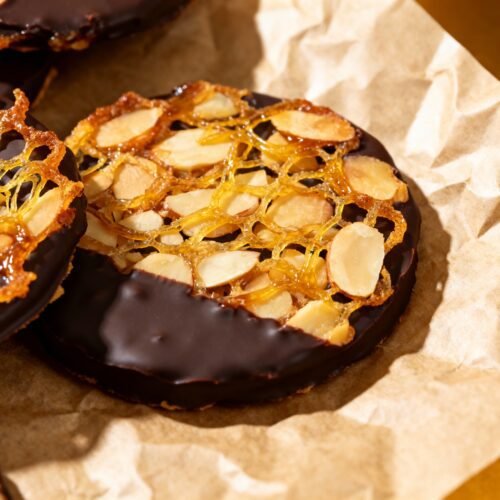
Flip cookies and spread a thin layer of chocolate on the flat side. Let set at room temp, or chill for 10 minutes to firm quickly.
For a classic look, drag a fork through the chocolate to create a crosshatch pattern before it sets.
Watch the color, not the clock: Too pale equals chewy; deep golden gives snap and flavor.
Keep portions tiny: One teaspoon makes perfect rounds. Larger mounds spread into puddles.
Work quickly: The mixture thickens as it cools. If needed, warm the pan briefly to loosen it up.
Use sliced blanched almonds: Skins can burn faster and taste bitter.