Perfect Amish Pie Crust Recipe | Flaky Homemade Baking Essential
If you’ve ever chased that elusive flaky, tender pie crust that holds its shape yet melts in your mouth, this Amish pie crust will make you grin. It brings together simple pantry staples and time-tested technique for a crust that bakes up golden, crisp, and beautifully layered—without stress or fancy tools.
I’ll walk you through the exact steps, why each one matters, and how to avoid the most common pie crust pitfalls. Consider this your reliable, go-to dough for sweet and savory pies, galettes, hand pies, and quiche. You’ll taste the difference from the very first slice.
Why This Amish Pie Crust Delivers Flaky, Tender Results
Amish bakers favor straightforward methods that just work. This crust nails that balance of tenderness and structure, thanks to a few smart fundamentals.
- Cold fat equals layers: Keeping butter and shortening cold creates steam pockets that puff into flaky sheets while baking.
- Shortening for tenderness, butter for flavor: A mix of both delivers rich taste with a delicate bite that rolls out easily.
- Vinegar and egg for control: A splash of vinegar and one egg help limit gluten development and create a dough that stays workable and smooth.
- Light touch: Minimal mixing keeps those fat pieces intact, which means better flake and no toughness.
- Rest time matters: Chilling relaxes the dough and firms the fat, so you get clean layers and neat edges in the oven.
Ingredients
These simple ingredients make two standard 9-inch pie crusts (top and bottom) or three single shells.
- 2 1/2 cups (300 g) all-purpose flour, spooned and leveled
- 1 tablespoon granulated sugar (optional for sweet pies)
- 1 teaspoon fine sea salt
- 1/2 cup (115 g) cold unsalted butter, cut into 1/2-inch cubes
- 1/2 cup (95 g) cold shortening
- 1 large egg, cold
- 1 tablespoon apple cider vinegar (or white vinegar)
- 5–7 tablespoons ice water, as needed
- Optional for finishing: 1 egg + 1 tablespoon water for egg wash; coarse sugar for sweet pies
How to Make This Flaky Amish Pie Crust
Before You Start
- Chill everything: Dice the butter, measure the shortening, and pop both in the freezer for 10 minutes. Keep the egg and vinegar cold too.
- Make ice water: Add ice cubes to a cup of water and let it chill while you prep.
- Use a large bowl: Give yourself space so you can toss, not mash.
Step-by-Step Instructions
- Whisk the dry mix. In a large bowl, whisk flour, sugar (if using), and salt until combined.
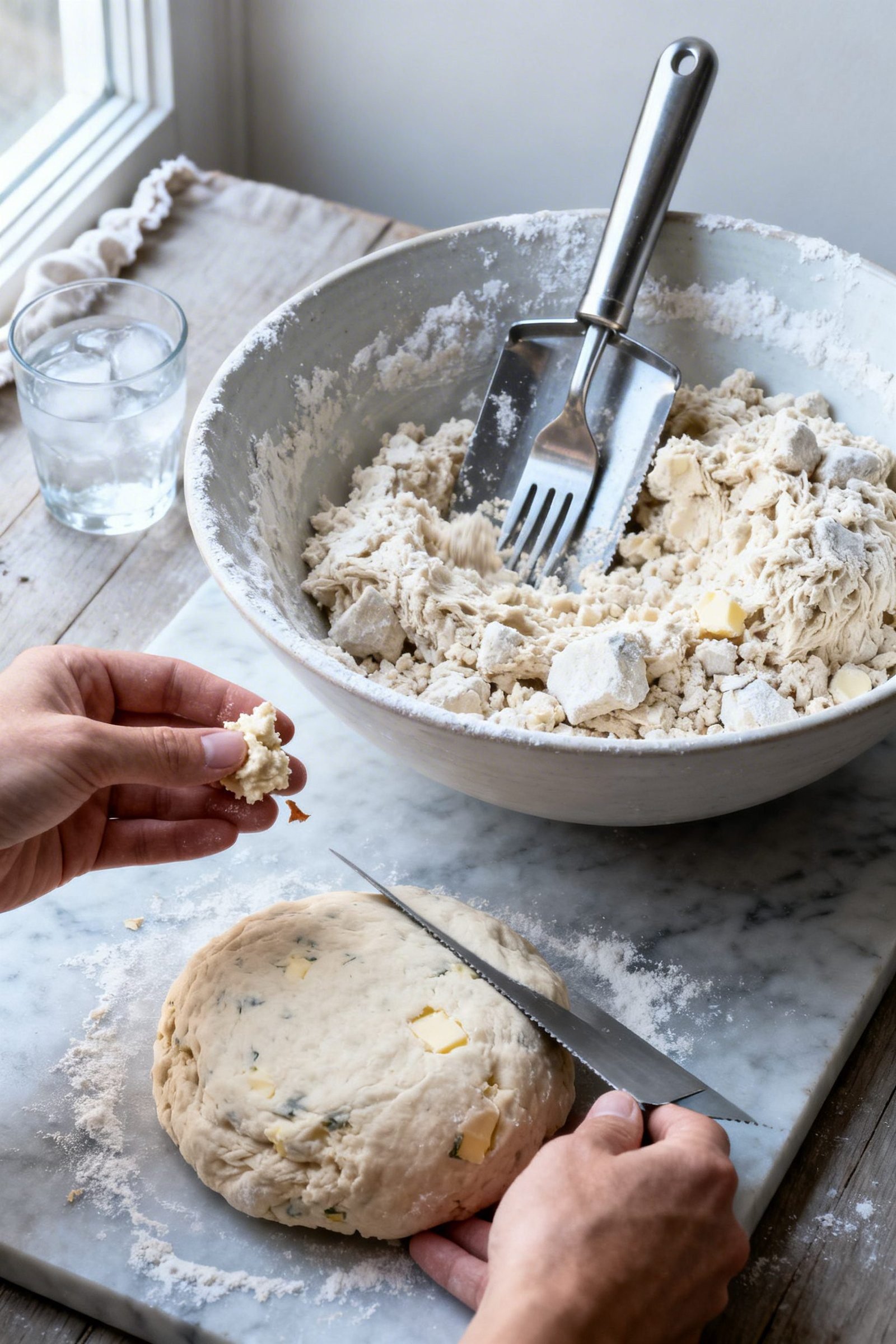
- Cut in the fats. Add cold butter and shortening. Use a pastry cutter or your fingertips to blend until you see pea-sized pieces with some larger marble-sized bits. Leave visible chunks for extra flake.
- Mix the wet ingredients. In a small bowl, beat the egg with the vinegar. Sprinkle over the flour mixture.
- Add ice water gradually. Drizzle in 5 tablespoons ice water, tossing with a fork. Pinch a handful: if it holds together with only a few dry spots, stop. If it crumbles, add up to 2 more tablespoons, 1 at a time.
- Bring it together gently. Turn the shaggy dough onto a lightly floured surface. Use the “frasage” motion: press and smear small portions forward with the heel of your hand once or twice to distribute fat layers without kneading.
- Divide and wrap. Form into 2 or 3 flat discs, about 1-inch thick. Wrap tightly in plastic or waxed paper.
- Chill. Refrigerate at least 2 hours (and up to 2 days). For fast-track, freeze 30–40 minutes, but full chill yields better texture.
- Roll it out. Work with one disc at a time on a lightly floured surface. Roll from the center outward, rotating a quarter-turn after each few passes. Aim for a 12-inch circle, about 1/8 inch thick.
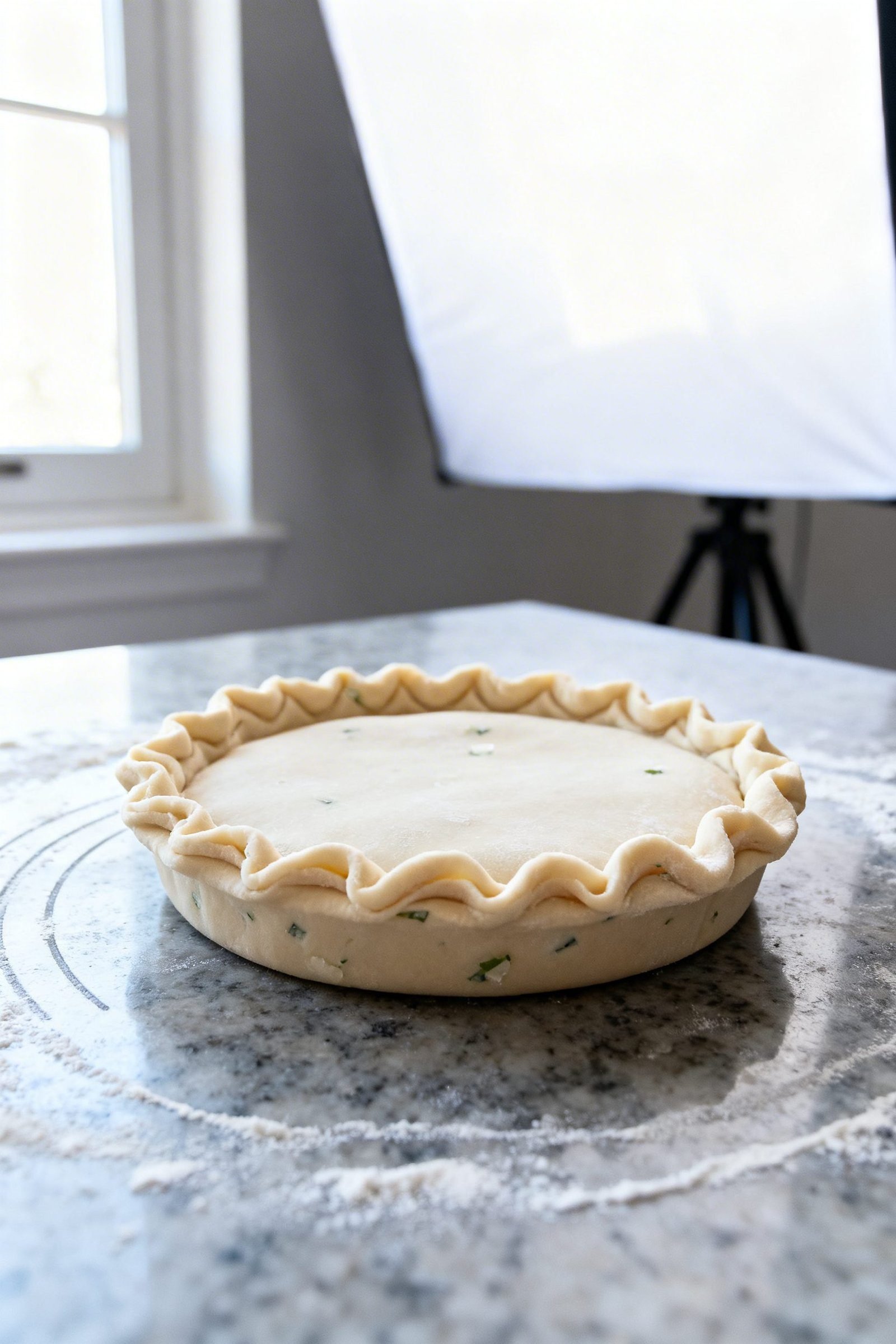
- Fit the pan. Drape the dough over a 9-inch pie plate. Lift and let it fall into the corners without stretching. Trim to a 1-inch overhang, tuck under, and crimp.
- Chill again. Place the shell in the fridge 20–30 minutes (or 10 minutes in the freezer) before filling or blind baking. Cold dough holds shape and resists shrinking.
Blind Baking (If Needed)
- Dock the bottom with a fork if you bake it fully for cream pies.
- Line with parchment and fill with pie weights or dried beans up to the rim.
- Bake at 400°F (200°C) for 15 minutes.
- Remove weights, brush with egg wash if desired, and bake:
- Partially baked: 6–8 more minutes, just set and lightly golden.
- Fully baked: 12–15 more minutes, deep golden and crisp.
How to Store Your Amish Pie Crust
- Refrigerate dough discs: Wrap well and chill up to 48 hours.
- Freeze dough: Double-wrap discs and freeze up to 3 months. Thaw overnight in the fridge before rolling.
- Freeze rolled shells: Fit dough into the pan, wrap, and freeze up to 2 months. Bake from frozen, adding a few extra minutes.
- Store baked shells: Cool completely, wrap, and keep at room temp 1 day or freeze up to 2 months. Crisp up in a 350°F (175°C) oven for 5–8 minutes before filling.
Benefits of Making This Pie Crust at Home
- Superior flake and flavor: Butter brings depth; shortening guarantees tenderness.
- Reliable texture every time: The egg and vinegar combo keeps the dough easy to handle.
- Versatility: Use for fruit pies, custards, quiche, savory hand pies, and galettes.
- Make-ahead friendly: Stash dough in the freezer and you’re always pie-ready.
- Cost-effective: Pantry staples beat store-bought shells in price and taste.
What to Avoid for Best Results
- Don’t overwork the dough: Stop mixing as soon as it holds together. Overmixing smears fat and toughens the crust.
- Don’t skip chilling: Warm dough shrinks, slumps, and loses flakes.
- Don’t add too much water: Add just enough so the dough clumps when pressed. Excess water builds gluten.
- Don’t stretch into the pan: Stretching leads to shrinkage in the oven.
- Don’t roll with heavy pressure: Gentle, even passes preserve layers.
Variations You Can Try
- All-butter crust: Replace shortening with butter for maximum flavor and crisp snap. Chill extra well.
- Savory swap: Skip sugar and add 1 teaspoon dried thyme, cracked pepper, or grated Parmesan.
- Whole-wheat blend: Use 1 cup white whole wheat plus 1 1/2 cups AP flour. Add 1 extra tablespoon water if needed.
- Buttermilk instead of water: Use cold buttermilk for subtle tang and tenderness; skip the vinegar.
- Brown sugar touch: For caramel notes in apple or pecan pies, replace granulated sugar with light brown sugar.
- Gluten-free version: Use a quality 1:1 gluten-free flour blend and add 1/2 teaspoon xanthan gum if not included.
FAQ
Can I make this crust in a food processor?
Yes. Pulse flour, sugar, and salt. Add cold fats and pulse until pea-sized. Whisk egg, vinegar, and 5 tablespoons ice water; drizzle in while pulsing just until clumps form. Stop before a ball forms. Gather by hand, chill, and proceed.
Why add vinegar?
Vinegar slightly acidifies the dough, which slows gluten development and keeps the crust tender without affecting flavor.
My dough cracks when rolling—what now?
Let it rest 5–10 minutes to warm slightly, then try again. Cold, tight dough cracks; a brief rest fixes it. Patch small tears with a dough scrap and a dab of water.
How do I prevent soggy bottoms?
- Chill the shaped shell before baking.
- Use a preheated baking steel or sheet on a lower rack.
- For juicy fillings, partially blind bake and brush with egg wash to seal.
Can I double this recipe?
Absolutely. Mix in batches so you don’t overwork the dough. Keep ingredients cold and divide into discs before chilling.
What pie plate works best?
Metal or glass conducts heat well for crisp bottoms. Ceramic looks lovely but may require a few extra minutes.
Conclusion
This Amish pie crust keeps things simple and dependable while delivering bakery-level flakes. With cold ingredients, a gentle hand, and a little chill time, you’ll nail a crust that supports juicy fruit, silky custards, and savory fillings with confidence. Make a few discs for the freezer, and future-you will thank you when pie cravings hit. Happy baking!
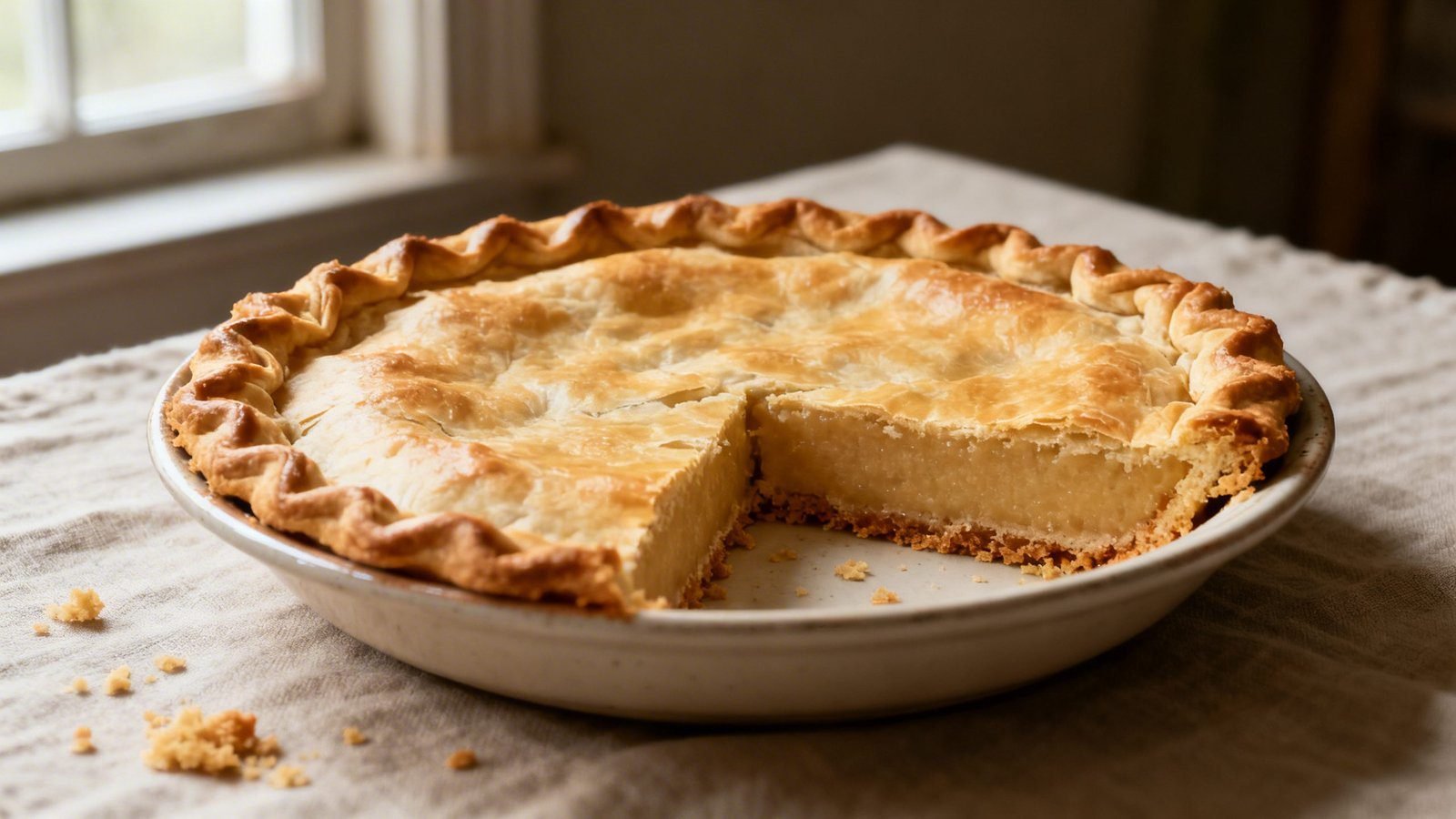
Amish Pie Crust
A flaky, tender double-crust pie dough using butter, shortening, egg, and vinegar for reliable layers and easy handling.
Ingredients
- 2 ½ cups (300 g) all-purpose flour, spooned and leveled
- 1 tablespoon granulated sugar (optional for sweet pies)
- 1 teaspoon fine sea salt
- ½ cup (115 g) cold unsalted butter, cut into ½-inch cubes
- ½ cup (95 g) cold shortening
- 1 large egg, cold
- 1 tablespoon apple cider vinegar (or white vinegar)
- 5–7 tablespoons ice water, as needed
- Optional finishing: 1 egg + 1 tablespoon water for egg wash; coarse sugar for sweet pies
Instructions
- Chill diced butter and measured shortening in the freezer for 10 minutes; keep egg and vinegar cold and prepare ice water.
- Whisk flour, sugar (if using), and salt in a large bowl.
- Cut in the cold butter and shortening until you have pea-sized pieces with some marble-sized bits; leave visible chunks.
- Beat the egg with vinegar; sprinkle over the flour mixture.
- Drizzle in 5 tablespoons ice water, tossing with a fork. If dough doesn’t hold when pinched, add up to 2 more tablespoons, 1 at a time.
- Turn dough onto a lightly floured surface and use a gentle frasage motion to bring it together without kneading.
- Divide into 2 or 3 discs about 1 inch thick; wrap tightly and refrigerate at least 2 hours (up to 2 days) or freeze 30–40 minutes.
- Roll one disc at a time on a lightly floured surface to a 12-inch circle about ⅛ inch thick.
- Fit into a 9-inch pie plate without stretching; trim to a 1-inch overhang, tuck under, and crimp. Chill 20–30 minutes (or 10 minutes in the freezer).
- For blind baking: Dock the bottom, line with parchment, and fill with pie weights. Bake at 400°F (200°C) for 15 minutes. Remove weights, optionally brush with egg wash, then bake 6–8 minutes more for partially baked or 12–15 minutes more for fully baked.