Organic Kimchi Recipe | Simple Home Made Kim Chee with Bold Flavor
Crave bright, tangy heat with a satisfying crunch? This easy organic kimchi recipe brings bold, classic flavor with simple steps and clean ingredients. You’ll salt crisp napa cabbage, blend a punchy paste with Korean red pepper flakes, and let time do its magic. The result: a small-batch kimchi that tastes deep, savory, and vibrant—without mystery additives.
I’ll walk you through every step, including how to choose quality organic produce, how to ferment safely at home, and how to tweak the spice level. Whether you’re brand new to fermenting or you’ve made kimchi before, this guide keeps it simple and reliable so you get delicious results on your first try.
Why This Organic Kimchi Recipe Delivers Big Flavor
This homemade kimchi hits the sweet spot of tang, heat, and umami. Here’s why it works so well:
- Balanced brine: Salting draws out moisture for a crisp bite and prevents mushy cabbage.
- Classic aromatics: Garlic, ginger, and scallions layer savory depth that gets richer as it ferments.
- Proper heat: Korean gochugaru offers gentle warmth and color without bitterness.
- Natural sweetness: A touch of apple or pear rounds the flavor and helps kickstart fermentation.
- Rice slurry (optional): A small cooked starch base feeds beneficial microbes for consistent bubbles and tang.
We also focus on clean, organic ingredients for pure flavor and a crisp texture that never tastes muddy or dull.
Ingredients
Produce
- 2 medium heads organic napa cabbage (about 3–3.5 lb total)
- 1 small organic daikon radish, peeled and cut into thin matchsticks
- 4 organic scallions, sliced into 1-inch pieces
- 1 small organic carrot, peeled and julienned (optional)
Salt and Brine
- 1/2 cup coarse sea salt (non-iodized) for salting cabbage
- Filtered water as needed
Kimchi Paste
- 6–8 cloves organic garlic
- 2 inches fresh organic ginger, peeled
- 1 small organic onion or 3 tablespoons chopped
- 1 organic apple or pear, cored
- 1/4 cup Korean red pepper flakes (gochugaru) for medium heat (adjust to taste)
- 2 tablespoons fish sauce (use organic or high-quality) or miso for vegan option
- 1 tablespoon organic cane sugar or 1 tablespoon rice syrup
- 2 tablespoons sea salt (fine) to season paste
- Optional: 2 tablespoons sweet rice flour + 1/2 cup water to make a quick slurry
Equipment
- Large bowl for salting
- Colander for draining
- Gloves to protect hands from spice and staining
- Clean 1–2 quart glass jars with lids (fermentation lids or loose-fitting lids preferred)
- Non-metal utensil for packing
How to Make Bold, Organic Homemade Kimchi
1) Prep and Salt the Cabbage
- Quarter the napa cabbage lengthwise. Remove the core and cut into 2-inch pieces.
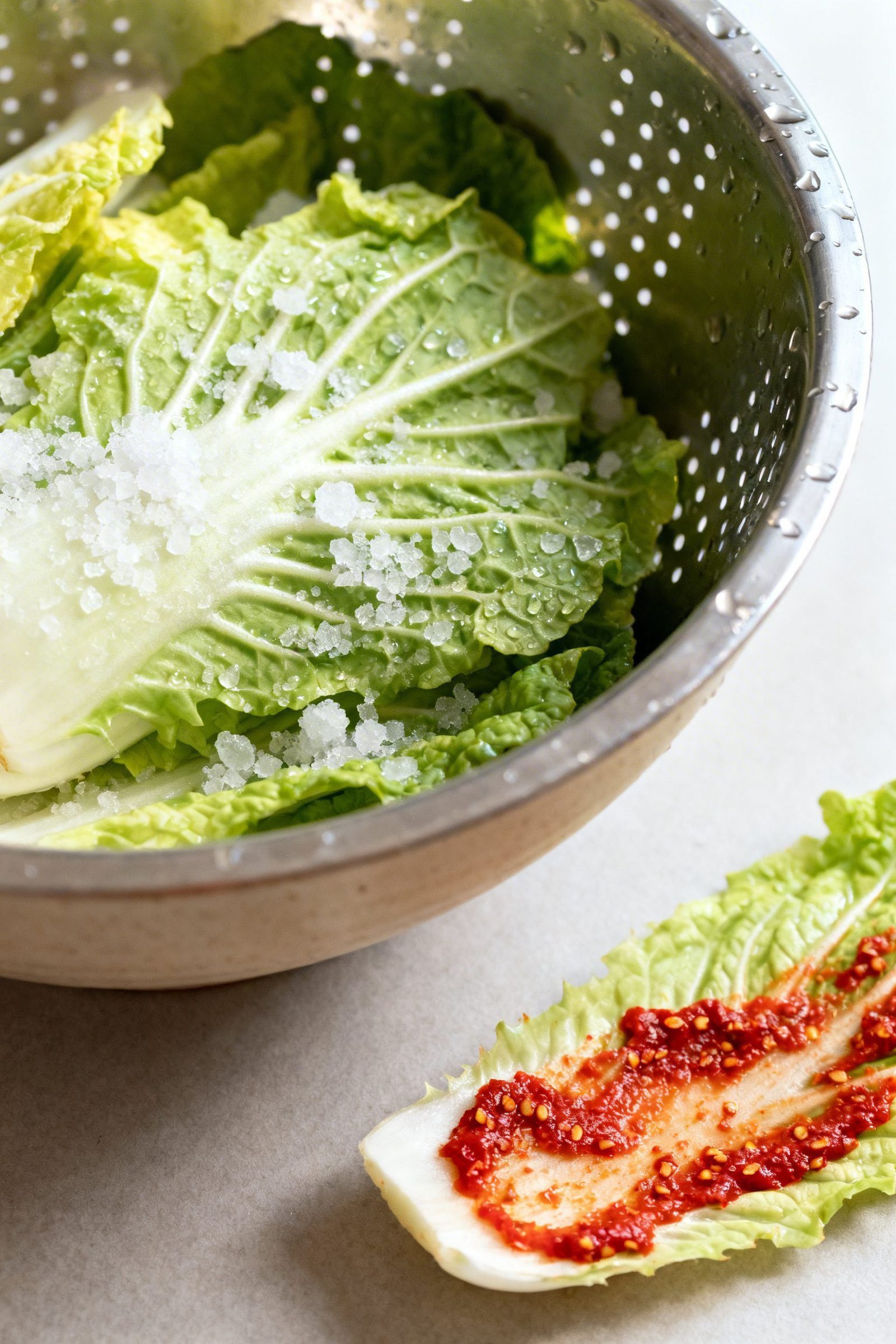
- Place cabbage in a large bowl. Sprinkle 1/2 cup coarse sea salt evenly and toss well. Add a little filtered water to help distribute salt.
- Let it sit for 45–60 minutes, tossing every 15 minutes. The leaves will soften and release liquid.
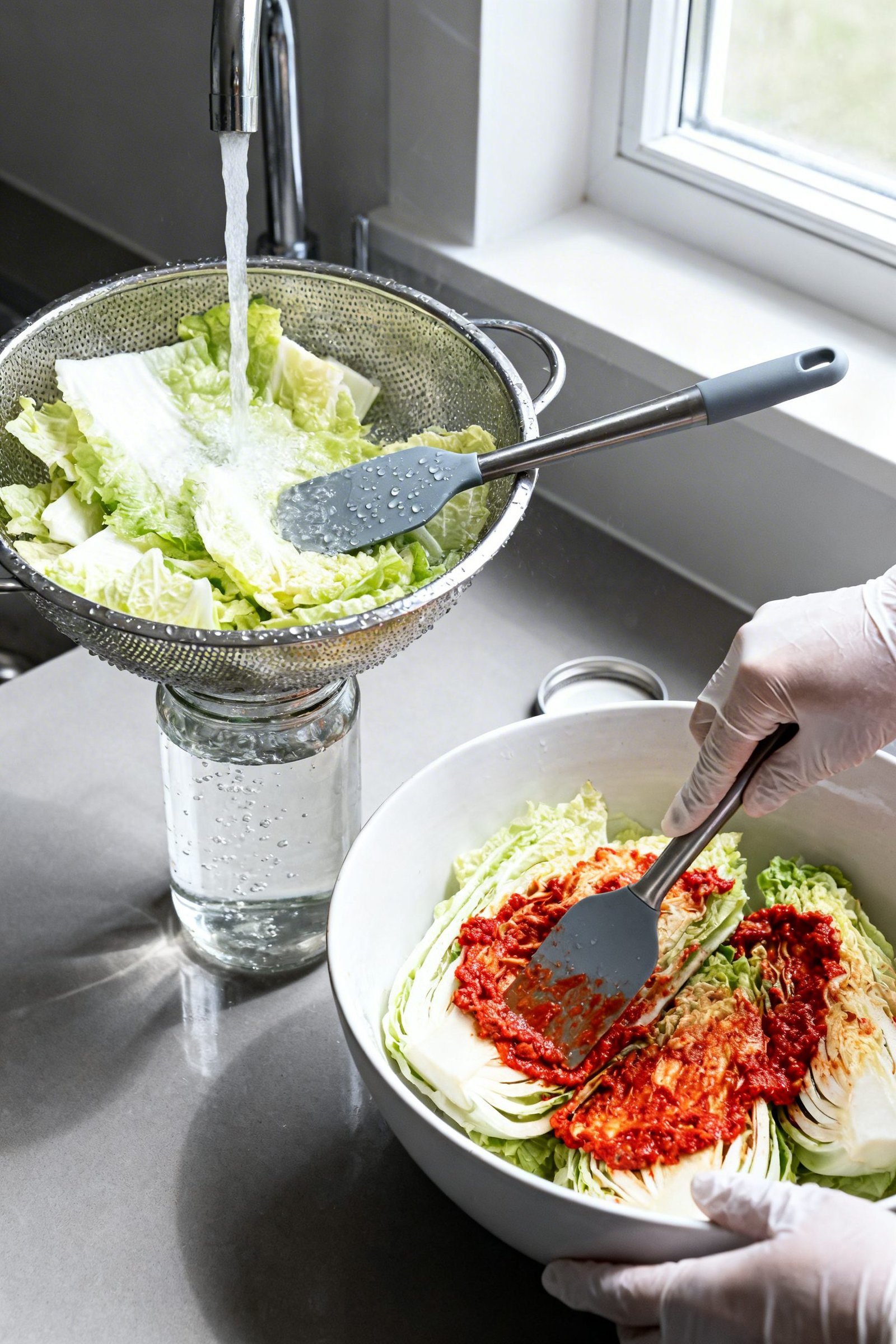
- Rinse the cabbage under cool water 2–3 times to remove excess salt. Drain very well. Taste a leaf; it should taste pleasantly seasoned, not overly salty.
2) Make the Flavor Paste
- Optional slurry: In a small saucepan, whisk 2 tablespoons sweet rice flour with 1/2 cup water. Simmer, whisking, until thickened and glossy, 1–2 minutes. Cool.
- Blend garlic, ginger, onion, and apple/pear until smooth.
- In a bowl, combine puree, cooled slurry (if using), 1/4 cup gochugaru, 2 tablespoons fish sauce (or 1 tablespoon white miso + 1 tablespoon water for vegan), 1 tablespoon sugar, and 2 tablespoons fine sea salt. Stir into a thick, spreadable paste. Adjust heat with more gochugaru if desired.
3) Mix Everything
- Put on gloves. In a large bowl, combine drained cabbage, daikon, scallions, and carrot.
- Add the paste. Massage gently until every piece looks evenly coated. You should see some brine forming at the bottom of the bowl.
4) Pack and Ferment
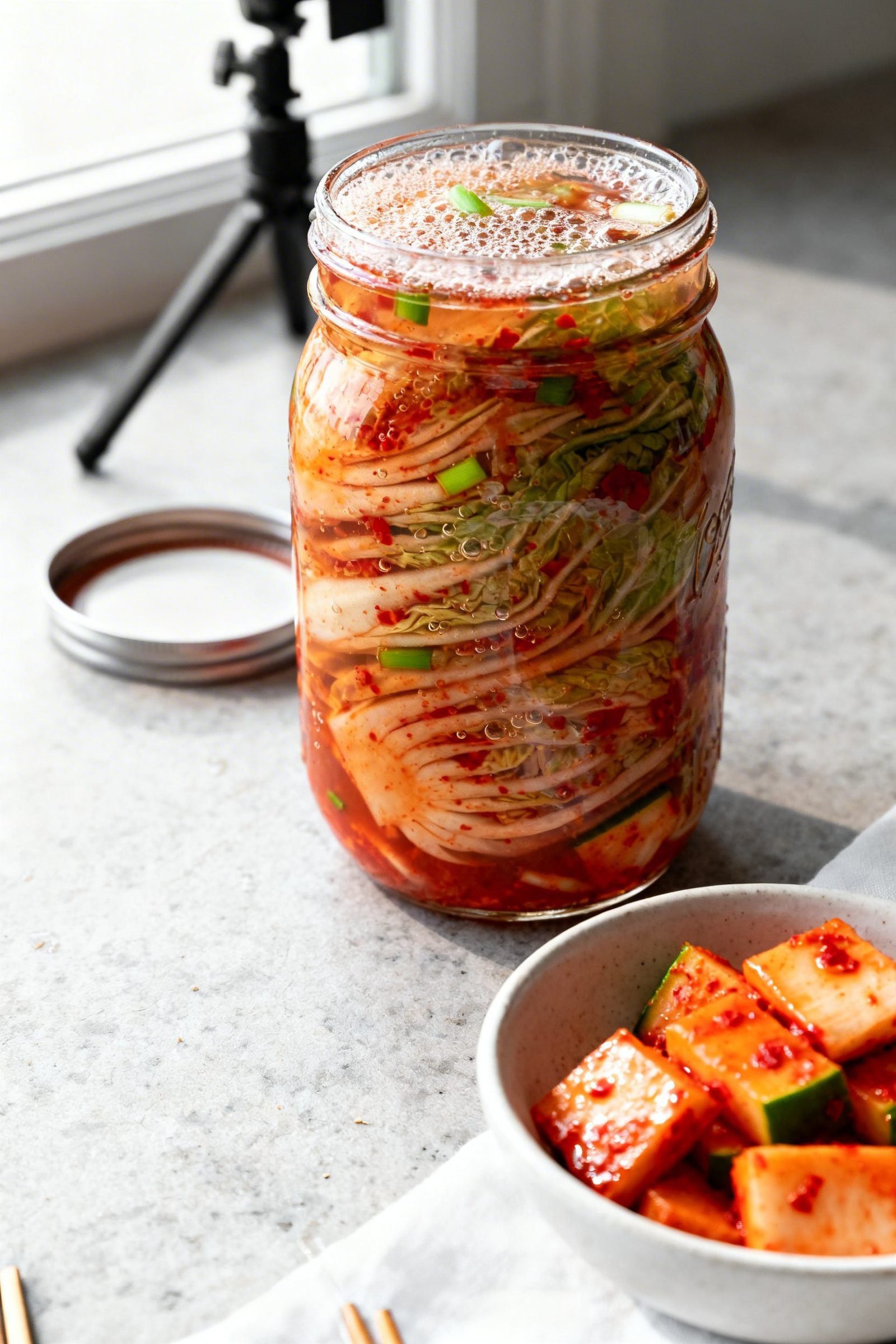
- Pack the kimchi into clean jars. Press down firmly to remove air pockets and release more liquid. Leave 1 inch headspace at the top.
- Ensure veggies sit below the brine. If needed, top with a little filtered 2% salt brine (2 g salt per 100 g water) to submerge.
- Seal with fermentation lids or set regular lids on loosely to allow gas to escape.
- Ferment at room temperature (65–72°F) out of direct sun for 1–3 days. Burp daily if using regular lids. Taste on day 2. When you like the tang and fizz, move to the fridge.
5) Chill and Enjoy
- Refrigerate to slow fermentation and develop deeper flavor. It tastes great right away and even better after 5–7 days.
How to Store Your Homemade Kimchi
- Refrigerate immediately once you hit your preferred sourness.
- Keep veggies submerged under brine to avoid dryness or yeast growth.
- Use clean utensils every time to prevent contamination.
- Kimchi stays crisp and tasty for 1–3 months. Flavor deepens over time.
- If brine level drops, add a little 2% salt brine to cover.
Benefits of Making Organic Kimchi at Home
- Better flavor control: Adjust heat, salt, and funk exactly to your taste.
- Clean ingredients: Organic produce and additive-free seasonings let bright flavors shine.
- Gut-friendly probiotics: Natural fermentation supports a diverse microbial community.
- Food waste win: Use leftover greens or radish tops for extra crunch.
- Budget-friendly: A big, bold batch costs far less than store-bought jars.
Common Mistakes to Avoid
- Under-salting the cabbage: Skipping or rushing the salt step leads to soggy kimchi and weak flavor.
- Overfilling jars: Leave headspace or you’ll deal with leaks and brine overflow.
- Letting veggies float: Keep everything submerged to prevent mold.
- Too hot a room: High temps ferment too fast and dull the crunch.
- Chlorinated water: It can inhibit fermentation; use filtered water.
- Dirty tools: Always start with clean jars and utensils for a safe ferment.
Easy Variations to Try
- Vegan kimchi: Swap fish sauce for white miso or soy sauce; add a sheet of torn kelp for umami.
- Extra-crunch mix-ins: Add sliced Korean radish, bok choy ribs, or cucumbers.
- Seafood boost: Stir in a spoon of salted shrimp (saeujeot) for classic depth.
- Milder heat: Use less gochugaru and add a touch more apple for sweetness.
- Fiery batch: Add a teaspoon of gochujang or a minced fresh chili for kick.
- Garlic chive kimchi (buchu-kimchi): Replace scallions with garlic chives for a punchy, herbaceous twist.
FAQ
How spicy is this kimchi?
Medium heat as written. For mild, use 2 tablespoons gochugaru. For hot, go up to 1/3–1/2 cup.
Can I skip the rice flour slurry?
Yes. It boosts fermentation and body, but the kimchi still ferments beautifully without it.
How do I know it’s fermenting?
Look for tiny bubbles, a gentle tangy aroma, and slight brine movement when you tap the jar.
Is mold normal?
No. Keep veggies submerged and use clean tools. A harmless white film (kahm yeast) can show up; skim it and keep fermenting if it doesn’t smell off.
Can I use table salt?
Use non-iodized salt only. Iodine can interfere with fermentation and flavor.
What if it gets too sour?
Move it to the fridge sooner next time. For a sour batch, chop it for fried rice, stews, or kimchi pancakes.
Wrapping Up
You now have a straightforward, organic kimchi recipe that brings bold, balanced flavor with just a handful of steps. Salt the cabbage well, mix a vibrant paste, pack it tight, and let time do its thing. Tweak the heat, go vegan if you like, and make it your own. Once you taste your first bubbly, tangy jar, you’ll want a batch in the fridge at all times.
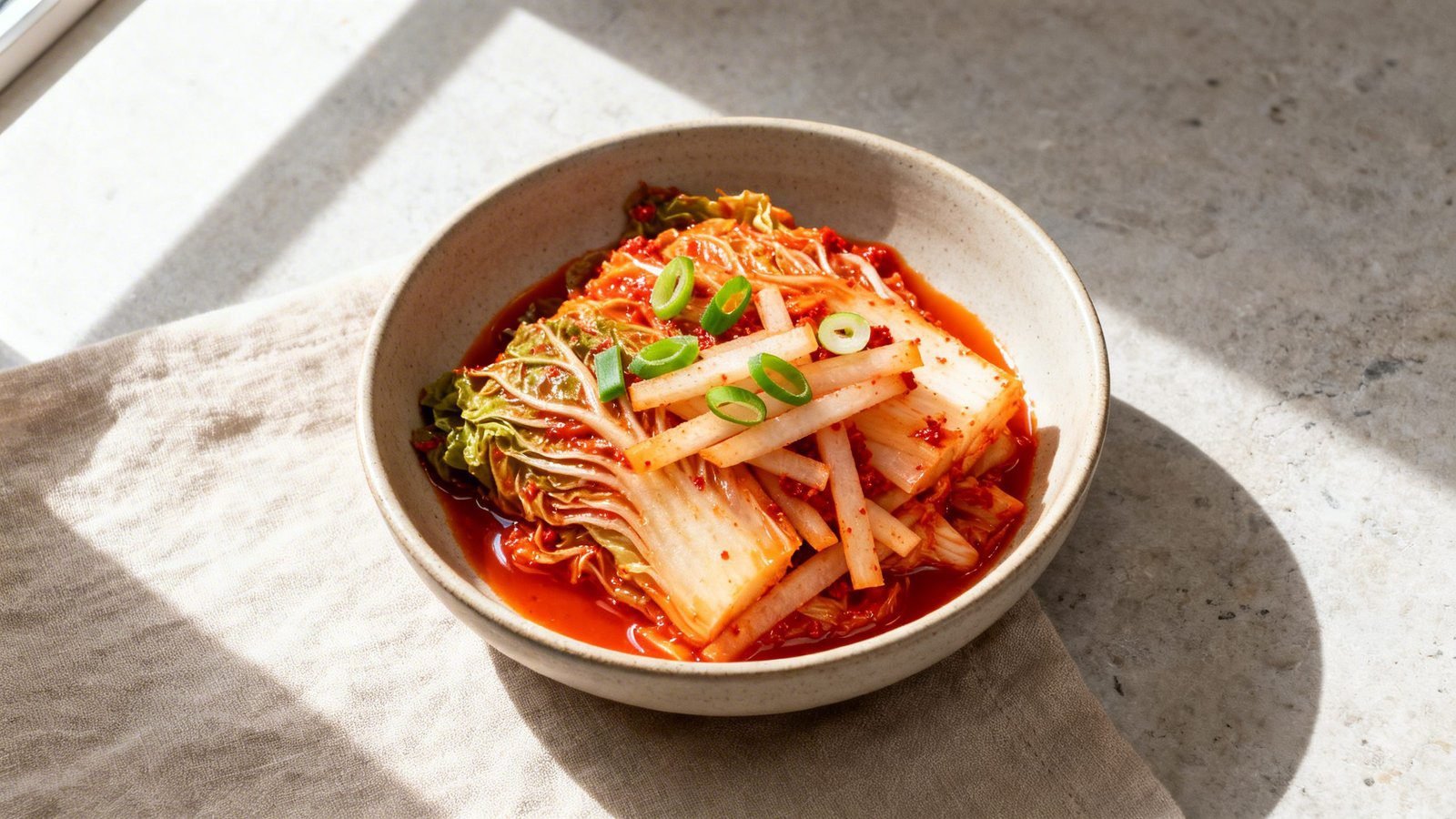
Organic Kimchi (Simple Homemade Kim Chee)
Bold, tangy organic kimchi with crisp napa cabbage and a classic gochugaru-garlic-ginger paste, fermented for vibrant flavor.
Ingredients
- 2 medium heads organic napa cabbage (about 3–3.5 lb total)
- 1 small organic daikon radish, peeled and thinly matchsticked
- 4 organic scallions, sliced into 1-inch pieces
- 1 small organic carrot, peeled and julienned (optional)
- ½ cup coarse sea salt (non-iodized) for salting cabbage
- Filtered water as needed
- 6–8 cloves organic garlic
- 2 inches fresh organic ginger, peeled
- 1 small organic onion or 3 tablespoons chopped
- 1 organic apple or pear, cored
- ¼ cup Korean red pepper flakes (gochugaru), adjust to taste
- 2 tablespoons fish sauce (or 1 tablespoon white miso + 1 tablespoon water for vegan option)
- 1 tablespoon organic cane sugar or 1 tablespoon rice syrup
- 2 tablespoons fine sea salt (for paste)
- Optional: 2 tablespoons sweet rice flour + ½ cup water for slurry
Instructions
- Quarter napa cabbage, remove core, and cut into 2-inch pieces.
- Place cabbage in a large bowl; sprinkle ½ cup coarse sea salt evenly and toss. Add a little filtered water to help distribute.
- Rest 45–60 minutes, tossing every 15 minutes until softened and releasing liquid.
- Rinse cabbage 2–3 times under cool water to remove excess salt; drain very well and taste to ensure pleasantly seasoned.
- Optional slurry: Whisk 2 tablespoons sweet rice flour with ½ cup water in a small saucepan; simmer 1–2 minutes until thick and glossy. Cool.
- Blend garlic, ginger, onion, and apple/pear until smooth.
- In a bowl, combine puree, cooled slurry (if using), ¼ cup gochugaru, 2 tablespoons fish sauce (or miso + water), 1 tablespoon sugar, and 2 tablespoons fine sea salt to form a thick paste; adjust heat with more gochugaru if desired.
- Put on gloves. In a large bowl, combine drained cabbage, daikon, scallions, and carrot.
- Add the paste and massage gently until evenly coated; some brine should form.
- Pack into clean jars, pressing firmly to remove air pockets; leave 1 inch headspace.
- Ensure vegetables are submerged under brine; top with 2% salt brine if needed.
- Seal with fermentation lids or set regular lids loosely. Ferment at 65–72°F out of direct sun for 1–3 days, burping daily if using regular lids. Taste on day 2 and refrigerate when desired tang is reached.
- Refrigerate to slow fermentation; flavor improves after 5–7 days.