Moist Vanilla Sponge Cake Recipe | Easy Light and Fluffy Vanilla Cake
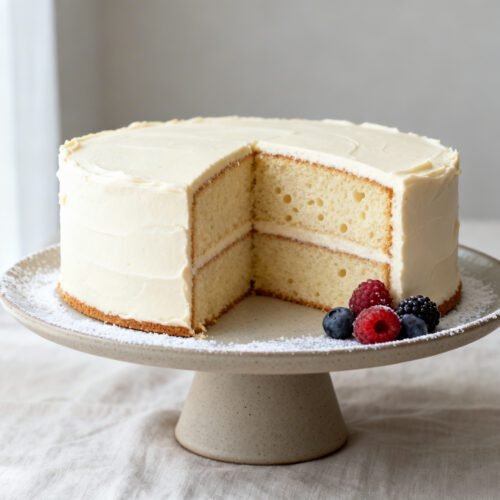
You know that classic vanilla cake you dream about—the one that’s light, tender, and tastes like a buttery cloud? This is it. My moist vanilla sponge cake bakes up with a delicate crumb, a subtle vanilla aroma, and just the right amount of sweetness. It slices clean, holds frosting like a champ, and tastes incredible plain with tea or layered into a celebration cake.
I’ll walk you through techniques that guarantee fluff, lift, and moisture. If you’ve had dense or dry cakes before, this method fixes that with balanced fat, proper mixing, and gentle baking. Expect straightforward steps, practical tips, and bakery-quality results in your own kitchen.
Why This Vanilla Sponge Cake Turns Out Light and Moist
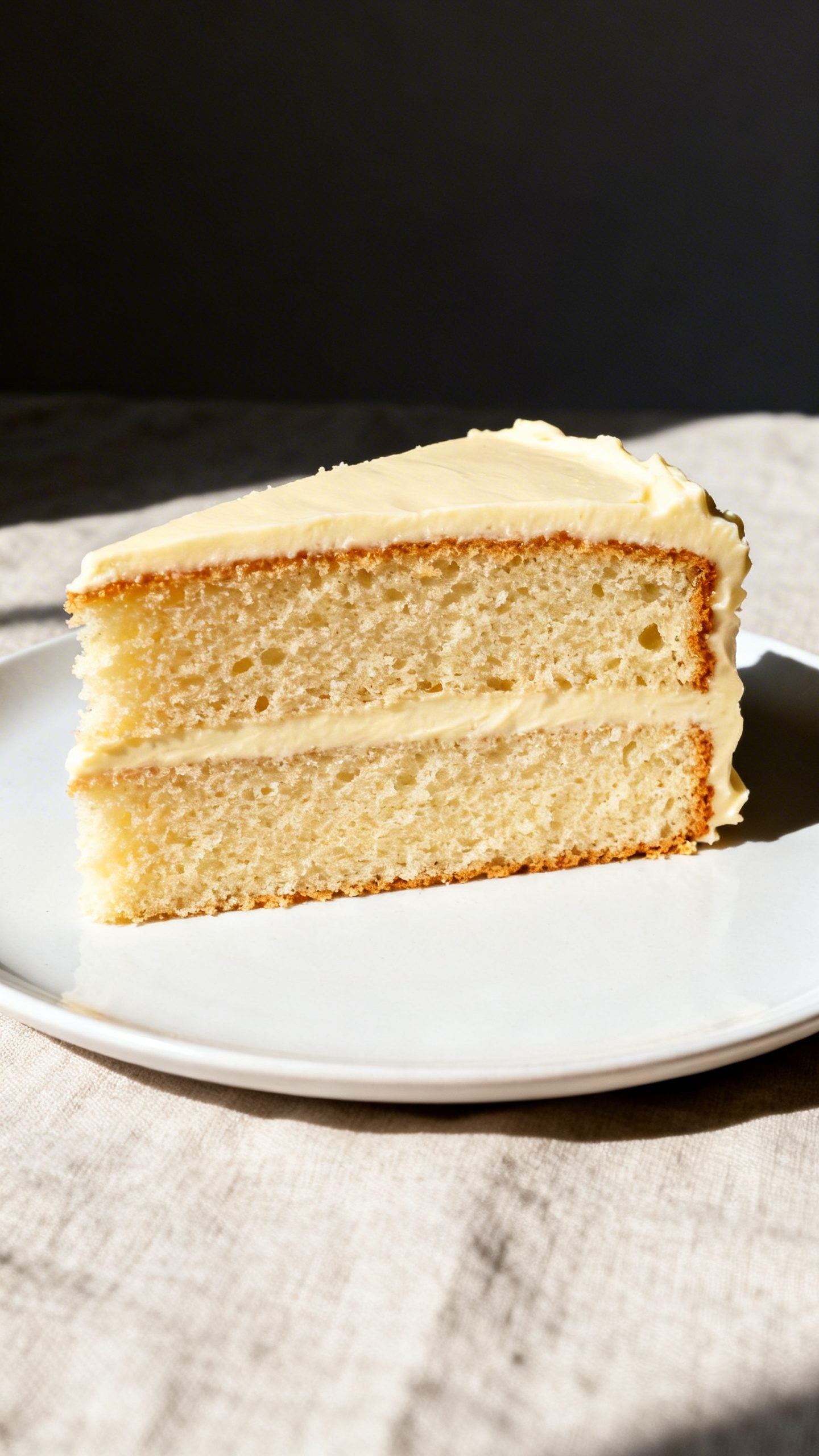
Vanilla cake sounds simple, but the texture depends on technique. Here’s why this version delivers every time:
- Room-temperature ingredients help the batter emulsify, which traps air and creates lift.
- Creaming butter and sugar long enough builds tiny air pockets that bake into a soft, light crumb.
- Cake flour keeps the crumb fine and tender; it has less protein than all-purpose.
- Buttermilk adds moisture and a gentle tang while activating the leavening for extra rise.
- Two leaveners (baking powder and a touch of baking soda) ensure reliable lift and even browning.
- Not overmixing once flour goes in protects the crumb from toughness.
Ingredients
Dry Ingredients
- 2 1/2 cups (300 g) cake flour, spooned and leveled
- 1 1/2 tsp baking powder
- 1/4 tsp baking soda
- 1/2 tsp fine sea salt
Wet Ingredients
- 3/4 cup (170 g) unsalted butter, room temperature
- 1 1/2 cups (300 g) granulated sugar
- 4 large eggs, room temperature
- 1 Tbsp pure vanilla extract (or 2 tsp vanilla bean paste)
- 1 cup (240 ml) buttermilk, room temperature
Optional for Serving
- Vanilla buttercream or whipped cream
- Fresh berries or jam
- Powdered sugar for dusting
Pan size: Two 8-inch round pans (or one 9×13-inch pan). Grease, line with parchment, and flour.
How to Make a Light and Fluffy Vanilla Sponge
Prep and Pan Setup
- Preheat oven to 350°F (175°C). Position a rack in the center.
- Grease your pans, line the bottoms with parchment, and dust with flour. Tap out excess.
- Whisk together the cake flour, baking powder, baking soda, and salt. Set aside.
Creaming for Airy Structure
- In a large bowl or stand mixer, beat the butter and sugar on medium-high for 3–4 minutes until pale and fluffy. Scrape the bowl.
- Add the eggs one at a time, beating 20–30 seconds after each until fully incorporated. Scrape as needed.
- Beat in the vanilla until fragrant.
Combine Wet and Dry Without Overmixing
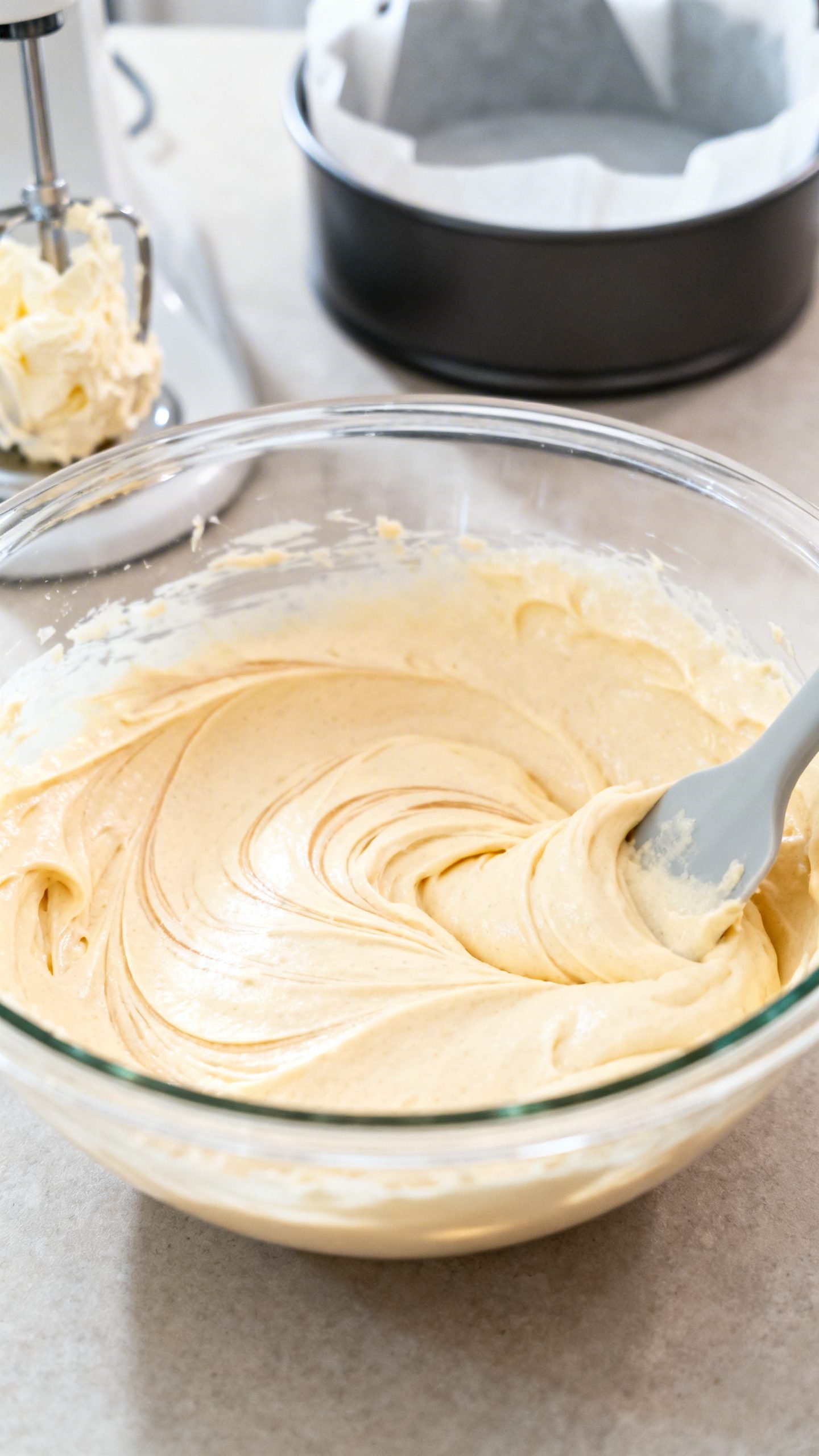
- With the mixer on low, add the dry ingredients in three additions, alternating with the buttermilk in two additions (dry-wet-dry-wet-dry). Mix just until the streaks disappear.
- Finish by hand with a spatula, giving the batter 3–4 gentle folds to catch any pockets of flour. The batter should look smooth and silky.
Bake and Cool for the Best Texture
- Divide batter evenly between pans. Weigh them for accuracy if you want perfectly even layers.
- Bake 8-inch rounds for 24–28 minutes (9×13 for 28–32 minutes) until the centers spring back lightly and a toothpick comes out with a few moist crumbs.
- Cool in pans 10 minutes. Run a knife around edges, turn out onto a rack, peel off parchment, and cool completely.
Frosting and Finishing
- For clean layers, chill cakes for 20–30 minutes before frosting.
- Fill with jam or vanilla buttercream, then apply a thin crumb coat. Chill briefly, then finish with a smooth final layer.
- Keep decorations simple: berries, sprinkles, or a dusting of powdered sugar.
How to Store Your Vanilla Sponge for Freshness
- Room temperature: Keep unfrosted cake wrapped airtight for up to 2 days. Frosted cake keeps under a dome for 1–2 days.
- Refrigerator: Store frosted cake for 3–4 days. Wrap slices or cover the whole cake to prevent drying.
- Freezer: Wrap unfrosted layers in plastic and foil. Freeze up to 2 months. Thaw in the fridge overnight, then bring to room temp before frosting.
- Make-ahead: Bake layers a day ahead and chill well; they slice and frost more cleanly when cold.
Why You’ll Love This Vanilla Sponge
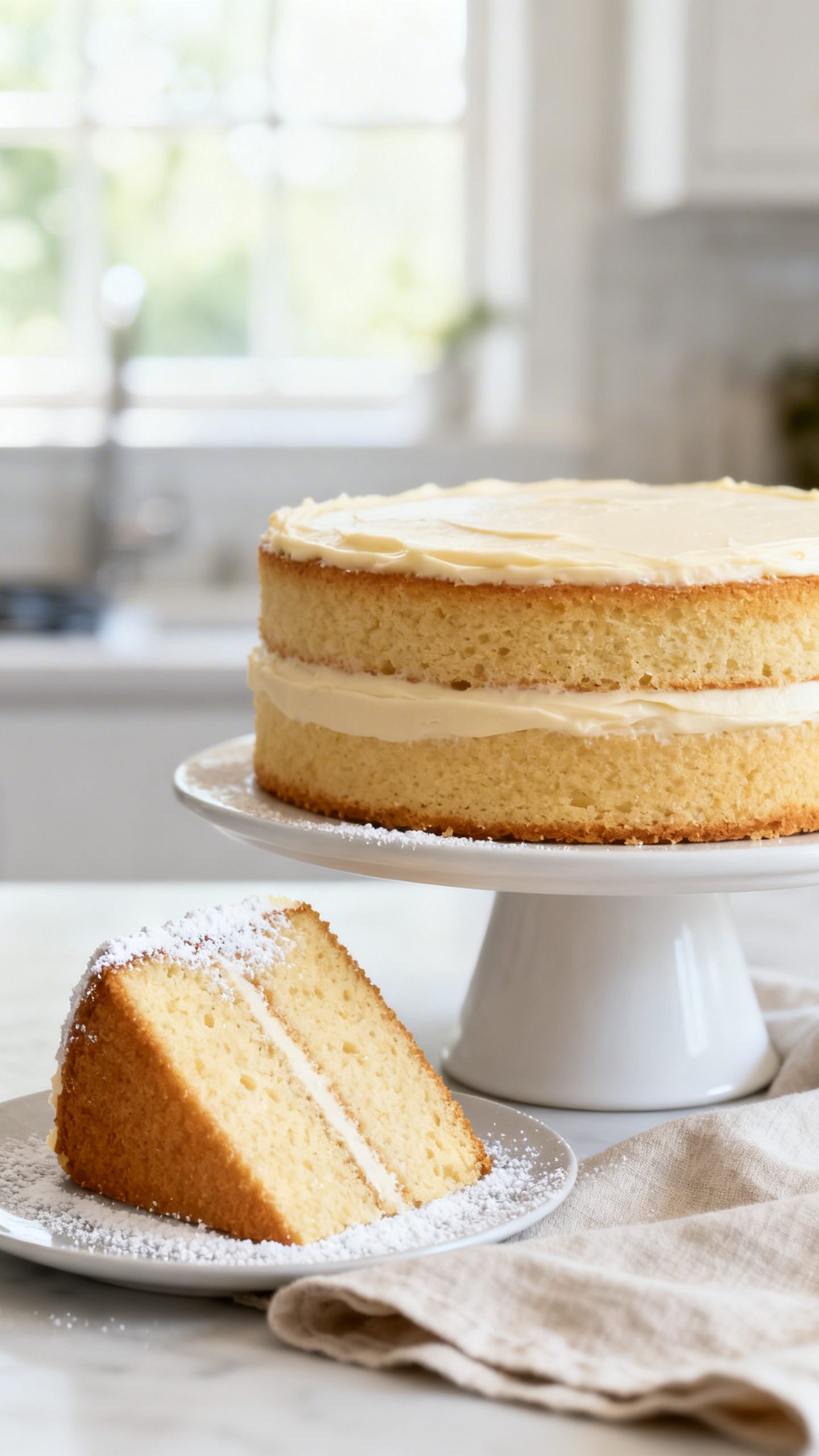
- Soft, cloud-like crumb: Balanced fat and leavening deliver a fine, tender texture.
- Real vanilla flavor: Pure extract or paste gives warmth without overpowering sweetness.
- Foolproof method: Clear steps and timing remove guesswork, even for new bakers.
- Versatile base: Works for birthdays, layered cakes, cupcakes, trifles, and snack cakes.
- Reliable slicing: Sturdy enough to stack, but still melts in your mouth.
Mistakes to Avoid
- Cold ingredients: Cold butter or eggs cause curdled batter and uneven texture.
- Overmixing after flour goes in: This develops gluten and leads to a dense crumb.
- Hot oven or dark pans without adjustment: Edges overbake before the center sets. Use the middle rack and check early.
- Skipping parchment: Cake sticks and tears. Line the pan bottoms every time.
- Cutting while warm: Warm cake crumbles. Cool completely for neat layers.
- Guessing measurements: Use a scale for flour and sugar if possible for consistent results.
Simple Twists and Flavor Variations
- Vanilla bean: Swap half the extract for vanilla bean paste or scrape 1 vanilla pod into the sugar before creaming.
- Lemon-vanilla: Add 1 Tbsp lemon zest and 1 Tbsp lemon juice; keep buttermilk at 1 scant cup total liquid.
- Almond-vanilla: Add 1/2 tsp almond extract for a bakery-style aroma.
- Coconut cream: Replace 1/4 cup buttermilk with coconut milk; finish with toasted coconut.
- Funfetti: Fold in 1/3 cup rainbow jimmies right at the end. Use jimmies, not nonpareils, to avoid bleeding.
- Cupcakes: Bake at 350°F for 17–20 minutes; yields about 24 cupcakes.
- 9×13 snack cake: Bake as directed and finish with a simple vanilla glaze.
FAQ
Can I use all-purpose flour?
Yes. Use 2 1/4 cups (270 g) all-purpose flour plus 1/4 cup (30 g) cornstarch to mimic cake flour. Sift well.
What if I don’t have buttermilk?
Stir 1 Tbsp lemon juice or white vinegar into 1 cup milk. Rest 5 minutes, then use.
Why did my cake sink?
You likely underbaked or opened the oven early. Bake until the center springs back and the toothpick shows moist crumbs, not wet batter.
How do I get flat, even layers?
Weigh the batter into pans and use cake strips (soaked fabric strips) around the pans to prevent domed tops.
Can I frost while the cake is warm?
No. Warm cake melts frosting and tears. Cool completely, then chill layers for the cleanest finish.
How strong should the vanilla be?
Use 1 Tbsp pure vanilla extract for classic flavor. For extra punch, add 1/2 tsp vanilla bean paste as well.
Final Thoughts
This moist vanilla sponge cake strikes that perfect balance: simple to make, impressive to serve, and reliably fluffy every single time. Once you try it, you’ll keep it as your go-to base for birthdays, cupcakes, and any sweet celebration. Bake it today, and enjoy a slice that tastes like comfort—light, tender, and beautifully vanilla-forward.
Moist Vanilla Sponge Cake Recipe | Easy Light and Fluffy Vanilla Cake
Ingredients
Ingredients
- 2 1/2 cups (300 g) cake flour, spooned and leveled
- 1 1/2 tsp baking powder
- 1/4 tsp baking soda
- 1/2 tsp fine sea salt
- 3/4 cup (170 g) unsalted butter, room temperature
- 1 1/2 cups (300 g) granulated sugar
- 4 large eggs, room temperature
- 1 Tbsp pure vanilla extract (or 2 tsp vanilla bean paste)
- 1 cup (240 ml) buttermilk, room temperature
- Butter and flour for greasing pans
- Parchment paper for lining pans
- Vanilla buttercream or whipped cream (optional, for serving)
- Fresh berries or jam (optional, for serving)
- Powdered sugar for dusting (optional)
Instructions
Instructions
- Preheat the oven to 350°F (175°C) and position a rack in the center.
- Grease two 8-inch round pans (or one 9x13-inch pan), line the bottoms with parchment, and dust with flour, tapping out the excess.
- Whisk together the cake flour, baking powder, baking soda, and salt, then set aside.
- In a large bowl or stand mixer, beat the butter and sugar on medium-high until pale and fluffy, about 3 to 4 minutes, scraping the bowl as needed.
- Add the eggs one at a time, beating 20 to 30 seconds after each until incorporated, then beat in the vanilla.
- With the mixer on low, add the dry ingredients in three additions alternating with the buttermilk in two additions (dry, wet, dry, wet, dry), mixing just until no dry streaks remain.
- Finish folding the batter gently by hand 3 to 4 times to catch any pockets of flour until the batter looks smooth and silky.
- Divide the batter evenly between the prepared pans.
- Bake 8-inch rounds for 24 to 28 minutes (9x13-inch for 28 to 32 minutes) until the centers spring back lightly and a toothpick comes out with a few moist crumbs.
- Cool in the pans for 10 minutes, then run a knife around the edges, turn out onto a rack, peel off the parchment, and cool completely.
- For clean layers, chill the cakes for 20 to 30 minutes before frosting, then fill with jam or vanilla buttercream, apply a thin crumb coat, chill briefly, and finish with a smooth final layer.
- Decorate simply with berries, sprinkles, or a dusting of powdered sugar if desired.