Korean Steamed Eggplant Banchan | Gaji Namul Side Dish Recipe
Korean steamed eggplant, or gaji namul, turns humble eggplants into a silky, savory banchan you’ll want on repeat. The texture melts, the seasoning pops, and the whole dish comes together fast. If you love simple sides that punch above their weight, this one belongs in your regular lineup.
You only need a steamer (or a DIY setup), a few pantry staples like soy sauce and sesame oil, and 15 minutes. It tastes great warm, room temp, or chilled, so you can make it ahead and serve it whenever you set out the rest of your Korean spread.
Why This Steamed Eggplant Side Dish Works
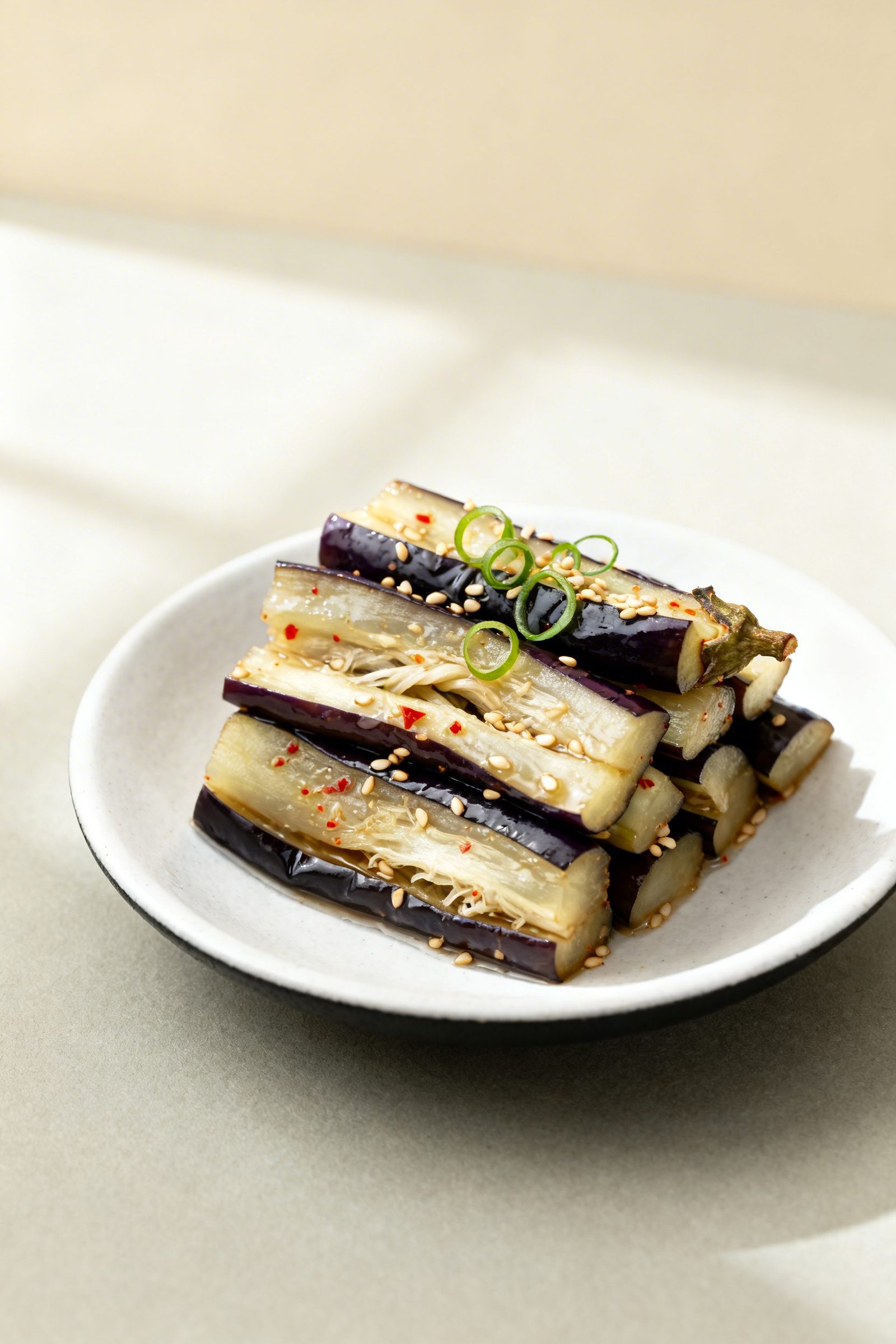
- Gentle steaming keeps eggplant silky without greasiness. No frying. No oil sponges.
- Bold seasoning wakes up mild eggplant with soy, garlic, sesame, and a touch of heat.
- Fast prep and cook time—you’ll finish in about 15–20 minutes.
- Flexible serving—serve warm with rice, tuck into bibimbap, or plate it cold with grilled meats.
- Make-ahead friendly—flavors deepen in the fridge, so it tastes even better the next day.
Ingredients
Produce
- Japanese or Chinese eggplants (3–4 medium)—thin-skinned, tender, and steam quickly
- Garlic (2–3 cloves), minced
- Scallions (2), thinly sliced
Pantry
- Soy sauce (2–2.5 tablespoons)—use regular or lite; adjust to taste
- Toasted sesame oil (1 tablespoon)—nutty aroma and finish
- Rice vinegar (1–2 teaspoons)—brightens and balances richness
- Gochugaru (Korean chili flakes, 1–2 teaspoons)—mild heat and color; scale up or down
- Sugar or honey (1 teaspoon)—rounds flavor
- Toasted sesame seeds (1 tablespoon)—for crunch and aroma
Optional boosters
- Fish sauce (1/2 teaspoon) for extra umami
- Grated ginger (1 teaspoon) for zing
- Neutral oil (1 teaspoon) if you prefer a glossier finish
Note: If you can’t find Japanese/Chinese eggplants, use globe eggplants and cut into thinner batons so they steam evenly.
How to Make Korean Steamed Eggplant (Gaji Namul)
1) Prep the eggplant
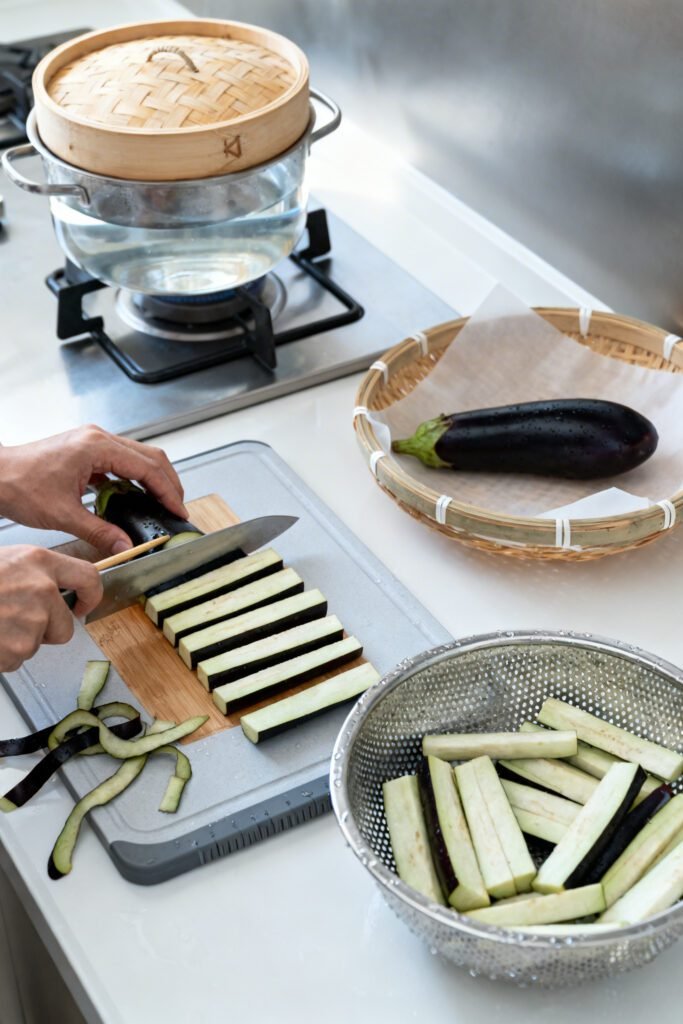
- Wash and trim ends. Peel a few long strips of skin off each eggplant, leaving some for structure.
- Slice lengthwise into 1/2-inch-thick planks, then into 3–4-inch batons. Aim for even thickness.
2) Set up your steamer
- Add 1–2 inches of water to a pot. Bring to a steady simmer.
- Line a steamer basket with parchment or place eggplants on a heatproof plate set in the steamer.
3) Steam until just tender
- Arrange eggplant in a single layer if possible.
- Steam 6–8 minutes for thin Asian eggplants or 8–10 for thicker pieces.
- Check doneness: A chopstick slides through with slight resistance; the flesh looks soft, not mushy.
4) Drain and cool briefly
- Transfer to a colander and let excess moisture drip for 2–3 minutes.
- Gently squeeze with tongs or clean hands to remove water without smashing the pieces.
5) Mix the seasoning
- In a bowl, combine soy sauce, sesame oil, rice vinegar, gochugaru, sugar, garlic, and fish sauce/ginger if using.
- Taste and adjust: more soy for salt, vinegar for brightness, sesame oil for richness.
6) Toss and finish
- Add steamed eggplant and scallions to the bowl. Toss gently to coat every piece.
- Top with toasted sesame seeds. Let it sit 5 minutes so flavors soak in.
Serve it your way
- Warm with rice and kimchi for a quick lunch.
- Room temp on a banchan spread with spinach namul and cucumber muchim.
- Cold in bibimbap bowls or alongside grilled bulgogi or tofu.
How to Store Leftover Gaji Namul
- Refrigerate in an airtight container for 3–4 days.
- Do not freeze—the texture turns watery and mealy.
- Reheat gently in the microwave for 15–20 seconds or enjoy cold. Avoid high heat to prevent mushiness.
- Refresh before serving with a drizzle of sesame oil, a pinch of gochugaru, and extra scallions if needed.
Why You’ll Love Adding This Side to Your Table
- Light but satisfying—steaming keeps it clean while sesame and soy deliver depth.
- Budget-friendly—eggplants and pantry staples create a restaurant-level side.
- Versatile—pairs with grilled meats, tofu, noodles, or rice bowls.
- Make-ahead ease—prep earlier in the day and serve when ready.
- Plant-forward and gluten-flexible—use gluten-free tamari if needed.
What to Avoid When Making Steamed Eggplant
- Don’t oversteam. Overcooked eggplant collapses and turns stringy. Check early.
- Don’t skip draining. Extra water dilutes the seasoning and makes a soggy dish.
- Don’t drown in sesame oil. You want aroma, not greasiness.
- Don’t oversalt before tasting. Soy brands vary; season after you sample.
- Don’t cut pieces too thick. Even size ensures tender centers without overcooking edges.
Tasty Variations to Try
- Garlicky extra: Add 1 more clove and a pinch of black pepper.
- Citrus pop: Swap rice vinegar with yuzu or add lemon zest.
- Nutty crunch: Mix in chopped roasted peanuts or more sesame seeds.
- Spicy kick: Stir in a little gochujang for heat and body.
- Herb lift: Finish with cilantro or shiso ribbons.
- Umami boost: A dash of mushroom powder or extra fish sauce.
- Garlic-chive swap: Use Korean buchu (garlic chives) instead of scallions.
FAQ
Which eggplant works best?
Japanese or Chinese eggplants work best because they’re tender and less seedy. If you only have globe eggplants, cut thinner batons and steam a bit longer, checking often.
Do I need to salt the eggplant first?
No. Steaming softens and sweetens the flesh without bitterness. Salting won’t hurt, but it’s not necessary here.
Can I microwave instead of steam?
Yes. Microwave cut eggplant in a covered dish for 3–5 minutes until tender, then drain well. The texture stays good if you don’t overdo it.
What if I don’t have gochugaru?
Use a mild chili flake like Aleppo or a mix of paprika and a pinch of cayenne. Start small and adjust.
How do I keep it from getting watery?
Drain and gently squeeze after steaming, then toss with seasoning. This step keeps flavors concentrated.
Can I double the recipe?
Yes—steam in batches so you don’t overcrowd. Toss everything together at the end.
Conclusion
Gaji namul proves how simple techniques make vegetables shine. Steam the eggplant just until tender, drain well, and toss with a punchy soy-sesame mix. The result tastes silky, savory, and balanced—exactly what a great banchan should be. Make it once, and you’ll find yourself keeping eggplants on hand just for this side.
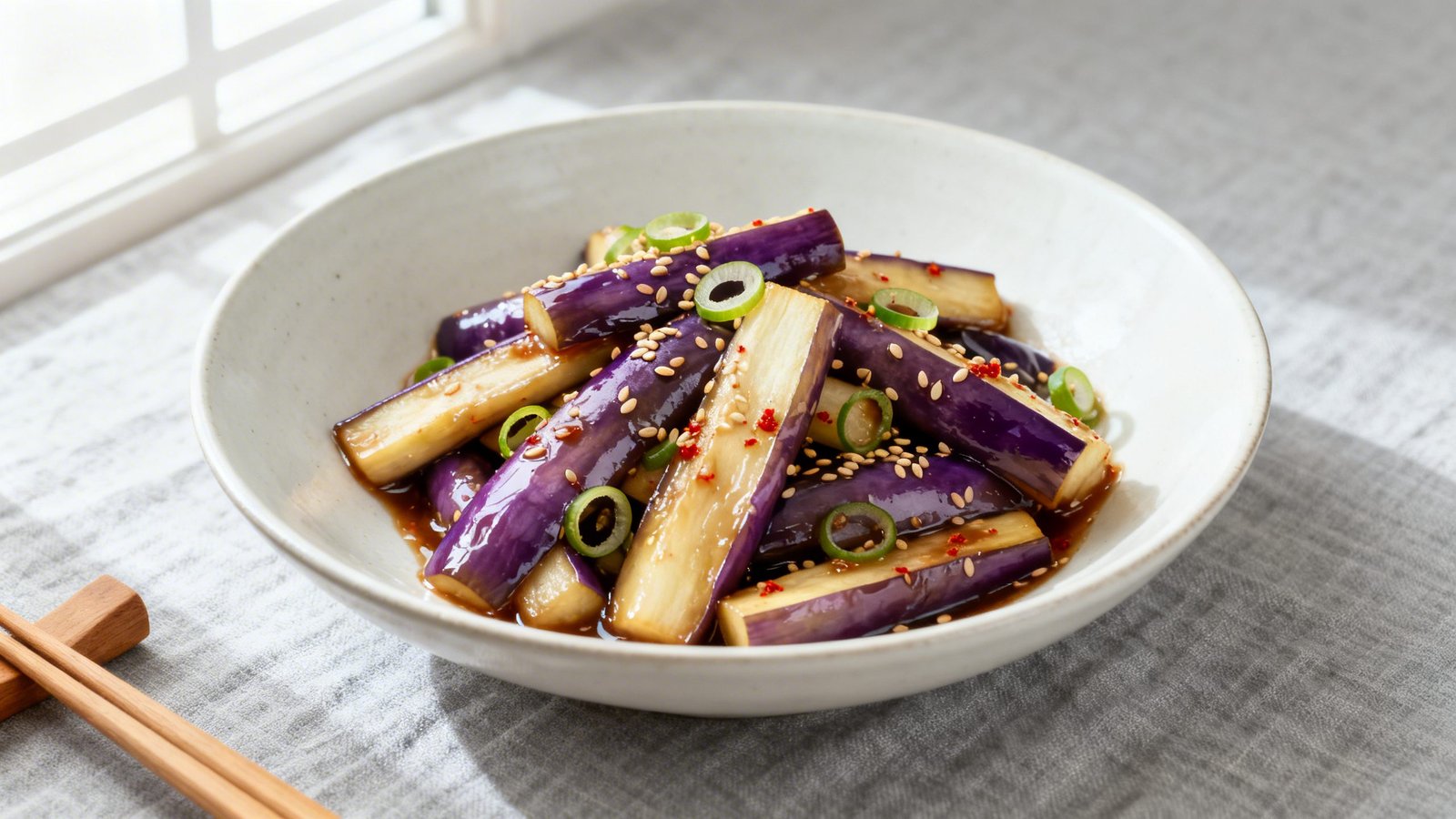
Korean Steamed Eggplant (Gaji Namul)
Silky steamed eggplant tossed with a punchy soy-sesame-garlic seasoning for a quick, versatile Korean banchan.
Ingredients
- Japanese or Chinese eggplants, 3–4 medium
- Garlic, 2–3 cloves, minced
- Scallions, 2, thinly sliced
- Soy sauce, 2–2.5 tablespoons
- Toasted sesame oil, 1 tablespoon
- Rice vinegar, 1–2 teaspoons
- Gochugaru (Korean chili flakes), 1–2 teaspoons
- Sugar or honey, 1 teaspoon
- Toasted sesame seeds, 1 tablespoon
- Optional: Fish sauce, ½ teaspoon
- Optional: Grated ginger, 1 teaspoon
- Optional: Neutral oil, 1 teaspoon
Instructions
- Prep eggplants: wash, trim ends, peel a few long strips of skin, slice lengthwise into ½-inch planks, then into 3–4-inch batons.
- Set up steamer: add 1–2 inches of water to a pot and bring to a steady simmer; line a steamer basket with parchment or use a heatproof plate.
- Steam eggplant in a single layer until just tender: 6–8 minutes for thin Asian eggplants or 8–10 minutes for thicker pieces; a chopstick should slide through with slight resistance.
- Drain and cool: transfer to a colander for 2–3 minutes, then gently squeeze out excess water without smashing.
- Mix seasoning: in a bowl, combine soy sauce, sesame oil, rice vinegar, gochugaru, sugar, minced garlic, and optional fish sauce and/or ginger; adjust to taste.
- Toss and finish: add steamed eggplant and sliced scallions; toss gently to coat; top with toasted sesame seeds and rest 5 minutes before serving.