How To Make Sprouted Grain Bread | Organic Ezekiel Bread Recipe Clean
Craving a wholesome, hearty loaf that actually nourishes you? Let’s make sprouted grain bread—often called Ezekiel bread—with clean, organic ingredients and no weird additives. You’ll sprout whole grains at home, grind them fresh, and bake a naturally flavorful, high-fiber loaf with a tender crumb and toasty crust. It’s earthy, nutty, and surprisingly simple once you understand the steps.
In this guide, I’ll walk you through what to sprout, how long it takes, the easiest mixing and kneading method, and how to get a perfect rise without refined sugar. I’ll also share storage tips, variations, and smart fixes so your loaf turns out beautifully every time. Grab a bowl and some jars—we’re baking real bread.
Why This Sprouted Grain Bread Recipe Works
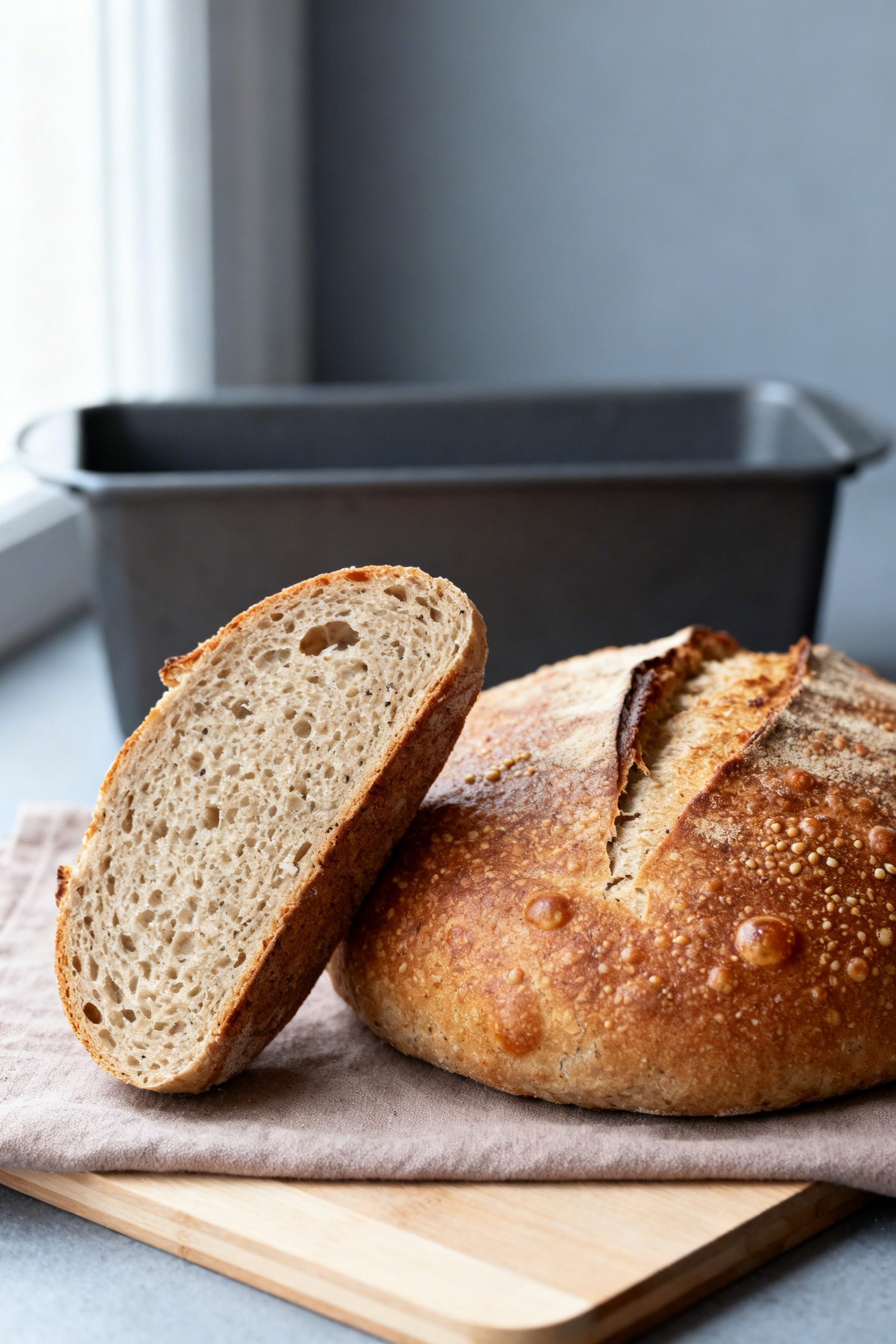
Sprouting transforms whole grains from good to great. It wakes up enzymes, softens the bran, and helps your body absorb nutrients more easily. This clean Ezekiel-style loaf uses a mix of organic wheat berries, spelt, barley, millet, and legumes for balance: great structure, gentle sweetness, and long-lasting moisture.
- Softer texture without white flour: Sprouting reduces tough bran edges, so the crumb stays tender.
- Easy digestion: Enzymes formed during sprouting help break down starches and phytic acid.
- Deep flavor: The blend of grains and legumes creates a naturally sweet, nutty taste with no added sugar.
- Reliable rise: A touch of honey or maple wakes up the yeast, while vital wheat gluten supports structure.
- Clean ingredients only: Organic whole foods and sea salt—nothing you can’t pronounce.
Ingredients
For Sprouting (Day 1–2)
- 1 cup organic hard red wheat berries
- 1/2 cup organic spelt berries
- 1/3 cup organic barley
- 1/4 cup organic millet
- 1/3 cup organic green lentils
- 1/4 cup organic dried chickpeas (garbanzo beans)
- Filtered water for soaking and rinsing
For the Dough (Baking Day)
- 2 1/4 teaspoons active dry yeast (one packet)
- 1 1/4 cups warm water, 105–110°F
- 1 tablespoon raw honey or pure maple syrup
- 3 tablespoons extra-virgin olive oil (plus more for the pan)
- 2 teaspoons fine sea salt
- 1/4 cup vital wheat gluten (for lift and structure)
- 2–2 1/2 cups freshly milled or finely ground sprouted grain mix (from above), plus more as needed
- Optional: 2 tablespoons mixed seeds (sunflower, sesame, or flax) for topping
Note: You’ll sprout and then either finely grind the sprouted grains/legumes in a food processor or dry them on low heat and mill into flour. I’ll show you both options.
How to Make Clean, Organic Sprouted Grain Bread (Ezekiel-Style)
Step 1: Soak and Sprout the Grains and Legumes
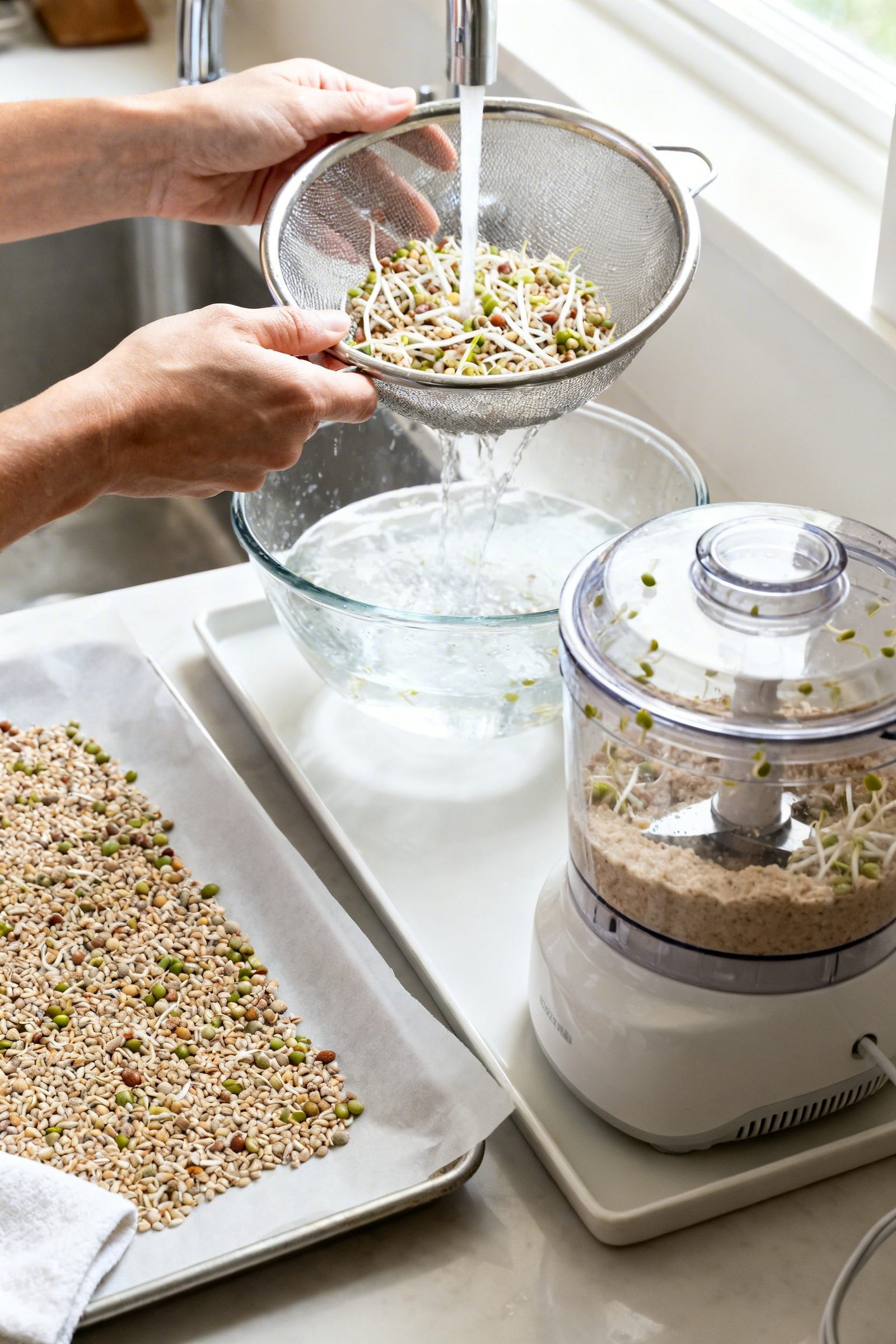
- Combine wheat, spelt, barley, millet, lentils, and chickpeas in a large bowl. Rinse well until the water runs clear.
- Cover with plenty of filtered water (at least 3 inches above). Soak 8–12 hours at room temperature.
- Drain and rinse. Transfer to sprouting jars or a fine-mesh sieve set over a bowl. Cover lightly and keep at room temperature.
- Rinse and drain every 8–12 hours until tiny sprouts appear, about 24–36 hours. You want short tails—about the length of a grain kernel. Stop sprouting before long tails form or the bread can taste grassy.
Step 2: Choose Your Grinding Method
- Wet-mash method (quick): Pat sprouts dry with a clean towel. Pulse in a food processor until finely ground and paste-like. This keeps moisture in, so you’ll use less water later.
- Dry-and-mill method (classic): Spread sprouts on lined baking sheets. Dry in a dehydrator or oven at the lowest temp (95–150°F) until fully dry, 3–6 hours. Mill into flour, or grind in a high-powered blender. This gives a lighter crumb.
Step 3: Activate Yeast
- In a mixing bowl, whisk warm water and honey until dissolved. Sprinkle in yeast.
- Wait 5–10 minutes until foamy. If it doesn’t foam, start over with fresh yeast.
Step 4: Make the Dough
- For wet-mash: Add olive oil, salt, vital wheat gluten, and 1 1/2 cups of the mashed sprouts. Mix. Add more mash or a spoon or two of flour until the dough pulls from the bowl sides but still feels tacky.
- For dry flour: Add olive oil, salt, vital wheat gluten, and 2 cups sprouted flour. Mix, then add more flour 1 tablespoon at a time until a soft, slightly sticky dough forms.
Knead 8–10 minutes by hand or 5–6 minutes in a stand mixer on low. You want a smooth, springy dough that still feels moist. Under-kneaded dough won’t rise well.
Step 5: First Rise
- Lightly oil a bowl. Place dough inside, turning to coat.
- Cover and let rise in a warm, draft-free spot until doubled, 60–90 minutes. Aim for about 75–80°F.
Step 6: Shape and Second Rise
- Gently deflate the dough. Shape into a tight loaf by patting into a rectangle, rolling up, and pinching the seam.
- Grease a 9×5-inch loaf pan with olive oil. Place the loaf seam-side down. Brush with a little water and sprinkle seeds if you like.
- Cover and let rise until the dough domes 1 inch above the pan, about 35–55 minutes. Don’t overproof or it may collapse in the oven.
Step 7: Bake
- Preheat oven to 375°F (190°C) with a rack in the center.
- Bake 35–45 minutes, until deeply golden and the internal temp hits 200–205°F.
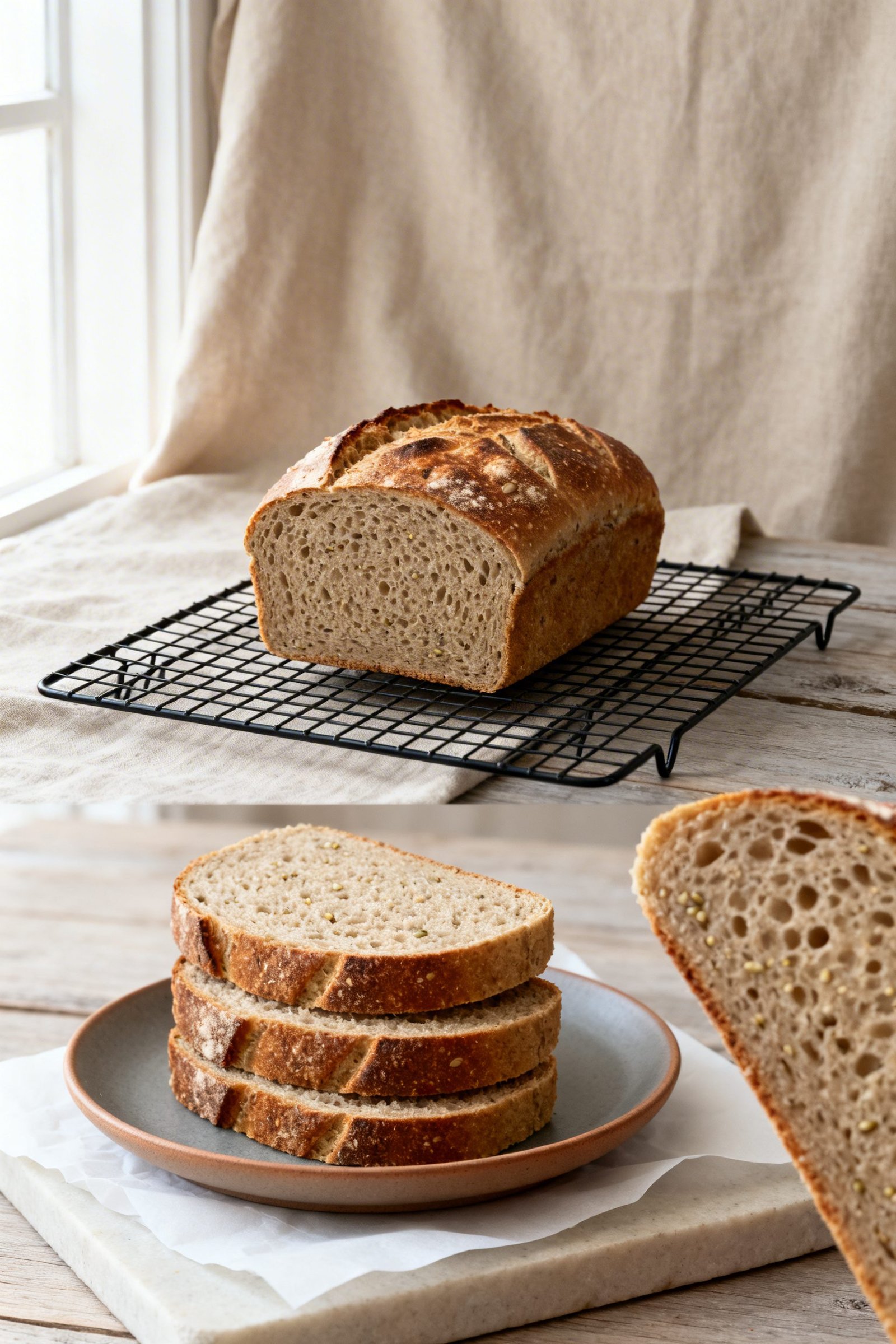
- Cool in the pan 10 minutes, then transfer to a rack. Cool completely before slicing so the crumb sets.
How to Store Your Sprouted Grain Bread
- Room temperature: Store in a bread box or wrapped in a clean towel for up to 2 days.
- Refrigerator: Wrap in beeswax wrap or airtight bag for 5–7 days. It will firm up slightly—toast to revive.
- Freezer: Slice, then freeze in a zip bag up to 3 months. Toast straight from frozen for best texture.
- Avoid plastic at room temp: It traps moisture and can cause a gummy crust.
Benefits of Baking Clean Ezekiel-Style Bread
- Higher nutrient availability: Sprouting unlocks minerals and boosts B vitamins.
- Better digestibility: Enzymes reduce anti-nutrients and mellow the grainy bite.
- Balanced protein: Grains plus legumes create a more complete amino acid profile.
- Steady energy: Whole sprouted grains digest slowly for fewer crashes.
- Incredible flavor: Toasty, nutty notes without added sugar or dairy.
What to Avoid for Best Results
- Don’t oversprout: Long tails lead to grassy flavors and weaker dough.
- Don’t skip vital wheat gluten: The legume blend lowers gluten; added gluten keeps the loaf tall.
- Don’t add too much flour: Slight stickiness means moisture. Too dry equals a dense brick.
- Don’t rush cooling: Slicing hot bread compresses the crumb and makes it gummy.
- Don’t use dead yeast: No foam, no rise. Replace it.
Variations You Can Try
- Cinnamon raisin: Add 1 teaspoon cinnamon and 3/4 cup raisins during the last minute of kneading.
- Seed lover’s loaf: Fold in 1/4 cup each sunflower, sesame, and pumpkin seeds; sprinkle extra on top.
- All-wheat version: Use only sprouted wheat berries for a simpler flavor and slightly lighter texture.
- Olive and herb: Mix in 1/2 cup chopped olives and 1 tablespoon chopped rosemary; reduce water by 1–2 tablespoons.
- Starter boost: Replace 1/2 cup water with bubbly sourdough starter for tang and keeping quality; expect a longer rise.
FAQ
Can I make it without vital wheat gluten?
Yes, but expect a shorter, denser loaf. Use the dry-and-mill method for lighter texture and let it rise a bit longer.
What if I don’t have a dehydrator?
Use the wet-mash method or your oven’s lowest setting with the door cracked. Keep temps low to protect nutrients.
How do I know the sprouts are ready?
Look for short, stubby tails—about the size of the grain itself. They should smell fresh and sweet, never sour.
Can I use canned beans instead of sprouting?
No. Canned beans add too much moisture and lack the enzymes created during sprouting.
Why is my loaf crumbly?
You added too much flour or didn’t knead enough. Next time, keep the dough tacky and knead to a smooth, elastic feel.
Do I need sweetener?
A tablespoon of honey or maple helps the yeast wake up and rounds out flavor. The loaf won’t taste sweet.
Conclusion
Sprouted grain bread takes a little planning, but the payoff tastes amazing and fuels you well. Once you master the soak-sprout-grind rhythm, you’ll bake a clean, organic Ezekiel-style loaf with confidence every time. Keep the dough a bit tacky, watch your proof, and let it cool fully. Slice, toast, slather with your favorite spread, and enjoy real bread that loves you back.
Clean Organic Sprouted Grain Bread (Ezekiel-Style)
A wholesome sprouted multigrain-and-legume loaf with a tender crumb, deep nutty flavor, and clean organic ingredients.
Ingredients
- For Sprouting (Day 1–2):
- 1 cup organic hard red wheat berries
- ½ cup organic spelt berries
- ⅓ cup organic barley
- ¼ cup organic millet
- ⅓ cup organic green lentils
- ¼ cup organic dried chickpeas (garbanzo beans)
- Filtered water for soaking and rinsing
- For the Dough (Baking Day):
- 2 ¼ teaspoons active dry yeast (one packet)
- 1 ¼ cups warm water, 105–110°F
- 1 tablespoon raw honey or pure maple syrup
- 3 tablespoons extra-virgin olive oil (plus more for the pan)
- 2 teaspoons fine sea salt
- ¼ cup vital wheat gluten
- 2–2 ½ cups freshly milled or finely ground sprouted grain mix (from above), plus more as needed
- Optional: 2 tablespoons mixed seeds (sunflower, sesame, or flax) for topping
Instructions
- Rinse wheat, spelt, barley, millet, lentils, and chickpeas until water runs clear; cover with filtered water by 3 inches and soak 8–12 hours at room temperature.
- Drain, rinse, and place in sprouting jars or a sieve over a bowl; rinse and drain every 8–12 hours until short sprouts appear (24–36 hours). Stop before long tails form.
- Choose grinding method: Wet-mash—pat sprouts dry and process to a fine paste; Dry-and-mill—dry sprouts at 95–150°F until fully dry (3–6 hours) and mill into flour.
- Activate yeast: Whisk warm water and honey, sprinkle yeast, and let stand 5–10 minutes until foamy.
- Make dough (wet-mash): Add olive oil, salt, vital wheat gluten, and 1 ½ cups mashed sprouts to yeast mixture; mix and adjust with more mash or a little flour until tacky and pulling from bowl sides.
- Make dough (dry flour): Add olive oil, salt, vital wheat gluten, and 2 cups sprouted flour; mix and add more flour 1 tablespoon at a time until a soft, slightly sticky dough forms.
- Knead 8–10 minutes by hand or 5–6 minutes in a stand mixer on low until smooth, springy, and moist.
- First rise: Lightly oil a bowl, add dough, turn to coat, cover, and let rise in a warm spot (75–80°F) until doubled, 60–90 minutes.
- Shape: Gently deflate, pat into a rectangle, roll up tightly, pinch seam, and place seam-side down in a greased 9×5-inch loaf pan. Brush with water and add seeds if desired.
- Second rise: Cover and let rise until the dome is 1 inch above the pan, about 35–55 minutes; do not overproof.
- Bake at 375°F (190°C) for 35–45 minutes until deeply golden and internal temperature is 200–205°F.
- Cool in pan 10 minutes, then transfer to a rack and cool completely before slicing.