How to Make Dumpling Dough | Tender Homemade Wrappers for Asian Cooking
Nothing beats the feel of soft, springy dumpling dough in your hands. When you make wrappers at home, you control the thickness, texture, and size—so your gyoza, potstickers, wontons, and momos turn out exactly how you like them. I’ll show you the easiest method for silky dough that rolls beautifully and seals without tearing.
This guide breaks down the why and how, with practical tips you can actually use. We’ll talk flour choice, water temperature, resting, and rolling so you get tender, elastic wrappers every time—whether you steam, boil, or pan-fry your dumplings.
Why This Dumpling Dough Method Works
You only need flour, water, and a pinch of salt, but the details matter. Here’s why this approach delivers consistent results:
- Right flour, right chew: All-purpose flour hits the sweet spot for tenderness and structure. It gives you enough gluten to stretch and seal, without turning tough.
- Hot or cold water on purpose: Hot water softens gluten for delicate, silky wrappers (great for potstickers and steamed dumplings). Cold water keeps gluten springy and resilient (ideal for boiled dumplings that need to hold up).
- Resting builds smoothness: A covered rest lets the flour hydrate and the gluten relax, which makes rolling easier and prevents snap-back.
- Weight measurements ensure accuracy: Measuring by grams keeps the dough consistent every time, even with different brands of flour.
Ingredients
- 300 g (about 2 1/2 cups) all-purpose flour, plus extra for dusting
- 150–170 g water (about 2/3–3/4 cup), see water temp notes below
- 1/4–1/2 tsp fine salt (optional but recommended)
- Cornstarch or flour for dusting finished wrappers
Choosing Water Temperature
- Hot-water dough (about 160–180°F / 70–80°C): Tender, pliable, easy to roll thin. Best for pan-fried or steamed dumplings.
- Cold-water dough (room temp to cool): Bouncy and strong; holds shape when boiled. Great for boiled dumplings like shuijiao.
- Half-and-half: Mix equal parts hot and cold for a versatile, all-purpose dough.
How to Make Tender Dumpling Wrappers
1) Mix and Hydrate
- In a bowl, whisk flour and salt.
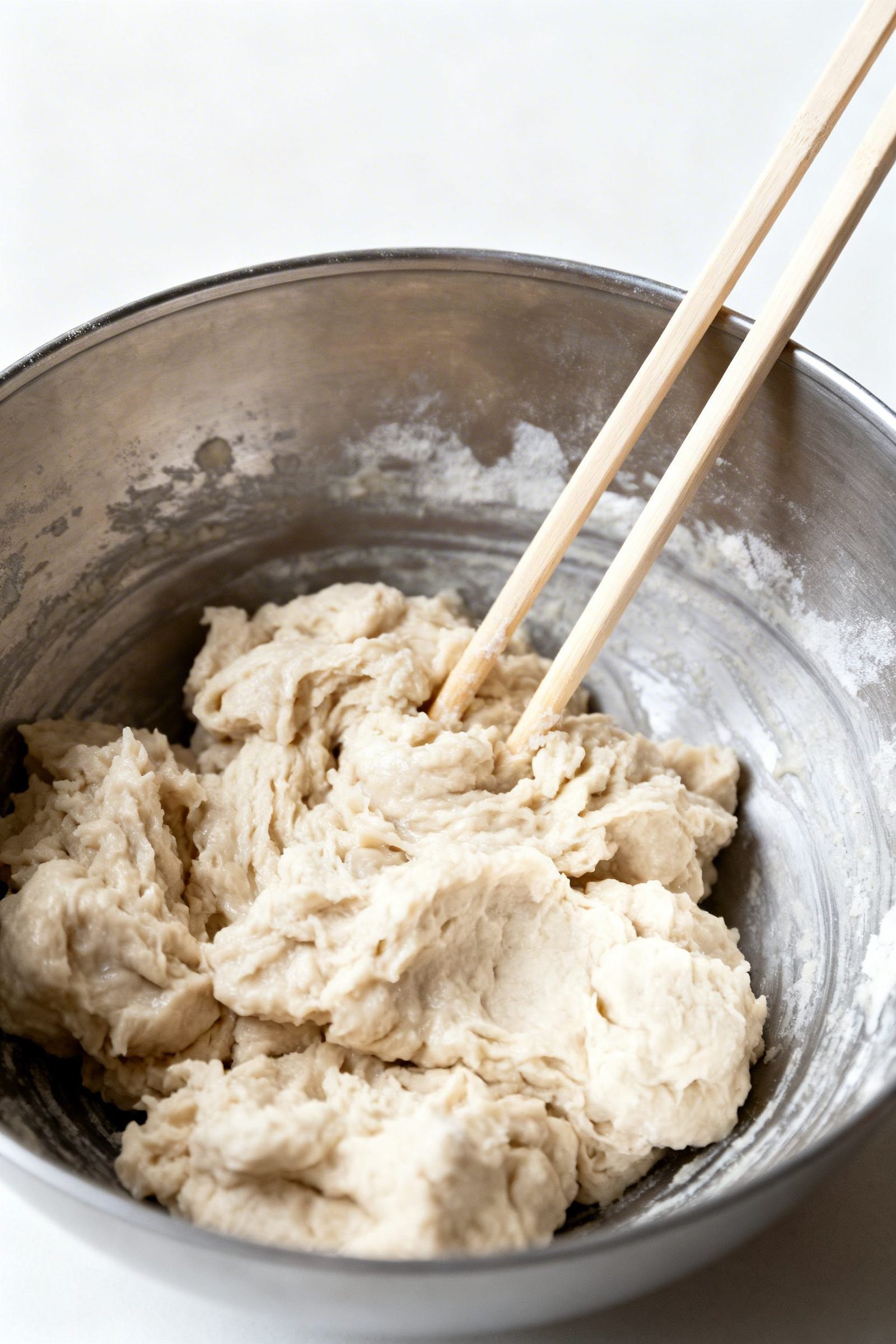
- Drizzle in water while stirring with chopsticks or a fork until shaggy clumps form. Stop once no dry flour remains. If it looks floury, add 1–2 tsp more water. If sticky, add 1–2 tsp more flour.
2) Knead to Smooth
- Turn the dough onto a clean surface. Knead 6–8 minutes until smooth and elastic. The dough should feel firm but pliable, like a soft ear lobe.
- Cover with a bowl or plastic wrap and rest 20–30 minutes (up to 1 hour). This rest makes the dough easier to roll and prevents tearing.
3) Divide and Pre-Shape
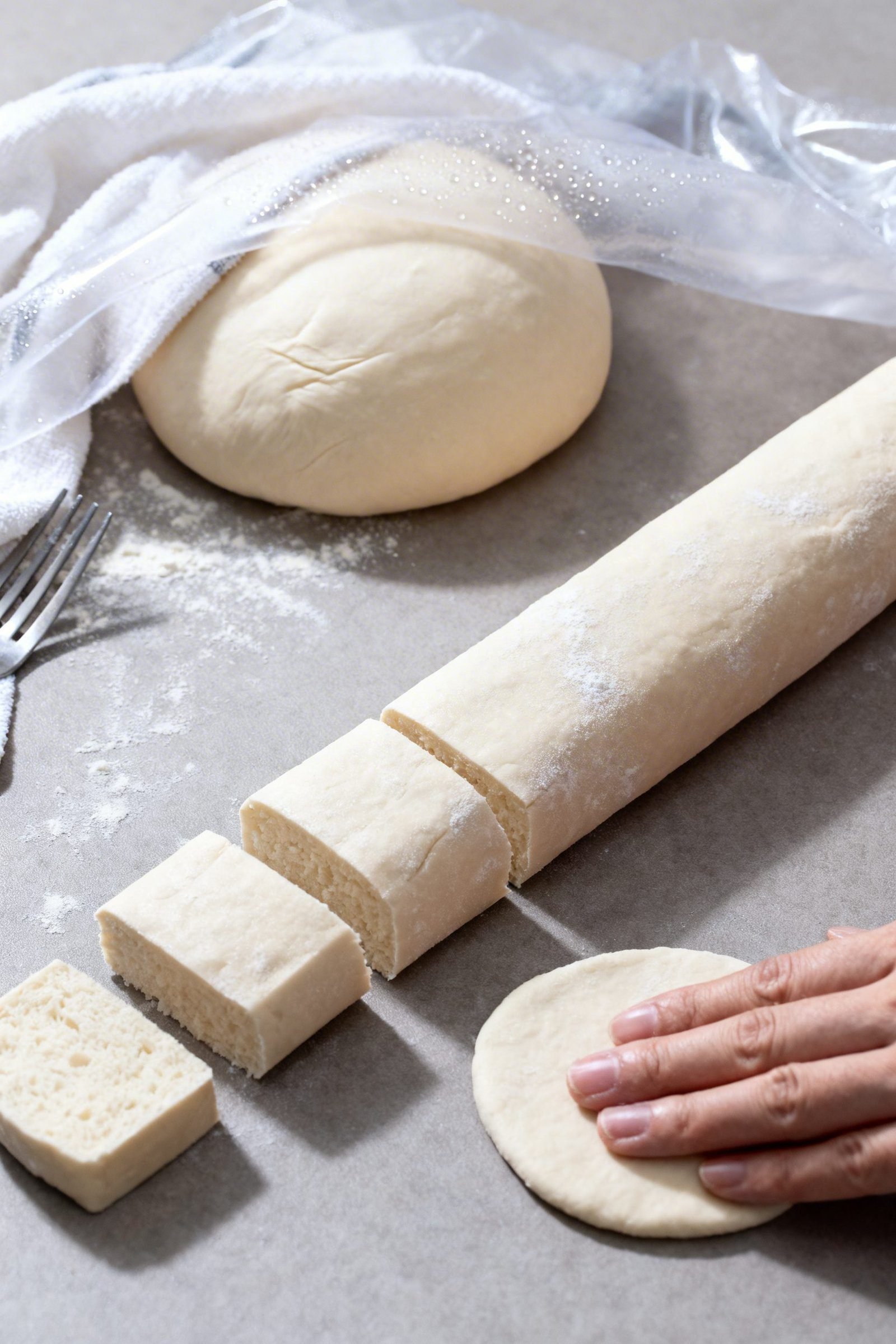
- Roll the rested dough into a log about 1 inch (2.5 cm) thick.
- Cut into 24 pieces for standard wrappers, or 30–36 for smaller bite-size dumplings.
- Lightly dust with flour. Keep pieces covered with a damp towel so they don’t dry out.
4) Roll the Wrappers
- Flatten one piece into a disk with your palm.
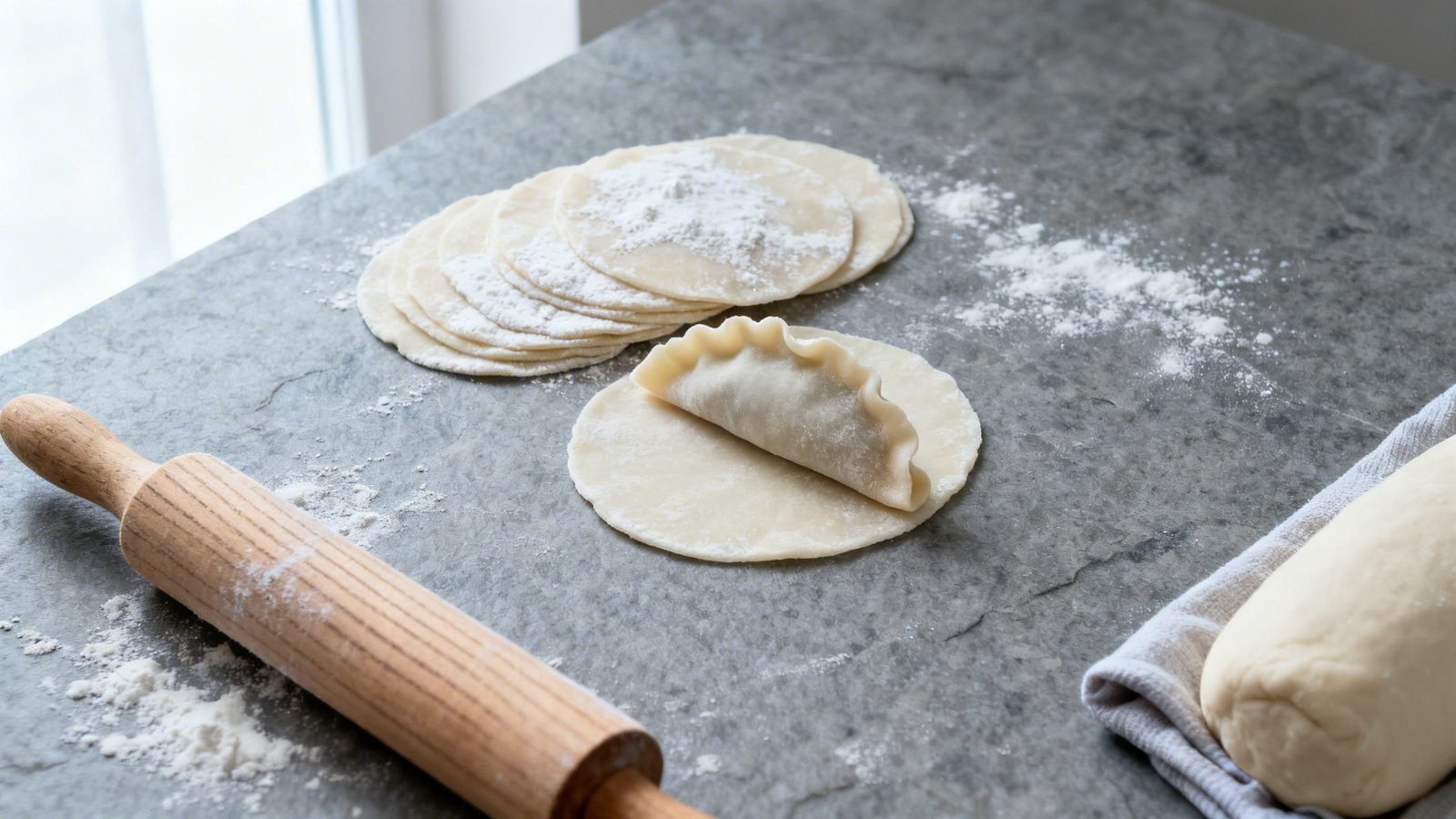
- Use a small rolling pin. Roll from the edge toward the center, rotate the disk a quarter turn, and repeat. Keep the center slightly thicker and edges thinner for easier pleating.
- Aim for 3–3.5 inches (7.5–9 cm) wide and 1–1.5 mm thick. Thinner for steaming, slightly thicker for boiling.
- Dust lightly with cornstarch or flour, stack, and cover. Do not over-flour; excess makes sealing harder.
5) Fill and Seal
- Use 1–2 teaspoons of filling per wrapper, depending on size.
- Dip a finger in water and moisten the edge if needed (hot-water dough often seals without it).
- Press out air as you seal to prevent bursting. Pleat one side against a flat back for classic potsticker folds, or seal edge-to-edge for simple half-moons.
Cooking Options
- Pan-fry (potstickers): Sear in a thin slick of oil until golden bottoms, splash with water, cover, steam 4–5 minutes, uncover to crisp.
- Steam: Line the steamer with cabbage or parchment; steam 6–8 minutes until translucent and cooked through.
- Boil: Simmer gently until they float and the dough turns glossy and tender, 3–5 minutes.
How to Store Dumpling Dough and Wrappers
- Dough ball: Wrap tightly and refrigerate up to 24 hours. Let it come to room temp before rolling.
- Rolled wrappers: Dust lightly with cornstarch, stack, wrap well, and refrigerate up to 24 hours. They may dry beyond that.
- Filled dumplings: Freeze on a tray until solid, then bag for up to 2 months. Cook from frozen; add 1–2 minutes to the cook time.
Benefits of Making Dumpling Dough at Home
- Custom texture: Adjust water temp and thickness for steamed, boiled, or pan-fried perfection.
- Better seal and shape: Fresh dough grips and pleats beautifully, with fewer leaks.
- Fresher flavor: No preservatives, no drying—just clean wheat aroma and tender bite.
- Right size, every time: Make larger for juicy fillings or smaller for party bites.
- Budget-friendly: Flour and water cost pennies and beat store-bought quality.
What to Avoid When Making Wrappers
- Don’t skip the rest. Tight dough fights you and shrinks as you roll.
- Don’t over-hydrate. Sticky dough tears and sticks to the pin. Aim for supple, not tacky.
- Don’t under-hydrate. Crumbly dough won’t roll thin or seal well.
- Don’t flour heavily. Excess flour prevents sealing and leaves raw pockets after cooking.
- Don’t roll all wrappers at once without covering. They dry quickly; keep stacks wrapped.
Variations You Can Try
- Whole-wheat blend: Swap 25–30% of the flour for whole wheat. Add 1–2 tsp extra water as needed.
- Spinach wrappers: Use warm puréed spinach in place of part of the water for a green hue and subtle flavor.
- Turmeric or beet tint: Add a pinch of turmeric or beet juice for color-coded batches.
- Chive-infused: Stir in very finely minced Chinese chives for aromatic wrappers (best for pan-fry or steam).
- Gluten-free test: Use a 1:1 gluten-free flour blend with xanthan gum and warm water; roll between parchment and handle gently.
FAQ
Can I use bread flour?
Yes, but expect extra chew. Lower the knead time and consider hot water to mellow the gluten.
Why do my wrappers snap back when rolling?
The dough needs more rest. Cover and rest 15 minutes, then resume. If still tight, add a teaspoon of water and knead briefly.
How thin should I roll?
For steaming or pan-frying, go thinner (about 1 mm at the edges). For boiling, keep them a touch thicker to hold up in water.
Do I need oil in the dough?
No. Proper hydration and resting achieve tenderness without oil. Add 1 tsp neutral oil only if you want extra suppleness.
Why do my dumplings burst?
Common causes: overfilling, trapped air, thin spots, or rapid boiling. Use less filling, press out air, and simmer gently.
Can I roll with a wine bottle?
Absolutely. Dust lightly, keep the center thicker, and rotate the dough as you roll the edges.
Conclusion
With flour, water, and a short rest, you can make silky dumpling dough that rolls thin, pleats neatly, and cooks up tender every time. Choose hot or cold water based on how you’ll cook, keep the center a touch thicker, and protect the dough from drying out. Once you nail the feel, you’ll never rely on store-bought wrappers again—your homemade dumplings will taste brighter, juicier, and downright irresistible.
Tender Dumpling Dough (Homemade Wrappers)
Silky, elastic dumpling dough for pan-fried, steamed, or boiled wrappers using just flour, water, and salt.
Ingredients
- 300 g (about 2 ½ cups) all-purpose flour, plus extra for dusting
- 150–170 g water (about ⅔–¾ cup), hot or cold per method
- ¼–½ tsp fine salt (optional but recommended)
- Cornstarch or flour for dusting finished wrappers
Instructions
- Whisk flour and salt in a bowl.
- Drizzle in water while stirring until shaggy clumps form; stop once no dry flour remains. Adjust with 1–2 tsp water or flour if needed.
- Knead on a clean surface 6–8 minutes until smooth and elastic; dough should be firm but pliable.
- Cover and rest 20–30 minutes (up to 1 hour).
- Roll dough into a 1 in (2.5 cm) thick log and cut into 24 pieces for standard wrappers or 30–36 for smaller ones; keep pieces covered.
- Flatten one piece into a disk. Using a small rolling pin, roll from edge toward center, rotating a quarter turn each pass, keeping the center slightly thicker and edges thinner.
- Roll to 3–3.5 in (7.5–9 cm) wide and 1–1.5 mm thick (thinner for steaming, slightly thicker for boiling). Dust lightly with cornstarch or flour, stack, and keep covered.
- Fill with 1–2 tsp filling as desired, moisten edges if needed, press out air, and seal with pleats or as half-moons.