Classic Florentine Cookies With Almonds
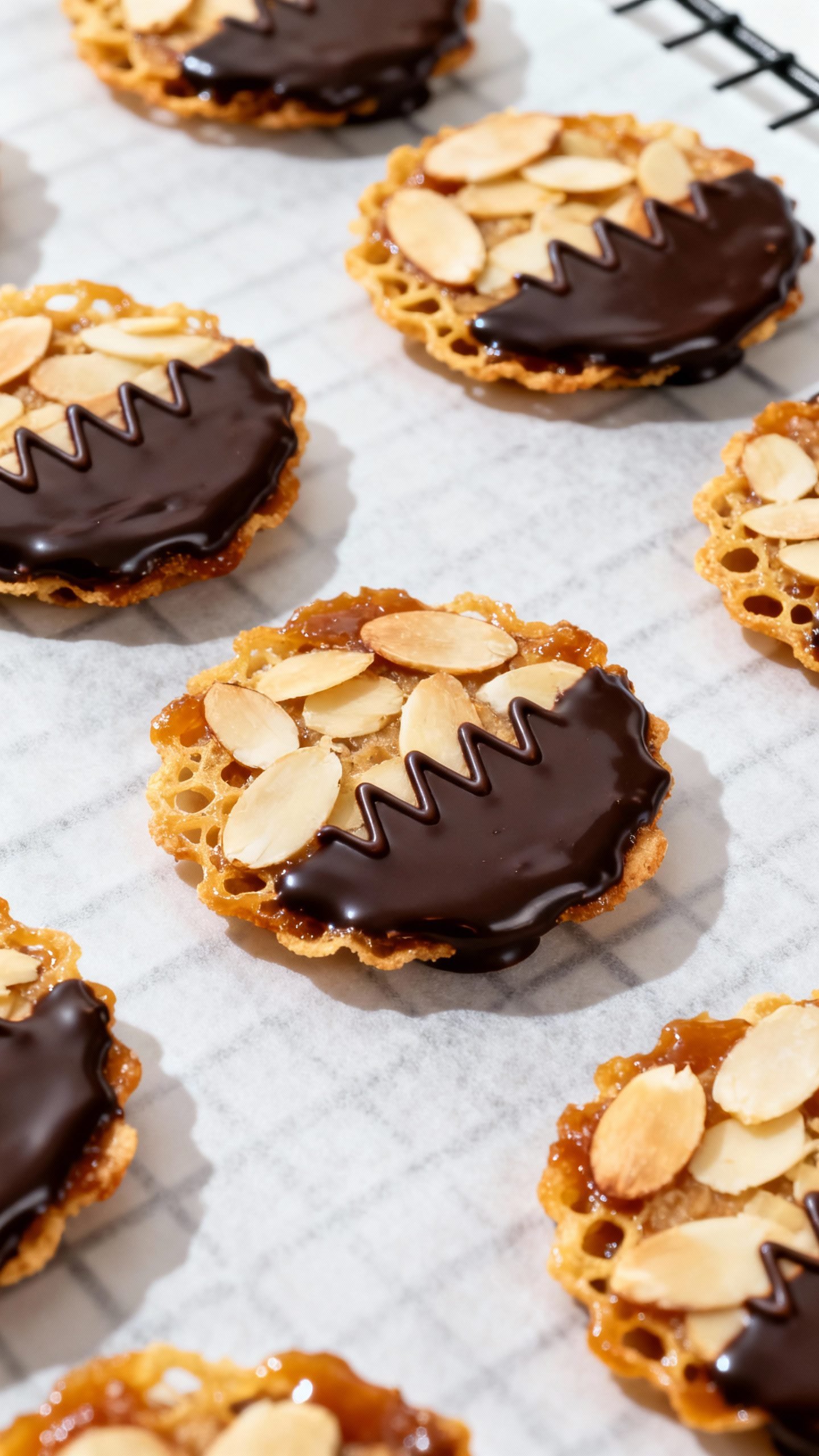
Florentine cookies look fancy, taste incredible, and come together faster than you’d think. These lacy almond crisps bake into golden rounds with caramel edges and a delicate snap, then get a swipe of dark chocolate for the perfect finish. They feel special enough for holidays, but I’ll be honest—I make them on random Tuesdays too.
If you’ve never made them, don’t stress. The batter cooks on the stovetop in minutes, the cookies bake in under 10, and you don’t need any special tools. I’ll walk you through everything: how to keep them thin and crisp, how to avoid sticking, and how to get that beautiful chocolate back.
Why This Almond Florentine Recipe Works
- Simple stovetop base: Butter, sugar, and honey melt into a quick caramel that binds the almonds and creates that signature lacy texture.
- Super thin and crisp: Sliced almonds bake into light, airy cookies that stay crisp with the right bake time and cooling technique.
- Balanced sweetness: Dark chocolate offsets the caramelized cookie, so each bite tastes complex, not cloying.
- No special equipment: A saucepan, spoon, and sheet pans get the job done. A silicone baking mat helps, but parchment works too.
- Fast and freezer-friendly: You can bake a batch in about 30 minutes and freeze them for weeks.
Ingredients
- Unsalted butter (6 tablespoons) – Adds rich flavor and helps the caramel spread thin.
- Granulated sugar (1/2 cup) – Sweetens and helps the cookies crisp up.
- Light corn syrup or honey (3 tablespoons) – Prevents crystallization and keeps the caramel smooth. Honey adds extra flavor.
- Heavy cream (2 tablespoons) – Softens the caramel and helps the batter set properly.
- All-purpose flour (2 tablespoons) – Just enough to bind and create structure without heaviness.
- Fine sea salt (1/4 teaspoon) – Rounds out the sweetness.
- Pure vanilla extract (1 teaspoon) – Classic warmth to complement the almonds.
- Sliced blanched almonds (1 1/2 cups) – Thin slices bake into lacy, delicate cookies.
- Dark chocolate (4–6 ounces, 60–70%) – For coating or drizzling. Use bars or chips.
How to Make Almond Florentine Cookies
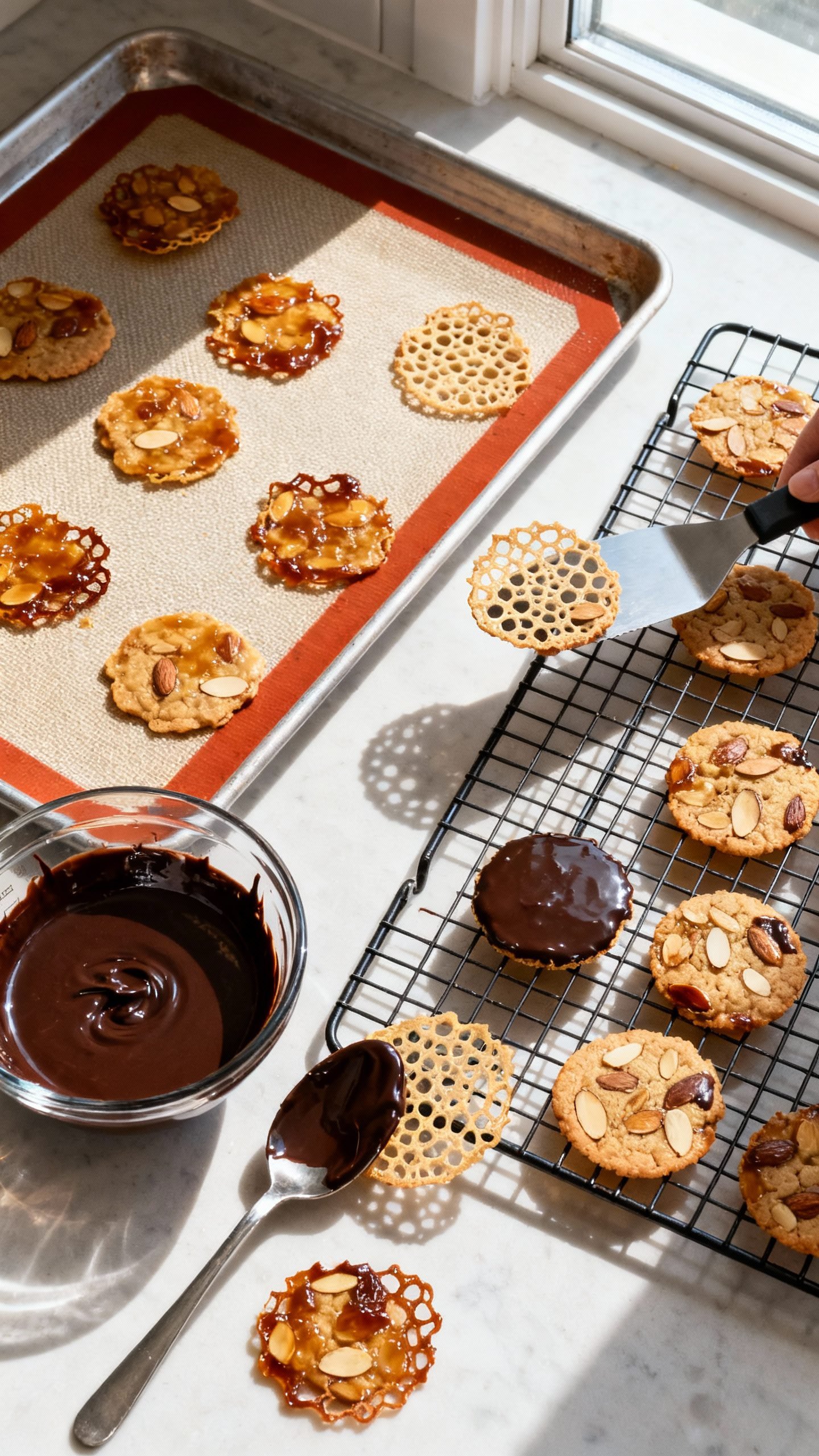
Prep the pans and oven
- Heat the oven to 325°F (165°C) with racks in the upper and lower thirds.
- Line two baking sheets with silicone baking mats or parchment. If using parchment, lightly grease for easier release.
- Set up a cooling rack for quick airflow after baking.
Cook the caramel base
- Melt butter, sugar, and syrup/honey in a medium saucepan over medium heat, stirring until the sugar dissolves and everything looks glossy, about 2–3 minutes.
- Add cream and bring to a gentle bubble. Stir constantly for 30–60 seconds; you want a smooth, cohesive mixture.
- Remove from heat, then whisk in flour, salt, and vanilla until no streaks remain.
- Fold in sliced almonds until coated. The mixture should be thick but scoopable.
Shape and bake
- Scoop 1 teaspoon portions onto the lined sheets, spacing at least 3 inches apart. They spread a lot. Work in batches so they don’t run into each other.
- Flatten gently with damp fingers or the back of a spoon to encourage even, lacy spreading.
- Bake 8–10 minutes, rotating pans halfway. Pull them when edges turn deep golden and centers look set but still bubbling slightly.
- Cool on the pan 3–4 minutes until they firm up enough to move, then slide the liners onto a rack to cool completely.
Add the chocolate
- Melt the chocolate in a microwave-safe bowl in 20–30 second bursts, stirring between, or over a double boiler.
- Flip cookies and spread a thin layer of chocolate on the flat side. Let set at room temp, or chill for 10 minutes to firm quickly.
- For a classic look, drag a fork through the chocolate to create a crosshatch pattern before it sets.
Pro tips for success
- Watch the color, not the clock: Too pale equals chewy; deep golden gives snap and flavor.
- Keep portions tiny: One teaspoon makes perfect rounds. Larger mounds spread into puddles.
- Work quickly: The mixture thickens as it cools. If needed, warm the pan briefly to loosen it up.
- Use sliced blanched almonds: Skins can burn faster and taste bitter.
How to Store Almond Florentine Cookies
- Room temperature: Keep in an airtight tin with parchment between layers for up to 5 days.
- Humidity warning: Moist air softens them. Add a food-safe desiccant or a few grains of uncooked rice in a separate sachet to help.
- Freezer-friendly: Freeze in a rigid container for up to 1 month. Thaw at room temp in the closed container to prevent condensation.
- Chocolate set: Let the chocolate fully firm before stacking to avoid smears.
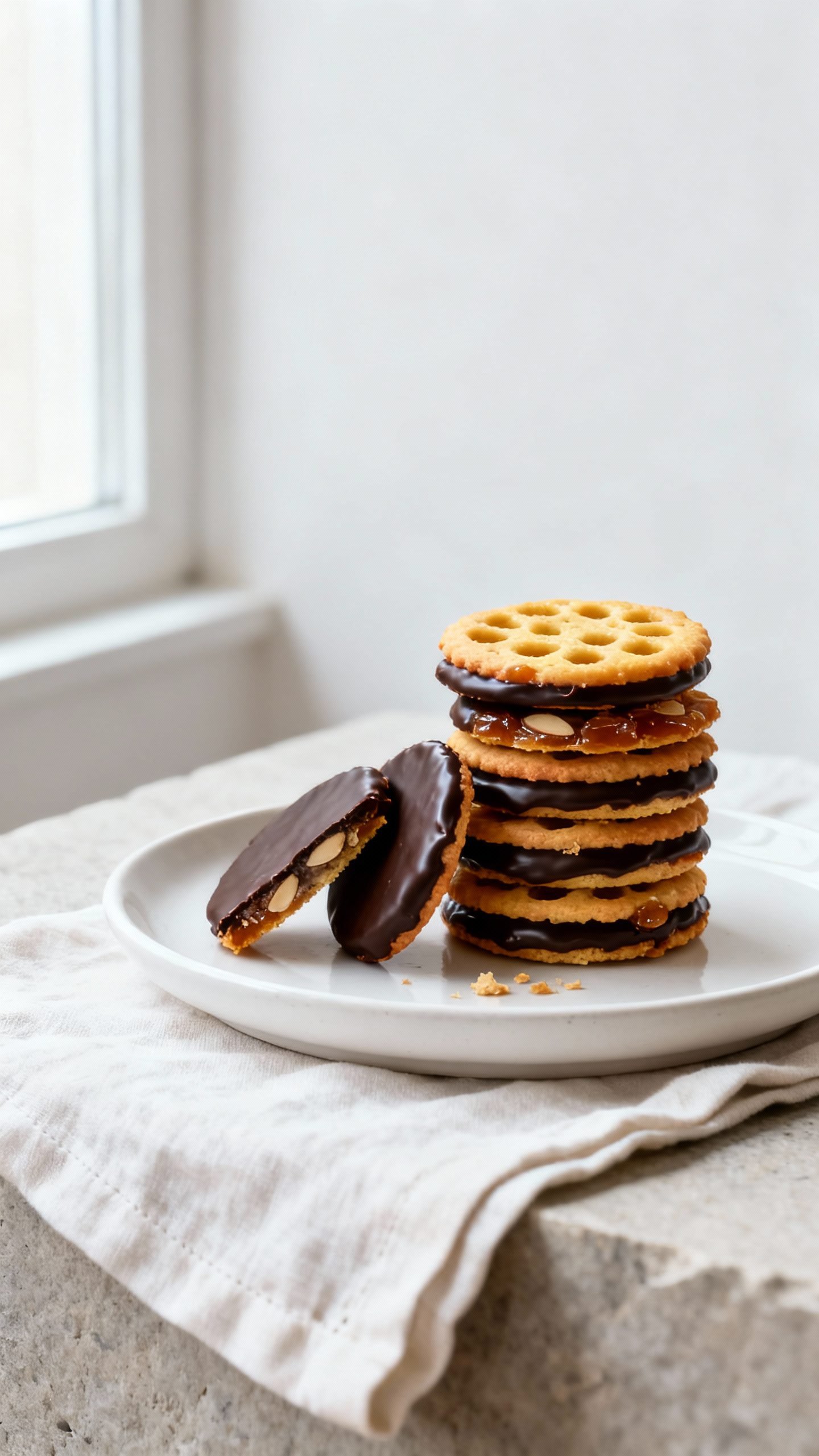
Why You’ll Love Almond Florentines
- Delicate crunch: Lacy texture with caramelized edges makes every bite addictive.
- Grown-up flavor: Toasty almonds, buttery caramel, and dark chocolate feel elegant without extra fuss.
- Quick bake: The batter cooks in minutes and bakes fast, so you can whip these up for last-minute guests.
- Beautiful gifts: Pack them in cellophane bags or tins for an instant homemade present.
Mistakes to Avoid
- Crowding the pan: These spread a lot. Give them space or you’ll end up with one giant cookie.
- Underbaking: Pale cookies turn sticky. Bake until the edges are deep golden brown.
- Skipping the liner: Bare pans lead to sticking. Always use silicone mats or parchment.
- Thick chocolate layer: A thin coat looks neat, sets faster, and doesn’t overpower the cookie.
- Rushing the cool time: Move them too soon and they warp. Wait a few minutes until they’re pliable but stable.
Flavor Twists to Try
- Orange zest: Add 1 teaspoon finely grated orange zest with the vanilla for a citrusy lift.
- Espresso: Stir in 1 teaspoon instant espresso powder for mocha vibes.
- Almond extract: Swap half the vanilla for 1/4 teaspoon almond extract to amp up the nuttiness.
- Half-dipped: Dip one side in chocolate and sprinkle with flaky sea salt.
- Seed mix: Replace 1/4 cup almonds with sesame or pumpkin seeds for a fun crunch.
- Milk or white chocolate: Go sweeter if you prefer—milk for creamy, white for a pretty contrast.
FAQ
Why did my Florentines turn chewy?
They likely underbaked or absorbed humidity. Bake until deep golden at the edges and cool completely before storing in an airtight container.
How do I keep them round?
Use tiny scoops (1 teaspoon each), space them well, and flatten slightly. If they spread unevenly, nudge the edges into circles with a spoon while still hot.
Can I use whole almonds?
You can, but sliced almonds work best for a lacy texture. Whole nuts won’t spread as thin and can make the cookies bulky.
Do I need corn syrup?
No. Honey works beautifully and adds flavor. Corn syrup offers neutral sweetness and extra stability—use what you prefer.
Can I make them gluten-free?
Yes. Swap the flour for a 1:1 gluten-free blend or use finely ground almond flour in the same amount.
Why is my chocolate streaky?
Overheating causes bloom. Melt slowly and stir often. If you want a glossy finish, temper the chocolate or chill briefly after spreading.
Conclusion
Almond Florentine cookies bring big payoff from simple ingredients: caramelized edges, delicate crunch, and a kiss of dark chocolate. With careful spacing, the right bake time, and a thin chocolate coat, you’ll get bakery-level results at home. Make a batch for a sweet gift—or keep them all for yourself. No judgment here.
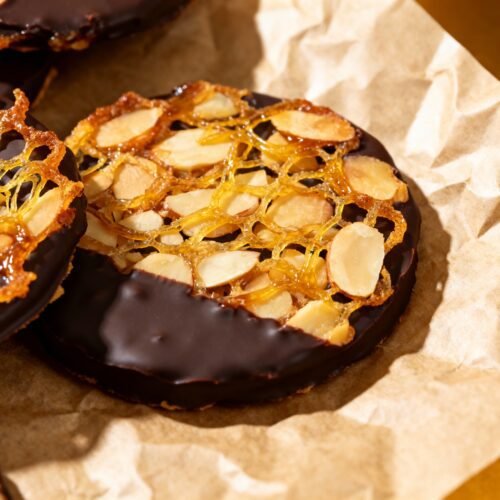
Classic Florentine Cookies With Almonds
Ingredients
Ingredients
Instructions
Instructions
- Heat the oven to 325°F (165°C) with racks in the upper and lower thirds.
- Line two baking sheets with silicone baking mats or parchment. If using parchment, lightly grease for easier release.
- Set up a cooling rack for quick airflow after baking.
- Melt butter, sugar, and syrup/honey in a medium saucepan over medium heat, stirring until the sugar dissolves and everything looks glossy, about 2–3 minutes.
- Add cream and bring to a gentle bubble. Stir constantly for 30–60 seconds; you want a smooth, cohesive mixture.
- Remove from heat, then whisk in flour, salt, and vanilla until no streaks remain.
- Fold in sliced almonds until coated. The mixture should be thick but scoopable.
- Scoop 1 teaspoon portions onto the lined sheets, spacing at least 3 inches apart. They spread a lot. Work in batches so they don’t run into each other.
- Flatten gently with damp fingers or the back of a spoon to encourage even, lacy spreading.
- Bake 8–10 minutes, rotating pans halfway. Pull them when edges turn deep golden and centers look set but still bubbling slightly.
- Cool on the pan 3–4 minutes until they firm up enough to move, then slide the liners onto a rack to cool completely.
- Melt the chocolate in a microwave-safe bowl in 20–30 second bursts, stirring between, or over a double boiler.
- Flip cookies and spread a thin layer of chocolate on the flat side. Let set at room temp, or chill for 10 minutes to firm quickly.
- For a classic look, drag a fork through the chocolate to create a crosshatch pattern before it sets.
- Watch the color, not the clock: Too pale equals chewy; deep golden gives snap and flavor.
- Keep portions tiny: One teaspoon makes perfect rounds. Larger mounds spread into puddles.
- Work quickly: The mixture thickens as it cools. If needed, warm the pan briefly to loosen it up.
- Use sliced blanched almonds: Skins can burn faster and taste bitter.