Beginner Smoked Brisket – A Simple, Reliable Guide for First-Timers
Smoked brisket feels like a big project, but it doesn’t have to be intimidating. With a few basics, you can turn a tough cut of beef into something tender, juicy, and full of smoky flavor. This recipe keeps it simple, focuses on technique, and doesn’t require fancy gear.
If you can manage steady heat and give it time, you’ll get great results. Think of this as your friendly roadmap to brisket success, even on your very first try.
What Makes This Recipe So Good

- Beginner-friendly method: Simple rub, steady temperature, and easy steps that don’t overwhelm.
- Reliable timing: Uses the classic low-and-slow approach, with clear cues so you know what to look for.
- Balanced flavor: Clean smoke, simple seasoning, and a buttery finish that highlights the beef.
- Flexible setup: Works on pellet smokers, kettles, offsets, or electric smokers.
- Great leftovers: Brisket reheats well and tastes even better the next day.
Shopping List
- Whole packer beef brisket (10–14 pounds), or a brisket flat (5–8 pounds) for smaller smokers
- Kosher salt
- Coarse black pepper (16-mesh if you can find it)
- Garlic powder (optional)
- Paprika (optional, for color)
- Yellow mustard or neutral oil (binder, optional)
- Beef broth or water (for spritzing)
- Butcher paper or heavy-duty foil (for wrapping)
- Wood: Oak or hickory (primary), with cherry or apple as a milder option
- Thermometer: instant-read and preferably a leave-in probe
How to Make It
- Choose the brisket: If you’re new, go with a 10–12 lb whole packer. Look for flexible meat with even thickness and a white, creamy fat cap.
- Trim it (lightly): Chill the brisket for 30 minutes to firm it up.
Trim the fat cap to about 1/4 inch and remove hard, waxy pockets of fat that won’t render. Square off thin edges so they don’t burn.
- Season simply: Mix 1 part kosher salt and 1 part coarse black pepper (about 1 tablespoon of each per pound). Add 1 teaspoon garlic powder and 1 teaspoon paprika per 4 pounds if you like.
Lightly coat the meat with mustard or oil, then season all sides generously.
- Preheat the smoker: Aim for 225–250°F. Use clean-burning smoke—thin and blue, not thick and white. If you’re using wood chunks, start with oak and add a piece of fruitwood for sweetness.
- Position the brisket: Place it fat cap down if heat comes from below (common), or fat cap up if heat comes from above.
Point the thicker end (the “point”) toward the hotter part of the smoker.
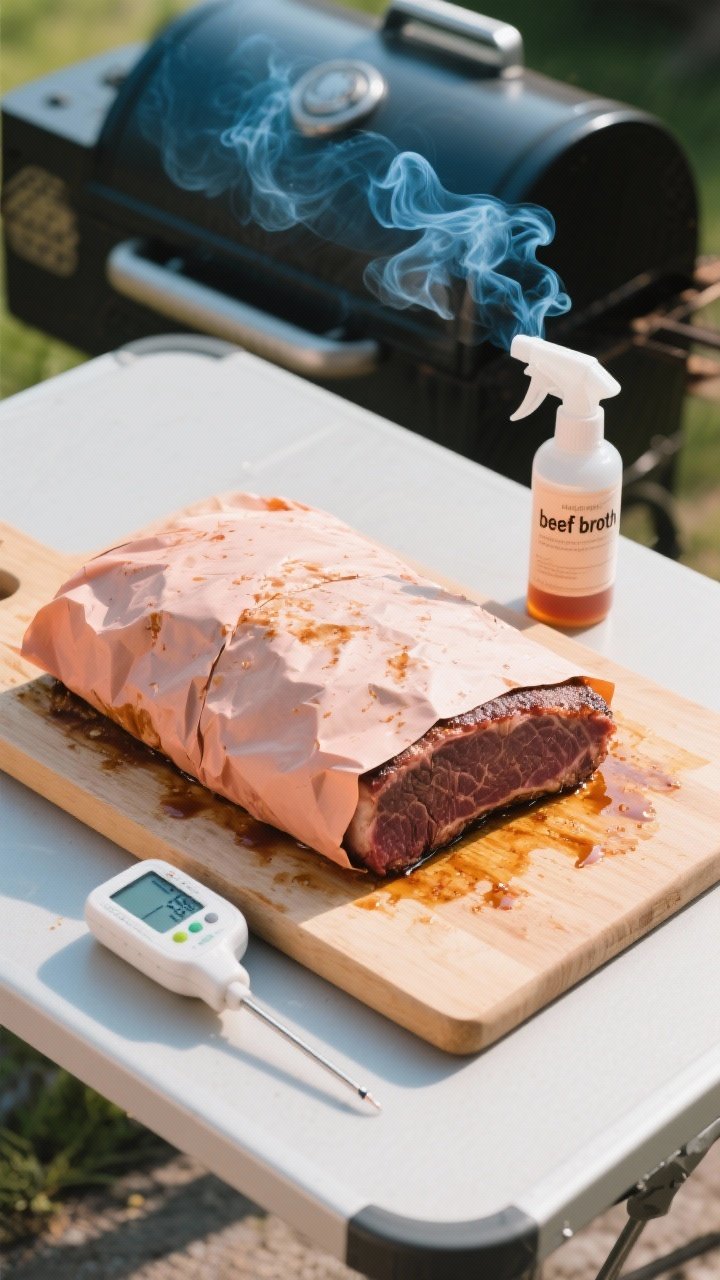
- Smoke, don’t rush: Maintain 225–250°F. Spritz lightly with beef broth or water every 60–90 minutes after the bark begins to set (about 3 hours). Don’t over-spritz; you want the bark to dry and darken.
- Watch for the stall: Around 150–170°F internal, the temp will stall.
When the bark is dark and set (it doesn’t wipe off), wrap tightly in butcher paper for a firmer bark or foil for a softer one and faster cook.
- Cook to tenderness, not just temperature: Start checking at 195°F. You’re done when a probe slides in with butter-like ease in the flat and point, usually between 200–205°F. Every brisket is different; tenderness is the key.
- Rest properly: Vent the wrapped brisket for 5 minutes on the counter, then place it in a dry cooler or warm oven (150–170°F off-heat) for 1–2 hours.
Resting lets juices redistribute and the bark relax.
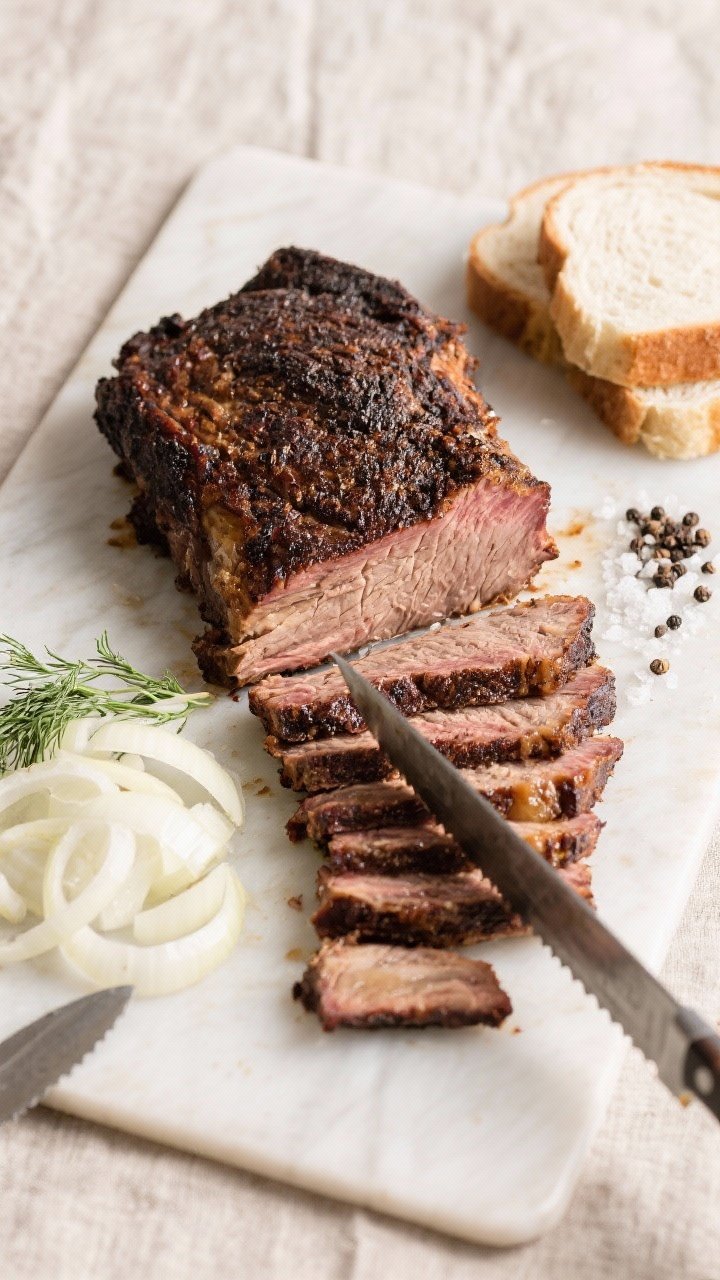
- Slice the right way: Separate the point from the flat along the natural seam if you like, or slice whole. Cut against the grain into 1/4-inch slices. The grain changes between the flat and point—rotate as needed.
- Serve simply: Sprinkle a pinch of salt on the slices to wake it up.
Serve with pickles, onions, and white bread or your favorite sides.
How to Store
- Refrigerate: Cool, then store sliced brisket in a sealed container with a little cooking juice for up to 4 days.
- Freeze: Vacuum-seal or pack tightly with extra liquid. Freeze up to 3 months. Thaw overnight in the fridge.
- Reheat: Warm gently in a covered pan at 300°F with a splash of broth until hot, or sous vide at 150°F for 45–90 minutes for best texture.
Benefits of This Recipe
- Forgiving cook: Wrapping and steady heat help beginners avoid dry meat.
- Simple seasoning: Lets the beef and smoke shine without fuss.
- Scales easily: Works for a small flat or a full packer.
- Teaches fundamentals: You’ll learn smoke management, bark formation, and doneness by feel.
What Not to Do
- Don’t chase perfect temperature constantly: Small swings happen.
Focus on clean smoke and overall range.
- Don’t skip the rest: Cutting too soon drains the juices and toughens slices.
- Don’t over-spritz: Too much moisture softens bark and extends the cook.
- Don’t cook by time alone: Use tenderness and internal temperature as your guides.
- Don’t trim all the fat: You need that 1/4-inch cap for protection and moisture.
Alternatives
- Seasoning swap: Use equal parts salt, pepper, and Montreal steak seasoning. Or try a Texas-style salt and pepper only rub.
- Wood choices: Oak for balanced smoke, hickory for stronger flavor, cherry/apple for mild sweetness. Blend to taste.
- No butcher paper? Use foil for a faster cook and softer bark.
Add a splash of broth before sealing.
- Oven finish: If weather or fuel is tricky, wrap and finish in a 250°F oven. You’ll keep bark and still get tenderness.
- Small smoker: Cook a 5–7 lb flat. Expect a shorter window but watch for dryness; wrap sooner if the bark is set.
FAQ
How long will it take to smoke a brisket?
Plan on 1 to 1.5 hours per pound at 225–250°F, but treat that as a rough guide.
Wrapping speeds things up. Focus on tenderness around 200–205°F rather than the clock.
What internal temperature should I pull the brisket?
Start probing at 195°F and pull when a thermometer slides in with little resistance, usually between 200–205°F. Tenderness beats exact temperature every time.
Do I need a water pan?
It helps with temperature stability and a gentle environment, especially in dry climates or kettle grills.
It’s optional on pellet smokers but rarely hurts.
Which side goes up, fat cap up or down?
Go with fat cap down if your heat source is below to protect the meat. If heat comes from above, fat cap up can help shield it. Use what fits your smoker’s design.
Why did my brisket stall?
Evaporation cools the surface, pausing the internal rise.
Wrapping reduces evaporation and pushes you through the stall faster.
How do I keep the bark from getting too soft?
Wrap in butcher paper instead of foil, avoid over-spritzing, and let the brisket rest unwrapped for 5 minutes before the full rest.
Can I cook it the day before?
Yes. Cook to tender, rest, chill whole or sliced with juices, then reheat gently. Sliced brisket warms more evenly; whole brisket retains moisture better.
What if my brisket is done early?
Rest it and hold it.
Wrap tightly, place in a dry cooler with towels, and it will stay hot for 2–4 hours without drying out.
How do I slice it correctly?
Find the grain on the flat and cut across it into 1/4-inch slices. When you reach the point, rotate the brisket to keep cutting against the grain.
Can I make this without a smoker?
Use an oven at 250°F. Add a small pan of water and a teaspoon of liquid smoke to the rub if you like.
You won’t get full smoke ring, but the texture and flavor will still be great.
Final Thoughts
Great brisket isn’t about gadgets—it’s about steady heat, patience, and knowing when it’s tender. Keep the seasoning simple, manage clean smoke, and let the meat rest. Your first brisket may not be perfect, but it will be delicious, and each cook teaches you something new.
Stick to the basics here and you’ll build confidence fast, one juicy slice at a time.

Beginner Smoked Brisket - A Simple, Reliable Guide for First-Timers
Ingredients
- Whole packer beef brisket (10–14 pounds), or a brisket flat (5–8 pounds) for smaller smokers
- Kosher salt
- Coarse black pepper (16-mesh if you can find it)
- Garlic powder (optional)
- Paprika (optional, for color)
- Yellow mustard or neutral oil (binder, optional)
- Beef broth or water (for spritzing)
- Butcher paper or heavy-duty foil (for wrapping)
- Wood: Oak or hickory (primary), with cherry or apple as a milder option
- Thermometer: instant-read and preferably a leave-in probe
Instructions
- Choose the brisket: If you’re new, go with a 10–12 lb whole packer. Look for flexible meat with even thickness and a white, creamy fat cap.
- Trim it (lightly): Chill the brisket for 30 minutes to firm it up.Trim the fat cap to about 1/4 inch and remove hard, waxy pockets of fat that won’t render. Square off thin edges so they don’t burn.
- Season simply: Mix 1 part kosher salt and 1 part coarse black pepper (about 1 tablespoon of each per pound). Add 1 teaspoon garlic powder and 1 teaspoon paprika per 4 pounds if you like.Lightly coat the meat with mustard or oil, then season all sides generously.
- Preheat the smoker: Aim for 225–250°F. Use clean-burning smoke—thin and blue, not thick and white. If you’re using wood chunks, start with oak and add a piece of fruitwood for sweetness.
- Position the brisket: Place it fat cap down if heat comes from below (common), or fat cap up if heat comes from above.Point the thicker end (the “point”) toward the hotter part of the smoker.
- Smoke, don’t rush: Maintain 225–250°F. Spritz lightly with beef broth or water every 60–90 minutes after the bark begins to set (about 3 hours). Don’t over-spritz; you want the bark to dry and darken.
- Watch for the stall: Around 150–170°F internal, the temp will stall.When the bark is dark and set (it doesn’t wipe off), wrap tightly in butcher paper for a firmer bark or foil for a softer one and faster cook.
- Cook to tenderness, not just temperature: Start checking at 195°F. You’re done when a probe slides in with butter-like ease in the flat and point, usually between 200–205°F. Every brisket is different; tenderness is the key.
- Rest properly: Vent the wrapped brisket for 5 minutes on the counter, then place it in a dry cooler or warm oven (150–170°F off-heat) for 1–2 hours.Resting lets juices redistribute and the bark relax.
- Slice the right way: Separate the point from the flat along the natural seam if you like, or slice whole. Cut against the grain into 1/4-inch slices. The grain changes between the flat and point—rotate as needed.
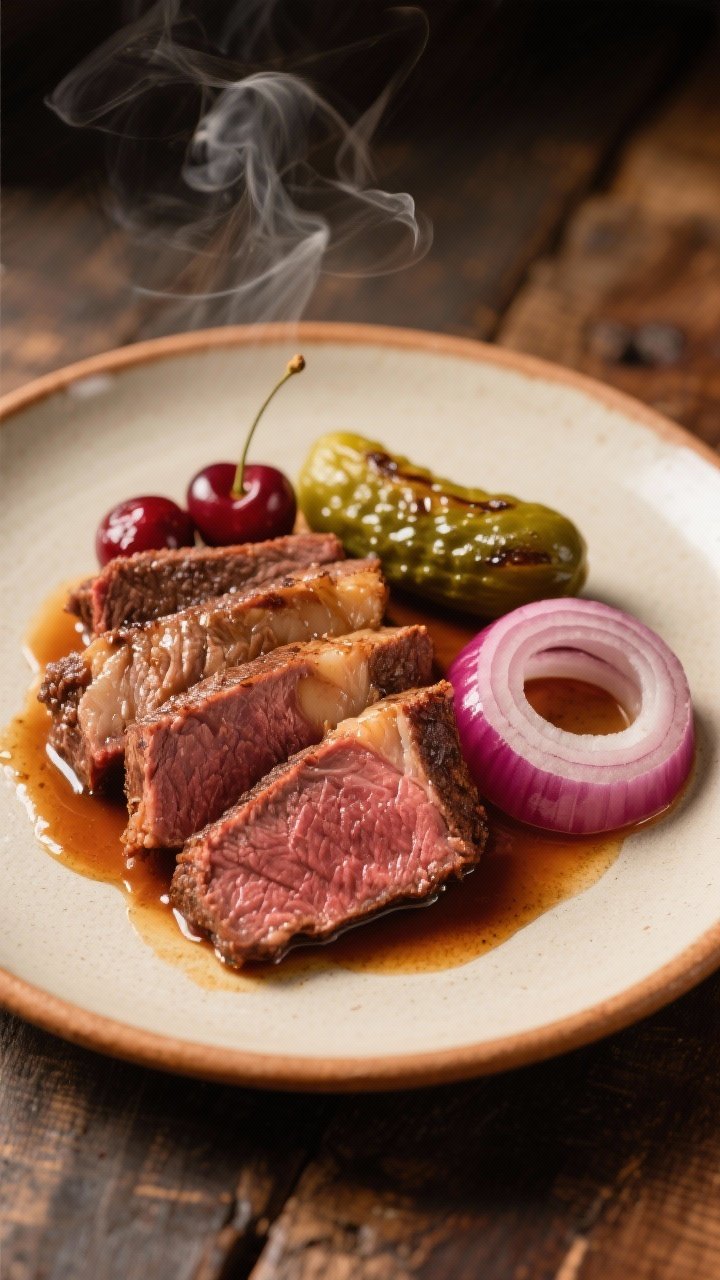
- Serve simply: Sprinkle a pinch of salt on the slices to wake it up.Serve with pickles, onions, and white bread or your favorite sides.