Basque Burnt Cheesecake Recipe | Velvety Vanilla Spanish Dessert
Meet your new favorite dessert: a Basque Burnt Cheesecake that bakes up with a dramatic caramelized top and a creamy, custardy middle scented with vanilla. No crust, no water bath, no fuss—just pure, velvety goodness that tastes like a cross between cheesecake and crème brûlée. If you love desserts that look impressive yet feel totally doable, this one’s for you.
I’ll walk you through every step, share tips to nail that signature “burnt” finish, and offer simple variations. You’ll get a cheesecake that slices like a dream and melts on your tongue. Grab your mixer, some parchment, and let’s make the Spanish dessert that took the world by storm.
Why This Basque Burnt Cheesecake Recipe Works
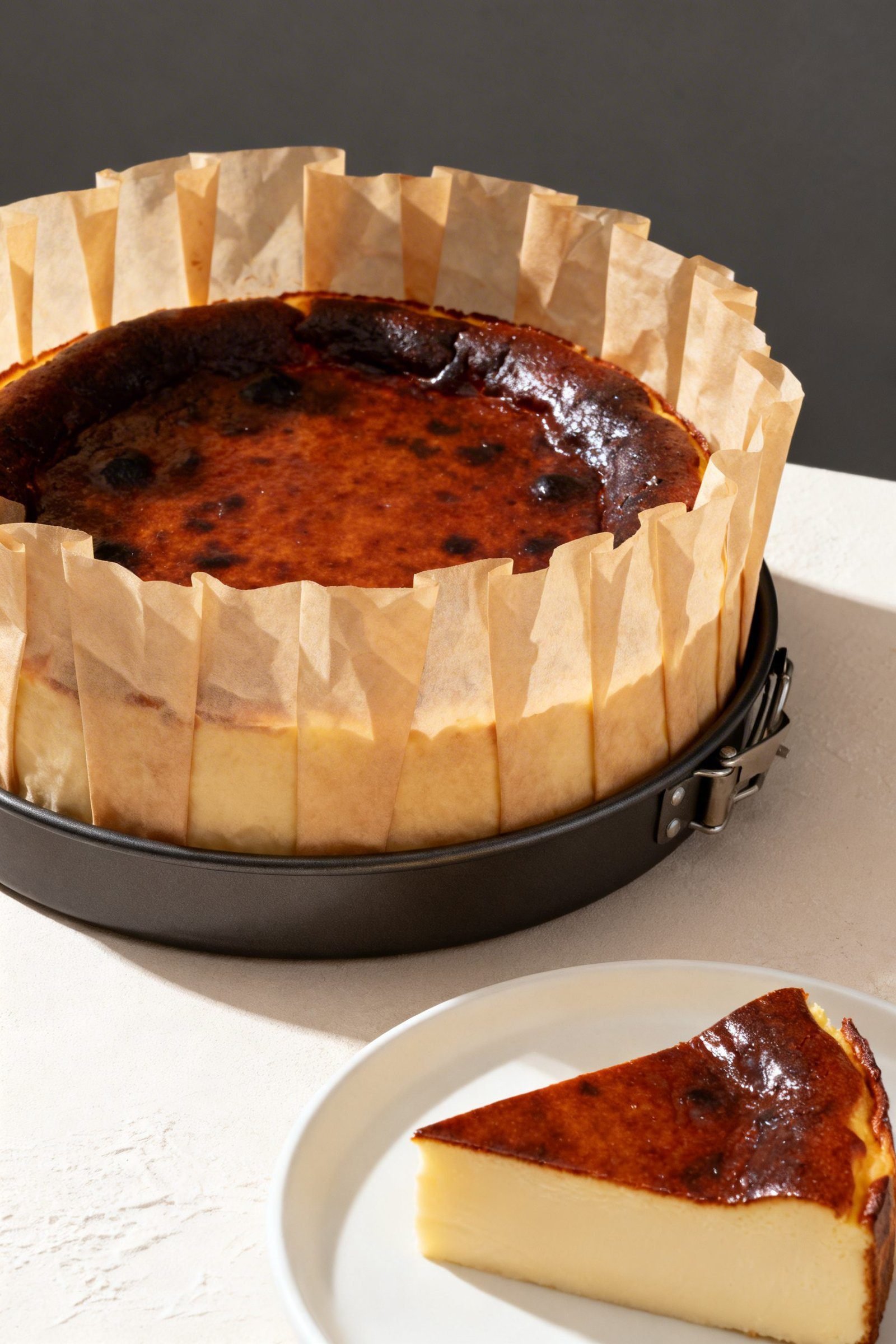
This style of cheesecake flips the usual rules. We bake it hot and fast to achieve a deep bronzed top while the center stays silky and just-set. Here’s why this method delivers standout results:
- High heat equals caramelized flavor: A roaring oven creates that signature mahogany top with toasty, slightly bitter notes that balance the sweet, creamy interior.
- No crust to fuss with: Parchment-lined pan keeps things simple and rustic. The cheesecake becomes the star—no soggy crust worries.
- Forgiving mixing method: Room-temperature dairy blends smoothly, so you avoid cracks and lumps without water baths or elaborate steps.
- Vanilla-forward profile: Real vanilla carries the flavor, so every bite tastes warm, aromatic, and luxurious.
- Perfect texture contrast: Set edges, custardy center. Chill time firms it up just enough while keeping that dreamy wobble.
Ingredients
Use the best dairy and real vanilla for top-tier flavor. Room temperature matters here.
- Cream cheese (full-fat): 32 oz (900 g), softened
- Granulated sugar: 1 cup (200 g)
- Large eggs: 5, at room temperature
- Heavy cream: 1 1/2 cups (360 ml), at room temperature
- Vanilla bean paste or pure vanilla extract: 2–3 teaspoons (paste gives speckles and deeper flavor)
- Fine sea salt: 1/2 teaspoon
- All-purpose flour or cornstarch: 2 tablespoons (optional for a slightly firmer set)
Tools that help:
- 9-inch (23 cm) springform pan
- Two large sheets of parchment paper for lining
- Stand mixer or hand mixer (low speed works best)
- Rubber spatula for scraping the bowl
How to Make Basque Burnt Cheesecake
1) Prep the pan and oven
- Heat the oven to 425°F (220°C). Place a rack in the middle.
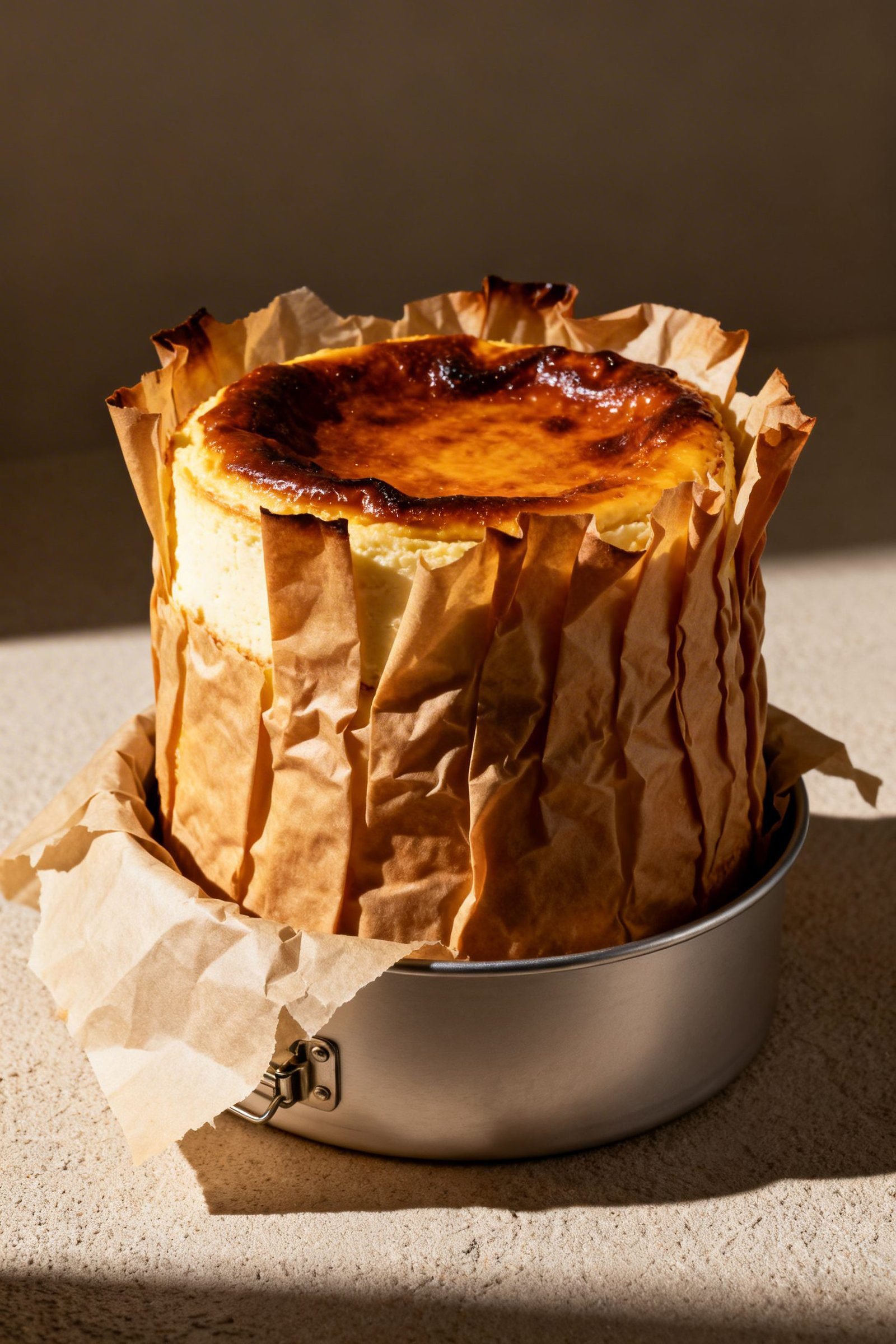
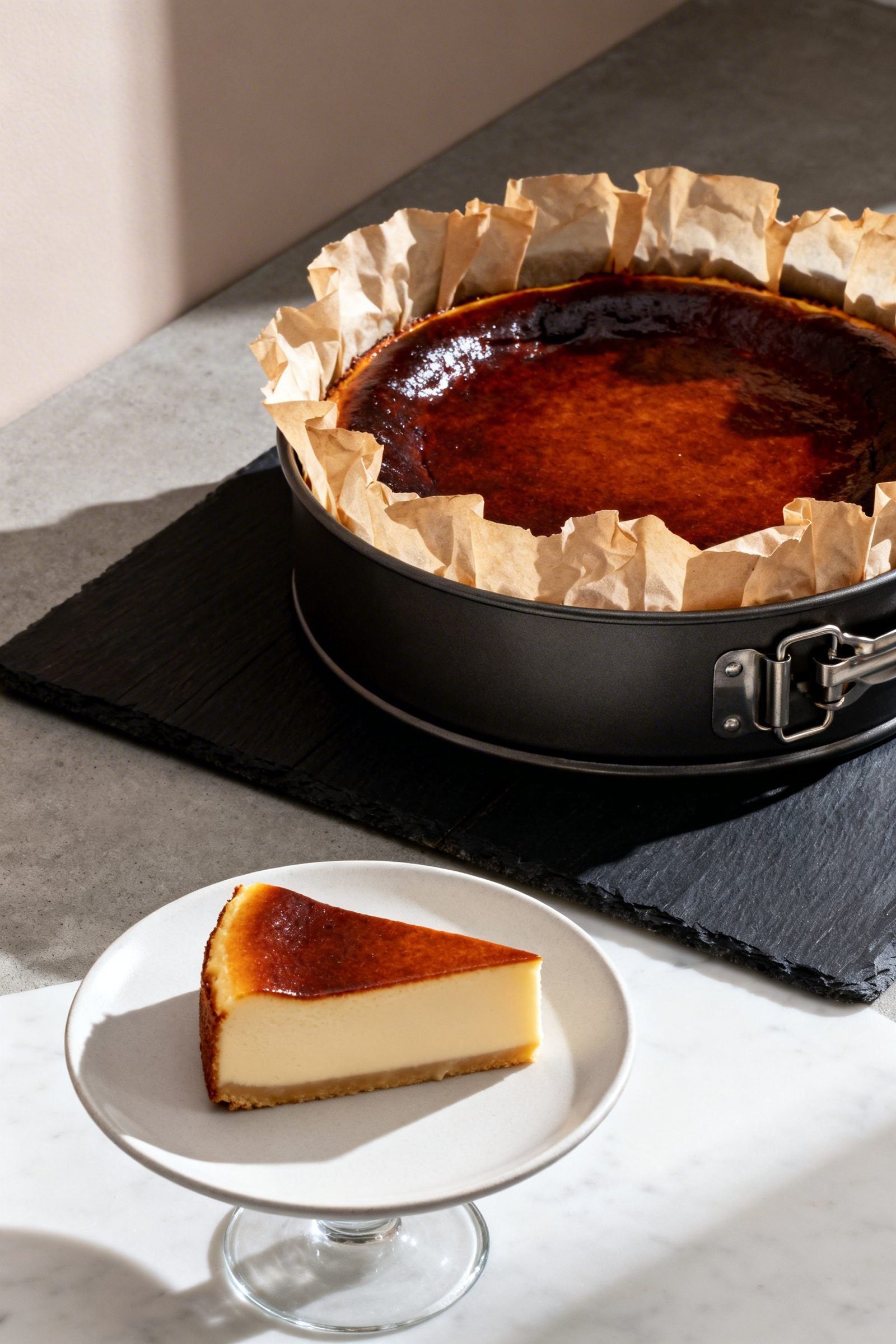
- Line the pan: Crumple two large sheets of parchment, then flatten them and overlap in the springform pan so the paper rises 2–3 inches above the rim. You want pleats and wrinkles—that rustic look prevents leaks and defines the tall sides.
2) Mix the base smoothly
- Beat the cream cheese and sugar on low until velvety and no lumps remain, about 2–3 minutes. Scrape the bowl often.
- Add eggs one at a time, mixing on low until incorporated before adding the next. Keep the mixture glossy and smooth without whipping in too much air.
- Blend in vanilla and salt until evenly combined.
- Sift in flour or cornstarch if using. Mix just until no dry spots remain. This step gently stabilizes the custard.
- Stream in heavy cream on low speed. Mix until silky and pourable. Tap the bowl on the counter to pop big bubbles.
3) Bake to “burnt” perfection
- Pour the batter into the lined pan. Smooth the top with a spatula.
- Bake at 425°F (220°C) for 25–30 minutes, then check. The top should be deeply bronzed with darker spots. If the center looks very pale, continue 5–10 more minutes. You want a bold color and a pronounced jiggle in the center.
- Optional color boost: For extra char, increase to 450–475°F (230–245°C) for the last 5 minutes. Watch closely.
4) Cool for the ideal texture
- Rest in the pan on a rack for 1 hour. The cheesecake will sink slightly and set.
- Chill uncovered for at least 4 hours, preferably overnight. This time gives you that luscious, sliceable custard with a creamy core.
- Unmold and peel away the parchment right before serving for neat, dramatic edges.
Serving tips
- Serve cool or slightly chilled for the best structure and flavor.
- Slice with a hot knife (dip in warm water, wipe dry) for clean cuts.
- Keep it simple: A dusting of powdered sugar or a few berries complements the vanilla without stealing the show.
How to Store Your Basque Burnt Cheesecake
- Refrigerate covered for up to 4–5 days. Press plastic wrap directly against the cut surface to prevent drying.
- Freeze slices on a sheet tray until firm, then wrap tightly and store up to 2 months. Thaw overnight in the fridge.
- Avoid condensation: If moisture forms on top, gently blot with a paper towel before serving.
Benefits of Making This Velvety Vanilla Dessert
- Effortless elegance: No crust, no water bath, and minimal prep deliver a bakery-caliber dessert.
- Flavor balance: Bitter-sweet top, creamy center, and fragrant vanilla keep each bite interesting.
- Make-ahead friendly: Chilling improves texture, so you can bake the day before guests arrive.
- Adaptable base: One batter, endless variations—citrus, spices, liqueurs, and more.
- Consistent results: A hot oven and room-temp ingredients keep the process reliable, even for beginners.
What Not to Do
- Don’t skip room temperature: Cold cream cheese forms stubborn lumps that won’t smooth out easily.
- Don’t overmix: Too much air leads to an overly puffy rise and potential cracking. Use low speed and scrape often.
- Don’t underbake the top: That deep bronzed color delivers the signature flavor. Pale tops taste flat.
- Don’t obsess over perfection: Wrinkles, cracks, and a sunken middle are normal—and part of the charm.
- Don’t rush the chill: Warm centers taste loose and won’t slice cleanly. Give it time.
Variations You Can Try
- Vanilla bean deluxe: Split a vanilla pod and scrape seeds into the batter. Steep the pod in the cream for 10 minutes, then discard.
- Citrus twist: Add 1 tablespoon finely grated lemon or orange zest for brightness.
- Espresso caramel: Stir in 2 teaspoons instant espresso and drizzle with warm caramel when serving.
- Almond-amaretto: Swap 1 teaspoon vanilla for 1 tablespoon amaretto and add 1/4 teaspoon almond extract.
- Salted honey: Replace 1/4 cup sugar with 1/4 cup honey and finish slices with flaky sea salt.
- Brown sugar vanilla: Substitute 1/3 cup of the sugar with light brown sugar for a toastier depth.
- Gluten-free: Use cornstarch instead of flour or skip the starch for a softer custard.
FAQ
How jiggly should the center be?
Think soft custard wobble: The outer 1–2 inches should look set, while the middle jiggles like gelatin. It will firm up during cooling.
Can I use a different pan size?
Yes, but adjust time. An 8-inch pan yields a taller cake and needs a few extra minutes. A 10-inch pan bakes faster and turns thinner—start checking earlier.
Why did my top not brown enough?
Crank the heat for the last 5–10 minutes or move the pan up one rack. Make sure you preheated properly and avoid opening the oven too often.
Do I need the flour or cornstarch?
Optional stabilizer. Starch gives a slightly firmer, more sliceable set. Skip it for an ultra-soft, custardy center.
Can I make this without a springform pan?
Yes, with care. Use a deep 9-inch cake pan well-lined with overhanging parchment for easy lifting. Expect a bit more rustic shape.
How sweet is this recipe?
Moderately sweet. The bitter caramelized top balances the sugar. For less sweetness, reduce sugar by 2–3 tablespoons without changing texture much.
What’s the best way to serve it?
Chilled and simple. Let it sit at room temp for 10–15 minutes, slice with a hot knife, and pair with coffee or a small spoon of macerated berries.
Conclusion
This Basque Burnt Cheesecake delivers everything you crave in a showstopping dessert—caramelized top, creamy vanilla center, and effortless prep. You line a pan, blend a few staples, and let high heat work its magic. Bake it today, chill it overnight, and watch every slice disappear tomorrow. Once you taste that velvety texture and toasty flavor, this will become your go-to celebration cake—and your “just because” treat, too.
Basque Burnt Cheesecake
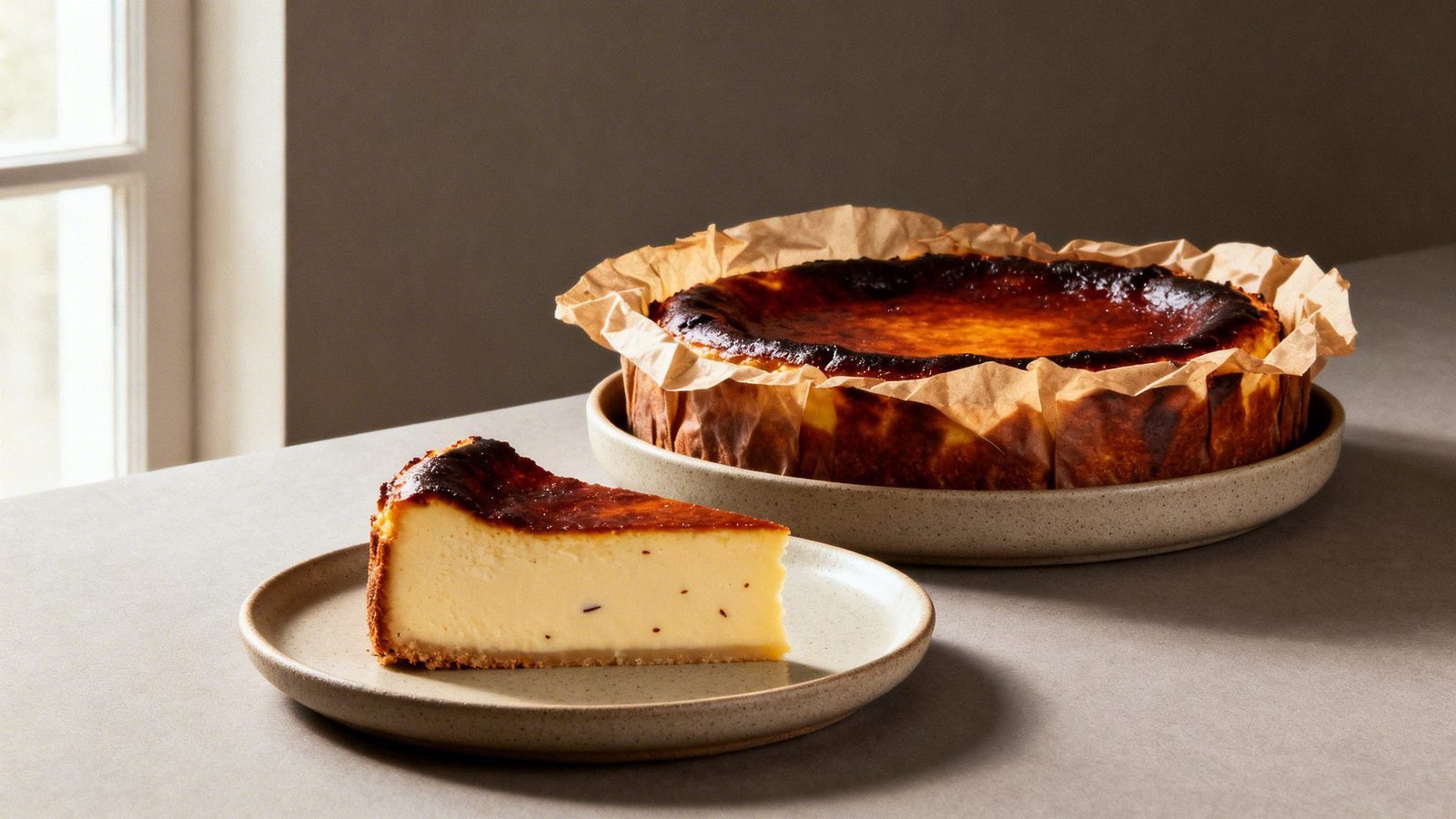
A crustless Spanish-style cheesecake with a deeply caramelized top and a creamy, vanilla-scented custardy center.
Ingredients
- Cream cheese (full-fat): 32 oz (900 g), softened
- Granulated sugar: 1 cup (200 g)
- Large eggs: 5, at room temperature
- Heavy cream: 1 ½ cups (360 ml), at room temperature
- Vanilla bean paste or pure vanilla extract: 2–3 teaspoons
- Fine sea salt: ½ teaspoon
- All-purpose flour or cornstarch: 2 tablespoons (optional)
Instructions
- Heat oven to 425°F (220°C) with a rack in the middle.
- Line a 9-inch (23 cm) springform pan with two crumpled-then-flattened overlapping sheets of parchment so they rise 2–3 inches above the rim.
- Beat cream cheese and sugar on low until smooth and lump-free, 2–3 minutes, scraping the bowl.
- Add eggs one at a time on low, mixing just to incorporate after each.
- Blend in vanilla and salt until evenly combined.
- Sift in flour or cornstarch if using and mix just until no dry spots remain.
- Stream in heavy cream on low until silky and pourable; tap the bowl to release large bubbles.
- Pour batter into the lined pan and smooth the top.
- Bake at 425°F (220°C) for 25–30 minutes, until the top is deeply bronzed with darker spots and the center has a pronounced jiggle; if pale, continue 5–10 minutes more. Optionally increase to 450–475°F (230–245°C) for the last 5 minutes for extra color.
- Cool in the pan on a rack for 1 hour, then chill uncovered for at least 4 hours or overnight.
- Unmold, peel away parchment, slice with a hot knife, and serve cool or slightly chilled.