Pain Au Chocolat Recipe | Flaky French Chocolate Croissants at Home
If making layered French pastries at home feels intimidating, I’ve got you. These pain au chocolat (aka chocolate croissants) turn out flaky, buttery, and deeply chocolatey with a crisp exterior and a tender, honeycombed interior. You only need patience, cold butter, and a few smart techniques to get bakery-level results from your own oven.
I’ll walk you through each step with practical tips so your dough behaves, your layers stay distinct, and your chocolate stays in the center where it belongs. You’ll learn how to laminate the dough, shape those classic bars, proof them just right, and bake until golden and shatteringly crisp.
Why This Pain Au Chocolat Recipe Works
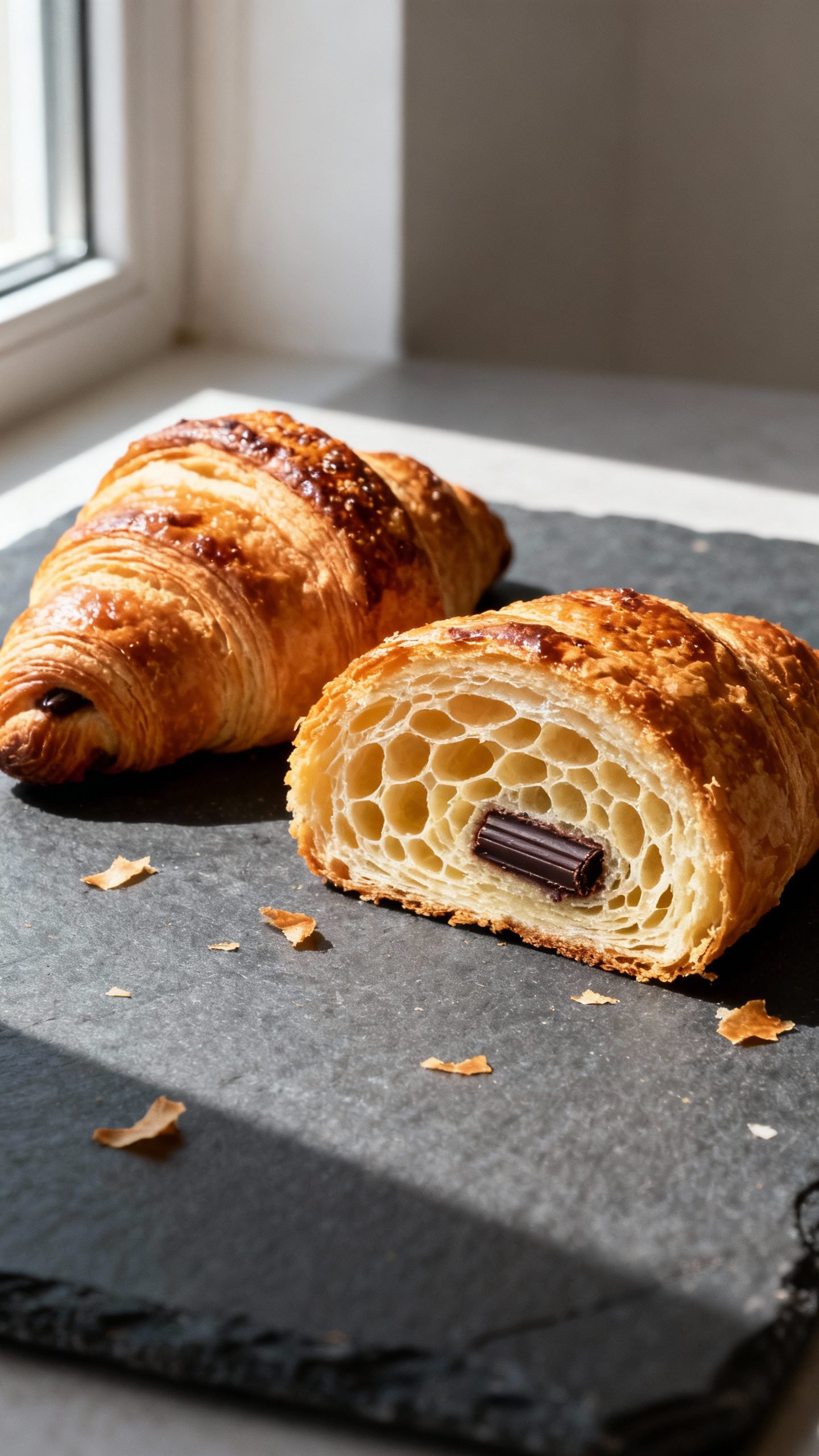
- Cold butter equals flaky layers: We lock a slab of butter into the dough, then roll and fold to create hundreds of layers that puff dramatically in the oven.
- Lean dough for structure: Milk, a touch of sugar, and just enough yeast create a dough strong enough to lift but tender enough to stay delicate.
- Controlled temperature: Chilling between folds keeps butter from melting into the dough, preserving clean layers.
- Chocolate batons for even melt: Slim sticks of dark chocolate hold shape during baking and soften into a lush center—no leaks.
- Tested timing: Clear windows for rising, resting, and proofing deliver consistent lift and color every time.
Ingredients
For the dough
- 4 cups (500 g) bread flour, plus extra for dusting
- 1/4 cup (50 g) granulated sugar
- 2 tsp (7 g) fine sea salt
- 2 1/4 tsp (7 g) instant or rapid-rise yeast
- 1 1/4 cups (300 ml) cold whole milk
- 3 tbsp (40 g) unsalted butter, softened (for the dough)
For the butter block
- 1 cup (225 g) cold unsalted European-style butter (82%+ fat)
For shaping and filling
- 16–20 dark chocolate batons (or chopped dark chocolate, 60–70% cacao)
- All-purpose flour for rolling
For finishing
- 1 large egg + 1 tbsp milk (egg wash)
Yield: 16 medium pain au chocolat
Active time: about 1 hour 15 minutes; Total time: 2 days with resting and proofing
How to Make Pain Au Chocolat at Home
1) Make the dough
- Whisk flour, sugar, salt, and yeast in a large bowl. Add cold milk and softened butter. Mix until a shaggy dough forms.
- Knead by hand 3–4 minutes just until smooth and cohesive. Do not overwork. The dough should feel cool and slightly firm.
- Flatten into a 1-inch-thick rectangle. Wrap and chill 30–45 minutes. Cold dough resists over-stretching and helps lamination.
2) Make the butter block
- Place butter between two sheets of parchment. Tap and roll into a 6×8-inch (15×20 cm) rectangle, about 1/2 inch thick.
- Square the edges with a bench scraper. Chill 10–15 minutes until cool yet pliable. Butter should bend without cracking or feeling greasy.
3) Enclose the butter
- On a lightly floured surface, roll dough into a 10×16-inch (25×40 cm) rectangle.
- Place the butter block in the center, with the short side parallel to the short side of the dough.
- Fold both short ends of dough over the butter to meet in the middle, then pinch the seams. You now have a neat packet.
4) First turn (letter fold)
- Roll the packet into an 8×24-inch (20×60 cm) rectangle. Keep edges straight; add flour as needed but brush off excess.
- Fold like a letter: bottom third up, top third down over it. That’s one turn.
- Wrap and chill 30 minutes. Resting prevents butter from smearing into the dough.
5) Second and third turns
- Repeat the rolling to 8×24 inches and do another letter fold. Chill 30 minutes.
- Do a third letter fold the same way. Chill at least 1 hour or up to overnight for best flavor.
6) Roll and cut
- Roll the laminated dough into a 12×24-inch (30×60 cm) rectangle, about 1/4 inch thick. Trim edges to reveal clean layers.
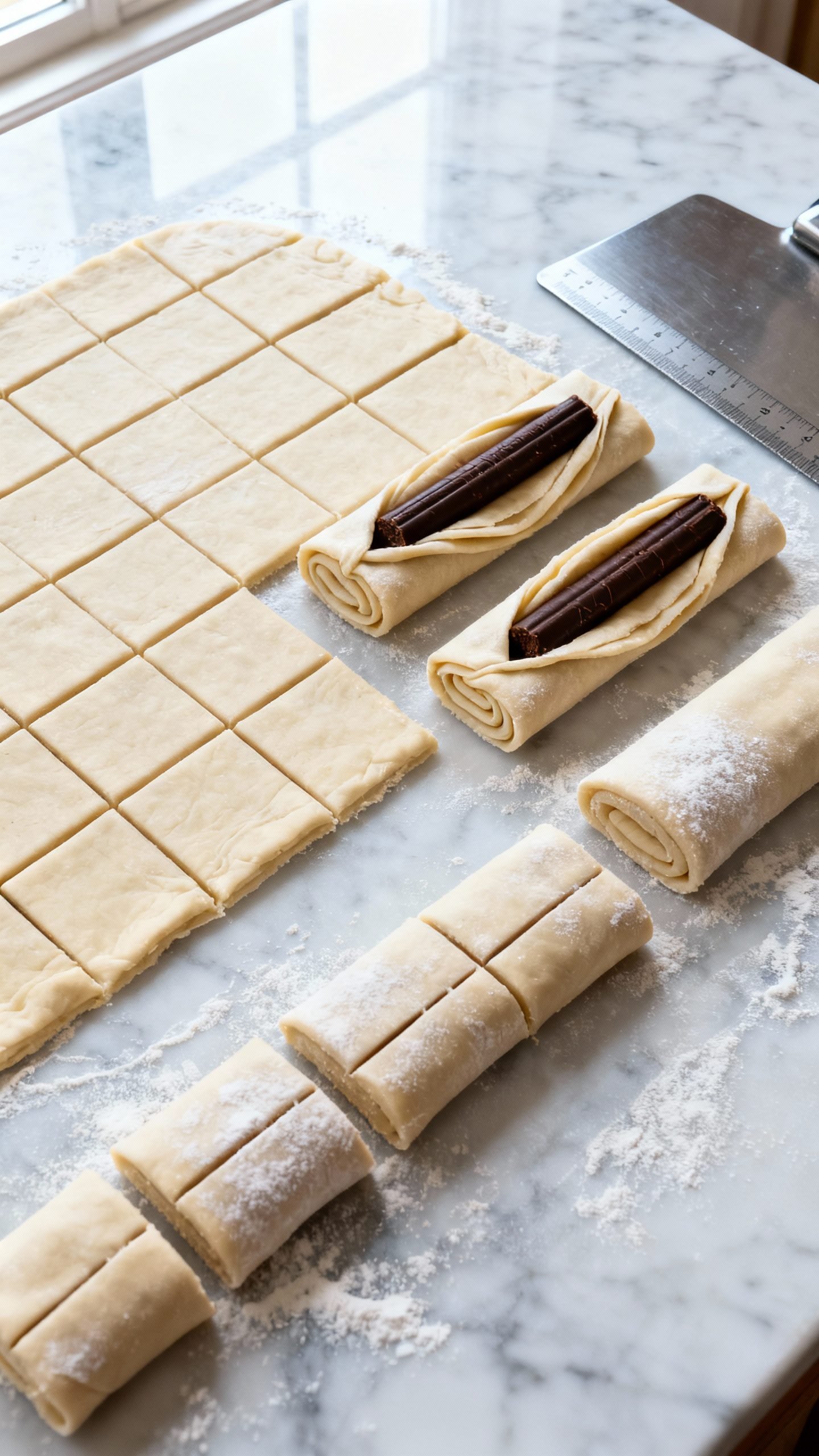
- Cut into 16 rectangles, each 3×6 inches (7.5×15 cm).
7) Shape the pain au chocolat
- Place a chocolate baton along the short edge of one rectangle. Roll the dough over the baton one full turn.
- Add a second baton and continue rolling to the end, seam side down. Do not press flat; keep the roll plump.
- Arrange on a parchment-lined sheet, leaving space to expand.
8) Proof
- Cover loosely and let rise at 75–80°F (24–27°C) for 1.5–2 hours until puffy, jiggly, and about 50% larger. The layers should look distinct.
- They should feel airy when gently shaken, not dense. If the butter looks melty, chill 10 minutes and resume proofing in a cooler spot.
9) Bake
- Heat oven to 400°F (200°C). Brush pastries lightly with egg wash, avoiding the cut edges.
- Bake 18–22 minutes until deep golden brown with a glossy top and crisp bottoms. Rotate pans halfway for even color.
- Cool 15 minutes before serving. The chocolate finishes melting as they rest.
How to Store Pain Au Chocolat
- Room temperature: Keep baked pastries in an airtight container for up to 2 days. Recrisp at 350°F (175°C) for 5–7 minutes.
- Freeze unbaked: After shaping, freeze on a tray. Once firm, bag airtight for up to 2 months. Thaw overnight in the fridge, proof, then bake.
- Freeze baked: Cool completely, wrap tightly, and freeze up to 2 months. Reheat from frozen at 350°F (175°C) for 10–12 minutes.
- Avoid the fridge: Refrigeration dries laminated dough quickly and dulls the crust.
Benefits of Making Pain Au Chocolat at Home
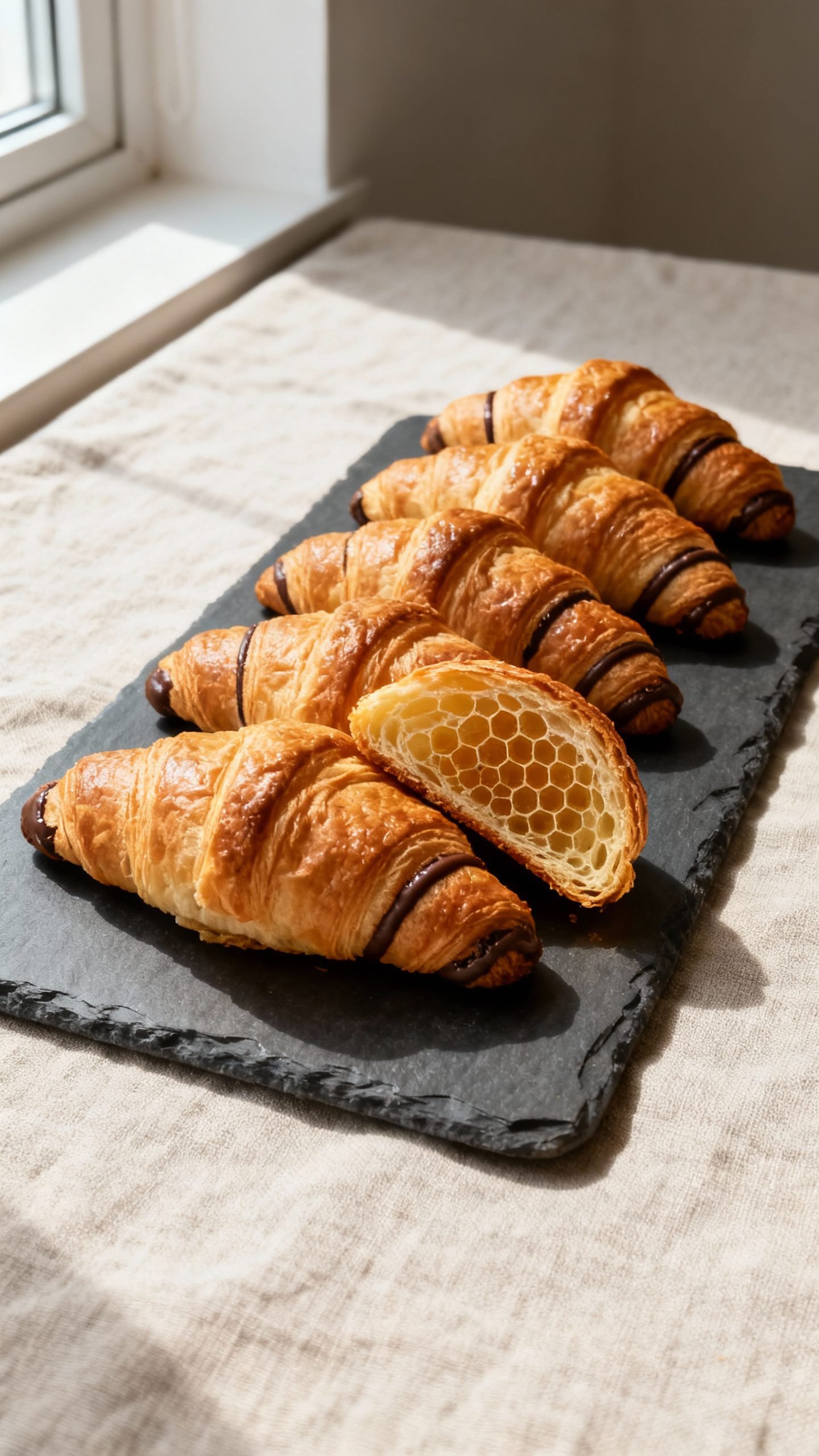
- Freshness you can taste: Nothing beats that just-baked aroma and shatteringly crisp exterior.
- Better ingredients: High-fat butter and quality chocolate make a noticeable difference.
- Custom size and sweetness: Shape small for snacks or larger bakery-style bars and choose darker or milk chocolate.
- Confidence boost: Mastering lamination builds skills that translate to croissants, Danish, and puff pastry.
- Cost-effective luxury: A weekend project that feels fancy without bakery prices.
What Not to Do
- Do not rush chilling: Warm dough smears butter and ruins layers.
- Do not overflour: Excess flour toughens dough and prevents clean lamination. Dust lightly and brush off.
- Do not overproof: If pastries start to leak butter or slump, bake immediately.
- Do not use low-fat butter: Water-heavy butter steams and tears layers. Choose 82%+ butter.
- Do not roll too thin: Paper-thin dough bakes patchy and leaks chocolate.
Variations You Can Try
- Almond pain au chocolat: Spread a thin layer of frangipane on the dough before adding chocolate.
- Orange and dark chocolate: Add zest of 1 orange to the dough and use 70% chocolate.
- Hazelnut crunch: Sprinkle finely chopped toasted hazelnuts with the chocolate batons.
- Milk chocolate or caramel: Swap batons for milk chocolate or soft caramel sticks for a sweeter version.
- Mini pains: Cut rectangles 2×4 inches and bake 14–16 minutes for bite-size pastries.
- Cinnamon sugar finish: Dust warm pastries with cinnamon sugar for a playful twist.
FAQ
Can I use active dry yeast?
Yes. Bloom 2 1/4 tsp active dry yeast in part of the cold milk warmed to lukewarm with a pinch of sugar for 5–10 minutes, then mix into the dough. Keep the rest of the milk cold to maintain dough temperature.
What if I don’t have chocolate batons?
Use chopped high-quality dark chocolate. Arrange a tight line at each roll to mimic batons so it stays centered and melts evenly.
How do I keep butter from leaking?
Work cold. Seal edges after each fold. Proof at moderate temperature, not warm. If you see sheen forming, chill 10–15 minutes and continue.
Why are my layers uneven?
Uneven rolling pressure or warm butter causes smearing. Roll from the center out, rotate the dough frequently, and square edges with a scraper.
Can I make the dough ahead?
Yes. After the third turn, chill overnight. The flavor improves and the dough handles even better the next day.
How do I get a deep golden crust?
Use an egg wash with a splash of milk, apply lightly in two coats (before proofing and right before baking), and bake until well-colored.
Conclusion
You can bake bakery-quality pain au chocolat at home with a little planning and a chill-first mindset. Keep the butter cold, respect the resting times, and roll with purpose. Once you pull those glossy, flaky pastries from the oven and hear that crisp crackle, you’ll know it was worth every fold. Brew coffee, share warm, and enjoy every buttery, chocolatey bite.

Pain Au Chocolat Recipe | Flaky French Chocolate Croissants at Home
Ingredients
Ingredients
Instructions
Instructions
- Whisk flour, sugar, salt, and yeast in a large bowl. Add cold milk and softened butter. Mix until a shaggy dough forms.
- Knead by hand 3–4 minutes just until smooth and cohesive. Do not overwork. The dough should feel cool and slightly firm.
- Flatten into a 1-inch-thick rectangle. Wrap and chill 30–45 minutes. Cold dough resists over-stretching and helps lamination.
- Place butter between two sheets of parchment. Tap and roll into a 6x8-inch (15x20 cm) rectangle, about 1/2 inch thick.
- Square the edges with a bench scraper. Chill 10–15 minutes until cool yet pliable. Butter should bend without cracking or feeling greasy.
- On a lightly floured surface, roll dough into a 10x16-inch (25x40 cm) rectangle.
- Place the butter block in the center, with the short side parallel to the short side of the dough.
- Fold both short ends of dough over the butter to meet in the middle, then pinch the seams. You now have a neat packet.
- Roll the packet into an 8x24-inch (20x60 cm) rectangle. Keep edges straight; add flour as needed but brush off excess.
- Fold like a letter: bottom third up, top third down over it. That’s one turn.
- Wrap and chill 30 minutes. Resting prevents butter from smearing into the dough.
- Repeat the rolling to 8x24 inches and do another letter fold. Chill 30 minutes.
- Do a third letter fold the same way. Chill at least 1 hour or up to overnight for best flavor.
- Roll the laminated dough into a 12x24-inch (30x60 cm) rectangle, about 1/4 inch thick. Trim edges to reveal clean layers.
- Cut into 16 rectangles, each 3x6 inches (7.5x15 cm).
- Place a chocolate baton along the short edge of one rectangle. Roll the dough over the baton one full turn.
- Add a second baton and continue rolling to the end, seam side down. Do not press flat; keep the roll plump.
- Arrange on a parchment-lined sheet, leaving space to expand.
- Cover loosely and let rise at 75–80°F (24–27°C) for 1.5–2 hours until puffy, jiggly, and about 50% larger. The layers should look distinct.
- They should feel airy when gently shaken, not dense. If the butter looks melty, chill 10 minutes and resume proofing in a cooler spot.
- Heat oven to 400°F (200°C). Brush pastries lightly with egg wash, avoiding the cut edges.
- Bake 18–22 minutes until deep golden brown with a glossy top and crisp bottoms. Rotate pans halfway for even color.
- Cool 15 minutes before serving. The chocolate finishes melting as they rest.