
Beginner Whole Wheat Sourdough Recipe | Easy Rustic Homemade Bread
If you’ve wanted to bake real sourdough but felt nervous to start, this easy whole wheat sourdough loaf is your perfect first step. It delivers a rustic crust, a tender, slightly chewy interior, and that signature tang—all with simple steps and reliable cues. You’ll mix, rest, fold, and bake your way to a gorgeous round loaf you’ll feel proud to slice.
I rely on this method when I want dependable results without babysitting the dough all day. The timeline fits real life, the ingredients stay basic, and you don’t need special equipment beyond a sturdy bowl and a hot oven. Let’s make your kitchen smell like a bakery.
Why This Whole Wheat Sourdough Recipe Works
- Balanced flour blend: A mix of whole wheat and bread flour gives flavor and nutrition while keeping the crumb light and tender.
- Autolyse for easy handling: A short rest before adding salt strengthens gluten naturally and makes the dough smoother and less sticky.
- Stretch-and-folds instead of kneading: Gentle folds build structure without a mixer, perfect for beginners.
- Overnight cold proof: The fridge slows fermentation for better flavor development and simpler scheduling.
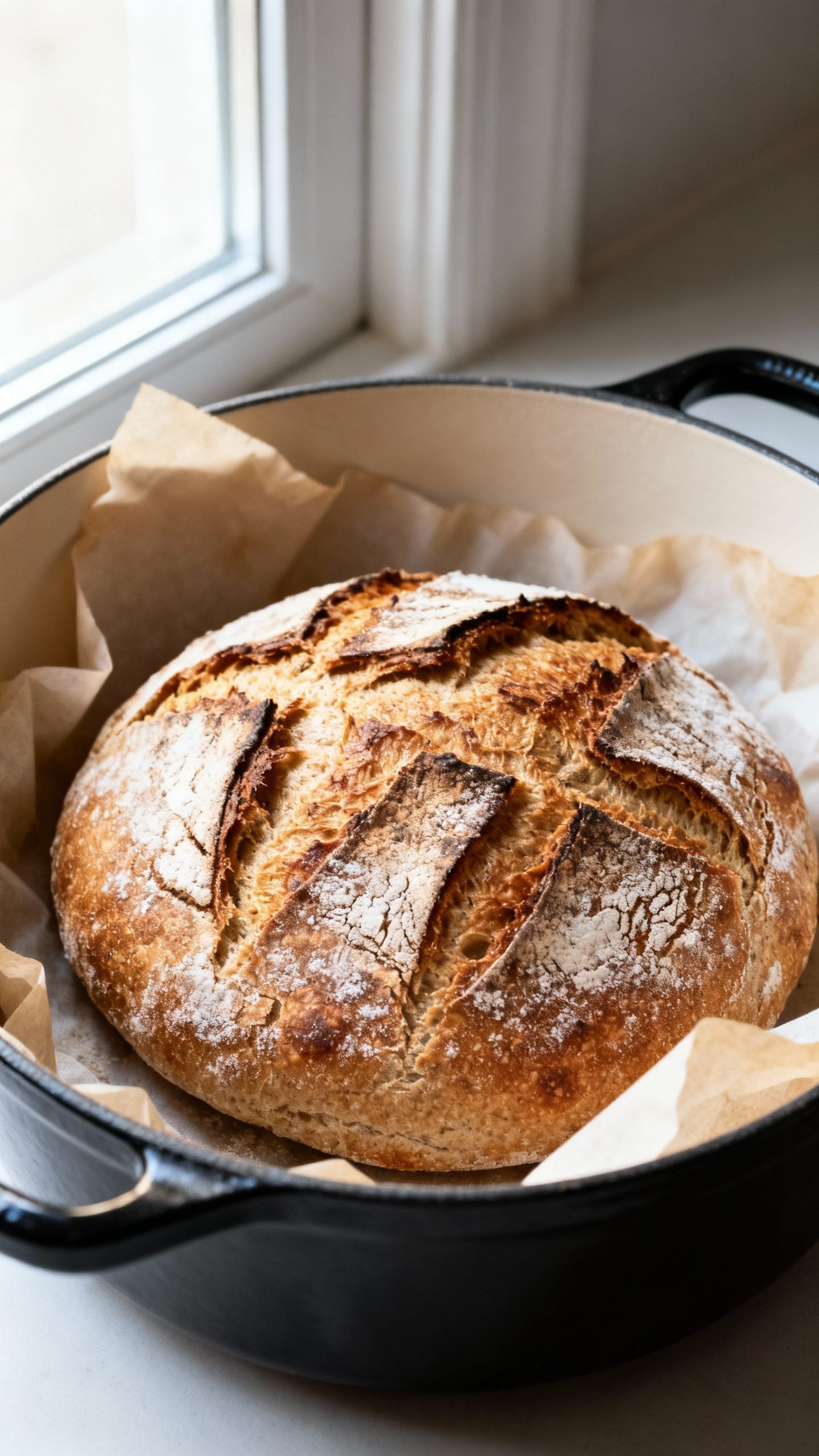
- Steam and high heat: Baking in a preheated Dutch oven traps steam, which boosts oven spring and a crisp, crackly crust.
Ingredients
- Active sourdough starter (100% hydration), bubbly and ripe
- Bread flour for strength and a lofty rise
- Whole wheat flour for nuttiness and extra fiber
- Water, room temperature
- Fine sea salt for flavor and dough structure
Suggested Measurements (1 medium loaf)
- 350 g bread flour
- 150 g whole wheat flour
- 100 g active starter (fed 6–8 hours prior and doubled)
- 360–380 g water (start with 360 g; add more if dough feels tight)
- 9 g fine sea salt (about 1.5 tsp)
Helpful Tools
- Large bowl or clear container for mixing
- Bowl scraper or rubber spatula
- Kitchen scale (highly recommended)
- Banneton or a towel-lined bowl for proofing
- Sharp lame or serrated knife for scoring
- Dutch oven with lid (or heavy oven-safe pot)
- Parchment paper
How to Make Easy Whole Wheat Sourdough Bread
1) Mix and Autolyse (30–45 minutes)
- Combine 350 g bread flour and 150 g whole wheat flour in a bowl.
- Pour in 340 g water and mix until no dry flour remains. The dough may look shaggy.
- Cover and rest for 30–45 minutes to hydrate the flour. This makes the dough easier to work.
2) Add Starter and Salt
- Add 100 g active starter and mix with damp fingers until fully incorporated.
- Sprinkle in 9 g salt with another 20–40 g water as needed. Pinch and fold until the salt dissolves and the dough feels cohesive.
3) Bulk Fermentation with Stretch-and-Folds (3–4 hours)
- Cover the bowl and rest for 30 minutes.
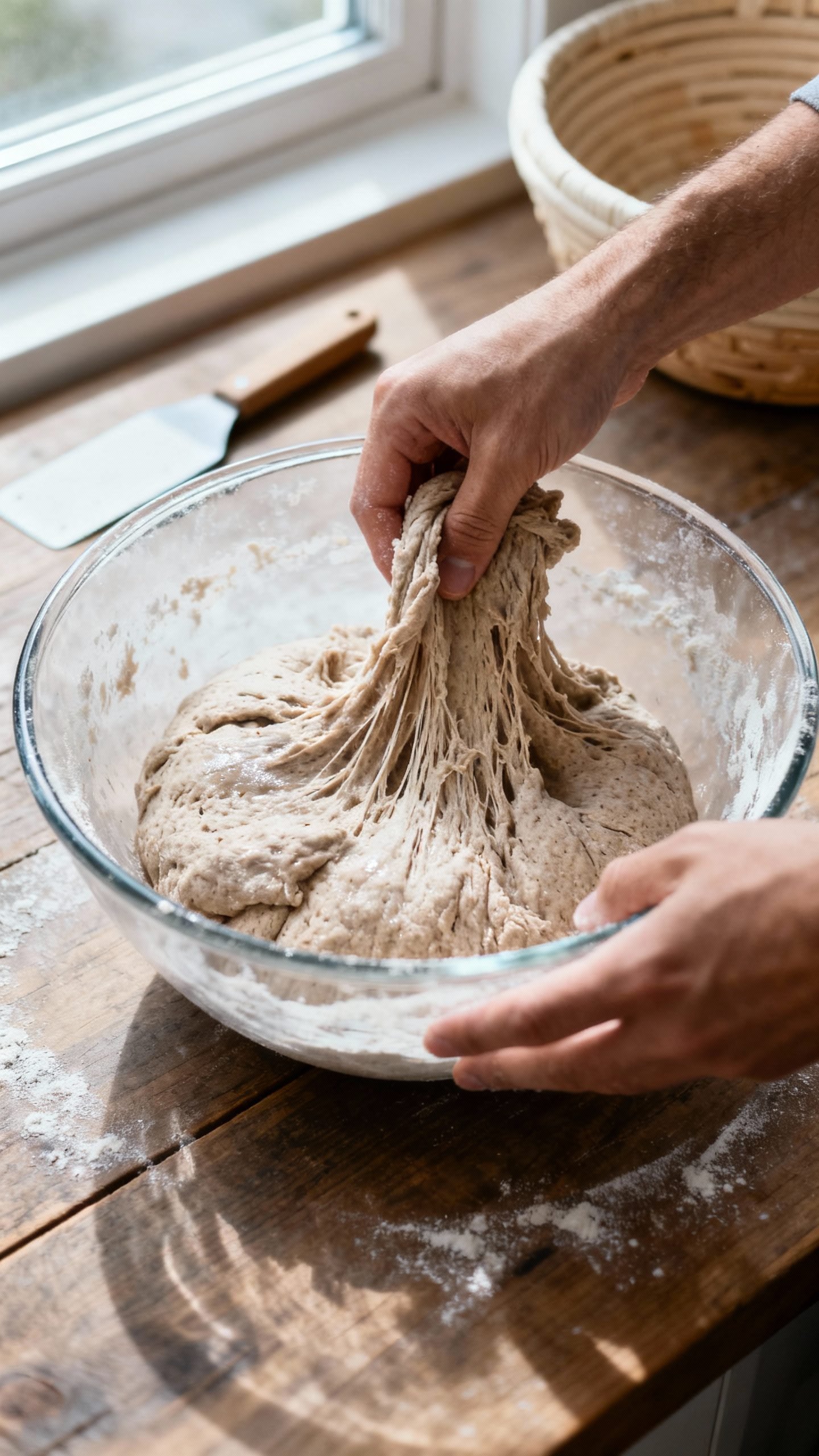
- Perform a set of stretch-and-folds: grab one edge, stretch up, and fold over; rotate the bowl and repeat 4–6 times.
- Repeat sets every 30 minutes for the first 2 hours (3–4 sets total). The dough should become smoother and more elastic.
- Let the dough rise until it looks puffy by about 50%, jiggles when shaken, and shows bubbles along the sides. Adjust time for your room temp.
4) Preshape and Bench Rest
- Lightly flour the counter and your hands. Turn out the dough.
- Use a bench scraper to form a loose round, creating surface tension by tucking edges toward the center.
- Rest uncovered for 20–30 minutes. The dough should relax but hold its shape.
5) Final Shape and Cold Proof
- Lightly flour the top of the dough, flip it, and shape into a tight round or oval. Build tension without tearing.
- Dust a banneton (or towel-lined bowl) with flour. Place the dough seam-side up.
- Cover and refrigerate for 8–16 hours for a slow, flavorful proof.
6) Preheat and Bake
- Place a Dutch oven in your oven and preheat to 475°F (246°C) for at least 30 minutes.
- Cut a piece of parchment. Invert the cold dough onto it, seam-side down.
- Score the top with a deep central slash about 1/2 inch deep to control the expansion.
- Carefully lower the dough (on parchment) into the hot pot. Cover and bake for 20 minutes.
- Reduce heat to 450°F (232°C), remove the lid, and bake another 20–25 minutes until deep golden-brown with a blistered crust.
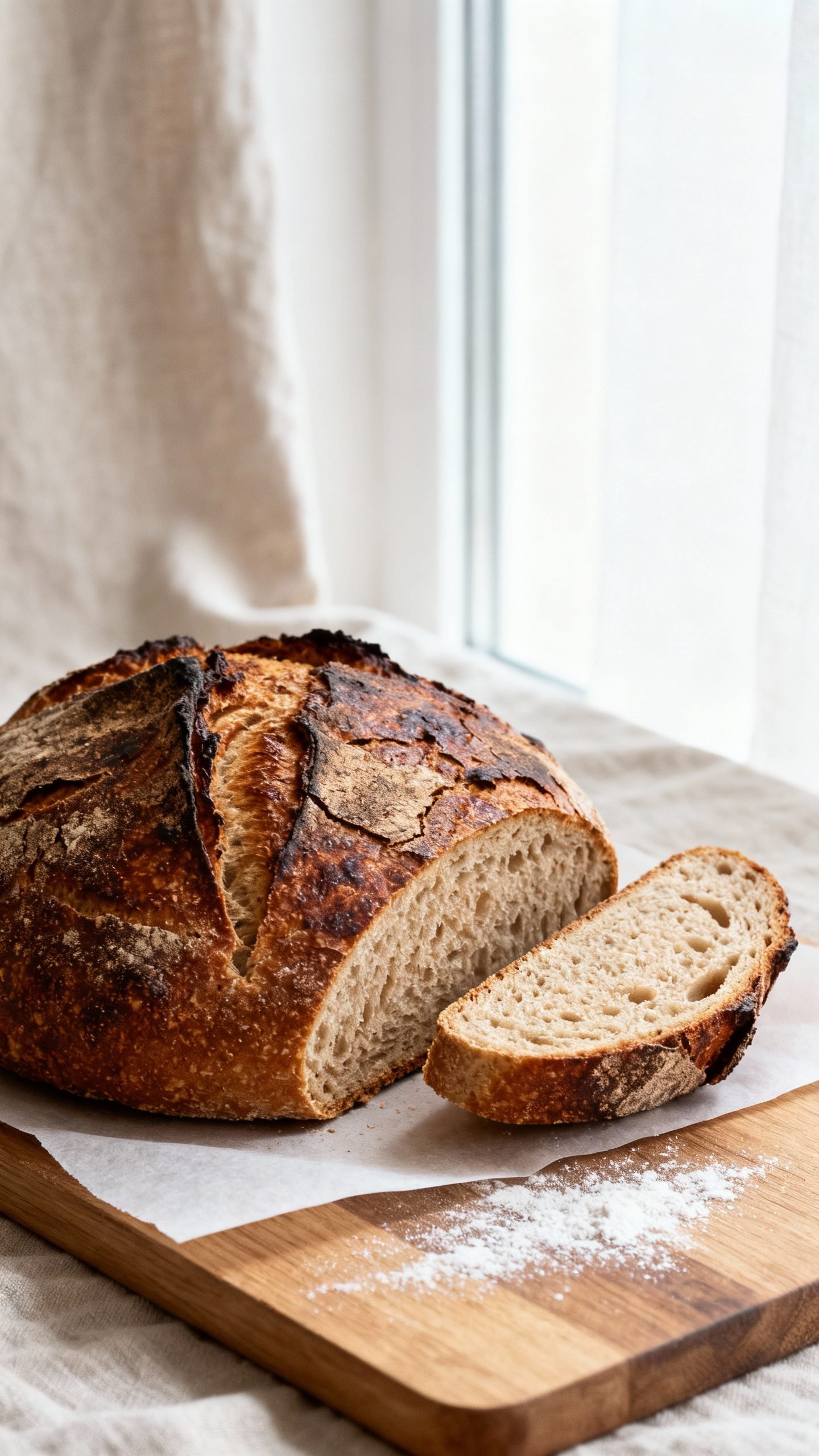
- Cool on a rack for at least 1–2 hours before slicing to set the crumb.
Doneness Cues
- Color: deep golden-brown with darker edges
- Sound: loaf feels light and sounds hollow when tapped
- Internal temp: about 208–212°F (97–100°C)
How to Store Whole Wheat Sourdough Bread
- Room temperature: Store cut-side down on a board or in a paper bag for 2–3 days. Avoid plastic, which softens the crust.
- Freezing: Slice the loaf, wrap tightly, and freeze up to 3 months. Toast straight from frozen.
- Reviving the crust: Warm at 350°F (177°C) for 8–10 minutes to re-crisp the exterior.
Benefits of Baking This Whole Wheat Sourdough
- Better flavor: Slow fermentation adds gentle tang and deep wheat complexity.
- Improved texture: The mix of flours gives a hearty crumb that still slices cleanly.
- Simple schedule: The cold proof fits busy days and rewards patience with better results.
- Beginner-friendly technique: Stretch-and-folds and clear visual cues remove guesswork.
- Wholesome ingredients: No commercial yeast, no sugar—just flour, water, salt, and starter.
What Not to Do
- Don’t rush the bulk rise: Under-fermented dough bakes dense and tight.
- Don’t use a weak starter: If it doesn’t double and look bubbly, refresh it and wait.
- Don’t over-flour the dough: Slight stickiness is normal; too much flour makes a dry loaf.
- Don’t skip the score: Without a good slash, the loaf can burst at the sides.
- Don’t slice while hot: The crumb needs time to set or it turns gummy.
Variations You Can Try
- Seeded crust: Roll the shaped dough in sesame, sunflower, or poppy seeds before proofing.
- Higher whole wheat: Bump whole wheat to 60–70% and add 10–20 g more water for a heartier crumb.
- Olive and herb: Fold in chopped olives and rosemary during the first set of folds.
- Soaker add-in: Hydrate 40 g cracked wheat or oats in hot water, cool, then fold in for extra texture.
- Pan loaf: Shape into a log and proof in a greased loaf pan; bake on a sheet with a steam pan.
FAQ
How do I know my starter is ready?
It should double in 4–8 hours after feeding, smell pleasantly tangy, and pass the float test in water. If it drops quickly or smells sharp and sour, give it a couple of smaller, frequent feeds.
Can I use all whole wheat flour?
Yes, but increase water and expect a denser crumb. Start with 70% hydration and add water gradually until the dough feels supple.
What if my kitchen runs cool?
Fermentation slows down. Extend bulk rise and look for visual cues: puffy dough, bubbles, and a soft, airy feel. A warm spot (around 75–78°F/24–26°C) helps.
Do I need a Dutch oven?
No. Use a preheated baking stone or sheet and place a cast-iron skillet on a lower rack. Add hot water for steam when the loaf goes in. Bake times stay similar.
Why did my loaf spread?
Likely under-developed gluten or over-proofing. Add one extra set of folds next time and shorten the cold proof by an hour or two.
How can I boost sourness?
Proof longer and cooler, or keep a stiffer starter for a few feeds. A longer cold proof also deepens flavor.
Conclusion
You can bake beautiful, rustic whole wheat sourdough with simple tools and a clear plan. Follow the cues, trust the timeline, and let the dough teach you. After one slice with butter, you’ll wonder why you waited so long to try. Happy baking—your new favorite loaf is coming out of the oven soon.
Beginner Whole Wheat Sourdough Recipe | Easy Rustic Homemade Bread
Ingredients
Ingredients
Instructions
Instructions
- Combine 350 g bread flour and 150 g whole wheat flour in a bowl.
- Pour in 340 g water and mix until no dry flour remains. The dough may look shaggy.
- Cover and rest for 30–45 minutes to hydrate the flour. This makes the dough easier to work.
- Add 100 g active starter and mix with damp fingers until fully incorporated.
- Sprinkle in 9 g salt with another 20–40 g water as needed. Pinch and fold until the salt dissolves and the dough feels cohesive.
- Cover the bowl and rest for 30 minutes.
- Perform a set of stretch-and-folds: grab one edge, stretch up, and fold over; rotate the bowl and repeat 4–6 times.
- Repeat sets every 30 minutes for the first 2 hours (3–4 sets total). The dough should become smoother and more elastic.
- Let the dough rise until it looks puffy by about 50%, jiggles when shaken, and shows bubbles along the sides. Adjust time for your room temp.
- Lightly flour the counter and your hands. Turn out the dough.
- Use a bench scraper to form a loose round, creating surface tension by tucking edges toward the center.
- Rest uncovered for 20–30 minutes. The dough should relax but hold its shape.
- Lightly flour the top of the dough, flip it, and shape into a tight round or oval. Build tension without tearing.
- Dust a banneton (or towel-lined bowl) with flour. Place the dough seam-side up.
- Cover and refrigerate for 8–16 hours for a slow, flavorful proof.
- Place a Dutch oven in your oven and preheat to 475°F (246°C) for at least 30 minutes.
- Cut a piece of parchment. Invert the cold dough onto it, seam-side down.
- Score the top with a deep central slash about 1/2 inch deep to control the expansion.
- Carefully lower the dough (on parchment) into the hot pot. Cover and bake for 20 minutes.
- Reduce heat to 450°F (232°C), remove the lid, and bake another 20–25 minutes until deep golden-brown with a blistered crust.
- Cool on a rack for at least 1–2 hours before slicing to set the crumb.
- Color: deep golden-brown with darker edges
- Sound: loaf feels light and sounds hollow when tapped
- Internal temp: about 208–212°F (97–100°C)