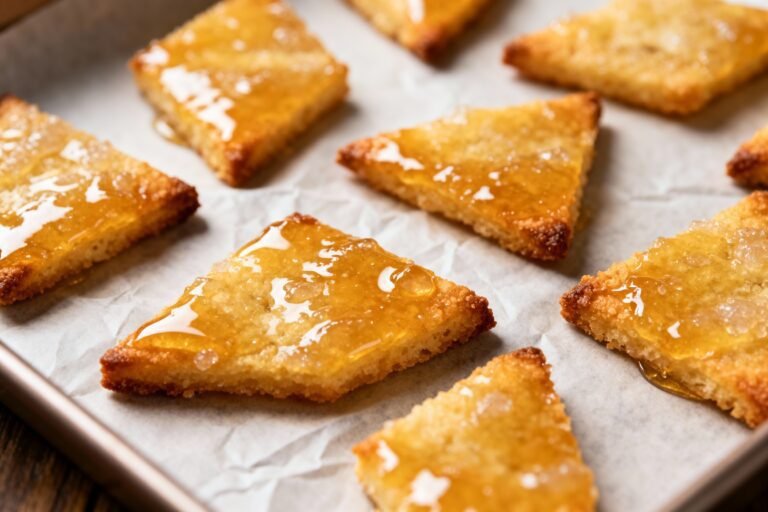
Turkish Flatbread Recipe | Easy Homemade Turkish Pide Bread from Scratch
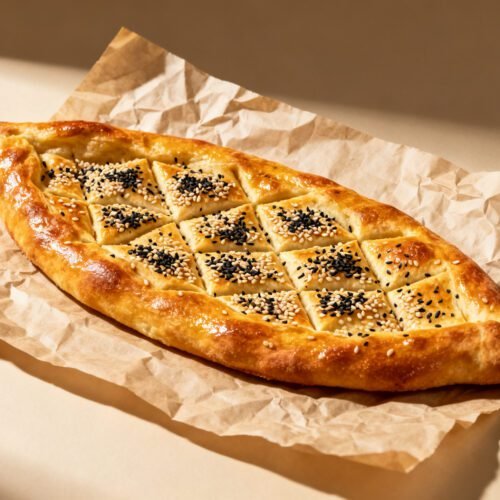
Warm, fluffy, and beautifully golden, Turkish flatbread (pide) makes any meal feel special. You can tear it, dip it, wrap it, or top it. The dough comes together easily, and the signature diamond pattern gives it that classic bakery look without extra fuss. If you’ve ever wanted to bake a simple bread that delivers huge payoff, this is the one.
I’ll walk you through a reliable, from-scratch method that fits into a busy day. You’ll mix a soft dough, let it rise, press the pattern, and bake until puffed and lightly blistered. You’ll get a tender interior, a thin, chewy crust, and that irresistible sesame-nigella finish. Let’s do it.
Why This Turkish Pide Flatbread Recipe Works
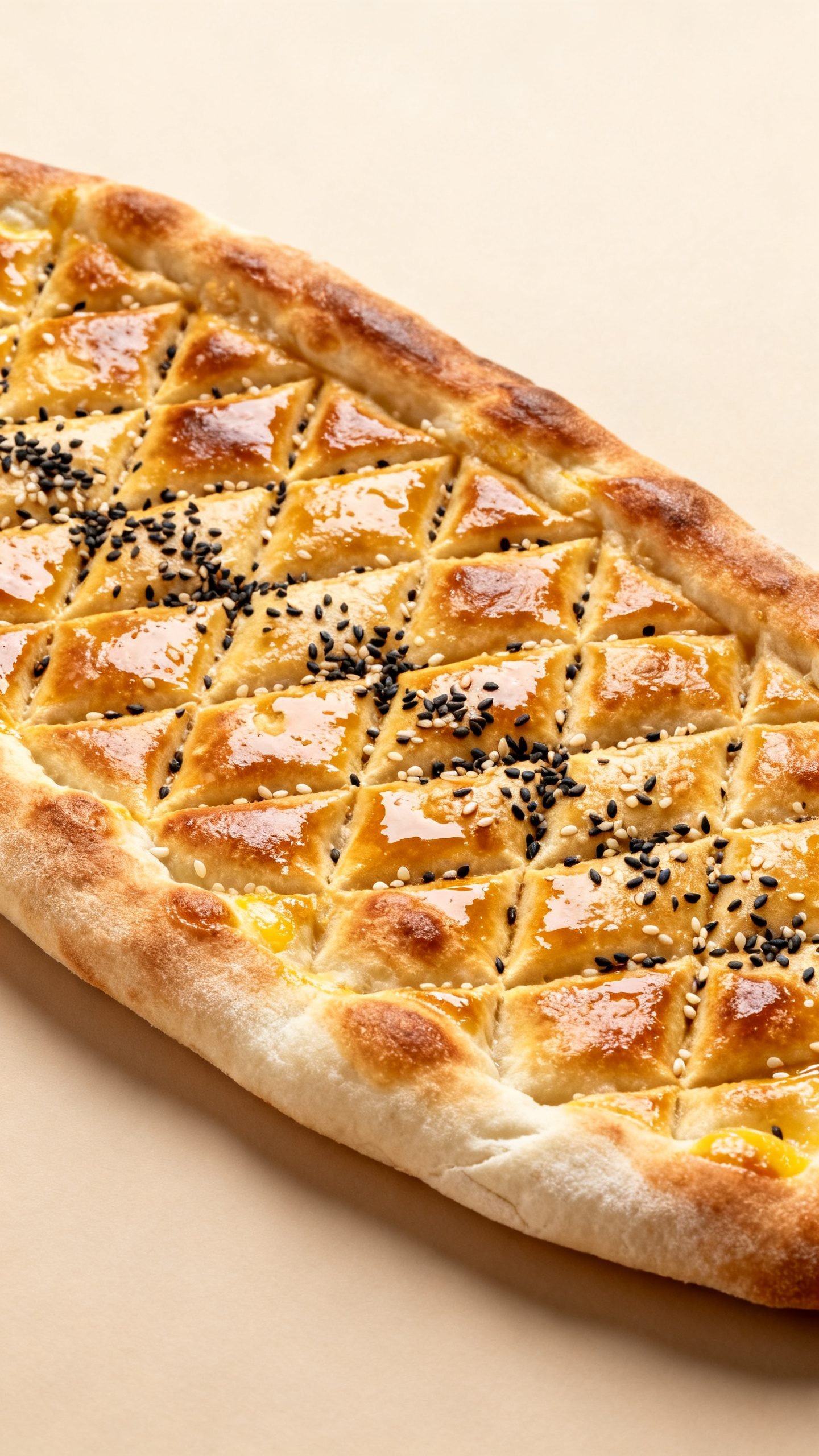
- Simple pantry ingredients create classic bakery-style bread: flour, yeast, water, salt, and a little olive oil.
- Hydration sweet spot makes a dough that stretches easily, rises well, and bakes up soft and airy.
- Warm milk-and-water mix adds subtle richness and helps achieve that pillowy crumb.
- Olive oil rub and egg wash give color, tenderness, and a glossy finish that holds seeds.
- High-heat bake delivers fast oven spring and light charring for authentic texture.
- Step-by-step shaping demystifies the signature oval and diamond pattern.
Ingredients
For the Dough
- 3 cups (375 g) bread flour or all-purpose flour, plus extra for dusting
- 1 cup (240 ml) warm water, about 105–110°F (40–43°C)
- 1/2 cup (120 ml) warm milk, about 105–110°F (40–43°C)
- 2 1/4 tsp (7 g) instant yeast
- 1 1/2 tsp fine sea salt
- 1 tbsp sugar or honey
- 2 tbsp olive oil
For Finishing
- 1 egg yolk
- 1 tbsp plain yogurt or milk
- 1 tbsp olive oil
- 1 tbsp sesame seeds
- 1 tsp nigella seeds (kalonji), optional but traditional
- Pinch of flaky salt
How to Make Easy Homemade Turkish Pide Bread
1) Mix the Dough
- Whisk warm water, warm milk, and sugar/honey in a large bowl. Sprinkle in the yeast and stir. Wait 2–3 minutes to hydrate.
- Add flour and salt. Drizzle in olive oil. Stir with a wooden spoon until a shaggy dough forms.
- Knead 8–10 minutes on a lightly floured surface (or 6–7 minutes with a stand mixer and dough hook) until smooth and slightly tacky. The dough should feel soft and elastic, not stiff.
2) First Rise
- Lightly oil a clean bowl. Place dough inside, turning to coat.
- Cover tightly and let rise in a warm spot until doubled, about 60–90 minutes.
3) Preheat and Prep
- Place a baking stone or inverted sheet pan in the oven. Preheat to 475°F (245°C) for at least 30 minutes so it’s blazing hot.
- Line a peel or another sheet of parchment for easy transfer.
- Whisk egg yolk, yogurt (or milk), and olive oil to make a glossy wash.
4) Shape the Pide
- Turn risen dough onto a lightly floured counter. Gently deflate and divide into two equal portions for medium loaves or keep whole for one large loaf.
- Form each portion into a tight ball. Rest 10 minutes to relax gluten.
- Pat one ball into an oval, about 10–12 inches long and 1/3–1/2 inch thick. Keep edges slightly thicker to hold shape.
5) Create the Signature Pattern
- Brush the surface lightly with the egg-yogurt wash.
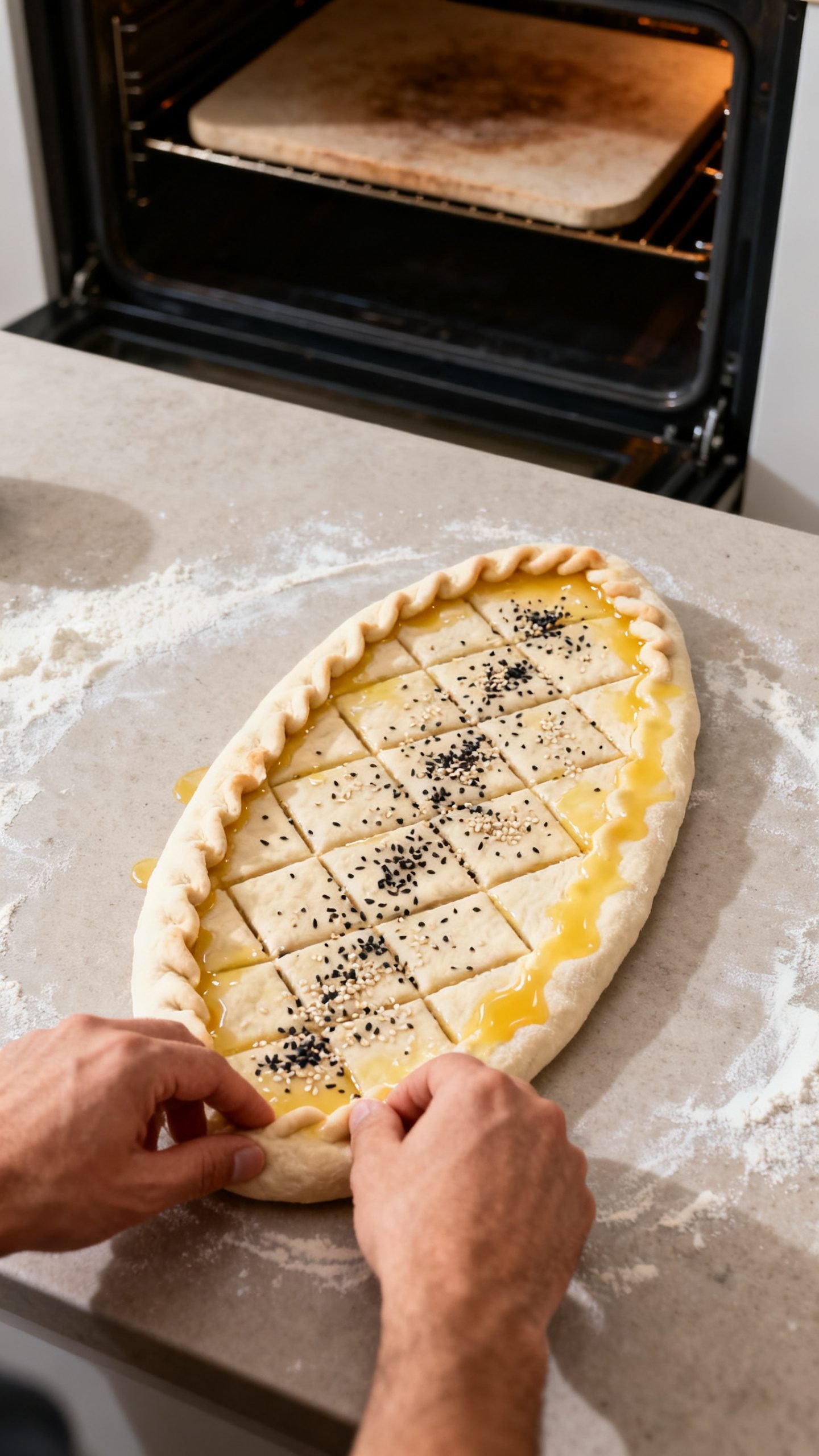
- With floured fingertips, press a border around the edge, about 3/4 inch from the rim, to create a shallow moat.
- Inside the border, press diagonal lines in one direction, then the other, to form diamond shapes. Press firmly enough to leave clear grooves without tearing.
- Sprinkle sesame and nigella seeds over the top. Add a pinch of flaky salt for extra pop.
6) Bake
- Slide the shaped dough (on parchment) onto the hot stone or pan.
- Bake 10–13 minutes until puffed, speckled, and deep golden with light char on the edges.
- Repeat with the second loaf. Cool 5–10 minutes on a rack. Brush with a tiny drizzle of olive oil if you like a softer sheen.
Texture and Doneness Cues
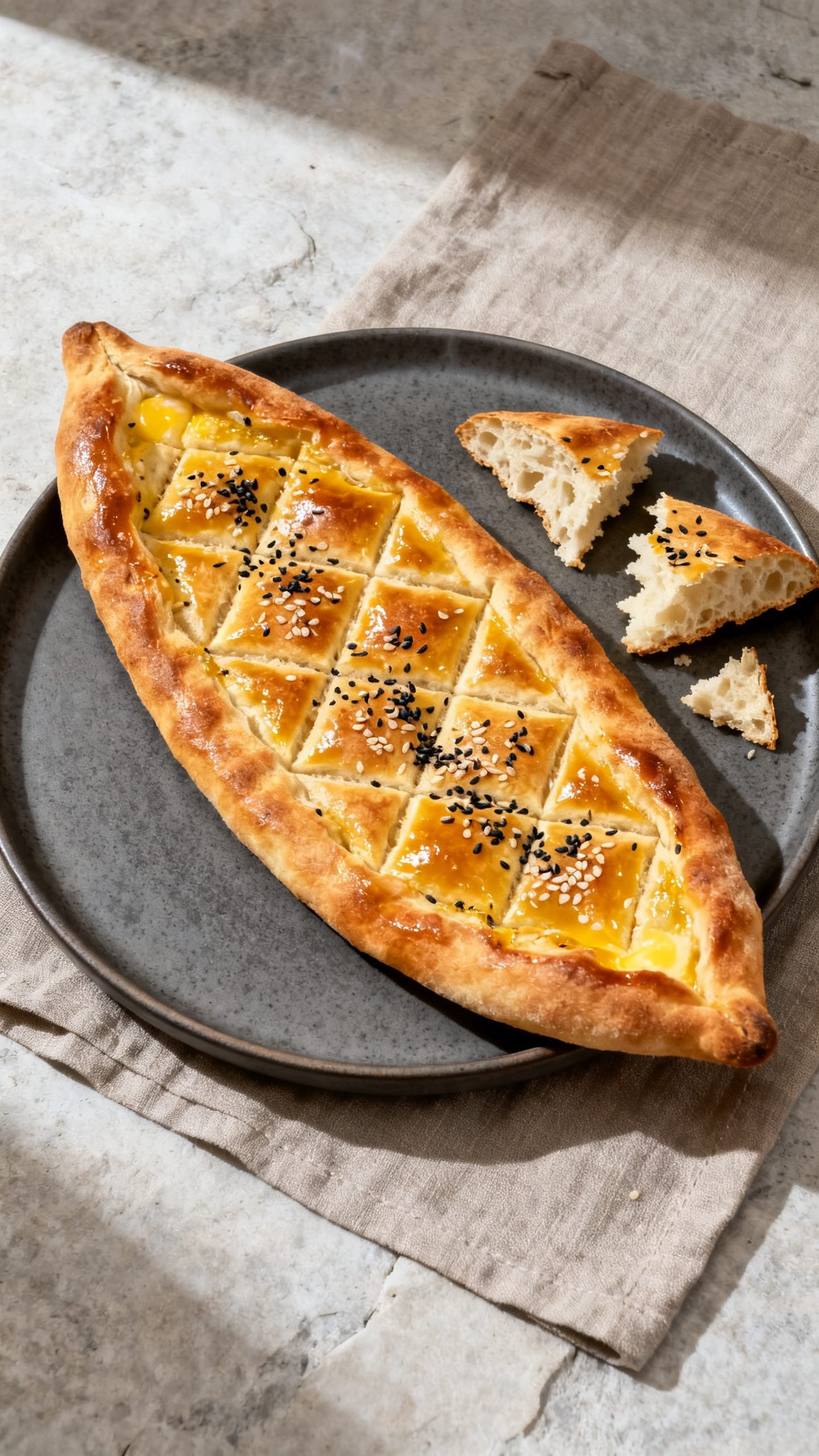
- Color: Deep golden top with toasted seeds.
- Lift: Noticeable puffing in the oven, then gentle settling.
- Crumb: Tender and slightly chewy with small, irregular holes.
How to Store Fresh Turkish Pide
- Room temperature: Wrap cooled bread in a clean towel or foil and keep in a bread box up to 2 days.
- Freeze: Cool completely, wrap tightly in plastic, then in foil, and freeze up to 2 months. Label with date.
- Reheat: From room temp: 350°F (175°C) for 5–8 minutes. From frozen: thaw, then warm 6–10 minutes. For crisp edges, place straight on the rack.
- Avoid the fridge: Refrigeration dries bread and dulls the texture.
Benefits of Making Turkish Pide at Home
- Better flavor and texture: Freshly baked bread tastes richer and feels lighter than store-bought versions.
- Budget-friendly: Flour, yeast, and a bit of oil deliver multiple loaves for pocket change.
- Customizable: Choose seed toppings, adjust thickness, and tweak richness with yogurt or milk.
- No specialty equipment needed: A preheated sheet pan mimics a stone well.
- Meal versatility: Serve with dips, soups, kebabs, salads, or make quick wraps and breakfast sandwiches.
What to Avoid When Baking Pide
- Water that’s too hot: Anything over 115°F (46°C) can weaken or kill yeast.
- Heavy flouring: Too much bench flour stiffens dough and blocks oven spring.
- Skipping the rest: If you don’t let dough relax before shaping, it will spring back and fight you.
- Underheating the oven: Lukewarm baking equals flat, pale bread. Preheat thoroughly.
- Pressing too deep: If you poke through while patterning, steam escapes and the loaf dries out.
- Overbaking: Extra minutes turn tender into tough. Pull when golden and puffed.
Fun Variations to Try
- Garlic-herb wash: Stir minced garlic and chopped parsley into the egg-yogurt wash for aromatic crust.
- All-seed topper: Mix sesame, nigella, poppy, and sunflower seeds for extra crunch.
- Whole-wheat blend: Swap 25–30% of the flour for whole-wheat and add 1–2 tbsp extra water to keep softness.
- Olive oil only: Skip the egg and yogurt; brush with olive oil for a vegan-friendly loaf and sprinkle generously with seeds.
- Cheese-flecked: Sprinkle a little grated kasseri, feta, or mozzarella over the center before baking for a melty accent.
- Mini pide rounds: Divide into 6–8 portions and bake smaller discs for sandwiches or mezze platters.
FAQ
Can I use active dry yeast instead of instant?
Yes. Bloom 2 1/4 tsp active dry yeast in the warm water and milk with the sugar for 5–10 minutes until foamy, then proceed.
What flour works best?
Bread flour gives a bit more chew and rise. All-purpose flour makes a softer bite. Both work beautifully.
Why did my bread come out dense?
You may have added too much flour or under-risen the dough. Aim for a soft, slightly tacky dough and let it double before shaping.
Can I make the dough ahead?
Yes. After kneading, cover and refrigerate up to 24 hours. Let it warm and rise until doubled before shaping and baking.
How do I get that bakery sheen?
The egg-yogurt wash gives gloss and color. For a vegan option, brush with olive oil before and after baking for a soft shine.
Do I need a baking stone?
No. A preheated inverted sheet pan creates strong bottom heat and great oven spring.
How thick should I roll it?
About 1/3–1/2 inch thick. Thicker yields pillowy bread; thinner gives a chewier, crisper finish.
Conclusion
Turkish pide flatbread rewards you with big flavor for minimal effort. You mix simple ingredients, shape an easy oval, press the classic pattern, and bake hot and fast. Serve it warm with hummus, olives, soups, grilled meats, or just good butter. Once you’ve tasted a fresh loaf, you’ll make it on repeat—and your kitchen will smell like your favorite bakery every time.
Turkish Flatbread Recipe | Easy Homemade Turkish Pide Bread from Scratch
Ingredients
Ingredients
- 3 cups (375 g) bread flour or all-purpose flour, plus extra for dusting
- 1 cup (240 ml) warm water, about 105–110°F (40–43°C)
- 1/2 cup (120 ml) warm milk, about 105–110°F (40–43°C)
- 2 1/4 tsp (7 g) instant yeast
- 1 1/2 tsp fine sea salt
- 1 tbsp sugar or honey
- 2 tbsp olive oil
- 1 egg yolk
- 1 tbsp plain yogurt or milk
- 1 tbsp olive oil
- 1 tbsp sesame seeds
- 1 tsp nigella seeds (kalonji), optional
- Pinch of flaky salt
Instructions
Instructions
- Whisk the warm water, warm milk, and sugar or honey in a large bowl, then stir in the yeast and let hydrate for 2–3 minutes.
- Add the flour and salt, drizzle in the olive oil, and mix until a shaggy dough forms.
- Knead on a lightly floured surface until smooth and slightly tacky, about 8–10 minutes by hand or 6–7 minutes with a mixer.
- Lightly oil a clean bowl, place the dough inside, turn to coat, cover, and let rise in a warm spot until doubled, about 60–90 minutes.
- Place a baking stone or inverted sheet pan in the oven and preheat to 475°F (245°C) for at least 30 minutes; line a peel or parchment for transfer.
- Whisk the egg yolk, yogurt or milk, and olive oil to make the wash.
- Turn the risen dough onto a lightly floured counter, gently deflate, and divide into two equal portions or keep whole for one large loaf; form into tight balls and rest 10 minutes.
- Pat one ball into an oval 10–12 inches long and 1/3–1/2 inch thick, keeping the edges slightly thicker.
- Brush the surface lightly with the egg-yogurt wash, press a border about 3/4 inch from the edge, then press diagonal lines in both directions to create a diamond pattern.
- Sprinkle sesame and nigella seeds over the top and add a pinch of flaky salt.
- Slide the shaped dough on parchment onto the hot stone or pan and bake until puffed and deep golden with light char on the edges, about 10–13 minutes; repeat with the second loaf.
- Cool on a rack for 5–10 minutes and, if desired, brush with a small drizzle of olive oil.