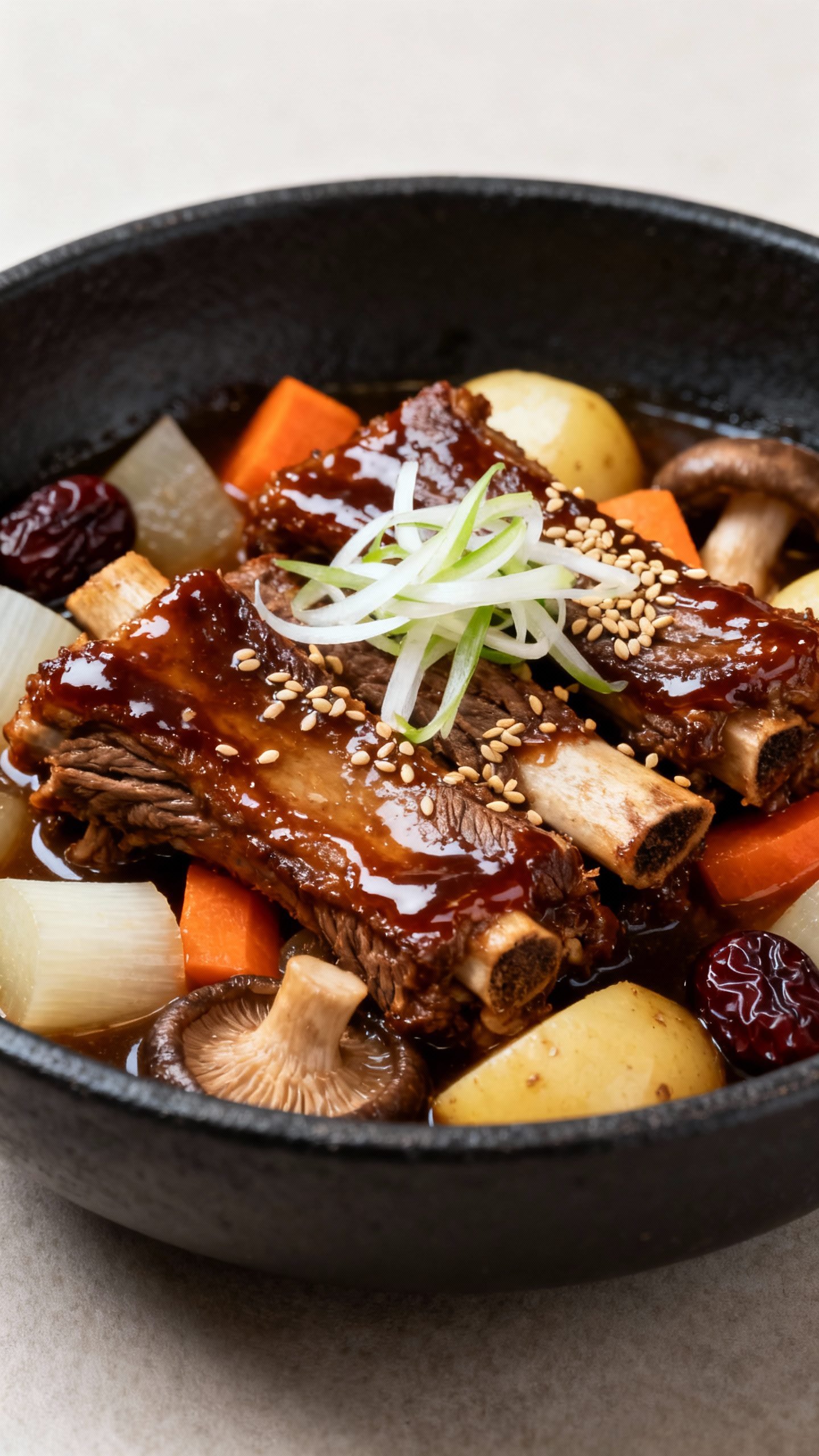
Traditional Galbi Jjim Korean Braised Beef
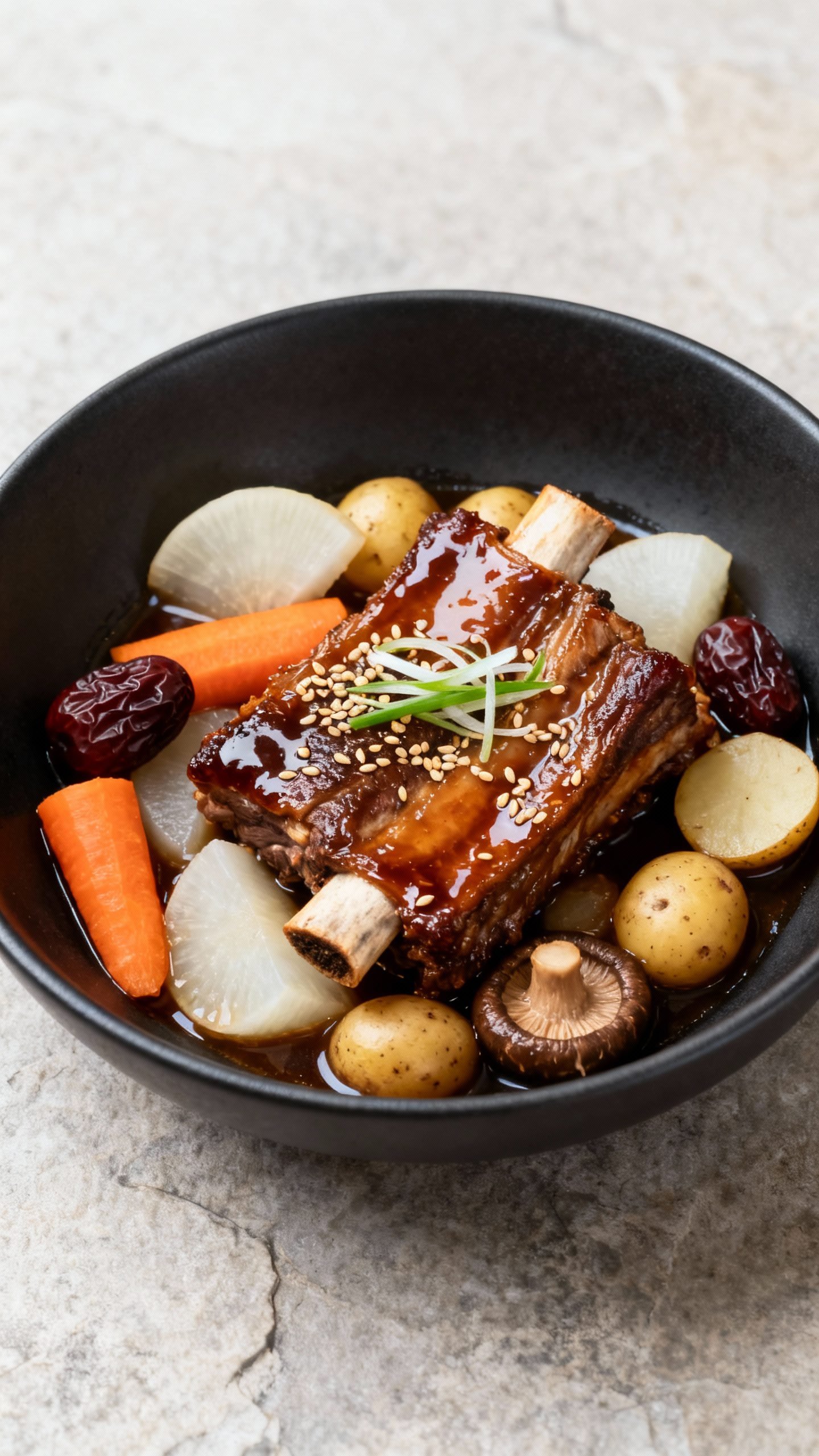
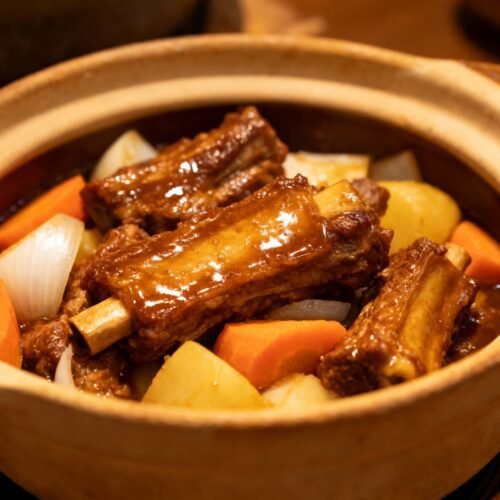
If you crave a cozy, show-stopping Korean comfort dish, Galbi Jjim (Korean braised beef short ribs) hits every note. The beef turns meltingly tender, the sauce tastes deep and savory-sweet, and the vegetables soak up all that flavor. It’s the kind of meal that makes everyone go quiet on the first bite, then ask for seconds.
I’ll walk you through the classic version I make at home, with helpful tips to ensure your short ribs cook perfectly and your sauce lands rich, glossy, and balanced. You don’t need restaurant tricks—just good ingredients, steady heat, and a little patience.
Why This Galbi Jjim Recipe Works
- Deep flavor layering: A base of soy sauce, aromatics, and fruit (Korean pear or apple) tenderizes the beef and adds natural sweetness without feeling sugary.
- Perfectly tender short ribs: A gentle braise coaxes the meat to fall off the bone while keeping it juicy.
- Balanced sweet-savory profile: Mirin and brown sugar round out the soy and garlic, so the sauce tastes complex, not flat.
- Restaurant-level shine: A final reduction turns the braising liquid into a glossy glaze that clings to every rib and vegetable.
- Meal-prep friendly: The flavors improve overnight, so you can make it ahead and reheat when guests arrive.
Ingredients
Beef and Vegetables
- 3 to 3.5 lb (1.4–1.6 kg) bone-in beef short ribs, English cut or flanken cut
- 2 medium carrots, peeled and cut into large chunks
- 1 medium daikon radish (about 1 lb), peeled and cut into 1.5-inch chunks
- 12–16 small waxy potatoes or 3 medium potatoes cut into large pieces
- 1 medium onion, quartered
- 6–8 dried jujubes (Korean dates) (optional, traditional)
- 8–10 shiitake mushrooms, stems trimmed (fresh or rehydrated dried)
- 2 scallions, sliced for garnish
- Toasted sesame seeds, for finishing
Braising Sauce
- 1 cup soy sauce (regular, not low-sodium for best flavor)
- 1/2 cup mirin
- 3–4 tbsp brown sugar (adjust to taste)
- 1 Korean pear (or 1 sweet apple), peeled and grated
- 8 cloves garlic, minced
- 1 tbsp fresh ginger, grated
- 2 tbsp rice vinegar (or apple cider vinegar)
- 1–2 tsp toasted sesame oil
- 1 tsp black pepper
- 3 cups water or beef stock
Optional Heat
- 1–2 tbsp gochugaru (Korean red pepper flakes) for gentle heat
- 1 tbsp gochujang for a fuller body and subtle spice
How to Make Classic Galbi Jjim at Home
1) Prep and Parboil the Short Ribs
- Soak the ribs: Rinse the ribs under cold water. Soak in cold water for 20–30 minutes to draw out excess blood. Change the water once.
- Parboil: Place ribs in a large pot, cover with cold water, and bring to a boil. Boil 5 minutes. This step removes impurities for a cleaner sauce.
- Drain and rinse: Rinse the ribs and wipe out the pot to remove scum.
2) Build the Braising Base
- Mix the sauce: In a bowl, combine soy sauce, mirin, brown sugar, grated pear, garlic, ginger, rice vinegar, sesame oil, black pepper, and water/stock. Add gochugaru or gochujang if using.
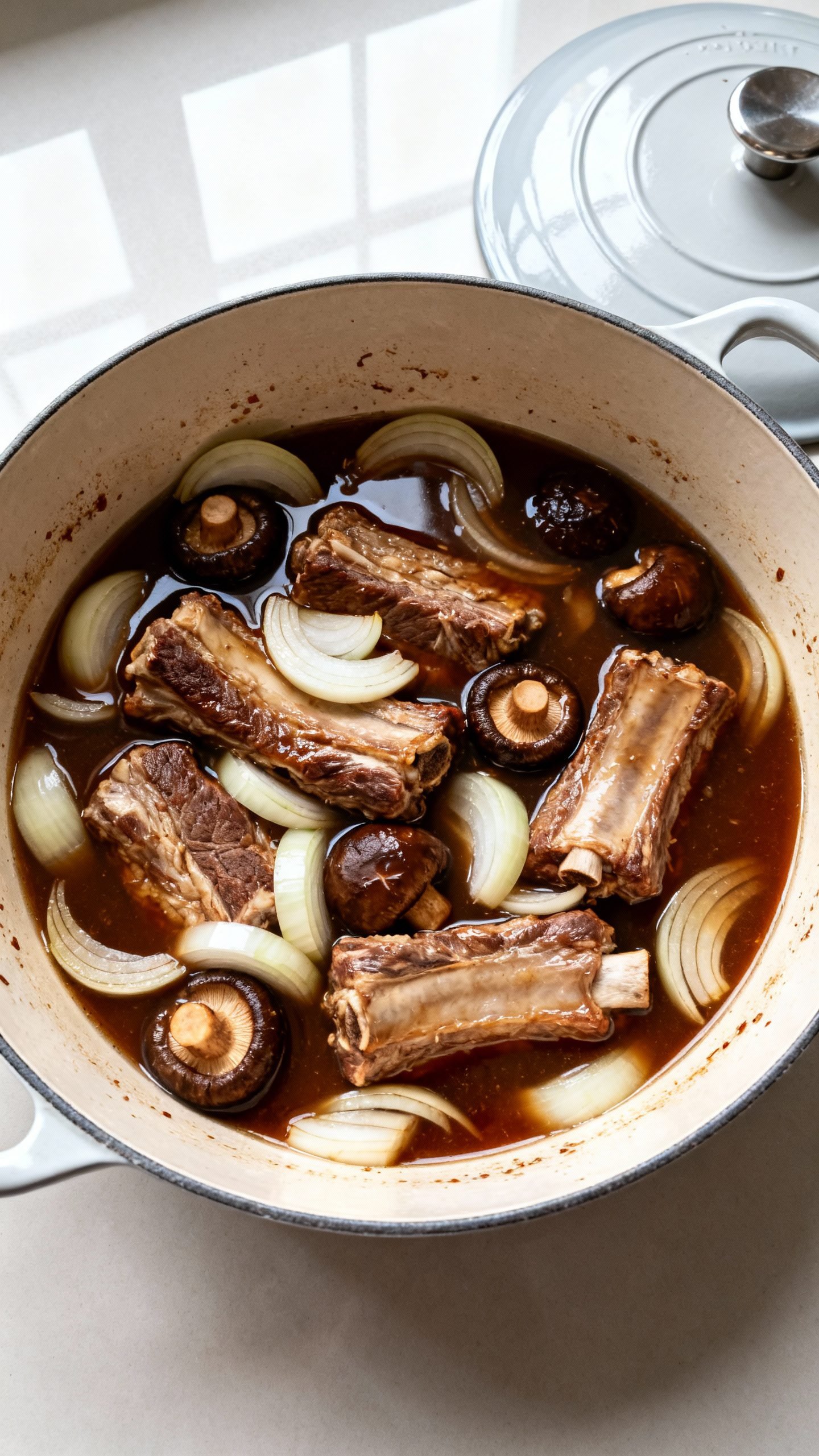
- Load the pot: Return the ribs to the clean pot. Add onion and mushrooms. Pour in the sauce.
3) Braise Low and Slow
- Simmer gently: Bring to a simmer over medium heat, then lower to maintain a gentle bubble. Cover and cook 45 minutes.
- Add hearty veg: Stir in daikon and carrots. Cover and cook 25 minutes.
- Add potatoes and jujubes: Cook another 20–25 minutes, until ribs turn fork-tender and vegetables feel soft but intact.
4) Reduce for a Glossy Finish
- Thicken the sauce: Uncover and increase heat slightly. Let the liquid reduce 10–15 minutes, stirring occasionally, until it looks glossy and coats a spoon.
- Taste and balance: Adjust salt with a splash of soy, sweetness with a pinch of sugar, and brightness with a touch more vinegar if needed.
- Garnish: Finish with sliced scallions and sesame seeds.
Serving Tips
- Serve with steamed short-grain rice to soak up the sauce.
- Add kimchi and simple banchan (pickled radish, sesame spinach) for a complete spread.
- Skim fat if desired: Chill the pot briefly and remove the solidified fat for a lighter finish.
How to Store Leftover Galbi Jjim
- Refrigerate: Cool completely, then store in airtight containers for 3–4 days. The flavors deepen by day two.
- Freeze: Portion into freezer-safe containers for up to 2 months. Leave headspace for expansion.
- Reheat: Warm gently on the stovetop over medium-low heat with a splash of water or stock until the sauce loosens and the meat heats through.
- Make-ahead tip: Cook one day ahead and reheat before serving. The sauce becomes even silkier.
Benefits of Cooking Galbi Jjim at Home
- Customizable flavor: Adjust sweetness, spice, and salt exactly the way you like.
- Cost-effective comfort: Short ribs feed a crowd without restaurant prices.
- Make once, eat twice: Leftovers taste better and simplify weeknight dinners.
- Celebration-worthy: The dish looks impressive and feels special for holidays or guests.
- Nutrient-dense: You get protein, hearty vegetables, and a mineral-rich braising liquid.
What to Avoid for Best Results
- Don’t skip soaking and parboiling: You’ll get a cloudy, overly beefy broth without it.
- Don’t boil hard: Vigorous boiling toughens meat. Keep a steady, gentle simmer.
- Don’t overcrowd with vegetables early: Add them in stages to prevent mushiness.
- Don’t under-season the sauce: Taste at the end and balance with soy, sugar, or vinegar.
- Don’t rush the reduction: The glossy finish makes the dish. Give it time.
Variations You Can Try
- Chestnut addition: Add peeled chestnuts with the potatoes for a nutty, sweet layer.
- Spicy twist: Stir in extra gochujang and a sliced fresh chili for medium heat.
- Shortcut pressure cooker: Cook on high pressure for 35 minutes, quick-release, then reduce the sauce on sauté.
- Bone-in chuck or oxtail: Swap the cut if short ribs aren’t available; adjust cook time until tender.
- Mushroom-forward: Boost shiitake and add king oyster slices for umami depth.
- Sweet potato swap: Use sweet potato instead of regular potatoes for a caramel-like finish (add later to avoid overcooking).
FAQ
Can I make Galbi Jjim without Korean pear?
Yes. Use a sweet apple or even a few tablespoons of applesauce. The fruit adds subtle sweetness and tenderizes the meat.
How do I know the ribs are done?
The meat should feel soft and yield easily with a fork, but not completely shredded. If it still resists, keep simmering 10–15 more minutes and check again.
Can I use boneless short ribs?
Yes, but bones add flavor. If you go boneless, consider adding a cup of beef stock for extra richness.
What if my sauce tastes too salty?
Add a splash of water or stock and a bit more grated pear or brown sugar. Then simmer a few minutes to integrate.
How spicy is the classic version?
Traditional Galbi Jjim leans mild. Add gochugaru or gochujang to bring gentle heat without overpowering the sweetness.
Can I prepare it a day ahead?
Absolutely. The flavors meld beautifully overnight. Skim the fat easily when cold, then reheat gently and reduce to your preferred thickness.
Conclusion
Make this Traditional Galbi Jjim when you want deep comfort and big flavor with minimal fuss. Short ribs simmer into tender perfection, vegetables turn silky, and the sauce finishes glossy and rich. Serve it with hot rice, pass the kimchi, and enjoy a bowl that tastes like home—no matter where you are.
Traditional Galbi Jjim Korean Braised Beef
Ingredients
Ingredients
Instructions
Instructions
- Soak the ribs: Rinse the ribs under cold water. Soak in cold water for 20–30 minutes to draw out excess blood. Change the water once.
- Parboil: Place ribs in a large pot, cover with cold water, and bring to a boil. Boil 5 minutes. This step removes impurities for a cleaner sauce.
- Drain and rinse: Rinse the ribs and wipe out the pot to remove scum.
- Mix the sauce: In a bowl, combine soy sauce, mirin, brown sugar, grated pear, garlic, ginger, rice vinegar, sesame oil, black pepper, and water/stock. Add gochugaru or gochujang if using.
- Load the pot: Return the ribs to the clean pot. Add onion and mushrooms. Pour in the sauce.
- Simmer gently: Bring to a simmer over medium heat, then lower to maintain a gentle bubble. Cover and cook 45 minutes.
- Add hearty veg: Stir in daikon and carrots. Cover and cook 25 minutes.
- Add potatoes and jujubes: Cook another 20–25 minutes, until ribs turn fork-tender and vegetables feel soft but intact.
- Thicken the sauce: Uncover and increase heat slightly. Let the liquid reduce 10–15 minutes, stirring occasionally, until it looks glossy and coats a spoon.
- Taste and balance: Adjust salt with a splash of soy, sweetness with a pinch of sugar, and brightness with a touch more vinegar if needed.
- Garnish: Finish with sliced scallions and sesame seeds.
- Serve with steamed short-grain rice to soak up the sauce.
- Add kimchi and simple banchan (pickled radish, sesame spinach) for a complete spread.
- Skim fat if desired: Chill the pot briefly and remove the solidified fat for a lighter finish.