The Best Vegan Pesto Recipe | Fresh Basil Plant-Based Sauce Without Cheese
If you crave bright, garlicky, herby flavor without dairy, this vegan pesto will be your new staple. It’s creamy, fresh, and ready in minutes. Toss it with hot pasta, spoon it over roasted veggies, or smear it on sandwiches. You’ll get all the classic basil punch with a silky finish—no cheese required.
I’ve tested a lot of plant-based pestos, and this one nails the balance: bold basil, plenty of lemon, and just enough richness to coat noodles beautifully. You’ll blend it in a food processor or blender with simple ingredients you probably already have, then watch everyone go back for seconds.
Why This Vegan Basil Pesto Tastes So Good
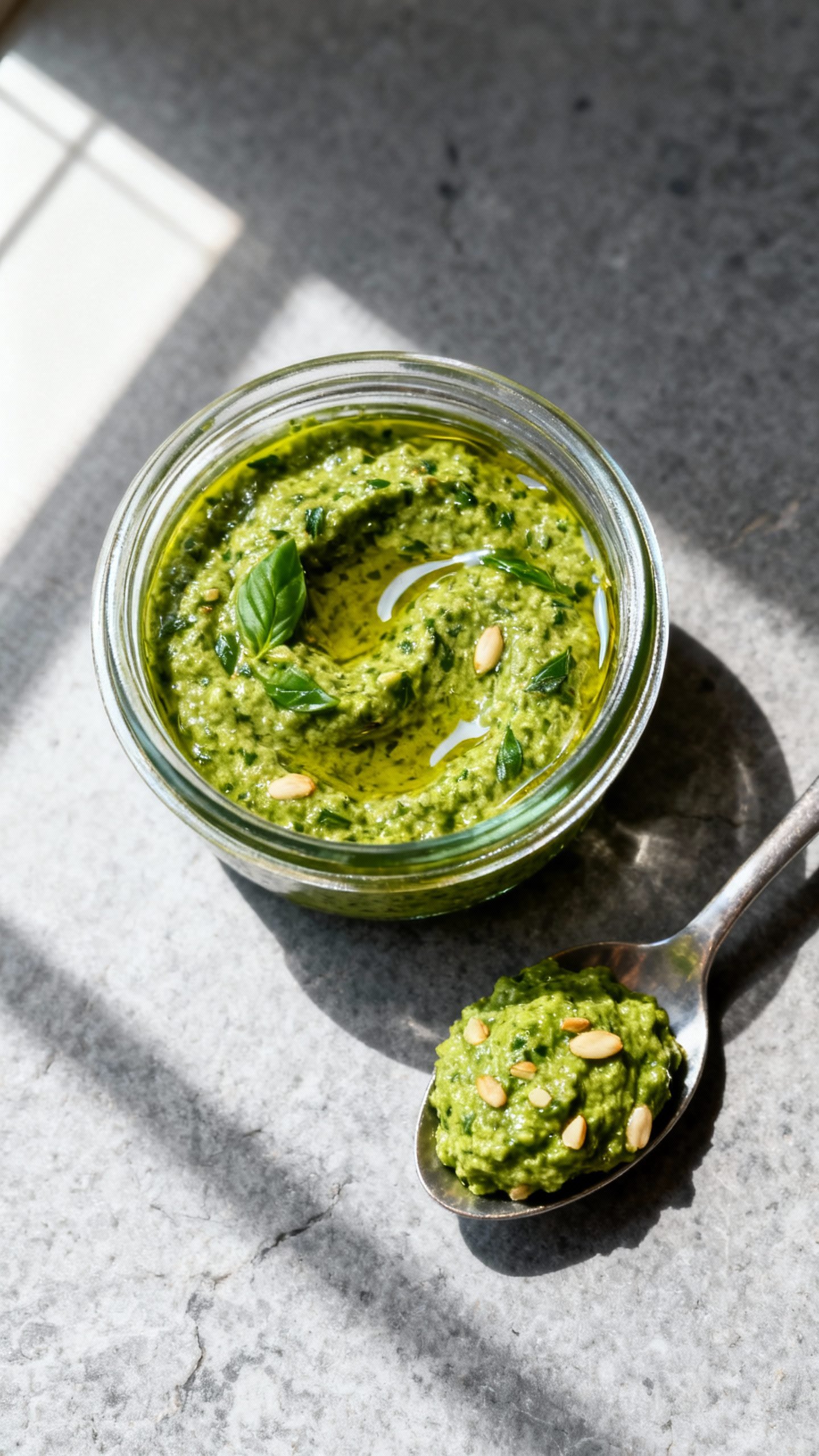
- Big basil flavor: Fresh basil leaves lead the recipe, so the sauce tastes bright and fragrant.
- Creamy without cheese: Nuts and olive oil add body and richness that mimic traditional pesto’s texture.
- Balanced acidity: Lemon juice lifts the herbs and keeps the flavor clean, not heavy.
- Umami boost: Nutritional yeast brings a subtle cheesy depth without dairy.
- Quick and easy: You’ll have a jar ready in about 10 minutes with zero cooking.
Chef tip: Chill the basil or use it fresh from the fridge to keep the sauce green and vibrant. Warm basil darkens fast.
Ingredients You’ll Need
- Fresh basil leaves: 2 packed cups (about 60 g). Use leaves only; tough stems can add bitterness.
- Raw nuts or seeds: 1/2 cup. Classic choice: pine nuts. Budget-friendly: walnuts. Nut-free: sunflower seeds or pumpkin seeds.
- Extra-virgin olive oil: 1/2 to 2/3 cup for desired consistency.
- Garlic: 2–3 small cloves, smashed.
- Lemon juice: 1–2 tablespoons, plus zest if you love extra brightness.
- Nutritional yeast: 2–4 tablespoons for a savory, cheesy note.
- Kosher salt: Start with 1/2 teaspoon, then adjust.
- Freshly ground black pepper: A few twists to taste.
- Optional add-ins: A handful of spinach to keep the color bright, a pinch of red pepper flakes for heat, or a splash of cold water to lighten the texture.
Allergy-friendly note: Use seeds instead of nuts for a completely nut-free pesto that still tastes rich and creamy.
How to Make Vegan Basil Pesto
1) Prep the greens and nuts
- Rinse and dry basil: Wash leaves and spin them very dry. Water dulls flavor and thins the sauce.
- Toast the nuts (optional): Lightly toast over medium heat until fragrant, 3–4 minutes. Cool completely for the smoothest blend.
2) Build the base
- Add nuts/seeds, garlic, and salt to a food processor. Pulse until finely chopped.
- Add basil, nutritional yeast, and lemon juice. Pulse to combine.
3) Stream in oil
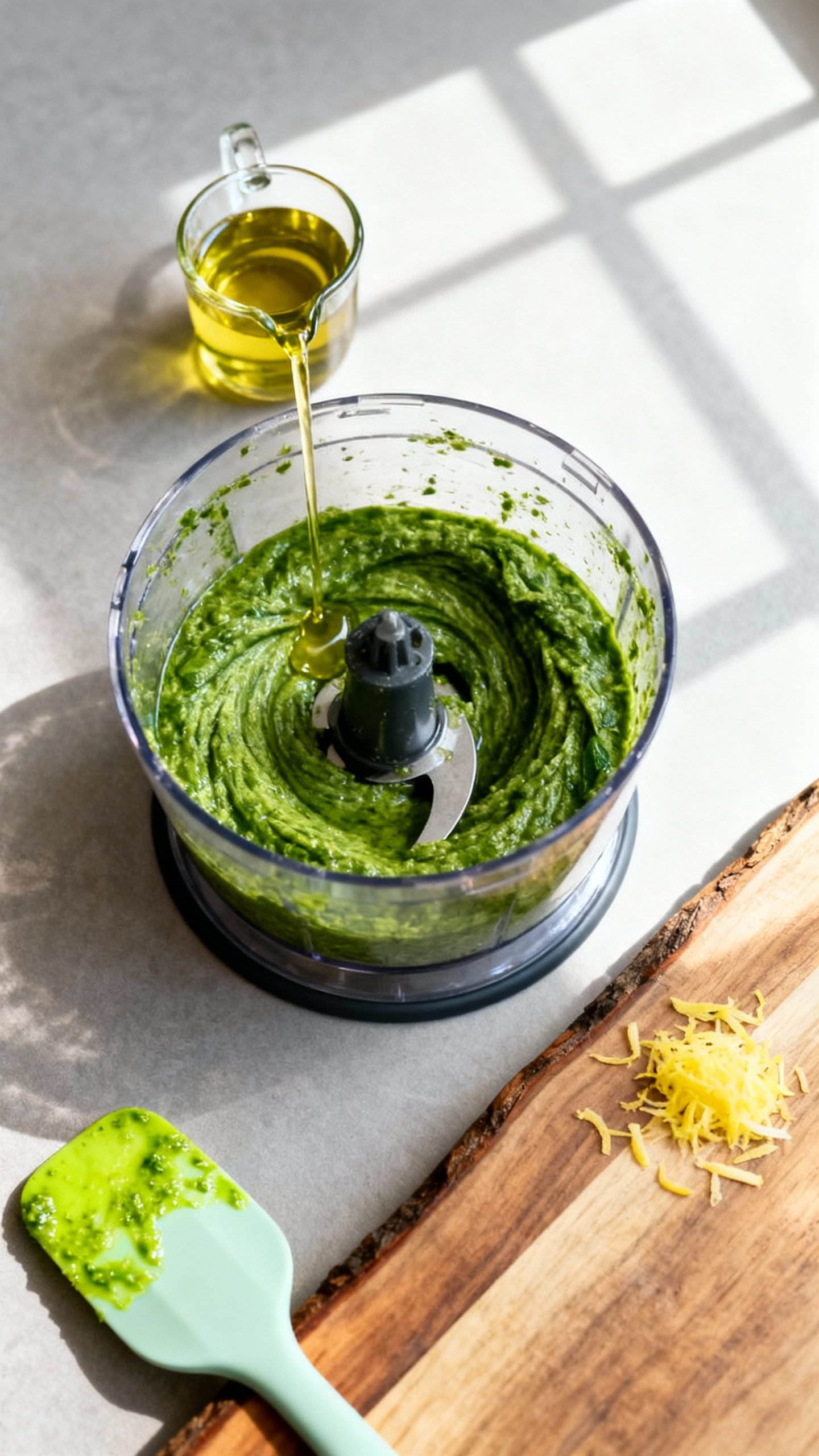
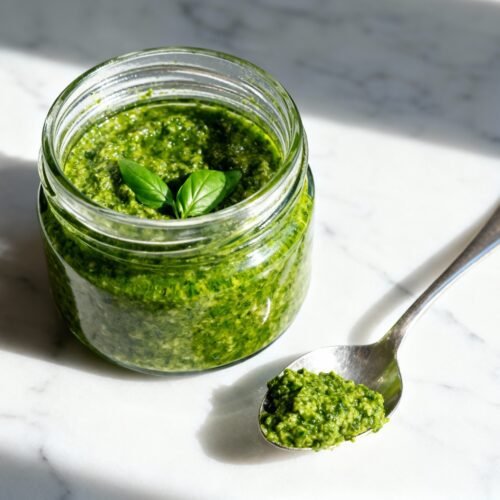
- With the machine running, slowly stream in olive oil until the pesto looks creamy and spoonable.
- Taste and adjust: more salt, pepper, or lemon as needed. For a looser sauce, add a tablespoon of cold water or more oil.
4) Serve it right away
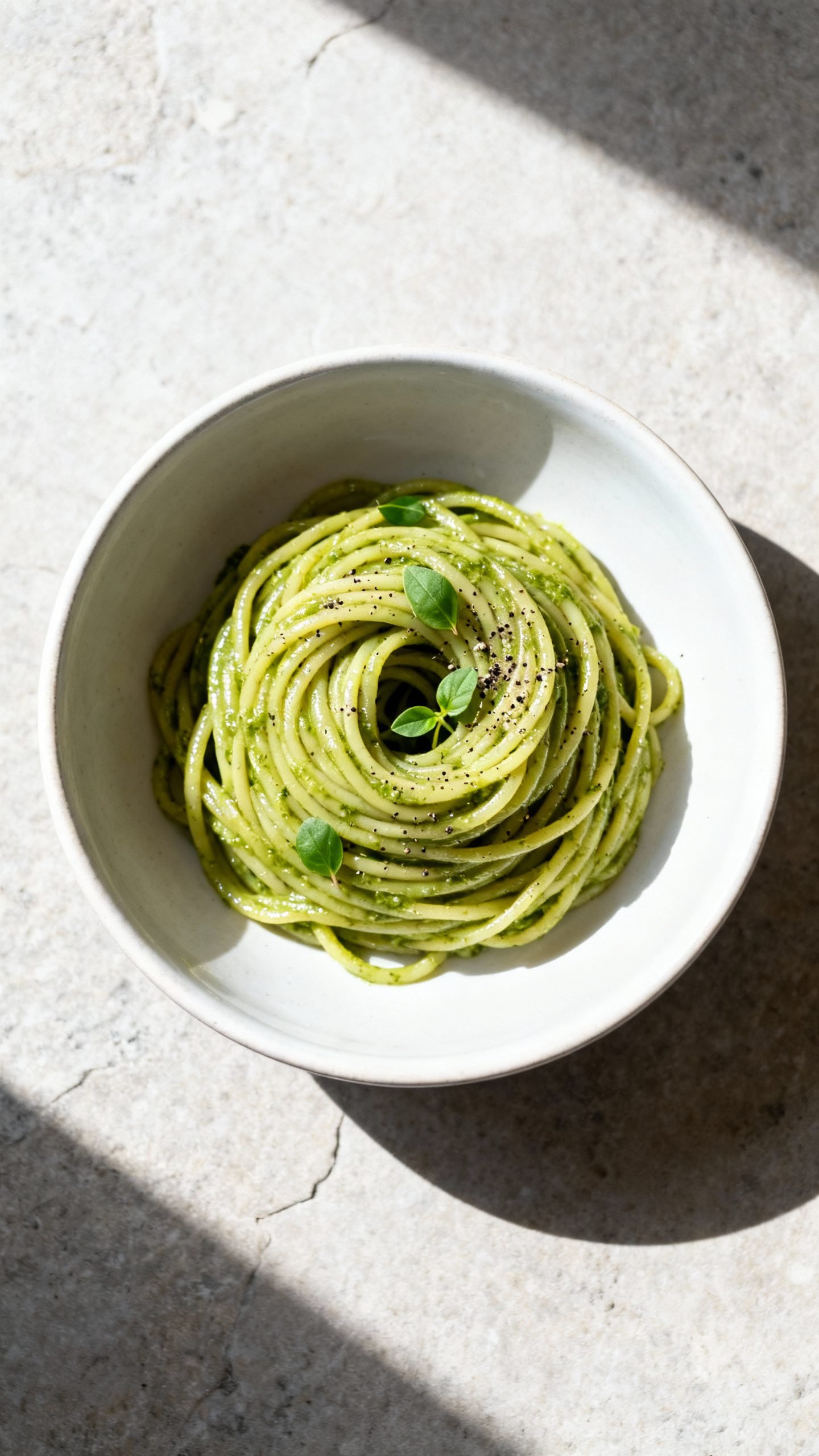
- Pasta: Toss with hot, just-drained pasta and a splash of pasta water to help it cling.
- Veggies and grains: Spoon over roasted tomatoes, grilled zucchini, quinoa, or farro.
- Sandwiches and bowls: Use as a spread for toast, wraps, and grain bowls.
Texture tip: For extra-smooth pesto, blend slightly longer and add 1–2 tablespoons more oil. For rustic pesto, pulse briefly and keep it chunky.
How to Store Vegan Pesto
- Refrigerator: Store in a sealed jar for 5–6 days. Press plastic wrap directly onto the surface or float a thin layer of olive oil on top to prevent browning.
- Freezer: Freeze in ice cube trays or small containers for up to 3 months. Pop out cubes and store in a freezer bag.
- Thawing: Thaw overnight in the fridge or stir a frozen cube straight into a hot pan to melt into pasta.
Color saver: A squeeze of lemon and an oil seal on top keep the pesto bright green.
Benefits of Making This Dairy-Free Pesto
- Plant-based and versatile: Works for vegans, dairy-free diners, and anyone who loves fresh flavor.
- Nutrient-packed: Basil offers antioxidants; nuts or seeds provide healthy fats; nutritional yeast adds B vitamins.
- Budget-smart: Swap pine nuts for walnuts or seeds without sacrificing taste.
- Meal-prep friendly: One batch upgrades pasta, bowls, and sandwiches all week.
- No cooking required: You’ll keep the basil bright and the kitchen cool.
Mistakes to Avoid
- Over-blending warm ingredients: Heat darkens basil and turns the sauce dull. Use cool ingredients and pause if the machine warms up.
- Skipping salt and acid: Pesto needs both. Taste and adjust at the end.
- Watery leaves: Wet basil thins the sauce and mutes flavor. Dry thoroughly.
- Too much garlic: Raw garlic hits hard. Start small and add more to taste.
- Using bitter oil: Taste your olive oil first. If it tastes harsh, blend with a mild olive oil or a neutral oil.
Easy Variations to Try
- Nut-free pesto: Use sunflower or pumpkin seeds. Toast lightly for deeper flavor.
- Spinach-basil blend: Replace half the basil with baby spinach for extra color and a milder taste.
- Lemony arugula pesto: Swap one-third of the basil for arugula and add extra lemon for peppery brightness.
- Roasted garlic pesto: Use 3–4 cloves of roasted garlic for a mellow, sweet flavor.
- Avocado pesto: Add 1/2 ripe avocado for extra creaminess and a lighter oil amount.
- Spicy pesto: Add red pepper flakes or a small fresh chili before blending.
- Herb swap: Try part basil, part parsley or cilantro for a fresh twist.
FAQ
Can I make this without a food processor?
Yes. Use a high-speed blender and scrape often, or chop everything very finely by hand and mash with a mortar and pestle for a rustic texture.
How much pasta does one batch sauce?
About 12–16 ounces of pasta, depending on how saucy you like it. Reserve some pasta water to help it coat evenly.
Why did my pesto turn brown?
Oxidation happens when basil meets air and heat. Keep ingredients cool, blend briefly, and cover the top with oil before storing.
Can I skip nutritional yeast?
Yes. Add a pinch more salt and a squeeze of lemon. For extra umami, use white miso—start with 1/2 teaspoon.
Is this gluten-free?
Yes, the pesto is naturally gluten-free. Pair with gluten-free pasta or grains if needed.
Can I use different oils?
Mostly olive oil works best. If your olive oil tastes strong, use half olive oil and half neutral oil to balance.
Final Thoughts
You can whip up this vibrant vegan pesto anytime you’ve got fresh basil. It’s bold, silky, and endlessly useful—from pasta nights to quick lunches and meal-prepped bowls. Make a double batch, freeze a few cubes, and you’ll always have a jar of green gold ready to go.
The Best Vegan Pesto Recipe | Fresh Basil Plant-Based Sauce Without Cheese
Ingredients
Ingredients
Instructions
Instructions
- Rinse and dry basil: Wash leaves and spin them very dry. Water dulls flavor and thins the sauce.
- Toast the nuts (optional): Lightly toast over medium heat until fragrant, 3–4 minutes. Cool completely for the smoothest blend.
- Add nuts/seeds, garlic, and salt to a food processor. Pulse until finely chopped.
- Add basil, nutritional yeast, and lemon juice. Pulse to combine.
- With the machine running, slowly stream in olive oil until the pesto looks creamy and spoonable.
- Taste and adjust: more salt, pepper, or lemon as needed. For a looser sauce, add a tablespoon of cold water or more oil.
- Pasta: Toss with hot, just-drained pasta and a splash of pasta water to help it cling.
- Veggies and grains: Spoon over roasted tomatoes, grilled zucchini, quinoa, or farro.
- Sandwiches and bowls: Use as a spread for toast, wraps, and grain bowls.