Super Soft Sourdough English Muffins | Easy Overnight Starter Recipe
Craving those nooks and crannies for butter and jam? These super soft sourdough English muffins deliver a tender crumb, a light tang, and a beautifully golden crust—all with a simple overnight schedule that fits real life. You’ll mix a quick starter before bed, finish the dough in the morning, and cook them right on the stovetop. Breakfast win.
I’ve tested these a lot so you don’t have to. The dough stays easy to handle, the muffins puff reliably, and you get that classic English muffin texture without special equipment. If you keep a sourdough starter, you can make these anytime. If you don’t, I’ll share a few tips so you can still get close.
Why This Sourdough English Muffin Recipe Works
- Overnight flavor boost: A quick preferment (sponge) develops deep flavor and gentle tang with zero fuss.
- Ultra-tender texture: A bit of milk and butter keeps the crumb soft while still delivering those signature holes.
- Reliable rise: A simple bulk rise and a second proof on cornmeal give predictable lift on the griddle.
- Stovetop friendly: No oven needed. You’ll cook low and slow for even browning and a soft interior.
- Make-ahead friendly: The schedule flexes with your day—proof in the fridge or room temp as needed.
Ingredients
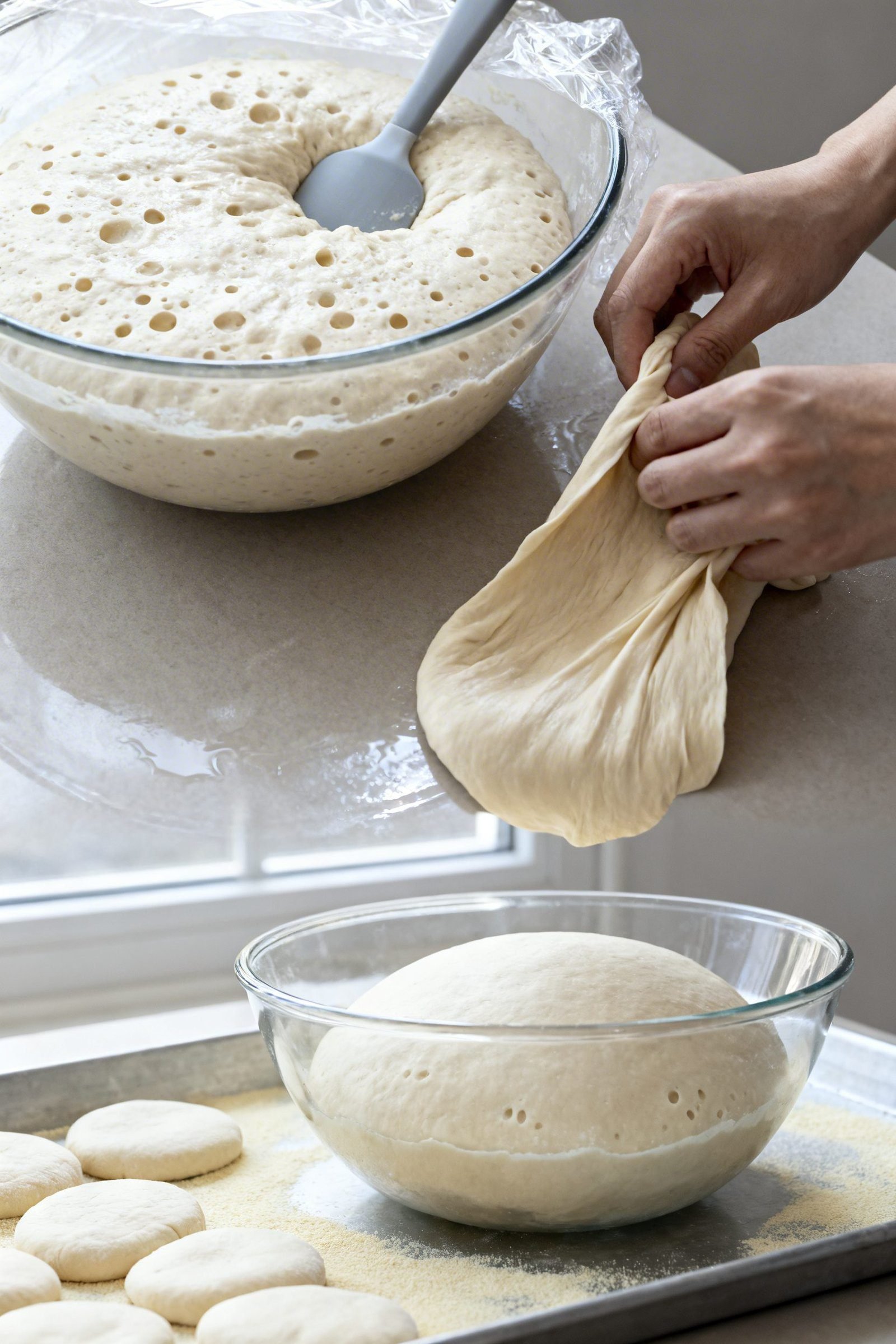
- Active sourdough starter (100% hydration): Bubbly and doubled after feeding, for reliable fermentation.
- Whole milk: Warms tenderness and adds mild richness. Use 2% if you prefer.
- Water: Balances hydration for a soft, workable dough.
- All-purpose flour: Gives a tender crumb; you can mix in some bread flour for extra chew.
- Sugar or honey: Feeds the yeast and adds light sweetness that browns nicely.
- Unsalted butter: Softened and mixed into the dough for a plush bite.
- Fine sea salt: Balances flavor and strengthens gluten.
- Cornmeal (or semolina): For dusting—prevents sticking and creates that classic crust.
How to Make Super Soft Sourdough English Muffins
1) Mix the Overnight Sponge
- In the evening, stir together 120 g active starter, 240 g warm milk, 120 g water, and 300 g all-purpose flour in a large bowl until no dry bits remain. The batter will look thick and sticky.
- Cover and let it rest at room temperature for 8–12 hours. By morning, it should look bubbly and expanded.
2) Make the Final Dough
- To the sponge, add 30 g sugar, 8 g fine sea salt, and 240–270 g all-purpose flour. Mix until a shaggy dough forms.
- Knead by hand for 6–8 minutes, or mix on low for 5 minutes, until smooth and slightly tacky.
- Knead in 45 g softened butter until fully absorbed and the dough feels supple and stretchy.
- Aim for a soft dough that barely clings to your fingers. If needed, dust with a tablespoon of flour to manage stickiness, but keep it soft for those nooks and crannies.
3) First Rise (Bulk Ferment)
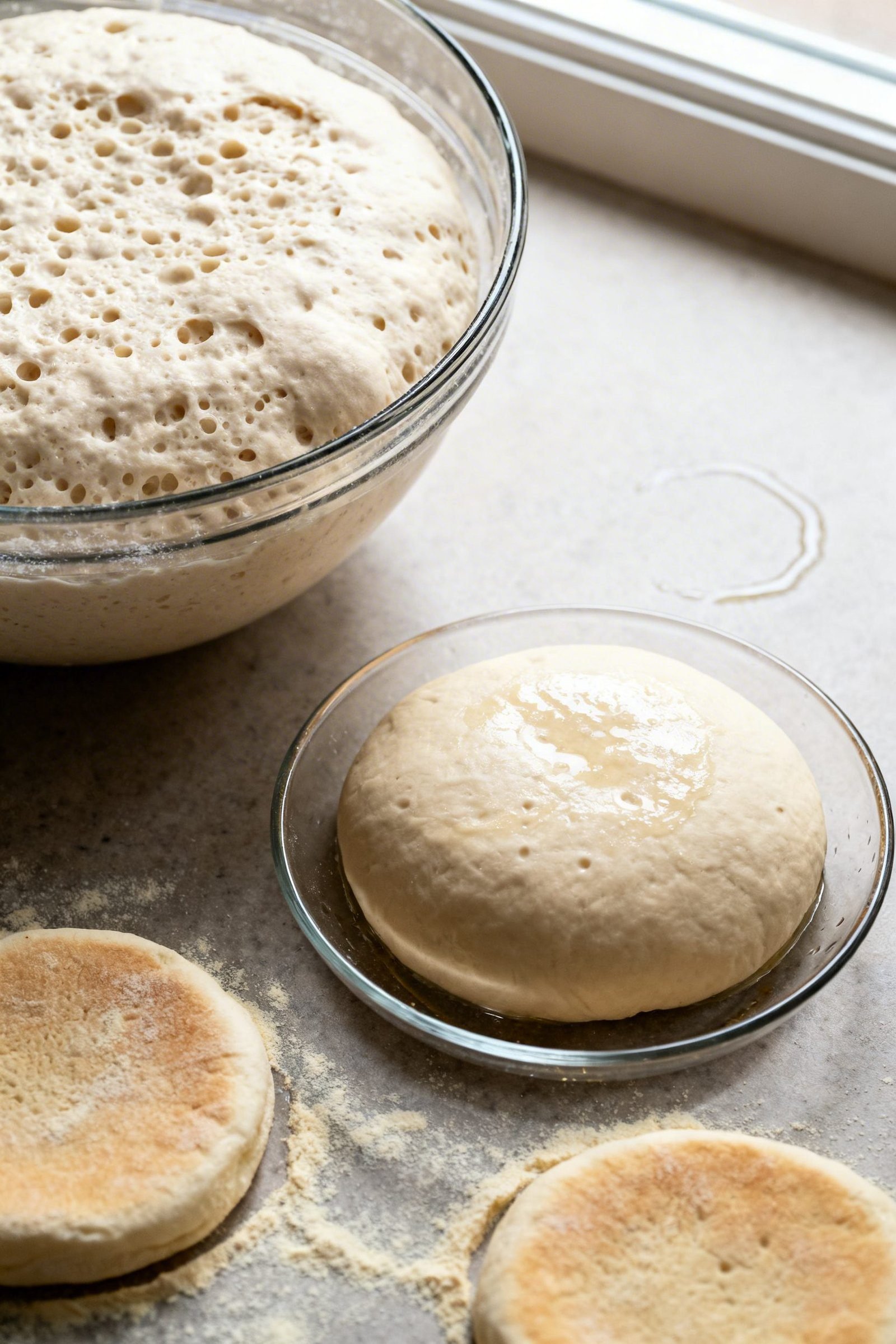
- Place the dough in a lightly oiled bowl, cover, and let rise until puffed and about 50% larger, roughly 60–90 minutes at warm room temp.
- Perform one gentle set of stretches and folds at the 30-minute mark to strengthen the dough without deflating too much.
4) Shape the Muffins
- Generously dust a sheet pan with cornmeal. Lightly dust your counter with flour.
- Turn the dough out and pat it into a 3/4-inch (2 cm) thick slab. Use a 3–3.5 inch round cutter to punch out muffins. Re-roll scraps gently to avoid tough crumbs.
- Set each round onto the cornmeal, then sprinkle more cornmeal on top so both sides are coated.
5) Proof the Rounds
- Cover the tray with a clean towel and let the muffins rise until noticeably puffy, about 45–75 minutes depending on room temperature. They should look lighter and domed but still easy to handle.
- For schedule flexibility, refrigerate the shaped rounds for up to 12 hours and cook straight from the fridge, adding a few extra minutes on the griddle.
6) Cook on the Stovetop
- Preheat a heavy skillet or griddle over low to medium-low heat for a full 10 minutes. Even heat matters.
- Place muffins on the dry pan (no oil), leaving space for expansion. Cook 6–8 minutes per side until deep golden with a matte, set crust. Flip gently with a thin spatula.
- If the centers feel squishy but the exterior browns too fast, lower the heat. You want slow, steady cooking so the interior steams through.
- For insurance, finish in a 325°F (165°C) oven for 5–7 minutes after griddling, especially for thicker muffins.
7) Cool and Split
- Cool on a rack for at least 20 minutes. Residual steam sets the crumb.
- Use a fork to split around the sides for classic craggy pockets, or use a serrated knife if you prefer cleaner edges.
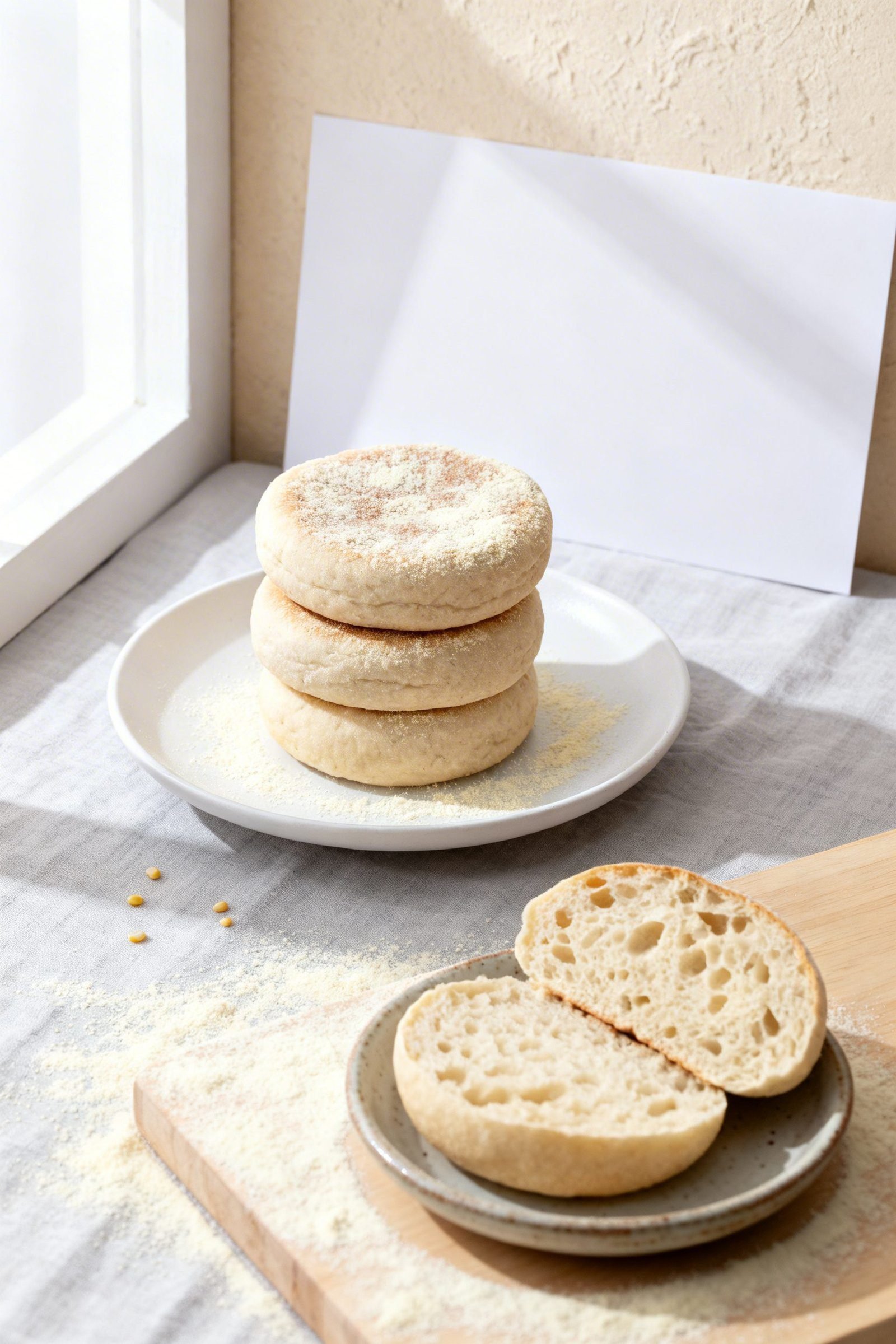
How to Store Sourdough English Muffins
- Room temperature: Keep in an airtight bag for 2–3 days. Toast to refresh.
- Freeze: Split first, then freeze in a zip-top bag for up to 3 months. Toast straight from frozen.
- Reheat: Toast cut-side down on a hot skillet or in a toaster until edges crisp and the center warms.
Benefits of Making These at Home
- Better texture: Tender, plush crumb with real nooks that grab butter and jam.
- Real sourdough flavor: Balanced tang without harsh acidity.
- Budget-friendly: Pantry staples turn into a bakery-worthy breakfast.
- Flexible timing: The overnight sponge and fridge-proof option fit busy mornings.
- No special gear: A skillet, a bowl, and a round cutter get the job done.
What Not to Do
- Don’t rush the sponge: Less time equals less flavor and weaker rise.
- Don’t overflour the dough: A firm dough won’t develop those signature holes.
- Don’t cook too hot: High heat burns the crust before the center sets.
- Don’t skip cornmeal: It prevents sticking and adds that classic texture.
- Don’t slice immediately: Steam needs time to finish the crumb structure.
Variations You Can Try
- Whole wheat twist: Swap 20–30% of the flour with whole wheat. Add 1–2 tablespoons extra water if needed.
- Buttermilk tang: Replace some or all of the milk with buttermilk for extra tenderness and a brighter tang.
- Cornmeal crunch-in: Mix 20–30 g fine cornmeal into the dough for a subtle crunch and sweetness.
- Cinnamon raisin: Add 1 teaspoon cinnamon and 100 g raisins after kneading the butter. Proof a bit longer.
- Sweet honey butter: Brush warm muffins with melted honey-butter for a glossy, lightly sweet finish.
- Mini muffins: Cut smaller rounds (2.5 inches) and reduce cook time by a couple of minutes per side.
FAQ
My starter isn’t very active. Can I still make these?
Feed your starter and wait until it doubles and looks airy before mixing the sponge. If it still lags, add a teaspoon of commercial yeast to the final dough for backup while you build a stronger starter over time.
How do I get more nooks and crannies?
Keep the dough on the softer side, avoid over-kneading, and use a fork to split. Gentle handling during shaping also helps preserve bubbles.
Why did my muffins brown too quickly?
The pan ran too hot. Preheat on low, then keep heat at medium-low. Thicker muffins need an oven finish to cook through without over-browning.
Can I use bread flour?
Yes. Swap in 25–50% bread flour for extra chew. Add a splash of water if the dough tightens too much.
Do I need rings to shape them?
No. A cutter or even a jar ring works. Proof right on cornmeal and handle gently when transferring to the pan.
Can I cold-proof overnight after shaping?
Yes. Cover the tray and refrigerate up to 12 hours. Cook straight from the fridge and extend cook time slightly.
How do I know they’re cooked inside?
They should feel firm at the edges and spring back when pressed. For precision, aim for an internal temp of 200–205°F (93–96°C) after the oven finish.
Conclusion
These super soft sourdough English muffins pack bakery flavor into a simple, overnight routine you can actually keep. Mix a quick sponge at night, finish the dough in the morning, and enjoy warm, craggy muffins ready for butter, jam, eggs, or breakfast sandwiches. Once you make a batch, you’ll keep starter on hand just for these—promise.
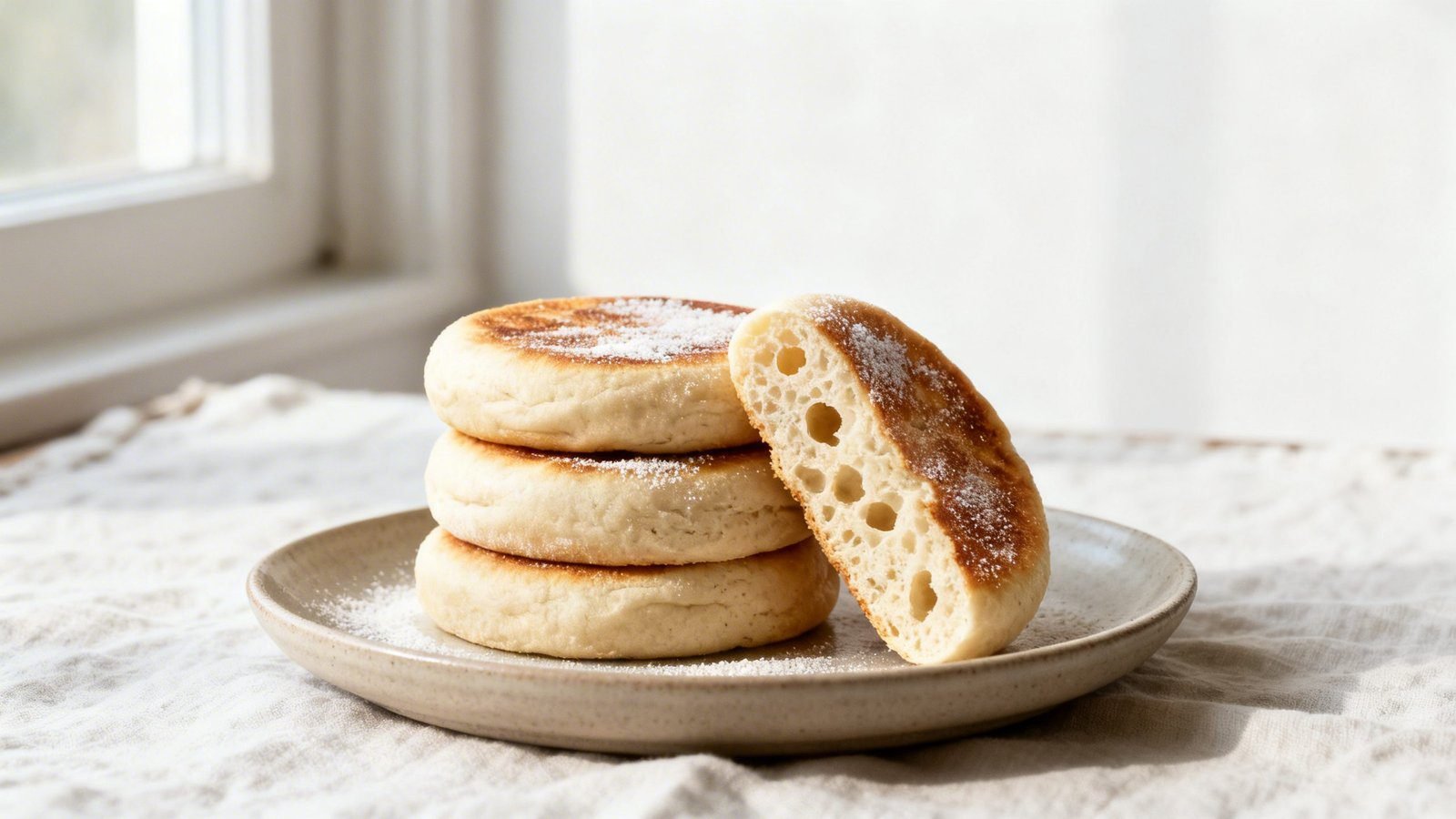
Super Soft Sourdough English Muffins
Tender, tangy sourdough English muffins made with an easy overnight sponge and cooked on the stovetop.
Ingredients
- 120 g active sourdough starter (100% hydration)
- 240 g warm whole milk (or 2%)
- 120 g water
- 300 g all-purpose flour (for sponge)
- 30 g sugar (or honey)
- 8 g fine sea salt
- 240–270 g all-purpose flour (for final dough)
- 45 g unsalted butter, softened
- Cornmeal or semolina, for dusting
Instructions
- Evening: In a large bowl, mix 120 g active starter, 240 g warm milk, 120 g water, and 300 g all-purpose flour until no dry bits remain. Cover and rest at room temperature 8–12 hours until bubbly and expanded.
- Morning: To the sponge, add 30 g sugar, 8 g fine sea salt, and 240–270 g all-purpose flour. Mix to a shaggy dough.
- Knead by hand 6–8 minutes or on low 5 minutes until smooth and slightly tacky.
- Knead in 45 g softened butter until fully absorbed and dough is supple and stretchy. Keep dough soft; dust lightly only if needed.
- Bulk ferment: Place in a lightly oiled bowl, cover, and rise until about 50% larger, 60–90 minutes at warm room temp. Do one gentle set of stretches and folds at 30 minutes.
- Shape: Generously dust a sheet pan with cornmeal. Lightly flour the counter. Pat dough to ¾-inch (2 cm) thick. Cut 3–3.5 inch rounds and place on the cornmeal. Sprinkle cornmeal on top.
- Proof: Cover and let rise until puffy, 45–75 minutes. Optionally, refrigerate up to 12 hours and cook straight from the fridge.
- Cook: Preheat a heavy skillet or griddle over low to medium-low for 10 minutes. Cook muffins dry (no oil) 6–8 minutes per side until deep golden and set; adjust heat to avoid over-browning. For thicker muffins, finish in a 325°F (165°C) oven for 5–7 minutes.
- Cool and split: Cool on a rack at least 20 minutes. Split with a fork for craggy pockets or a serrated knife for cleaner edges.