Simple Sweet Scones Recipe | Buttery Breakfast Scones With Icing
Meet your new weekend favorite: simple sweet scones with a buttery crumb and a drizzle of vanilla icing. They bake up golden on the outside, soft and tender inside, and they taste like a cozy bakery morning—without leaving your kitchen.
These breakfast scones come together fast with basic pantry staples. I’ll walk you through cold-butter technique, gentle mixing, and easy shaping so your scones rise tall and stay tender. Make them plain and classic, or add citrus zest or a handful of chocolate chips if you like. Let’s bake.
Why These Buttery Sweet Scones Turn Out So Good
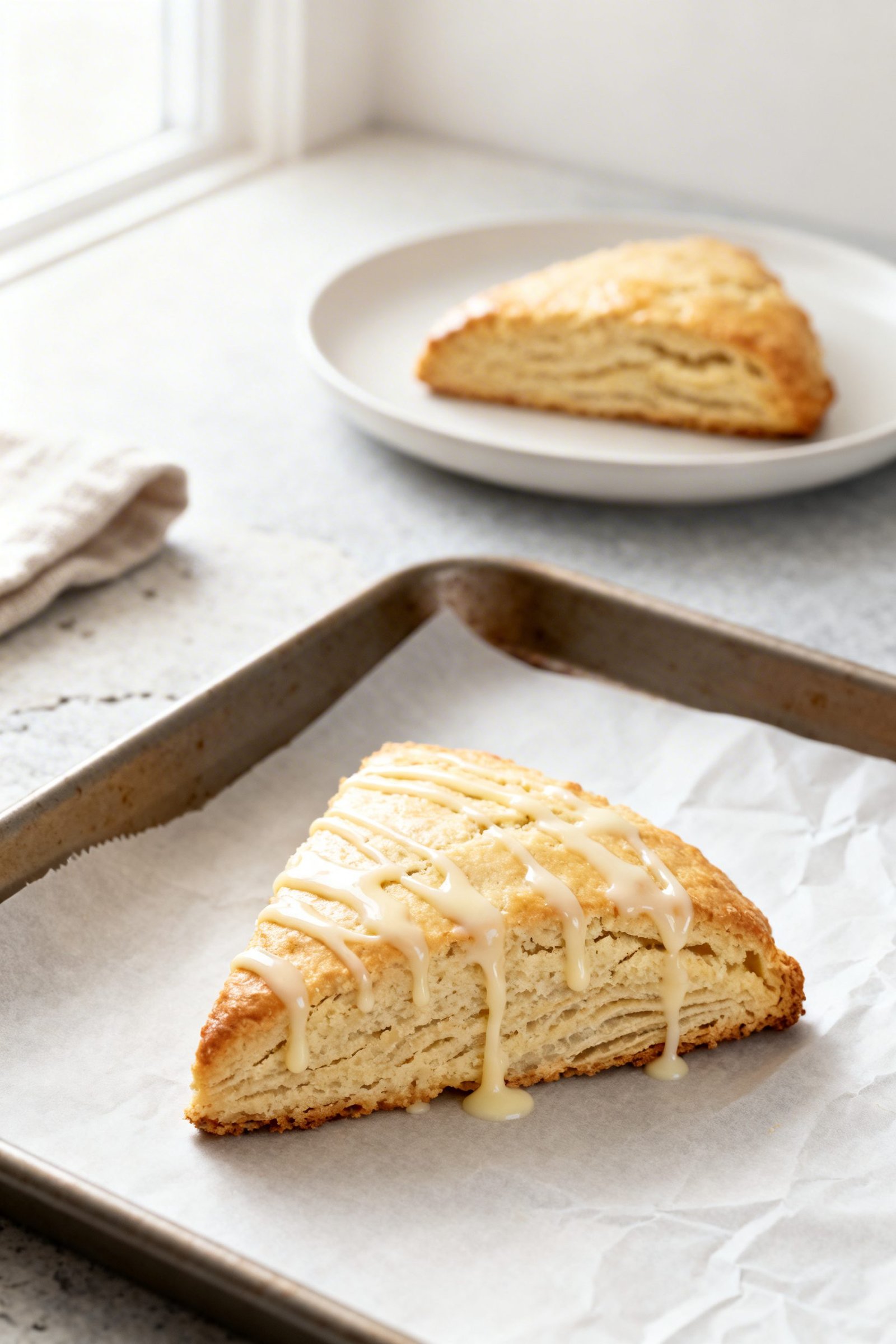
- Cold butter creates flaky layers that puff in the oven and give you that tender, almost layered crumb.
- Just the right amount of sugar sweetens the dough while keeping the texture light, not cake-like.
- Heavy cream adds richness and moisture without making the dough sticky or dense.
- Chilling before baking helps the scones hold their shape and rise taller.
- Simple vanilla icing adds a glossy finish and sweet contrast to the buttery base.
Ingredients
For the scones
- 2 cups (250 g) all-purpose flour
- 1/3 cup (65 g) granulated sugar
- 1 tablespoon baking powder
- 1/2 teaspoon fine salt
- 1/2 cup (113 g) unsalted butter, very cold, cut into small cubes
- 2/3 cup (160 ml) cold heavy cream (plus a little extra for brushing)
- 1 large egg, cold
- 2 teaspoons pure vanilla extract
- Optional: 1 teaspoon lemon zest or orange zest
For the vanilla icing
- 1 cup (120 g) powdered sugar, sifted
- 2–3 tablespoons milk or cream
- 1/2 teaspoon pure vanilla extract
- Pinch of salt to balance the sweetness
Pantry and tools
- Sheet pan lined with parchment
- Large mixing bowl
- Pastry cutter, forks, or box grater for the butter
- Bench scraper or sharp knife for cutting wedges
How to Make These Sweet Breakfast Scones
1) Mix the dry ingredients
- Whisk flour, sugar, baking powder, and salt in a large bowl until combined.
2) Cut in the butter
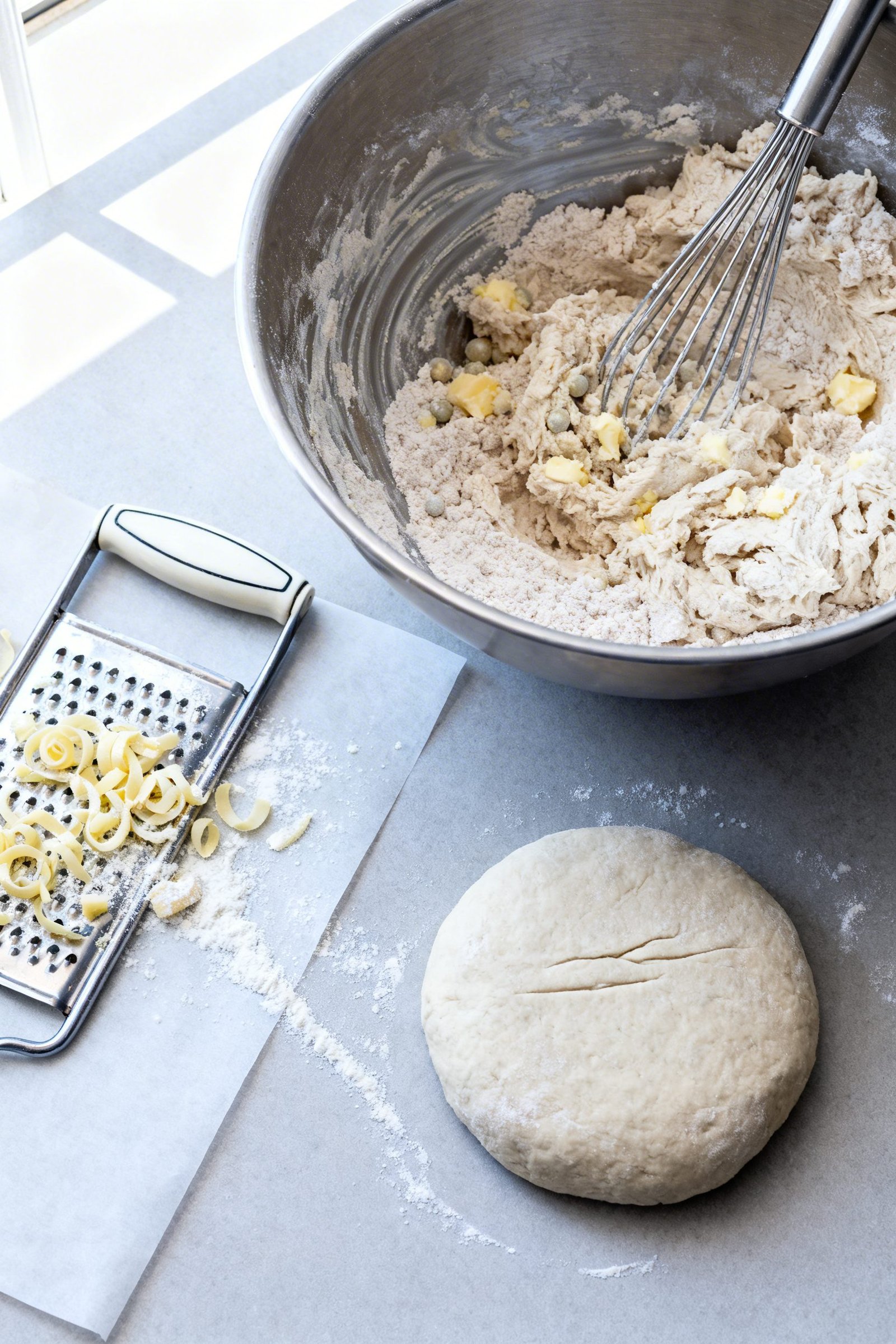
- Add the cold butter cubes. Use a pastry cutter, two forks, or your fingertips to work the butter into the flour until you see pea-size bits throughout. You want small, visible pieces—those make flaky pockets.
- Tip: Grate frozen butter on a box grater for extra-fast mixing, then toss with the flour to coat.
3) Add the wet ingredients
- In a small bowl, whisk the cream, egg, vanilla, and zest if using.
- Pour over the flour-butter mixture. Stir with a fork until large clumps form. The dough should look shaggy, not smooth.
4) Bring the dough together
- Turn the shaggy mixture onto a lightly floured surface. Gently press and fold it together just until it holds. If dry flour remains, drizzle 1–2 teaspoons cream over the dry spots and fold again.
- Pat into a 6–7 inch round about 1 inch thick. Keep the edges tidy to help the scones rise evenly.
5) Cut, chill, and prep for baking
- Use a sharp knife or bench scraper to cut the round into 8 wedges. Transfer to a parchment-lined sheet pan, spacing them out.
- Brush the tops lightly with cream for a golden finish. Sprinkle with a little sugar for crunch if you like.
- Refrigerate the pan for 15–20 minutes while you preheat the oven to 400°F (200°C). Chilling keeps the butter cold and helps the scones rise higher.
6) Bake
- Bake on the center rack for 15–18 minutes, until the tops look lightly golden and the edges feel set. A toothpick should come out with just a few moist crumbs.
- Cool on the pan 5 minutes, then move to a rack. Let them cool until just warm before icing.
7) Make the icing
- Whisk powdered sugar, 2 tablespoons milk or cream, vanilla, and a pinch of salt. Add more liquid drop by drop until the icing drips slowly off the whisk—thick but pourable.
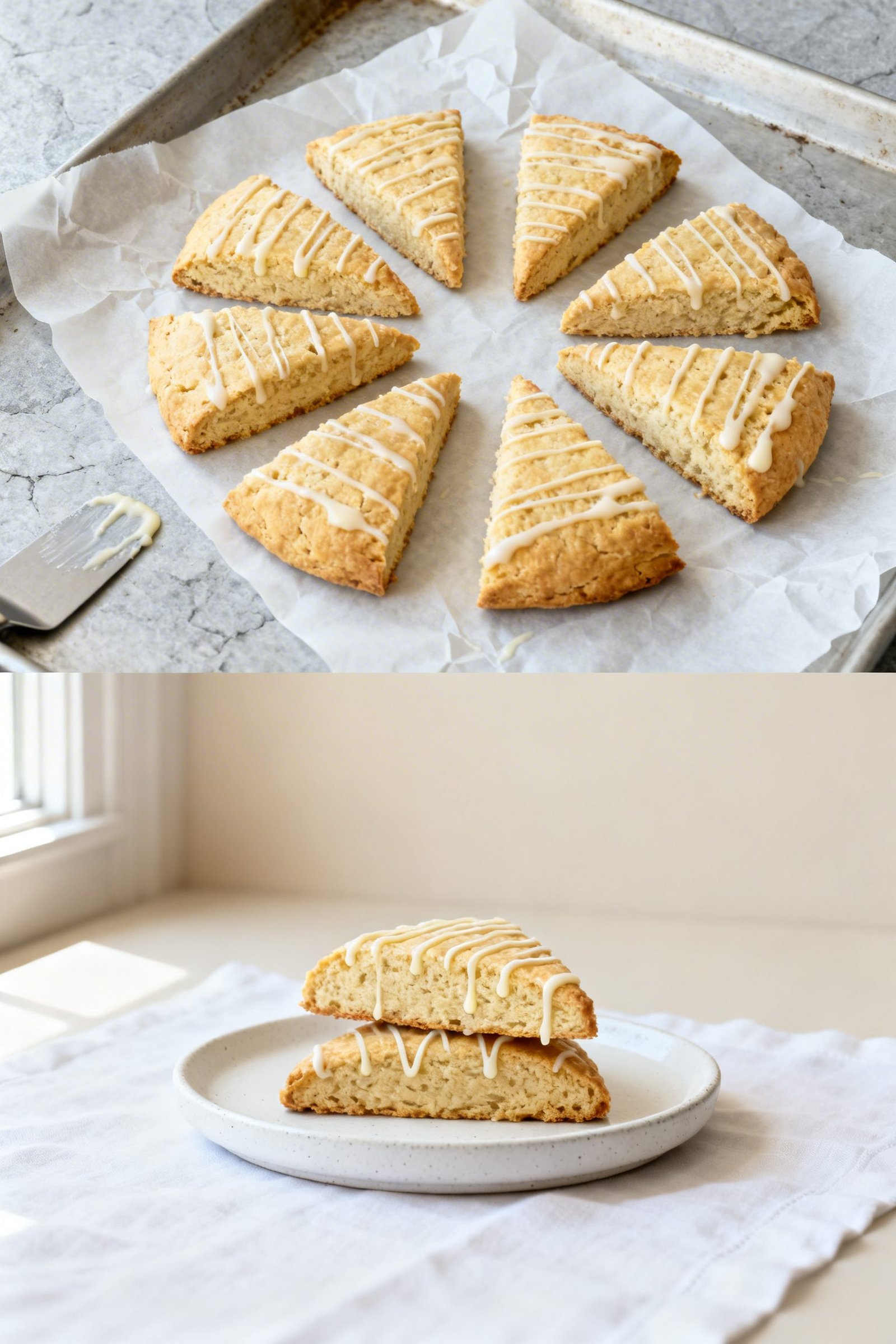
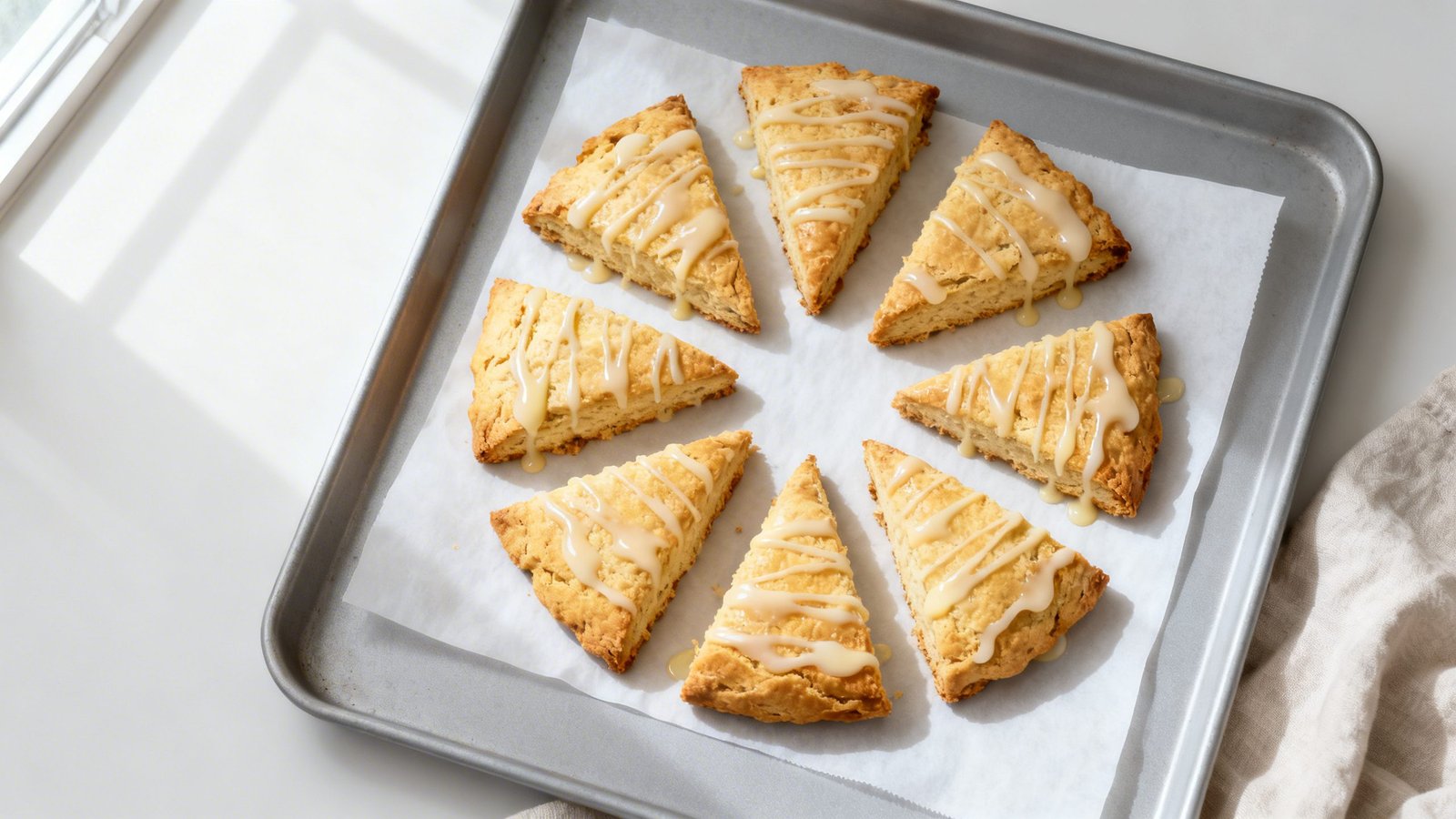
- Drizzle over warm (not hot) scones. The icing will set in a few minutes with a soft sheen.
Helpful tips for success
- Keep everything cold: cold butter and cold dairy make the best texture.
- Don’t overmix: stop as soon as the dough comes together. Overworking makes tough scones.
- Use the right thickness: aim for about 1 inch; thinner dough dries out, thicker needs a bit more time.
- Rotate the pan: if your oven has hot spots, rotate halfway through for even browning.
How to Store Your Iced Sweet Scones
- Room temperature: store un-iced scones, tightly covered, for up to 2 days. Add icing just before serving for the best texture.
- Refrigerator: store iced scones in an airtight container for 3–4 days. Let them sit at room temp 10 minutes before eating.
- Freezer (baked): wrap cooled, un-iced scones individually and freeze up to 2 months. Thaw at room temp and warm at 300°F (150°C) for 8–10 minutes, then ice.
- Freezer (unbaked): freeze cut wedges on a sheet pan until solid. Transfer to a freezer bag for up to 2 months. Bake from frozen at 400°F (200°C) for 18–22 minutes. Ice after cooling.
Why You’ll Love These Buttery Iced Scones
- Bakery flavor at home: buttery crumb, light sweetness, and a delicate vanilla glaze.
- Quick and doable: from whisk to oven in about 20 minutes.
- Simple ingredients: flour, butter, sugar, cream—nothing fancy.
- Make-ahead friendly: chill or freeze the dough for busy mornings.
- Customizable: easy base for citrus, spices, or mix-ins.
Common Mistakes to Avoid
- Letting the butter warm up: warm butter blends too much with the flour and kills flakiness.
- Overworking the dough: kneading develops gluten and makes heavy scones.
- Skipping the chill: unchilled dough spreads more and rises less.
- Too much flour on the board: excess flour dries the dough. Use just a light dusting.
- Baking too long: dry, crumbly scones happen fast. Pull them when the edges set and the tops lightly brown.
- Icing when hot: heat melts the glaze into the crumb. Cool to just warm first.
Easy Variations to Try
- Lemon scones: add 2 teaspoons lemon zest to the dough and 1 tablespoon lemon juice to the icing.
- Vanilla bean: scrape 1/2 vanilla bean into the cream for deep vanilla flavor.
- Cinnamon sugar: mix 1 teaspoon ground cinnamon into the dry ingredients and sprinkle cinnamon sugar on top before baking.
- Chocolate chip: fold in 1/2 cup mini chocolate chips just before shaping.
- Orange almond: add 2 teaspoons orange zest to the dough and 1/4 teaspoon almond extract to the icing; sprinkle with sliced almonds.
- Maple glaze: swap milk for maple syrup in the icing and add a pinch of cinnamon.
- Berry swirl (fresh or frozen): gently press 1/2 cup small berries into the dough surface before folding once and shaping; bake a few minutes longer.
FAQ
Can I use milk instead of cream?
Yes, but expect a slightly less rich texture. If you use milk, choose whole milk and reduce the amount by 1–2 tablespoons to keep the dough from getting sticky.
How do I make the scones extra tall?
Keep the butter very cold, avoid overmixing, pat the dough to a full 1 inch, and chill the cut wedges before baking. A hot oven helps, so preheat fully.
Can I make them smaller?
Yes. Shape into a 6-inch round and cut 10–12 petite wedges, or use a 2.5-inch cutter. Start checking 3–5 minutes earlier.
Why did my scones spread?
Warm dough, too much liquid, or overmixing usually cause spreading. Chill the shaped dough and measure your cream accurately.
Do I need eggs?
The egg adds tenderness and structure. If you skip it, add 2–3 extra tablespoons cream and expect a slightly crumblier texture.
How do I reheat leftovers?
Warm un-iced scones at 300°F (150°C) for 8–10 minutes. For iced scones, warm 4–6 minutes or enjoy at room temp.
Conclusion
These simple sweet scones deliver buttery layers, gentle sweetness, and a pretty vanilla drizzle with minimal effort. Keep your ingredients cold, mix lightly, and give the dough a quick chill—those small steps make bakery-quality scones at home. Brew some coffee, whisk the glaze, and enjoy a warm, fresh-baked morning.
Simple Sweet Scones with Vanilla Icing
Buttery, tender scones with a light vanilla icing that bake up golden and soft inside.
Ingredients
- 2 cups (250 g) all-purpose flour
- ⅓ cup (65 g) granulated sugar
- 1 tablespoon baking powder
- ½ teaspoon fine salt
- ½ cup (113 g) unsalted butter, very cold, cut into small cubes
- ⅔ cup (160 ml) cold heavy cream, plus extra for brushing
- 1 large egg, cold
- 2 teaspoons pure vanilla extract
- Optional: 1 teaspoon lemon zest or orange zest
- Icing: 1 cup (120 g) powdered sugar, sifted
- Icing: 2–3 tablespoons milk or cream
- Icing: ½ teaspoon pure vanilla extract
- Icing: Pinch of salt
Instructions
- Whisk flour, sugar, baking powder, and salt in a large bowl until combined.
- Cut in the cold butter with a pastry cutter, two forks, or fingertips until pea-size pieces are visible; optional: grate frozen butter and toss with flour.
- In a small bowl, whisk cream, egg, vanilla, and optional zest; pour into dry mixture and stir with a fork until shaggy clumps form.
- Turn dough onto a lightly floured surface and gently press and fold just until it holds together; if dry spots remain, drizzle 1–2 teaspoons cream and fold again. Pat into a 6–7 inch round about 1 inch thick.
- Cut into 8 wedges and transfer to a parchment-lined sheet pan, spacing apart. Brush tops lightly with cream and optionally sprinkle with sugar. Refrigerate 15–20 minutes while preheating oven to 400°F (200°C).
- Bake on center rack for 15–18 minutes until lightly golden and edges set; cool on pan 5 minutes, then transfer to a rack until just warm.
- Make icing: whisk powdered sugar, 2 tablespoons milk or cream, vanilla, and a pinch of salt; add more liquid drop by drop until thick but pourable. Drizzle over warm (not hot) scones and let set.