Simple Mango Pudding Recipe | Creamy Mango Coconut Dessert Treat
You want a creamy, fruity dessert that takes little effort and tastes like sunshine? This simple mango pudding delivers exactly that. It blends ripe mangoes with coconut milk for a silky, tropical treat you can set in the fridge and serve chilled. No oven, no fuss—just pure mango bliss.
I make this when I crave something light, smooth, and refreshing after dinner. It sets beautifully, scoops like a dream, and impresses guests every time. You can prep it ahead, customize the sweetness, and even make it dairy-free without sacrificing that luscious, custard-like feel.
Why This Easy Mango Coconut Pudding Works
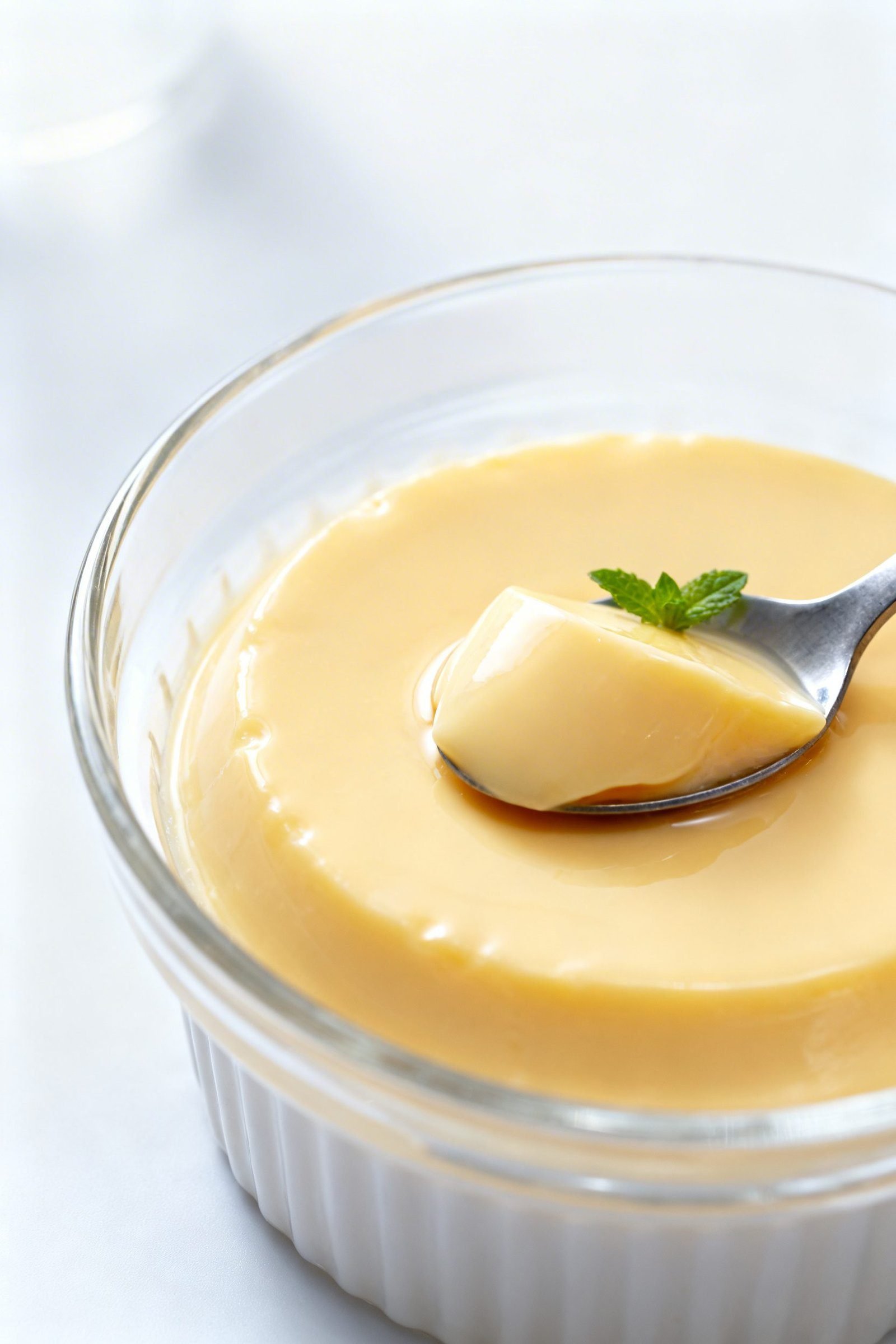
This recipe nails the balance of flavor, texture, and simplicity. Here’s why it earns a spot in your regular dessert rotation:
- Pure mango flavor: Ripe mangoes shine without heavy spices or distractions.
- Ultra-creamy texture: Coconut milk adds body and richness without feeling heavy.
- No baking needed: A quick stovetop simmer and the fridge does the rest.
- Adjustable sweetness: You control the sugar level based on your fruit.
- Make-ahead friendly: Chill it a few hours or overnight for easy entertaining.
- Dairy-free option: Use coconut milk for a naturally lactose-free dessert.
Ingredients
Choose juicy, fragrant mangoes for the best result. If fresh mangoes are out of season, high-quality frozen mango chunks or canned mango pulp work well.
- Fresh ripe mangoes (about 3 large) or 2 cups mango puree
- Coconut milk (full-fat for creaminess), 1 can (13.5–14 oz)
- Evaporated milk or heavy cream, 1/2 cup (optional for extra richness)
- Granulated sugar, 1/4 to 1/3 cup, to taste
- Unflavored gelatin, 2 1/2 teaspoons (one packet) or agar-agar powder 1 to 1 1/2 teaspoons for a vegetarian set
- Cold water or coconut water, 1/4 cup (for blooming gelatin)
- Fresh lime juice, 1 to 2 teaspoons (brightens the mango flavor)
- Pinch of salt (enhances sweetness)
- Optional toppings: diced mango, toasted coconut flakes, mint, or a drizzle of coconut cream
How to Make This Creamy Mango Coconut Pudding
Prep the Mango
- Peel and cube the mangoes. Blend until completely smooth. You want about 2 cups of silky puree.
- Taste the puree. If the mangoes taste very sweet, lean toward the lower end of the sugar range.
Bloom the Setting Agent
- Sprinkle gelatin over 1/4 cup cold water. Let it sit for 5 minutes to bloom. For agar-agar, skip this and see the note below.
Warm the Coconut Base
- In a saucepan, whisk together coconut milk, sugar, and a pinch of salt.
- Heat over medium until the sugar dissolves and the mixture steams. Do not boil.
- Remove from heat. Stir in the bloomed gelatin until fully melted. If using agar-agar, return to a gentle simmer for 2 minutes to activate it, whisking well.
Combine and Balance
- Whisk in the mango puree and lime juice. If using, add evaporated milk or heavy cream for extra richness.
- Taste and adjust sweetness or lime. The mixture should taste slightly sweeter than you want when chilled.
Strain and Chill
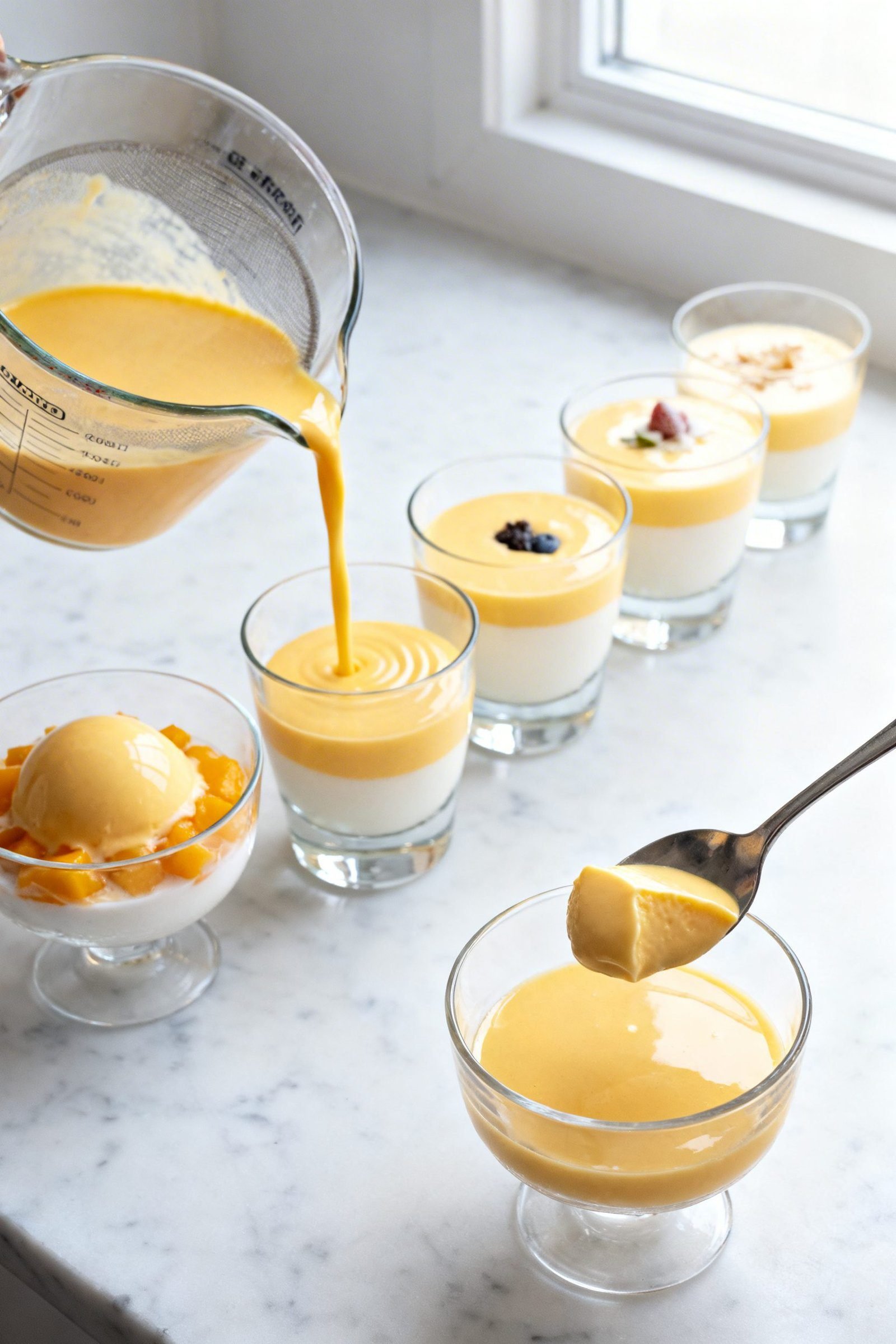
- For the smoothest texture, strain the mixture through a fine-mesh sieve into a pitcher.
- Pour into ramekins, glasses, or one larger dish.
- Refrigerate for 4 hours, or until fully set. Overnight gives the best chill and texture.
Serve
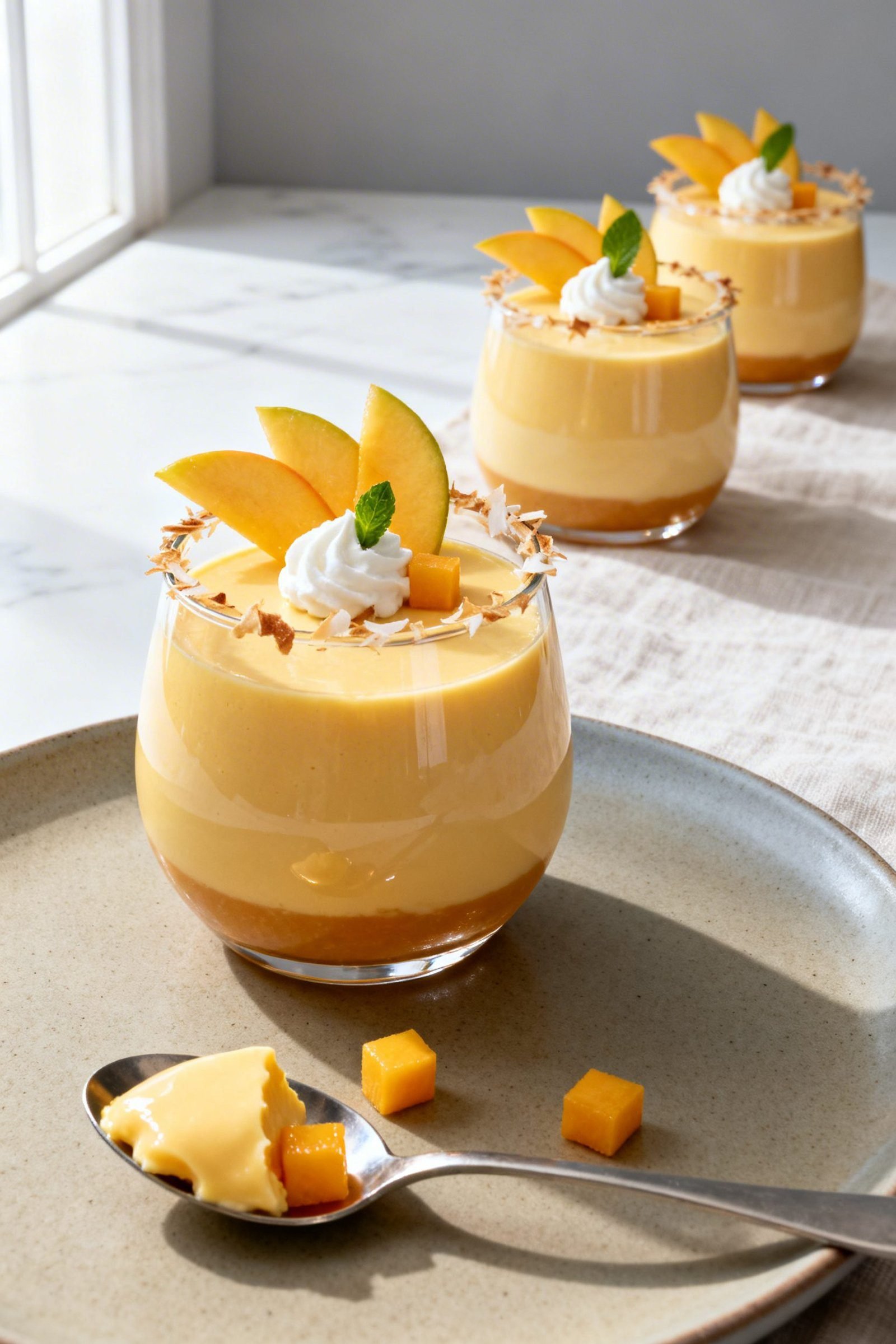
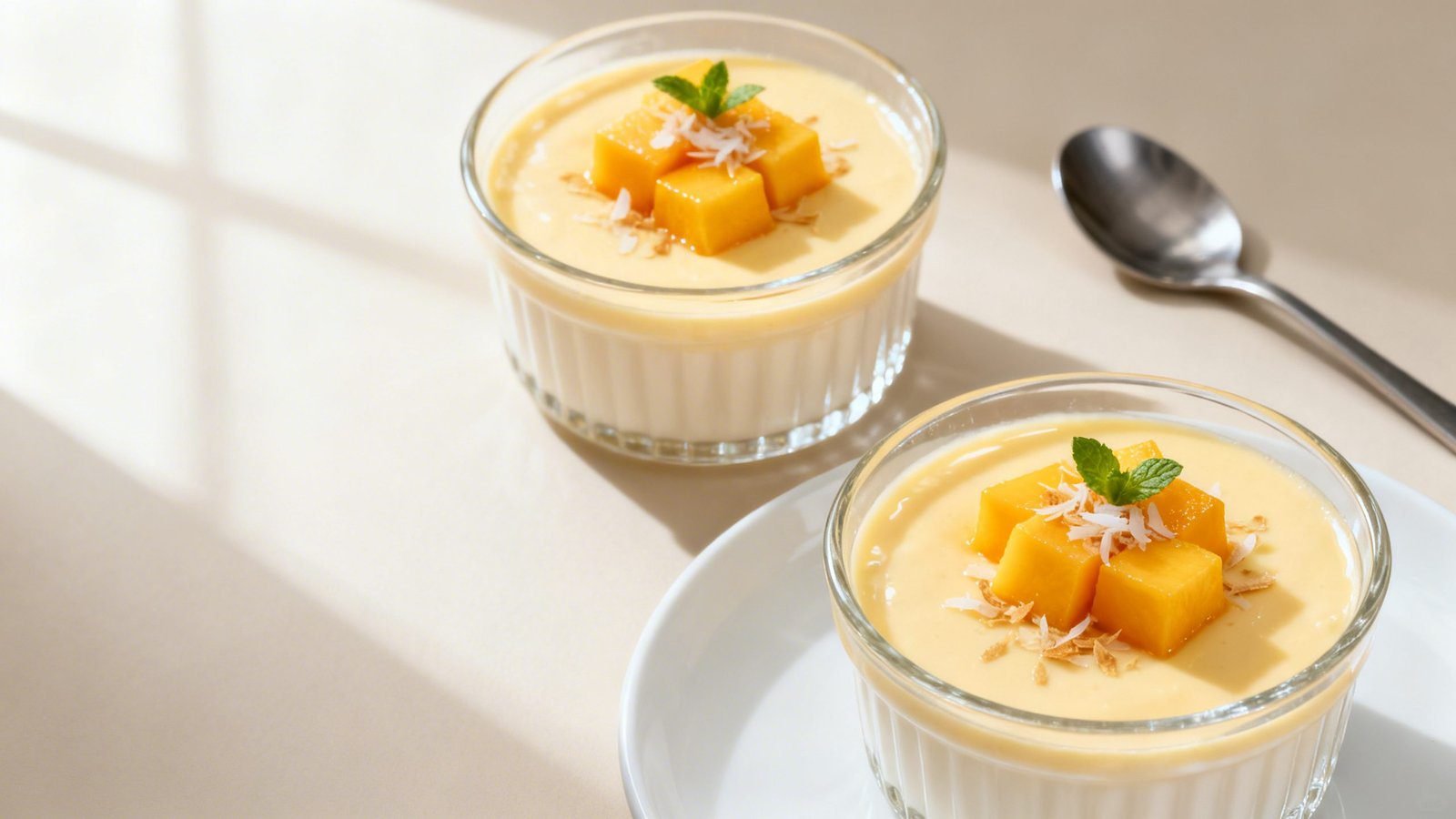
- Top with diced mango, toasted coconut, and a few mint leaves. Add a spoonful of coconut cream if you like it extra lush.
How to Store Your Mango Coconut Pudding
- Refrigerate: Cover tightly and chill for up to 3 days.
- No freezing: Freezing changes the texture and weeps on thawing.
- Keep toppings separate: Add fruit and coconut just before serving for the best texture.
- Transport tips: If traveling, set the puddings in jars with lids and pack them in a cooler.
Benefits of This Mango Coconut Dessert
- Quick prep: Active time stays under 20 minutes.
- Reliable set: Gelatin or agar gives a clean, custardy wobble every time.
- Light but satisfying: Creamy mouthfeel without feeling heavy.
- Seasonal flexibility: Use fresh mango in summer or good-quality pulp any time.
- Dairy-free option: Skip the cream and stick with full-fat coconut milk.
- Make-ahead friendly: Perfect for dinner parties and holidays.
What Not to Do
- Don’t boil the coconut milk: Boiling can split the fat and dull the flavor.
- Don’t skip blooming gelatin: Undissolved granules lead to a gritty set.
- Don’t add mango to boiling liquid: High heat mutes the fresh flavor and can thicken oddly.
- Don’t guess sweetness: Always taste the puree; mangoes vary a lot.
- Don’t rush chilling: The pudding needs several hours to set cleanly.
- Don’t use low-fat coconut milk: It won’t deliver that silky, creamy texture.
Variations You Can Try
- Mango sago twist: Fold in cooked tapioca pearls after the mixture cools slightly.
- Thai-inspired: Add a few drops of vanilla and a tiny pinch of cardamom.
- Layered parfait: Alternate pudding with crushed coconut cookies and diced mango.
- Yogurt swirl: Marble in Greek yogurt for tang and extra protein.
- Vegan agar version: Use agar-agar and swap cream for more coconut milk.
- Spiked dessert: Stir in 1 tablespoon of dark rum or coconut liqueur for adults.
- Chia cup: Stir 2 tablespoons chia seeds into warm mixture for texture, then chill.
FAQ
Can I use canned mango pulp?
Yes. Choose unsweetened or lightly sweetened pulp and reduce added sugar. Taste the mix before chilling.
What’s the best mango for pudding?
Use very ripe, fragrant mangoes like Ataulfo, Alphonso, or Kent. They blend smooth and taste intensely sweet.
How do I thicken without gelatin?
Use agar-agar powder (1 to 1 1/2 teaspoons). Simmer it in the coconut mixture for 2 minutes to activate, then proceed.
Why did my pudding not set?
Common causes: too little setting agent, didn’t bloom/activate properly, or too much liquid. Measure carefully and chill long enough.
Can I make it lower sugar?
Yes. Start with 2 tablespoons sugar, then taste and adjust. Very ripe mangoes often need less.
Can I double the recipe?
Absolutely. Double all ingredients, use a larger dish or more cups, and extend the chilling time as needed.
How do I avoid fibrous texture?
Blend the mango until velvety and strain the final mixture. This removes any threads or bubbles.
Conclusion
This simple mango pudding turns a handful of ingredients into a creamy coconut treat that always hits the spot. It sets softly, tastes bright and tropical, and works for weeknights or special occasions. Grab ripe mangoes, a can of coconut milk, and a few pantry basics—you’ll have a chilled dessert everyone asks for again and again.
Simple Mango Coconut Pudding
A creamy, no-bake mango pudding blended with coconut milk and gently set with gelatin or agar, then chilled until silky and refreshing.
Ingredients
- Fresh ripe mangoes (about 3 large) or 2 cups mango puree
- Coconut milk (full-fat), 1 can (13.5–14 oz)
- Evaporated milk or heavy cream, ½ cup (optional)
- Granulated sugar, ¼ to ⅓ cup, to taste
- Unflavored gelatin, 2 ½ teaspoons (one packet) OR agar-agar powder, 1 to 1 ½ teaspoons
- Cold water or coconut water, ¼ cup (for blooming gelatin)
- Fresh lime juice, 1 to 2 teaspoons
- Pinch of salt
- Optional toppings: diced mango, toasted coconut flakes, mint, coconut cream
Instructions
- Peel and cube the mangoes and blend until completely smooth to yield about 2 cups of puree; taste and gauge sweetness.
- If using gelatin, sprinkle it over ¼ cup cold water and let bloom for 5 minutes; skip this step for agar.
- In a saucepan, whisk coconut milk, sugar, and a pinch of salt; heat over medium until sugar dissolves and mixture steams without boiling.
- Remove from heat and stir in bloomed gelatin until fully melted. If using agar-agar, return to a gentle simmer for 2 minutes, whisking to activate.
- Whisk in mango puree and lime juice; add evaporated milk or heavy cream if using. Taste and adjust sweetness and lime.
- Strain the mixture through a fine-mesh sieve into a pitcher for smooth texture.
- Pour into ramekins, glasses, or a larger dish and refrigerate for 4 hours or until fully set (overnight preferred).
- Serve topped with diced mango, toasted coconut, mint, and a drizzle of coconut cream if desired.