Quick Samjang Recipe | Easy Korean Spicy Soybean Paste Sauce
Craving that punchy, savory-spicy kick you get at Korean BBQ? Let’s make samjang in minutes. This bold dipping sauce blends fermented soybean paste with a little heat, a little sweetness, and a lot of umami. It’s perfect for grilled meats, lettuce wraps, veggie sticks, rice bowls—basically anything that needs flavor fast.
I’ll show you a quick, balanced version you can whip up with pantry staples. You’ll learn how to tweak the heat, dial in the texture, and store it so you can scoop a spoonful all week long. No special equipment, no long wait—just big flavor now.
Why This Quick Samjang Recipe Delivers Big Flavor
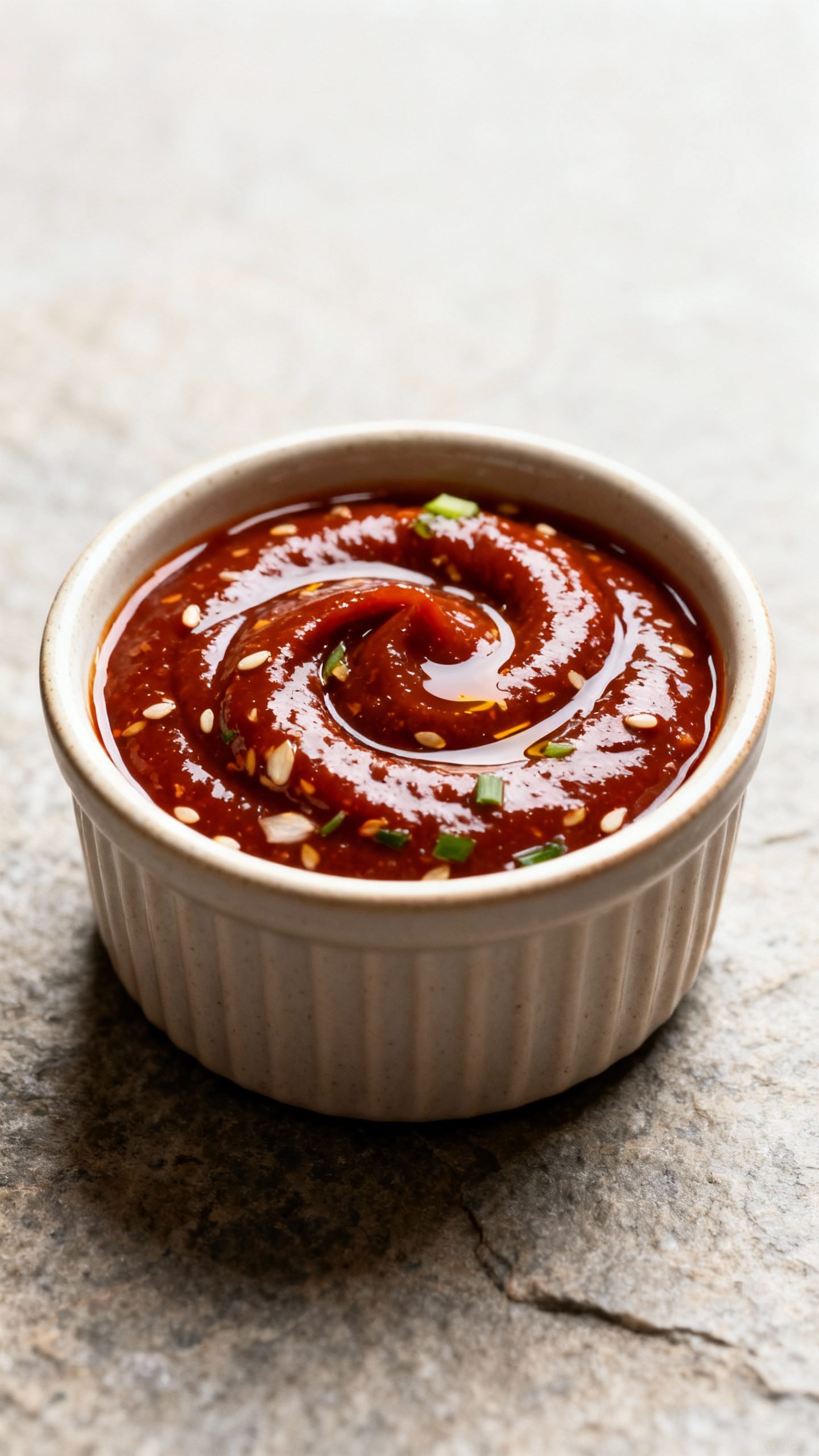
- Bold umami base: Doenjang (Korean fermented soybean paste) brings deep savoriness that tastes complex with zero effort.
- Balanced heat: Gochujang adds a gentle burn plus a little sweetness for a rounded finish.
- Fresh bite: Garlic, scallions, and sesame wake everything up and make it taste freshly made.
- Fast and reliable: Stir everything in one bowl in under 10 minutes—no cooking.
- Super versatile: Use it as a dip, sauce, or spread—great with grilled meats, tofu, roasted veggies, or bibimbap.
- Easy to customize: Adjust thickness, sweetness, and heat in seconds.
Ingredients
Core Ingredients
- Doenjang (2 tablespoons): The savory backbone. Look for smooth, well-fermented paste.
- Gochujang (1 tablespoon): Adds heat and sweetness; choose your spice level.
- Sesame oil (1 to 1½ teaspoons): Nutty richness that ties everything together.
- Rice vinegar or apple cider vinegar (1 teaspoon): A little acid brightens the sauce.
- Honey or sugar (1 to 2 teaspoons): Balances salt and spice; adjust to taste.
- Garlic (1 small clove, finely minced): Fresh bite and aroma.
- Scallions (1 to 2 tablespoons, finely sliced): Mild onion flavor and color.
- Toasted sesame seeds (1 teaspoon): Crunch and nuttiness.
- Water (1 to 2 teaspoons): Optional, to loosen the texture.
Optional Flavor Boosters
- Mirin for a gentle sweetness and sheen.
- Grated onion for body and mellow sweetness.
- Finely chopped chili for extra heat.
- Doenjang-to-gochujang ratio tweaks to push savory or spicy.
- Soy sauce for a touch more salt and depth.
How to Make This Easy Korean Spicy Soybean Paste Sauce
- Prep aromatics: Mince the garlic and slice the scallions as thin as you can. Thin slices blend better and taste cleaner.
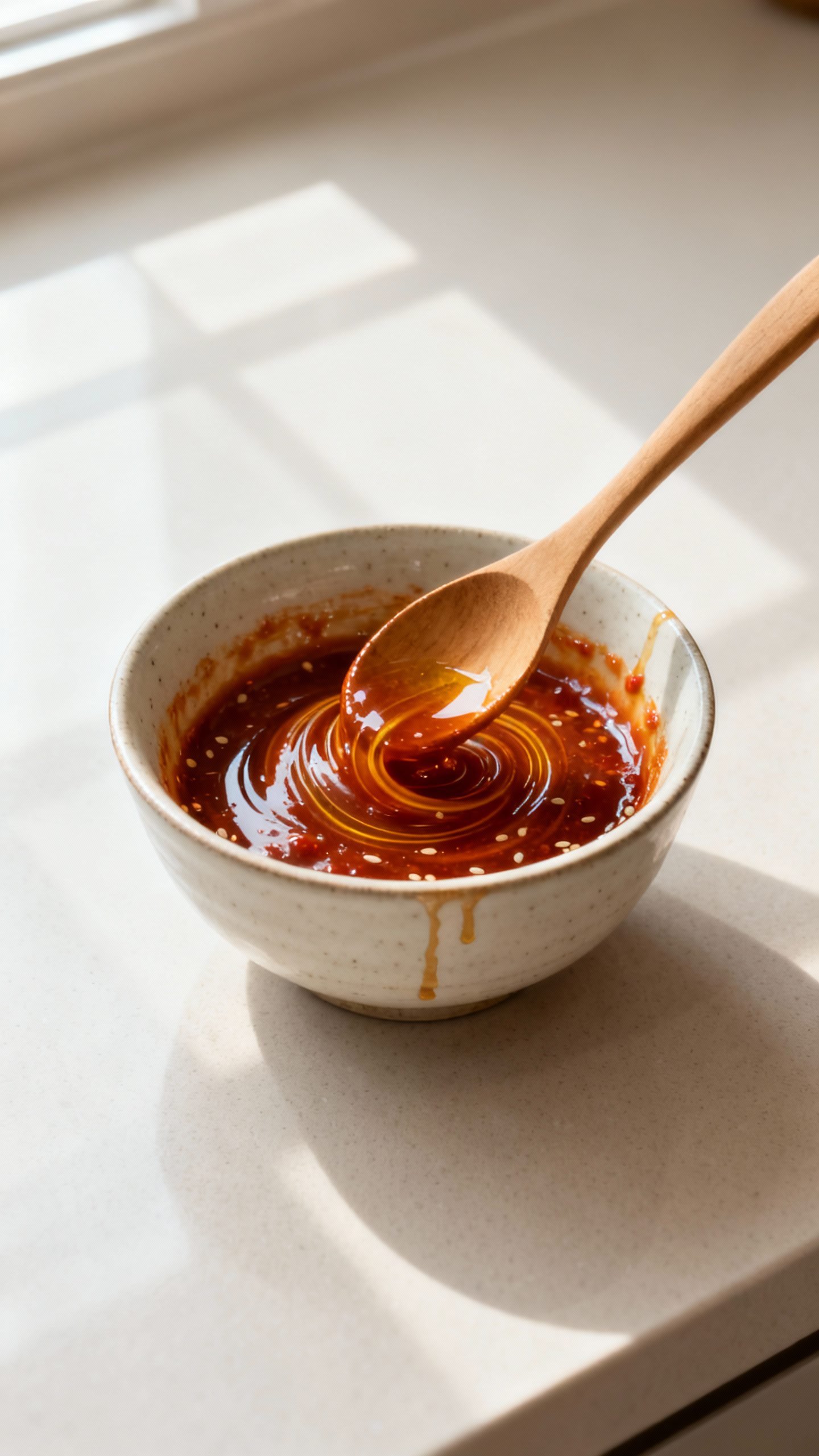
- Mix the base: In a small bowl, combine the doenjang and gochujang. Stir until smooth. If it feels too thick to mix, add 1 teaspoon water.
- Build flavor: Add sesame oil, vinegar, and honey (start with 1 teaspoon honey). Stir well until glossy.
- Add the aromatics: Fold in garlic, scallions, and sesame seeds. Taste. You want savory first, a gentle heat next, and a clean finish.
- Adjust:
- Too salty? Add a touch more honey and a few drops of water.
- Too thick? Add water ½ teaspoon at a time until scoopable.
- Not enough heat? Add ½ teaspoon more gochujang or a pinch of Korean chili flakes (gochugaru).
- Needs brightness? Add a few more drops of vinegar.
- Rest (optional but nice): Let the sauce sit 5 to 10 minutes so flavors meld. Then serve.
How to Store This Quick Samjang
- Refrigerate: Transfer to an airtight container. Keep up to 7 days.
- Stir before using: Natural separation happens. Give it a quick mix.
- Freezer option: Spoon into an ice cube tray, freeze, then bag. Thaw in the fridge overnight. Use within 2 months.
- Freshness cue: If it smells sour in a funky way or looks watery and dull, make a new batch.
Benefits of Making Samjang at Home
- Control the balance: Customize salt, heat, and sweetness to your taste and your menu.
- No additives: Clean ingredients, nothing weird.
- Budget-friendly: A small batch costs less than store-bought and tastes fresher.
- Always ready: Keep a jar on hand to instantly upgrade grilled meats, tofu, or veggie wraps.
- Meal-prep friendly: Make once, enjoy all week with different dishes.
Common Mistakes to Avoid
- Over-salting: Doenjang varies in saltiness. Taste before adding soy sauce or extra salt.
- Skipping the sweetness: A small amount of honey or sugar balances the fermented savoriness and heat.
- Using old sesame oil: Rancid oil ruins the sauce. Smell it before you pour.
- Adding too much water: Aim for a thick, scoopable dip. Thin it only a little.
- Ignoring texture: Finely minced garlic and thinly sliced scallions blend better and taste more polished.
Easy Variations to Try
- Crunchy veggie mix-in: Add minced cucumber or Korean pear for juicy crunch. Great for lettuce wraps.
- Citrus zing: Swap vinegar for yuzu or lime juice for a bright twist.
- Nutty boost: Stir in 1 teaspoon roasted soybean powder (konggaru) or extra sesame seeds for body.
- Smoky heat: Add a pinch of smoked chili powder or a few drops of chili oil.
- Miso backup: No doenjang? Use red miso and add a pinch of gochugaru to mimic the flavor profile.
- Herby freshness: Fold in chopped cilantro or perilla leaves for a green, aromatic pop.
FAQ
What is samjang?
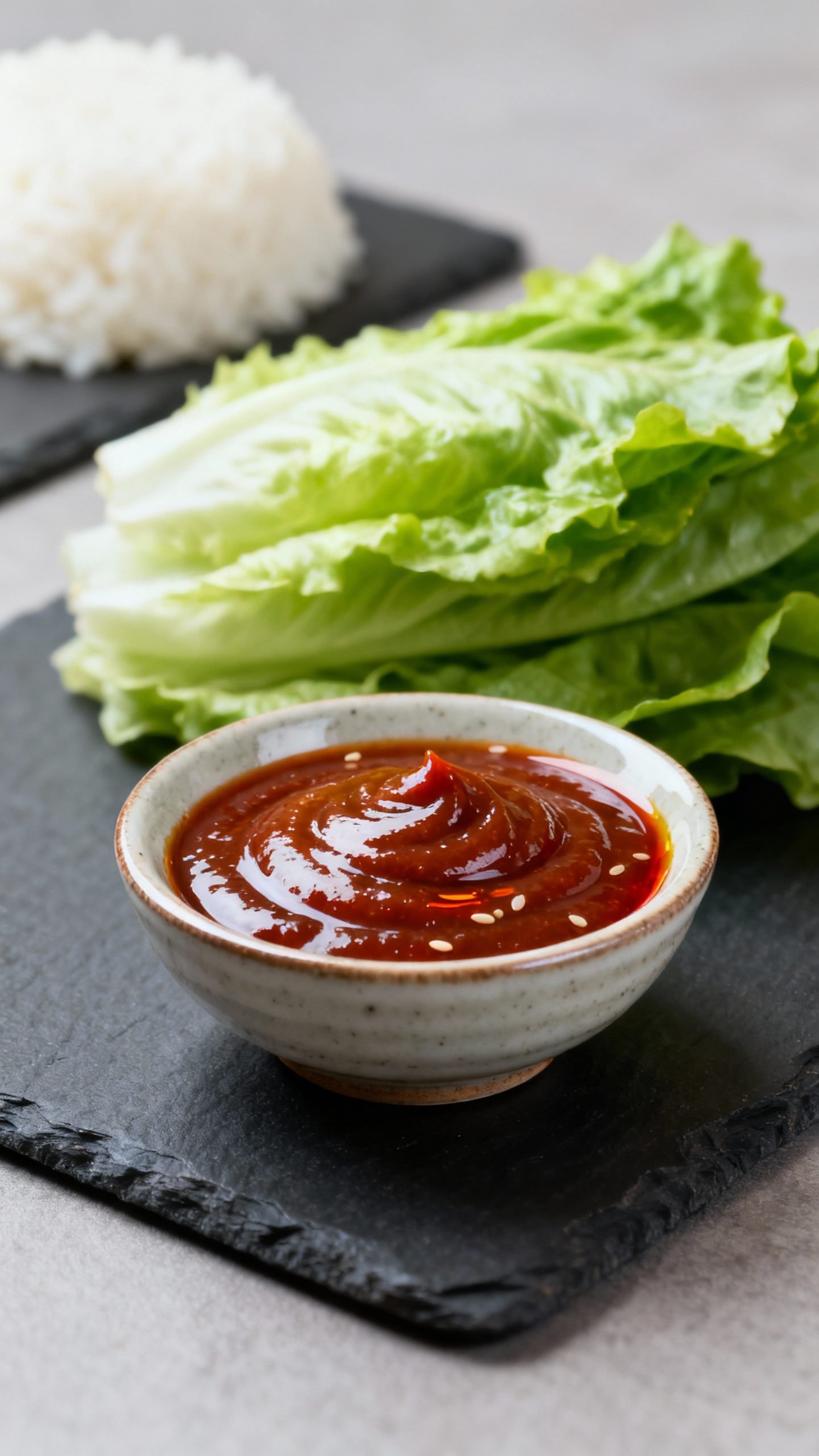
Samjang is a thick, savory-spicy Korean dipping sauce made mostly from doenjang and gochujang. People serve it with lettuce wraps (ssam), grilled meats, tofu, and vegetables.
How spicy is this recipe?
It lands in the medium zone. Use less gochujang for mild, more for hot. A pinch of gochugaru bumps it further.
Can I make it without sugar?
Yes. Use honey, maple syrup, or a sugar-free sweetener. You can also grate a little onion or pear for natural sweetness.
What can I use instead of doenjang?
Red miso works in a pinch. It’s slightly sweeter and less funky, so add a tiny splash of soy sauce for depth.
How do I use samjang?
- Spread in lettuce wraps with grilled beef, pork, chicken, or tofu.
- Serve as a dip for cucumber, carrot, or bell pepper sticks.
- Stir a spoonful into rice or noodles for instant flavor.
- Brush onto grilled mushrooms or eggplant.
Can I make it gluten-free?
Yes. Use certified gluten-free gochujang and a gluten-free doenjang. Some brands contain wheat, so check labels.
Does it need to rest?
No, but a 5 to 10 minute rest melds flavors and smooths the edges.
Conclusion
Make this quick samjang once and you’ll keep a jar in your fridge forever. It takes minutes, tastes complex, and transforms anything from grilled meat to simple vegetables. Adjust the heat, sweeten to taste, and keep it thick and scoopable. That’s the beauty of homemade—big flavor, your way, anytime.
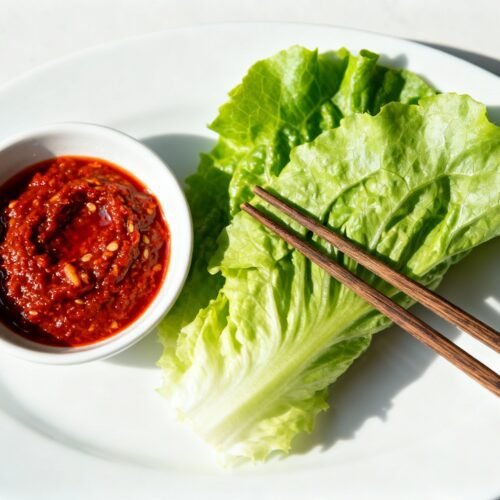
Quick Samjang Recipe | Easy Korean Spicy Soybean Paste Sauce
Ingredients
Ingredients
Instructions
Instructions
- Prep aromatics: Mince the garlic and slice the scallions as thin as you can. Thin slices blend better and taste cleaner.
- Mix the base: In a small bowl, combine the doenjang and gochujang. Stir until smooth. If it feels too thick to mix, add 1 teaspoon water.
- Build flavor: Add sesame oil, vinegar, and honey (start with 1 teaspoon honey). Stir well until glossy.
- Add the aromatics: Fold in garlic, scallions, and sesame seeds. Taste. You want savory first, a gentle heat next, and a clean finish.
- Adjust: Too salty? Add a touch more honey and a few drops of water.
- Too thick? Add water ½ teaspoon at a time until scoopable.
- Not enough heat? Add ½ teaspoon more gochujang or a pinch of Korean chili flakes (gochugaru).
- Needs brightness? Add a few more drops of vinegar.
- Rest (optional but nice): Let the sauce sit 5 to 10 minutes so flavors meld. Then serve.