No Oven Stovetop Bread Recipe | Quick Fluffy Skillet Bread
Meet your new favorite bread hack: soft, fluffy stovetop skillet bread that you can make without turning on the oven. It cooks in a covered skillet, rises beautifully, and tastes like a cross between a pillowy flatbread and a tender dinner roll. You’ll mix simple pantry ingredients, rest the dough, and cook on the stove in under an hour.
I make this when I want fresh bread fast—no special equipment, no long proofing, and no complicated shaping. It pairs with soups, curries, salads, eggs, or just butter and honey. If you’ve ever thought bread felt intimidating, this recipe will change your mind.
Why This Stovetop Skillet Bread Works
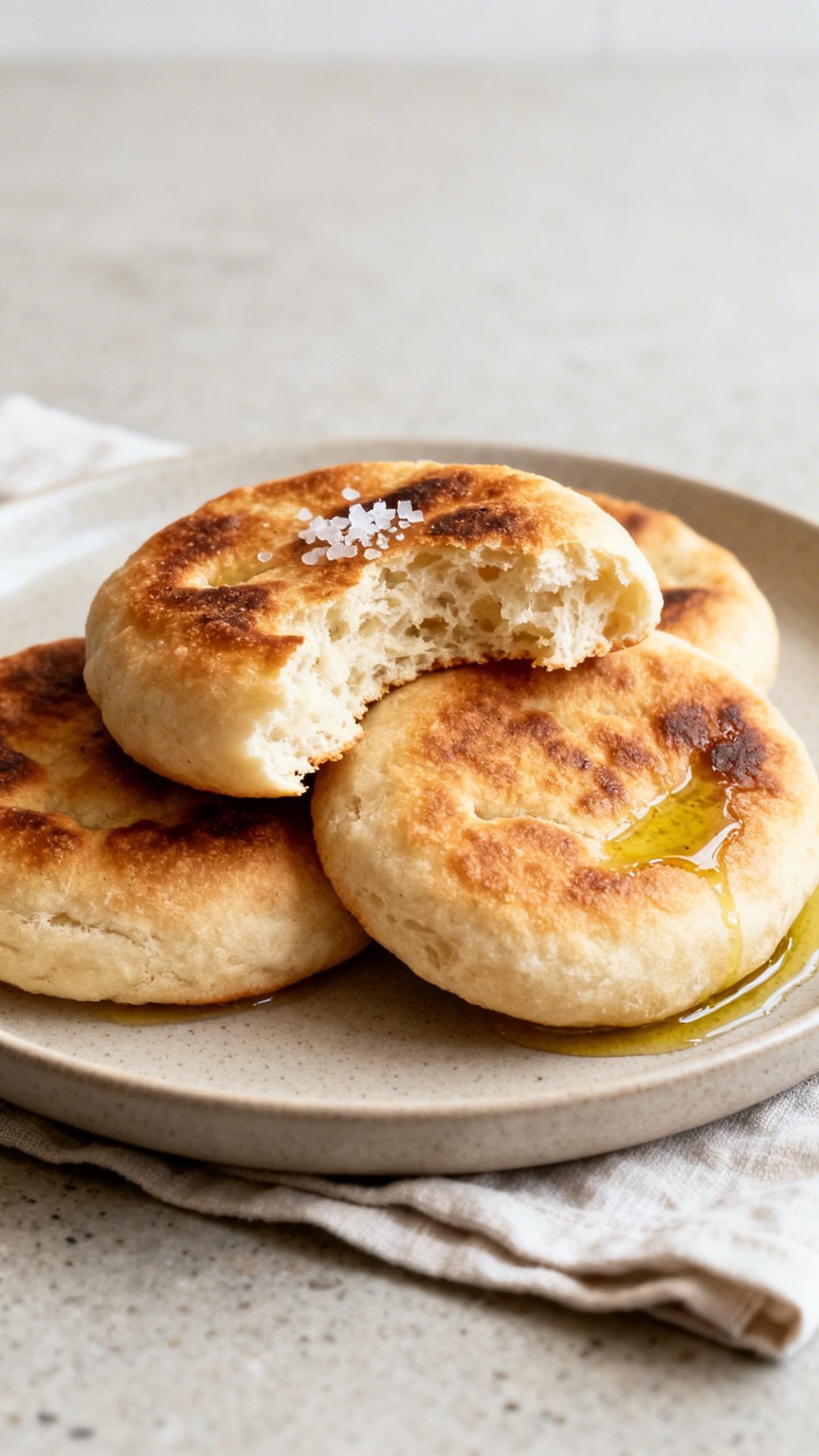
- Steam creates lift: A lid traps steam, helping the dough puff and stay moist while cooking.
- Gentle heat builds structure: Moderate stovetop heat sets the crumb slowly so the inside stays fluffy and the outside turns golden.
- Simple dough, big payoff: All-purpose flour, yeast, water, and a touch of oil deliver soft texture without kneading for ages.
- Flexible timing: A short rest builds flavor and elasticity. You can extend the rest for deeper flavor if you have time.
- Small rounds cook evenly: Individual portions brown better and finish faster than one big loaf.
Ingredients
- 2 1/4 teaspoons (1 packet) instant yeast
- 1 cup warm water (about 105–115°F; warm to the touch, not hot)
- 2 1/2 cups all-purpose flour (plus extra for dusting)
- 1 tablespoon sugar (helps activate yeast and browning)
- 1 teaspoon fine sea salt
- 2 tablespoons olive oil (plus a little more for cooking)
- Optional: 2 tablespoons plain yogurt for extra tenderness
- Optional seasonings: garlic powder, dried herbs, sesame or nigella seeds
- For finishing: butter or olive oil, flaky salt, chopped parsley
How to Make Soft Skillet Bread on the Stove
1) Mix and rest the dough
- In a bowl, whisk warm water, sugar, and yeast. Let it sit for 5 minutes until a light foam appears.
- Add flour, salt, olive oil, and yogurt if using. Stir with a spoon until a shaggy dough forms.
- Turn the dough onto a lightly floured surface. Knead 2–3 minutes until smooth and slightly tacky. Add flour only if it sticks aggressively.
- Shape into a ball, place in a lightly oiled bowl, and cover. Rest 20–30 minutes at room temperature until puffy.
2) Divide and shape
- Dust the counter. Turn out the dough and gently deflate.
- Divide into 6–8 equal pieces for small rounds or 4 pieces for larger breads.
- Shape each into a ball by tucking edges underneath, then rest 5 minutes to relax gluten.
- Roll each ball to 1/4–3/8 inch thick. Keep them covered with a towel so they don’t dry out.
3) Cook on the stovetop
- Preheat a heavy skillet (cast iron or nonstick) over medium heat for 3–4 minutes. Lightly brush with oil.
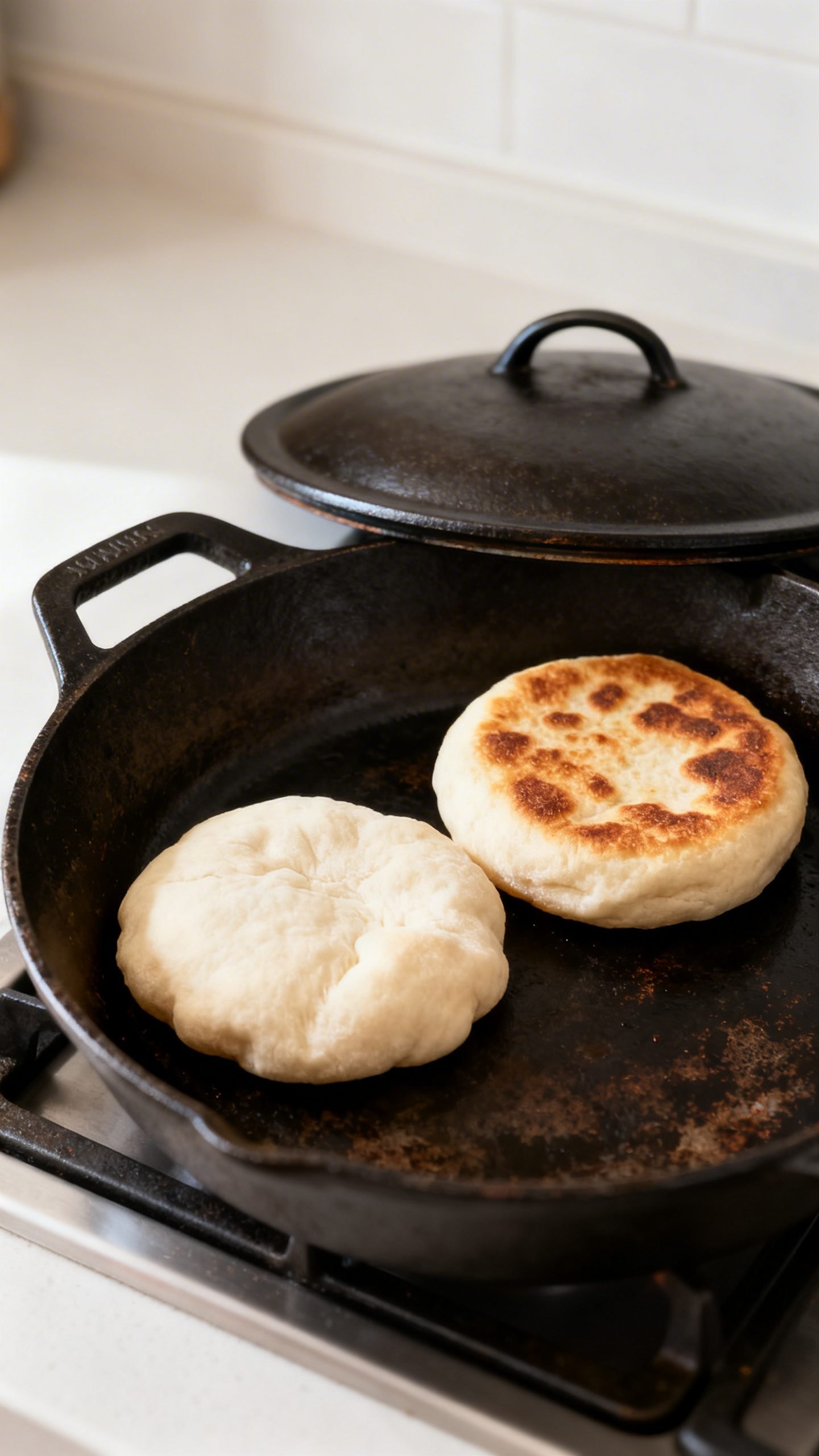
- Place one or two rounds in the skillet. Cover with a lid to trap steam.
- Cook 2–3 minutes until bubbles form and the bottom turns golden.
- Flip, cover again, and cook 1–2 minutes until the second side browns and the bread feels set and springy.
- Adjust heat as needed: lower if it browns too fast, higher if it pales and dries out.
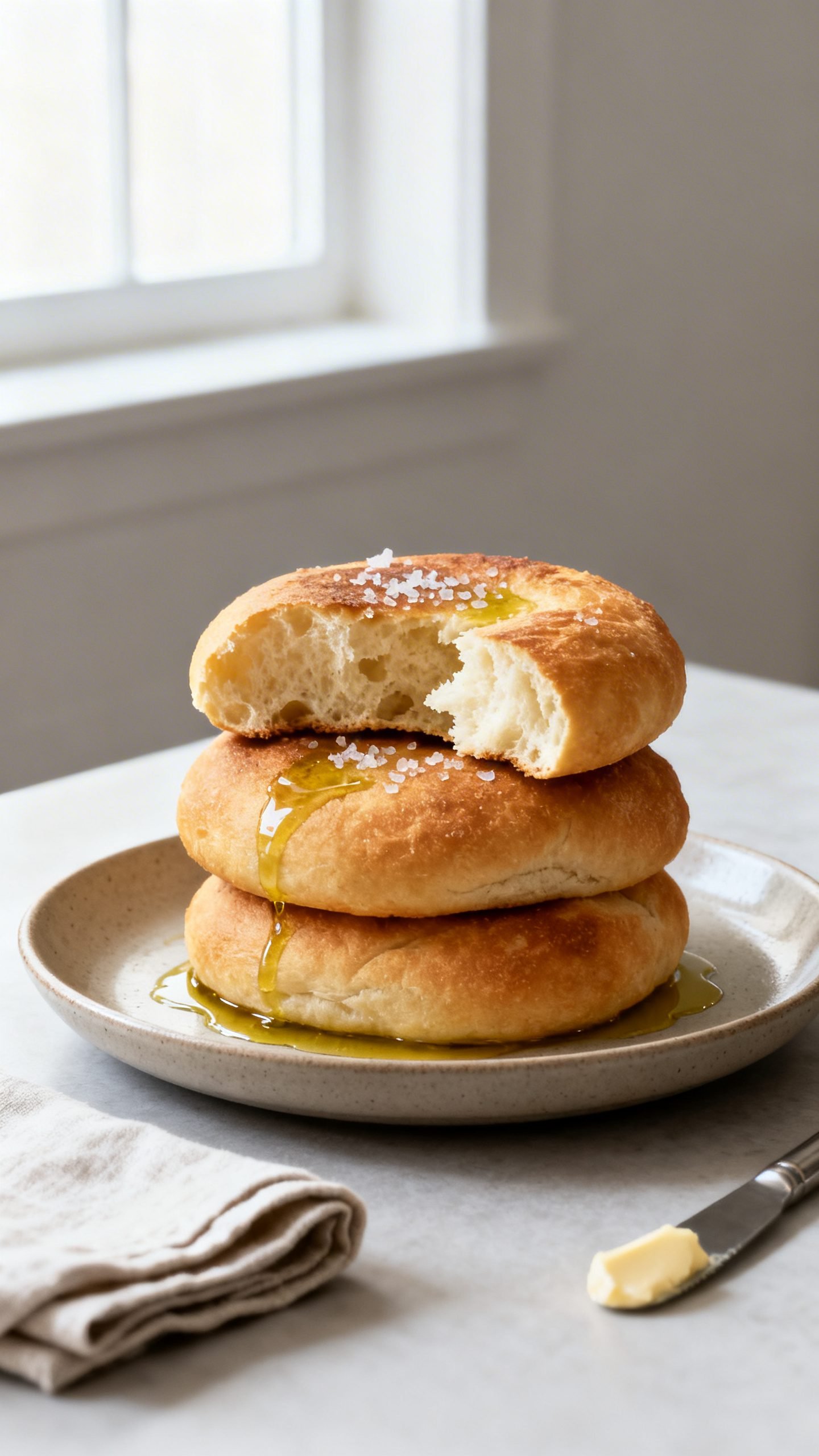
- Transfer to a towel-lined plate. Brush with butter or olive oil and sprinkle a little salt. Repeat with remaining dough.
4) Make-ahead tip
- For more flavor and convenience, let the shaped dough rounds rest in the fridge, covered, for up to 24 hours. Cook straight from the fridge, adding 30–60 seconds more per side.
How to Store Your Stovetop Bread
- Room temperature: Cool completely. Store in an airtight bag for 2 days. Refresh in a warm skillet for 30–60 seconds per side.
- Freeze: Wrap each round, then place in a freezer bag for up to 2 months. Thaw at room temp or warm straight from frozen over low heat, covered, until soft.
- Do not refrigerate the cooked bread; it stales faster. Freeze instead.
Benefits of Making Bread on the Stove
- No oven needed: Perfect for hot days, small kitchens, dorms, and RVs.
- Fast from start to finish: You’ll eat warm bread in under an hour.
- Beginner-friendly: Short knead, quick rise, clear visual cues, and forgiving dough.
- Customizable: Season the dough, change the fat, or finish with herbs and seeds.
- Meal-flexible: Works as a side, wrap, mini pizza base, or breakfast bread.
What to Avoid
- Overheating the pan: High heat scorches the outside before the center cooks. Medium heat gives even browning and rise.
- Using hot water for yeast: Above 120°F kills yeast. Aim for warm bathwater temperature.
- Adding too much flour: A slightly tacky dough bakes softer. Heavy flour makes dense bread.
- Skipping the lid: Without steam, you lose puff and tenderness.
- Rolling too thin or too thick: Ultra-thin turns cracker-like; too thick can stay doughy. Target 1/4–3/8 inch.
- Cooking right after mixing: A short rest builds gluten and airiness. Don’t rush it.
Variations You Can Try
- Garlic-herb: Mix 1 teaspoon garlic powder and 1–2 teaspoons dried parsley, oregano, or thyme into the flour.
- Yogurt flatbread: Use 1/3 cup yogurt and reduce water slightly for extra tenderness and tang.
- Seeded tops: Brush rolled rounds with water and sprinkle sesame or nigella seeds before cooking.
- Whole-wheat blend: Swap 1 cup of the all-purpose flour for whole-wheat. Add 1–2 teaspoons extra water if needed.
- Buttery skillet rolls: Brush the dough rounds with melted butter before and after cooking for rich flavor.
- Cheesy: Sprinkle grated Parmesan or cheddar on the first flip to melt as the second side cooks.
- Scallion version: Fold in thinly sliced scallions and a pinch of black pepper for savory vibes.
- Flatbread pizza: Cook one side, flip, add sauce and cheese, cover, and cook until melted.
FAQ
Can I use active dry yeast instead of instant?
Yes. Bloom 2 1/4 teaspoons active dry yeast in the warm water with sugar for 8–10 minutes until foamy, then proceed.
What pan works best?
A well-heated cast iron skillet gives the best color and even heat. A heavy nonstick pan also works. Use a lid that fits to trap steam.
How do I know it’s done?
The bread should spring back when pressed and show deep golden spots on both sides. If it still feels doughy in the center, give it another 30–60 seconds on low heat, covered.
Can I make gluten-free?
Use a 1:1 gluten-free flour blend with xanthan gum and add 1 extra tablespoon oil. Expect less chew and slightly less rise, but it still tastes great.
What if the dough feels too sticky?
Oil your hands and the counter, then knead briefly. Add 1 tablespoon flour at a time only if needed. Slight tackiness keeps the crumb soft.
Can I double the recipe?
Yes. Cook in batches and keep finished breads wrapped in a towel so they stay warm and soft.
How do I add fresh garlic without burning?
Knead in very finely minced garlic or mix it into melted butter and brush after cooking to avoid scorching.
Conclusion
This no-oven skillet bread delivers warm, fluffy rounds with minimal effort and maximum comfort. Keep the heat moderate, cover to trap steam, and don’t over-flour the dough. You’ll get soft, golden bread any night of the week—perfect for scooping, wrapping, or snacking straight from the pan.
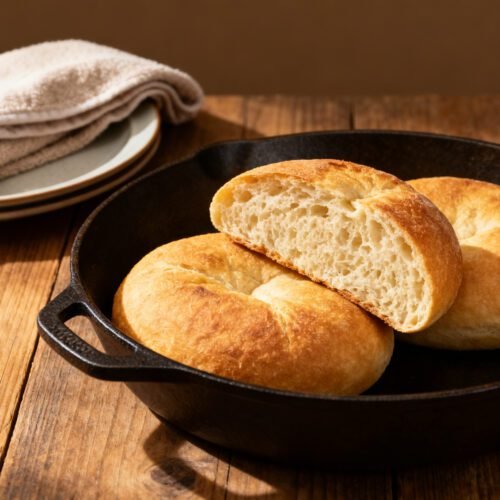
No Oven Stovetop Bread Recipe | Quick Fluffy Skillet Bread
Ingredients
Ingredients
- 2 1/4 teaspoons instant yeast (1 packet)
- 1 cup warm water (105–115°F)
- 2 1/2 cups all-purpose flour (plus extra for dusting)
- 1 tablespoon sugar
- 1 teaspoon fine sea salt
- 2 tablespoons olive oil (plus more for cooking)
- 2 tablespoons plain yogurt (optional, for extra tenderness)
- Optional seasonings: garlic powder, dried herbs, sesame seeds, or nigella seeds
- For finishing: butter or olive oil, flaky salt, chopped parsley
Instructions
Instructions
- Whisk warm water, sugar, and yeast in a bowl and let sit until lightly foamy, about 5 minutes.
- Add flour, salt, olive oil, and yogurt if using, then stir until a shaggy dough forms.
- Turn dough onto a lightly floured surface and knead 2–3 minutes until smooth and slightly tacky, adding flour only if very sticky.
- Shape into a ball, place in a lightly oiled bowl, cover, and rest at room temperature 20–30 minutes until puffy.
- Dust the counter, turn out the dough, gently deflate, and divide into 6–8 equal pieces for small rounds or 4 for larger breads.
- Shape each piece into a ball, rest 5 minutes, then roll each to 1/4–3/8 inch thick, keeping them covered with a towel.
- Preheat a heavy skillet over medium heat for 3–4 minutes and lightly brush with oil.
- Place one or two rounds in the skillet, cover, and cook 2–3 minutes until bubbles form and the bottom is golden.
- Flip, cover, and cook 1–2 minutes until the second side browns and the bread feels set and springy, adjusting heat as needed.
- Transfer to a towel-lined plate, brush with butter or olive oil, and sprinkle with a little salt; repeat with remaining dough.
- For make-ahead, refrigerate shaped rounds up to 24 hours and cook straight from the fridge, adding 30–60 seconds per side.