Gochujang King Oyster Mushrooms Recipe | Easy Spicy Korean Vegan Dish
If you love bold, spicy-sweet Korean flavors and want a quick vegan main that tastes like it came from a restaurant, you’ll love these gochujang king oyster mushrooms. They sear up meaty and caramelized, then get coated in a glossy, garlicky sauce that hits all the right notes—heat, umami, and a little sweetness. It’s a weeknight-friendly dish you can plate over rice, tuck into lettuce wraps, or serve as a side.
I lean on this recipe when I crave something satisfying without fuss. It uses pantry staples from Korean cooking, cooks in under 20 minutes, and delivers huge flavor. Plus, king oyster mushrooms keep a firm bite and soak up the sauce like a dream.
Why This Spicy Gochujang Mushroom Recipe Works
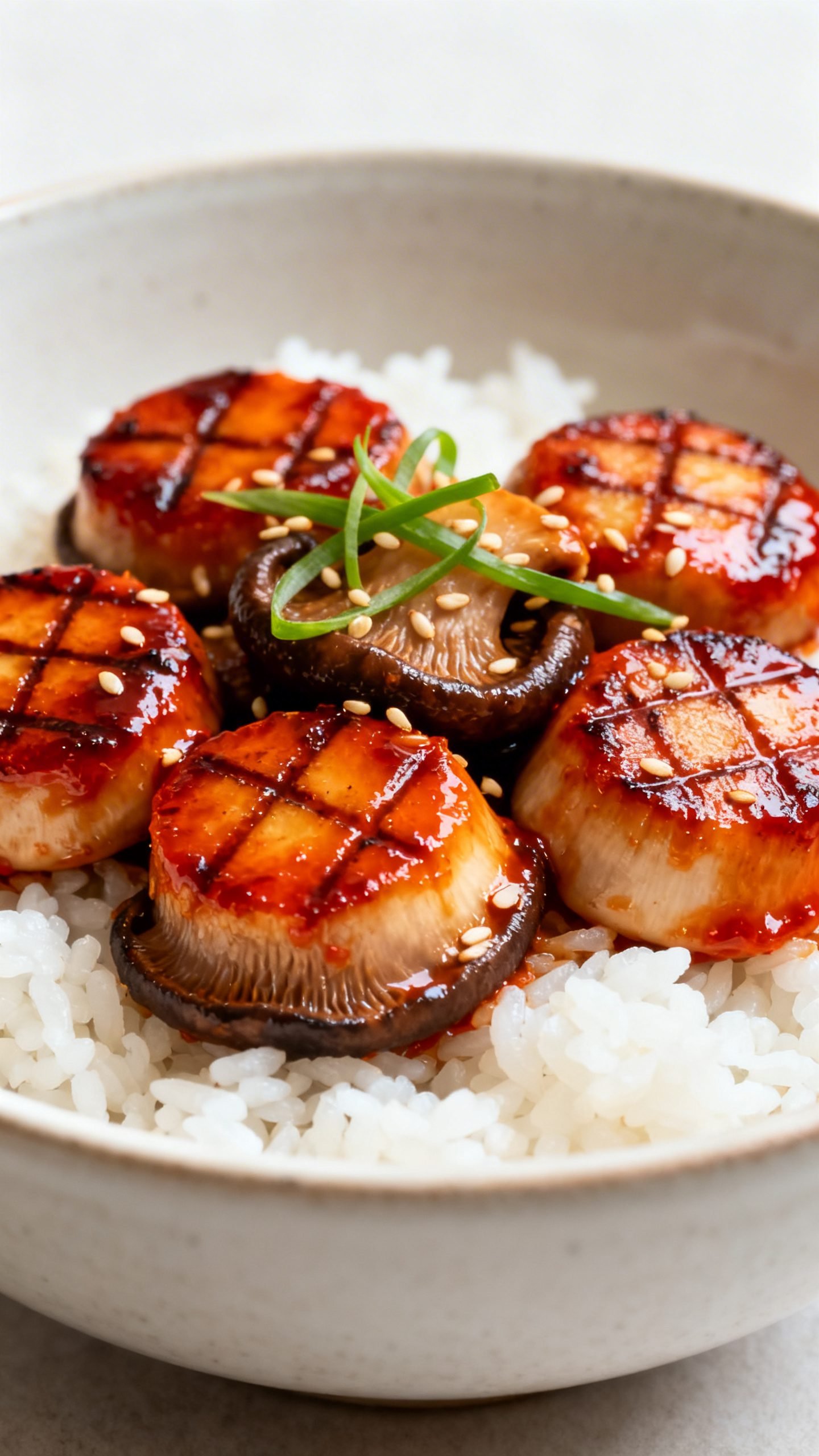
- Big flavor, minimal effort: Gochujang brings heat, depth, and sweetness, so you don’t need a long ingredient list to make it taste complex.
- Meaty texture without meat: King oyster mushrooms sear beautifully and shred or slice into thick pieces that feel substantial.
- Fast stovetop method: A quick pan sear builds char and umami, then the sauce reduces to a glossy finish.
- Flexible serving options: Serve with rice, noodles, or lettuce cups. Add tofu or veggies if you want to bulk it up.
- Balanced heat: Sweetness and rice vinegar keep the spice pleasant, not punishing.
Ingredients
Main
- 1 lb king oyster mushrooms (also called king trumpet)
- 1–2 tbsp neutral oil (avocado, canola, or grapeseed)
- 2 green onions, sliced (white and green parts separated)
- 1 tsp toasted sesame oil
- 1 tsp toasted sesame seeds, for garnish
Gochujang Sauce
- 2 tbsp gochujang (Korean fermented chili paste)
- 1 tbsp soy sauce (or tamari for gluten-free)
- 1 tbsp maple syrup or brown sugar
- 1 tbsp rice vinegar
- 2 tsp gochugaru (Korean chili flakes), optional for extra heat
- 2 cloves garlic, finely minced
- 1 tsp fresh ginger, grated
- 3 tbsp water (plus more as needed to thin)
Optional Add-Ins
- 1 tsp cornstarch mixed with 1 tbsp water for a thicker glaze
- 1 small shallot, thinly sliced
- Steamed rice, noodles, or lettuce leaves for serving
- Thinly sliced cucumber or radish for crunch
How to Make Spicy Gochujang King Oyster Mushrooms
1) Prep the Mushrooms
- Clean: Wipe mushrooms with a damp towel. Avoid soaking so they don’t steam in the pan.
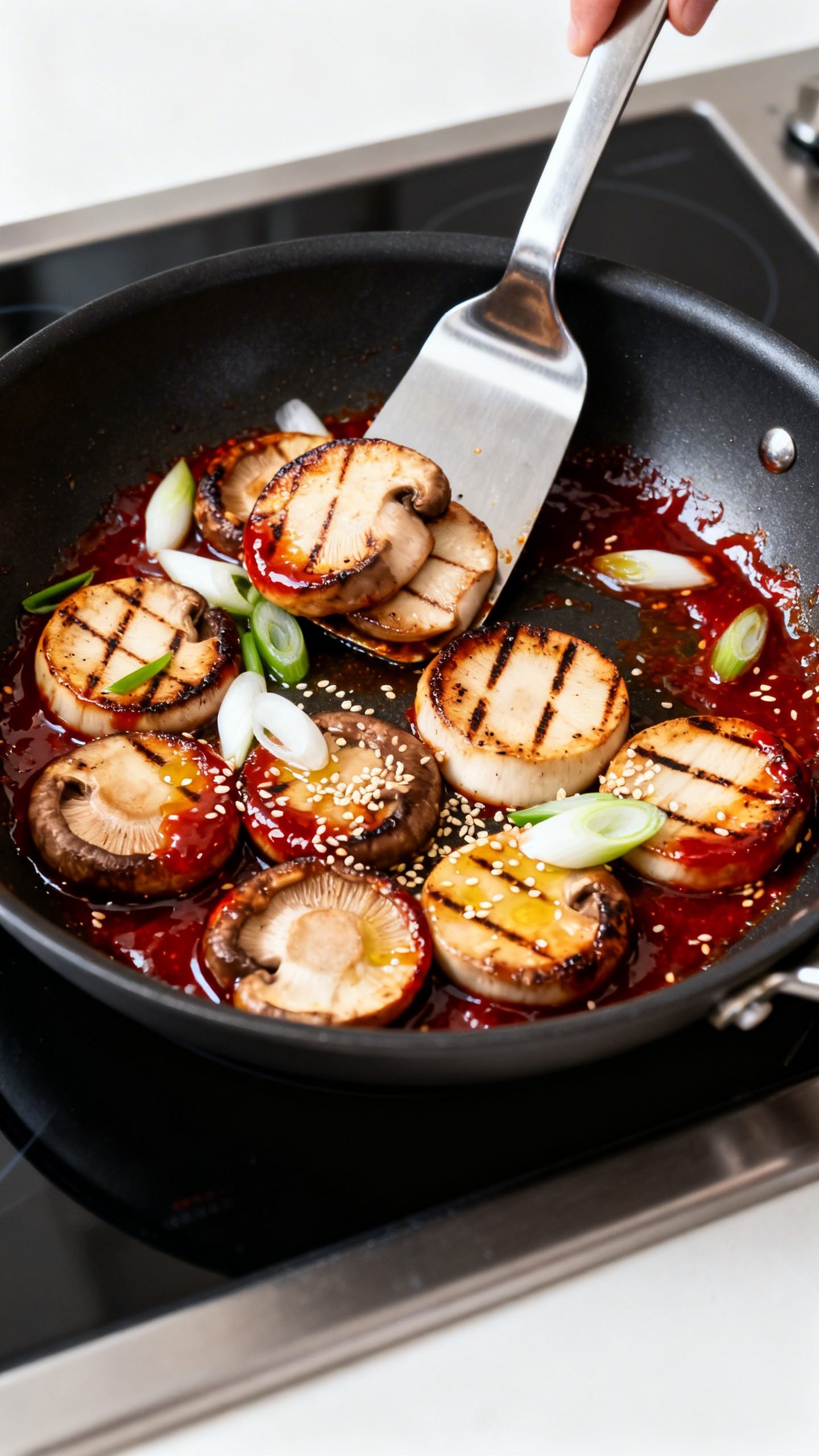
- Cut: Slice the stems into 1/2-inch coins. Halve or quarter the caps lengthwise. For extra “scallop” vibes, score the cut sides lightly with a crosshatch.
2) Stir Together the Sauce
- In a bowl, whisk gochujang, soy sauce, maple syrup, rice vinegar, garlic, ginger, gochugaru (if using), and water until smooth.
- Taste and tweak: Add more maple for sweetness, vinegar for brightness, or water for a looser sauce.
3) Sear the Mushrooms
- Heat a large skillet over medium-high until hot. Add neutral oil and swirl to coat.
- Add mushrooms in a single layer. Don’t crowd the pan—work in batches for deep browning.
- Let them sit: Sear 3–4 minutes per side until golden with crisp edges. Resist constant stirring.
- Add the white parts of the green onions (and shallot if using). Cook 1 minute to soften.
4) Sauce and Glaze
- Pour in the gochujang sauce. Toss to coat.
- Simmer 1–2 minutes until glossy and slightly thickened. If you want a sticky glaze, stir in the cornstarch slurry and cook 30–60 seconds more.
- Turn off the heat. Stir in sesame oil and the green onion tops.
5) Serve
- Top with sesame seeds.
- Serve over hot rice or noodles, or pile into crisp lettuce leaves with cucumber for crunch.
How to Store Leftover Gochujang Mushrooms
- Cool first: Let leftovers reach room temperature within 1 hour.
- Refrigerate: Store in an airtight container for 3–4 days.
- Freeze: You can freeze up to 2 months, but the mushrooms soften after thawing. Still tasty, just less firm.
- Reheat: Warm in a skillet over medium heat with a splash of water to loosen the sauce, 2–3 minutes. Microwave works in a pinch.
- Meal prep tip: Keep rice and cucumbers separate until serving so textures stay fresh.
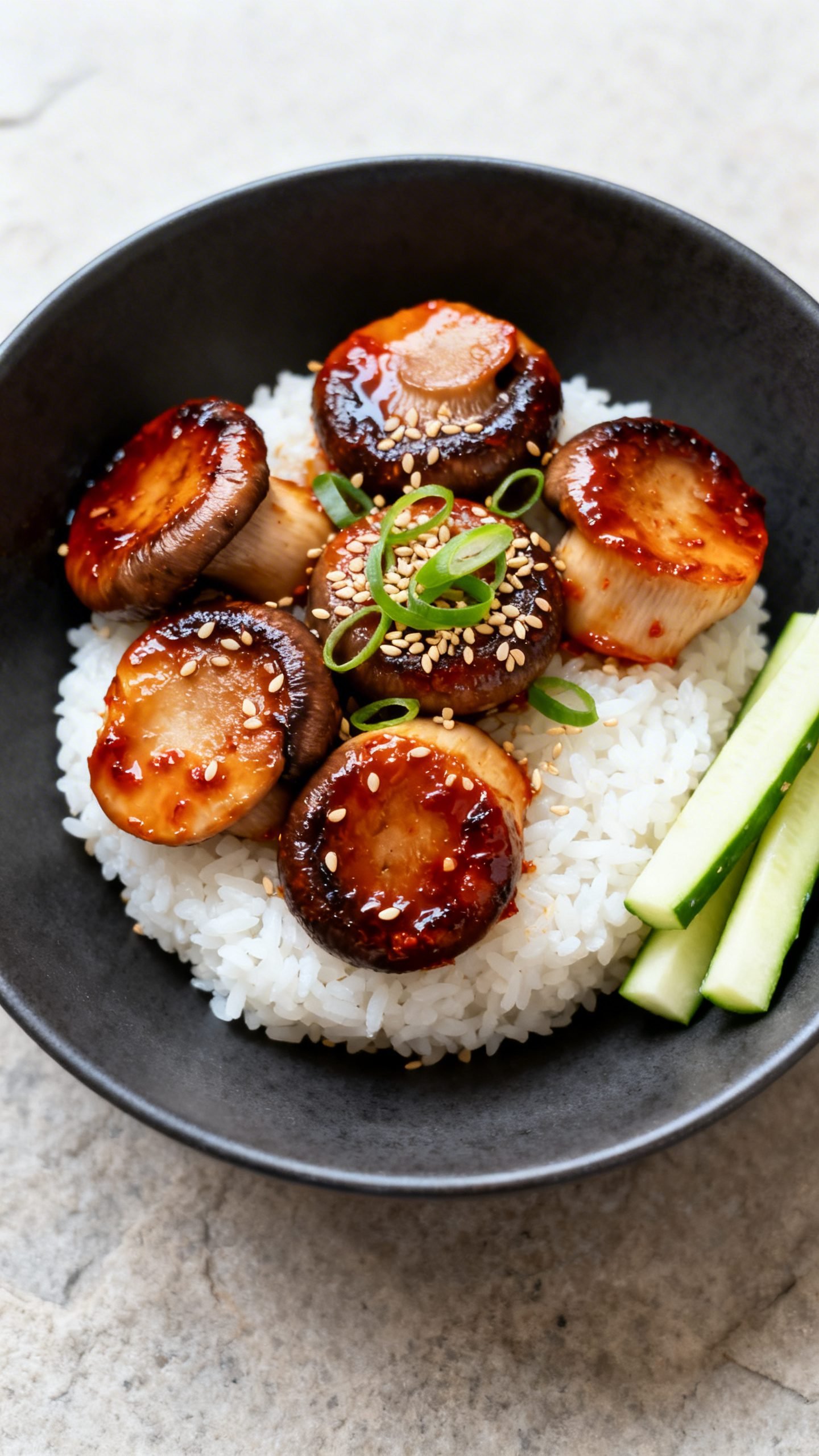
Why You’ll Feel Good About This Vegan Dish
- Plant-based protein partner: Mushrooms don’t bring tons of protein, but they pair perfectly with tofu, edamame, or a side of beans for a complete meal.
- Umami-rich and satisfying: Gochujang and soy sauce give deep savory flavor that kills cravings without heavy ingredients.
- Nutrient perks: King oyster mushrooms offer fiber, B vitamins, and a satisfying chew that helps you slow down and enjoy.
- Weeknight-friendly: Short ingredient list, fast cook time, and minimal cleanup.
What to Avoid for Best Results
- Don’t wash mushrooms under running water: They’ll absorb moisture and steam instead of sear.
- Don’t overcrowd the pan: Cook in batches to get real browning and caramelization.
- Don’t skip the vinegar: The brightness balances the heat and sweetness.
- Don’t add sauce too early: Brown first, then glaze. That’s how you get sticky, flavorful mushrooms instead of soggy ones.
- Don’t blast the heat the whole time: High heat for searing, then medium to reduce the sauce without burning it.
Tasty Variations to Try
- Extra-crispy: Lightly dust mushroom slices with cornstarch before searing for more crunch.
- Garlic butter gochujang: Finish with a tablespoon of vegan butter for a rich, restaurant-style glaze.
- Miso boost: Whisk 1 tsp white miso into the sauce for deeper umami.
- Veggie add-ins: Toss in snap peas, thin-sliced onions, or zucchini during the sauce step.
- Tofu upgrade: Pan-fry firm tofu cubes, then add with the sauce for extra protein.
- Lettuce wrap party: Serve with butter lettuce, rice, quick pickles, and a sprinkle of crushed roasted seaweed.
- Low-heat version: Use half the gochujang and skip gochugaru; add more maple and a splash of water.
FAQ
What is gochujang and where can I buy it?
Gochujang is a Korean fermented chili paste that tastes spicy, savory, and slightly sweet. You’ll find it in Asian markets, many grocery stores, or online. Look for it in a red tub or squeeze bottle.
Can I use a different mushroom?
Yes. Oyster, shiitake, or cremini work, but king oyster mushrooms give the best meaty texture. If you swap, adjust cook time so they brown without overcooking.
How spicy is this dish?
It’s medium-spicy. For less heat, use less gochujang and skip gochugaru. For more, add extra gochugaru or a pinch of red pepper flakes.
Is this recipe gluten-free?
Use tamari or a gluten-free soy sauce and choose a certified gluten-free gochujang. Many brands contain wheat, so check the label.
Can I air-fry the mushrooms?
You can. Toss slices with a little oil and air-fry at 400°F (200°C) for 8–10 minutes, shaking once. Warm the sauce in a skillet and toss the air-fried mushrooms in to coat.
What should I serve with it?
Steamed rice, kimchi, quick pickled cucumbers, or simply sautéed greens. Noodles or quinoa also work well.
How do I make it less sweet?
Reduce maple syrup to 1–2 teaspoons and increase soy sauce or vinegar slightly to balance.
Can I double the recipe?
Absolutely. Sear in batches so the mushrooms brown properly, then combine everything with the sauce at the end.
Conclusion
These gochujang king oyster mushrooms prove you can cook a fast, cozy vegan dish that tastes bold and feels special. You sear, glaze, and serve—no complicated steps, just great texture and flavor. Make a bowl with rice and cucumbers tonight, then tuck leftovers into lettuce wraps tomorrow. Simple, spicy, and incredibly satisfying.
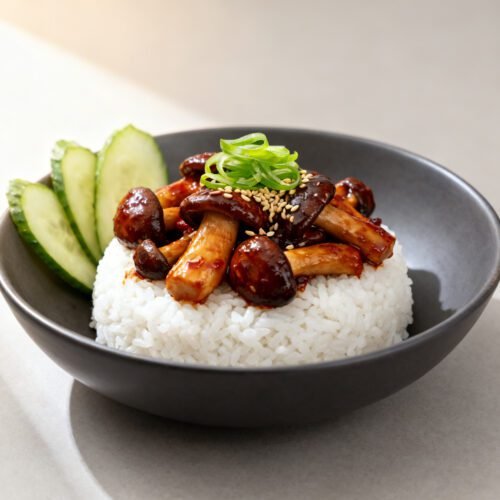
Gochujang King Oyster Mushrooms Recipe | Easy Spicy Korean Vegan Dish
Ingredients
Ingredients
- 1 lb king oyster mushrooms (king trumpet)
- 1–2 tbsp neutral oil (avocado, canola, or grapeseed)
- 2 green onions, sliced (white and green parts separated)
- 1 tsp toasted sesame oil
- 1 tsp toasted sesame seeds, for garnish
- 2 tbsp gochujang (Korean fermented chili paste)
- 1 tbsp soy sauce (or tamari for gluten-free)
- 1 tbsp maple syrup or brown sugar
- 1 tbsp rice vinegar
- 2 tsp gochugaru (Korean chili flakes), optional
- 2 cloves garlic, finely minced
- 1 tsp fresh ginger, grated
- 3 tbsp water (plus more as needed to thin)
- 1 tsp cornstarch mixed with 1 tbsp water, optional
- 1 small shallot, thinly sliced, optional
- Steamed rice, noodles, or lettuce leaves, for serving
- Thinly sliced cucumber or radish, for serving
Instructions
Instructions
- Wipe the mushrooms with a damp towel, then slice the stems into 1/2-inch coins and halve or quarter the caps; optionally score the cut sides lightly.
- Whisk together the gochujang, soy sauce, maple syrup, rice vinegar, garlic, ginger, gochugaru if using, and water until smooth; adjust sweetness, acidity, or thickness to taste.
- Heat a large skillet over medium-high heat, add neutral oil, and arrange mushrooms in a single layer; sear 3–4 minutes per side until deeply browned and crisp at the edges, working in batches as needed.
- Add the white parts of the green onions and the shallot if using, and cook about 1 minute to soften.
- Pour in the gochujang sauce and toss to coat; simmer 1–2 minutes until glossy and slightly thickened.
- If a thicker glaze is desired, stir in the cornstarch slurry and cook 30–60 seconds until sticky.
- Turn off the heat and stir in the sesame oil and green onion tops.
- Garnish with sesame seeds and serve hot over rice or noodles, or tuck into lettuce leaves with cucumber or radish for crunch.