Easy Okayu with Egg Recipe | Japanese Rice Porridge Comfort Food
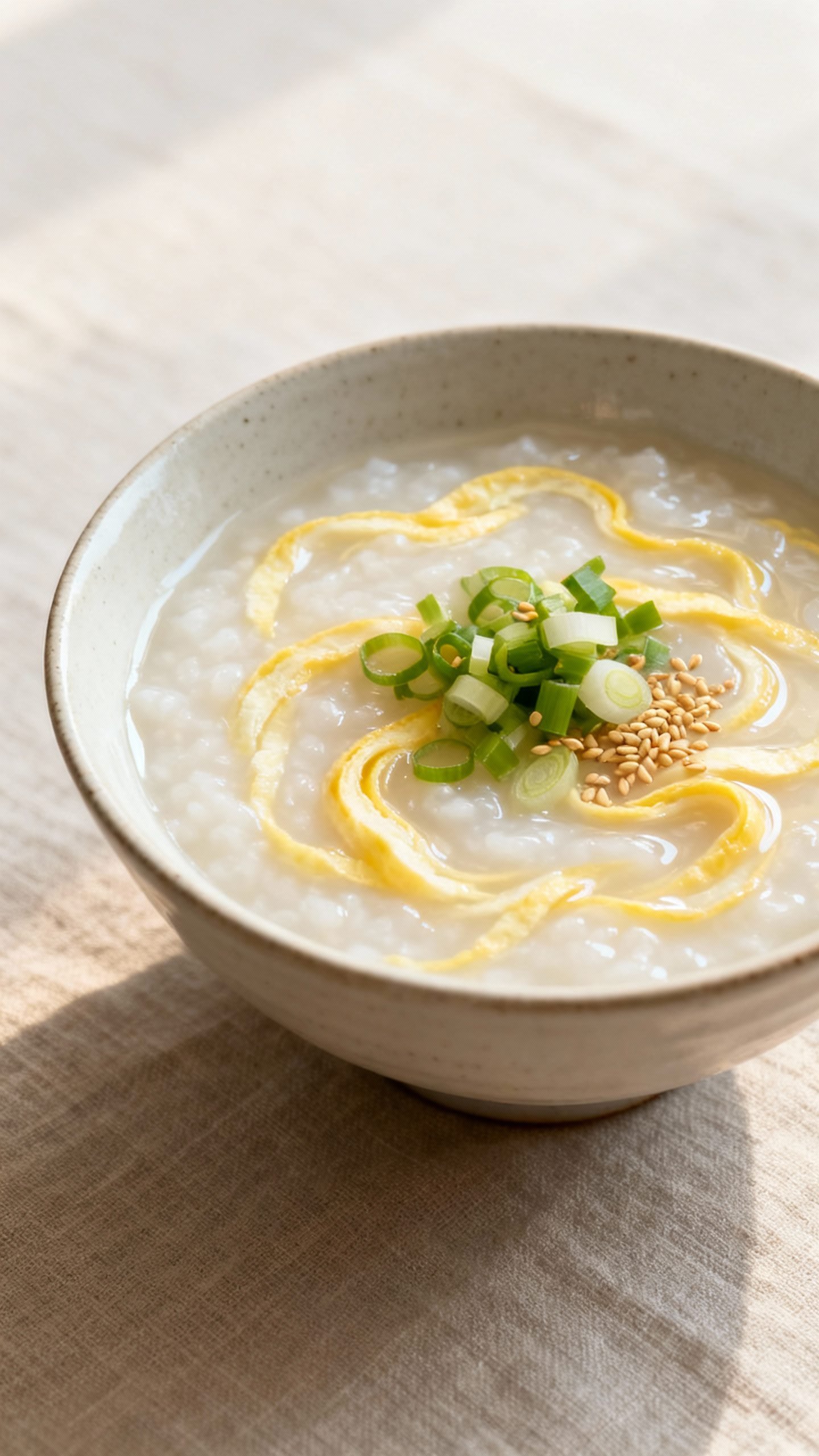
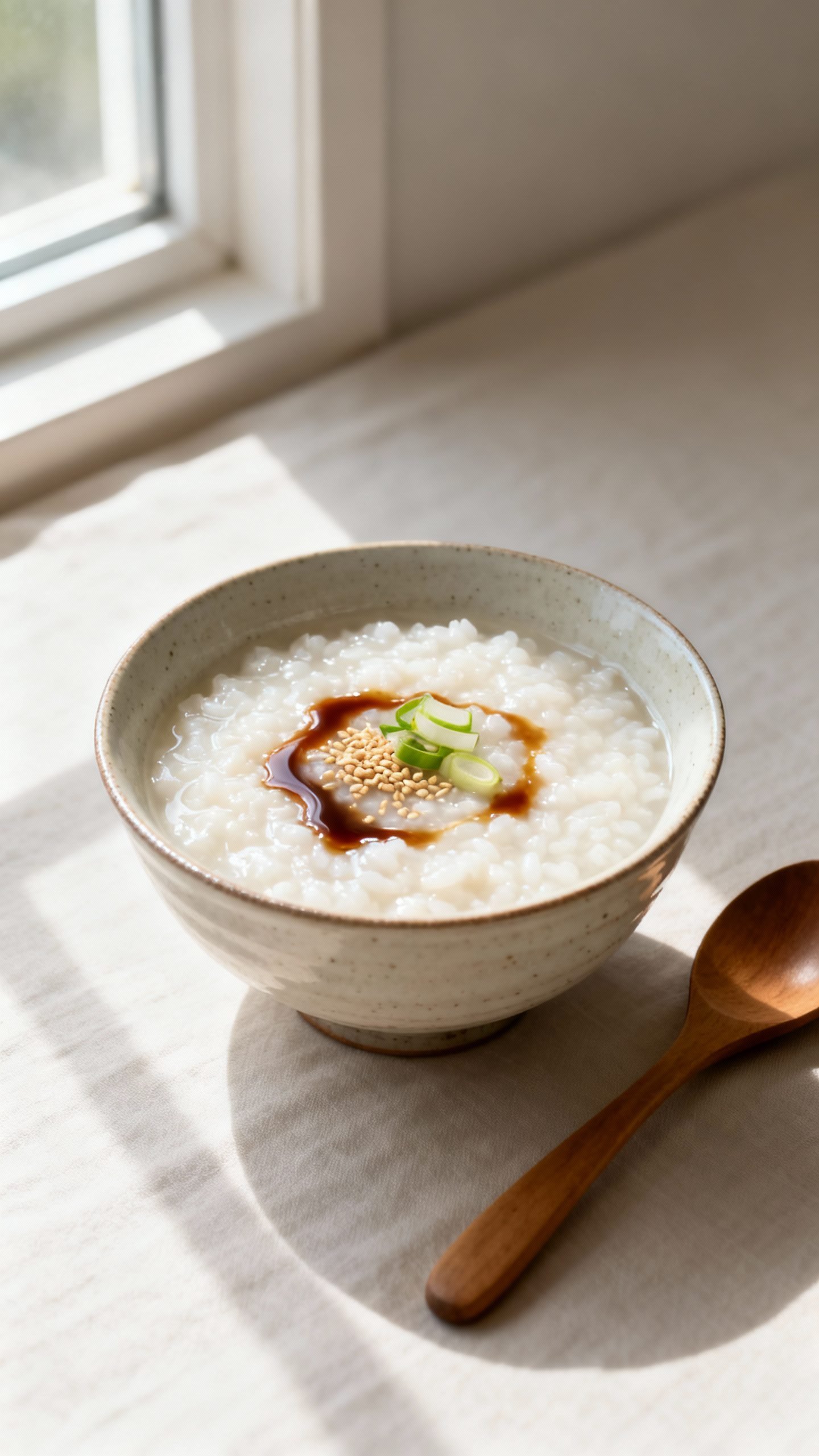
When you crave something soothing, simple, and deeply satisfying, a warm bowl of okayu (Japanese rice porridge) hits the spot. This version folds in an egg for extra creaminess and protein, and it keeps everything gentle on the stomach. Think of it as the ultimate comfort food—light, nourishing, and easy to customize.
You only need rice, water or broth, an egg, and a few basic seasonings. The magic comes from slow simmering, which turns humble rice into a silky porridge. Top it with scallions, sesame, or a drizzle of soy sauce, and you’ve got a bowl that feels like a hug.
Why This Easy Okayu with Egg Recipe Works
- Minimal ingredients, big comfort: A short list delivers a cozy, savory bowl in under an hour.
- Flexible texture: Add more water for a thinner porridge or simmer longer for thicker, creamier okayu.
- Gentle and nourishing: Soft rice and egg go easy on your digestion while still feeling satisfying.
- Custom-friendly: Swap broths, toppings, and seasonings to fit your mood or pantry.
- Great any time of day: Breakfast, lunch, dinner, or late-night snack—it always works.
Ingredients
Base
- 1/2 cup short-grain Japanese rice, rinsed until the water runs clear
- 3–4 cups water or low-sodium chicken or vegetable broth (start with 3 cups, add more as needed)
- 1 large egg
Seasoning
- 1–2 teaspoons soy sauce or tamari (to taste)
- 1/2 teaspoon kosher salt, plus more to finish
- 1/2 teaspoon toasted sesame oil (optional, for aroma)
Toppings (choose your favorites)
- Sliced scallions
- Toasted sesame seeds
- Shredded nori or furikake
- Pickled plum (umeboshi) or pickled ginger for brightness
- Shoyu or a dash of white pepper
How to Make Cozy Okayu with Egg
- Rinse the rice well: Swirl the rice with cool water, drain, and repeat until the water turns mostly clear. This helps you get a silky, clean-tasting porridge.
- Combine rice and liquid: Add the rinsed rice and 3 cups of water or broth to a medium pot. Cover and bring to a gentle boil over medium heat.
- Simmer low and slow: Reduce heat to low. Partially cover with the lid slightly ajar to prevent boiling over. Simmer for 25–35 minutes, stirring every 5–7 minutes to keep the rice from sticking. Add more liquid as needed to reach your preferred consistency.
- Season the pot: Stir in salt and soy sauce. Taste and adjust. Keep the porridge gently bubbling.
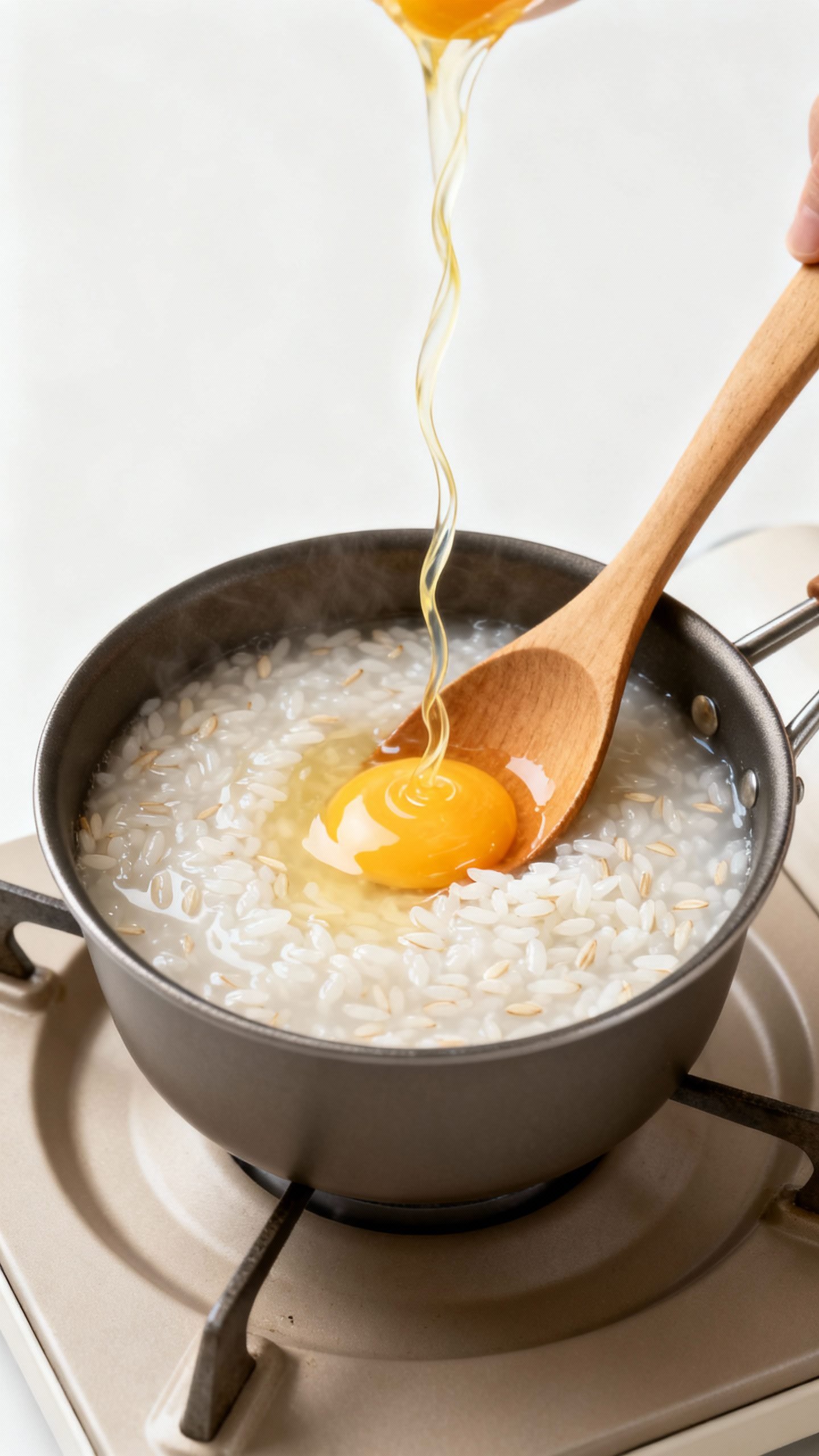
- Add the egg: Two easy options:
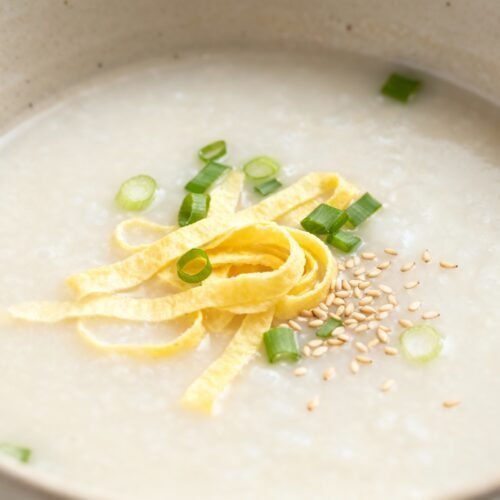
- Silky swirl: Beat the egg in a small bowl. Slowly drizzle it into the hot porridge while stirring gently to create ribbons.
- Soft-poached style: Crack the egg directly into a small well in the porridge. Cover and cook 3–4 minutes until the white sets and the yolk stays runny.
- Finish and serve: Turn off the heat. Stir in sesame oil if using. Ladle into bowls and top with scallions, sesame seeds, and anything else you like.
How to Store Leftover Okayu with Egg
- Cool it fast: Transfer leftovers to a shallow container so it cools evenly.
- Refrigerate: Store in an airtight container for up to 3 days.
- Reheat gently: Warm on the stovetop over low heat with a splash of water or broth to loosen. Stir often. Avoid boiling.
- Add egg fresh: If you plan ahead, store the porridge without egg and add a fresh egg when reheating for the best texture.
- Freezing tip: Freeze plain okayu (no egg) for up to 1 month. Thaw in the fridge and reheat with added liquid, then finish with a fresh egg.
Benefits of Making Okayu with Egg
- Comfort in a bowl: The gentle texture and mild flavor calm the senses and soothe sensitive stomachs.
- Balanced nourishment: Carbs from rice plus protein from egg create a steady, satisfying meal.
- Budget-friendly: Pantry staples transform into something special without a long shopping list.
- Customizable nutrition: Add greens, mushrooms, or tofu for extra vitamins and fiber.
- Meal-prep friendly: Make a small batch for now and a plain batch for later—easy breakfasts all week.
What to Avoid When Cooking Okayu
- Skipping the rinse: Unrinsed rice can taste dusty and turn gluey rather than silky.
- Cranking the heat: High heat scorches the bottom and thickens the porridge too fast.
- Neglecting to stir: Gentle stirring every few minutes prevents sticking and promotes creaminess.
- Over-salting early: Season lightly at first, then adjust at the end—liquid reduces as it simmers.
- Adding egg too soon: Wait until the porridge thickens; otherwise the egg can disappear into the liquid.
Variations You Can Try
- Ginger scallion: Simmer with a few slices of fresh ginger; finish with extra scallions and sesame oil.
- Mushroom umami: Add sliced shiitake or shimeji during simmering. A splash of mirin rounds it out.
- Green and gold: Stir in chopped spinach or bok choy during the last 3 minutes, then add the egg.
- Miso twist: Whisk 1 tablespoon white miso with a little hot porridge, then stir back in off heat.
- Chicken comfort: Use chicken broth and fold in shredded poached chicken at the end.
- Sea breeze: Top with flaked salmon, nori strips, and a sprinkle of furikake.
- Citrus spark: Finish with yuzu kosho or a bit of lemon zest for brightness.
FAQ
What kind of rice works best?
Short-grain Japanese rice gives the creamiest texture. Medium-grain also works. Long-grain won’t break down as nicely.
How thick should okayu be?
Personal choice. Traditional ratios range from 1:5 to 1:7 rice to liquid. Start with 1:6 and adjust by adding more water as you simmer.
Can I make it in a rice cooker?
Yes. Use the porridge/congee setting if your cooker has one. Add rinsed rice and 5–7 parts liquid, then stir in the egg at the end.
Can I use dashi instead of broth?
Absolutely. Dashi adds clean, savory depth without overpowering the porridge.
How do I keep the egg soft?
Lower the heat and add the egg at the end. For ribbons, drizzle beaten egg slowly while stirring. For a poached egg, cover and cook just until the white sets.
Is okayu gluten-free?
Yes, if you use gluten-free soy sauce or tamari and a gluten-free broth.
What can I serve with okayu?
Try pickles, a simple salad, grilled fish, or steamed greens for a light, balanced meal.
Conclusion
Okayu with egg proves that simple ingredients can feel luxurious. Keep the technique gentle, season thoughtfully, and finish with your favorite toppings. You’ll have a bowl that restores and comforts—any day, any time. Make a pot today, and enjoy the kind of cozy that never gets old.
Easy Okayu with Egg Recipe | Japanese Rice Porridge Comfort Food
Ingredients
Ingredients
- 1/2 cup short-grain Japanese rice, rinsed until the water runs clear
- 3 to 4 cups water or low-sodium chicken or vegetable broth
- 1 large egg
- 1 to 2 teaspoons soy sauce or tamari, to taste
- 1/2 teaspoon kosher salt, plus more to finish
- 1/2 teaspoon toasted sesame oil (optional)
- Sliced scallions, for topping
- Toasted sesame seeds, for topping
- Shredded nori or furikake, for topping
- Pickled plum (umeboshi) or pickled ginger, for topping
- Shoyu or a dash of white pepper, for topping
Instructions
Instructions
- Rinse the rice thoroughly under cool water, swirling and draining until the water runs mostly clear.
- Add the rinsed rice and 3 cups of water or broth to a medium pot, cover, and bring to a gentle boil over medium heat.
- Reduce heat to low and partially cover with the lid ajar; simmer 25 to 35 minutes, stirring every 5 to 7 minutes to prevent sticking, adding more liquid as needed for desired consistency.
- Stir in the salt and soy sauce, taste, and adjust seasoning while keeping the porridge at a gentle bubble.
- For silky ribbons, beat the egg and slowly drizzle it into the hot porridge while gently stirring; for a soft-poached egg, crack it into a small well in the porridge, cover, and cook 3 to 4 minutes until the white sets and the yolk is runny.
- Turn off the heat, stir in sesame oil if using, ladle into bowls, and top with scallions, sesame seeds, and other desired toppings.