Easy 4 Ingredient Homemade Mayo – Simple, Fresh, and Foolproof
Homemade mayo is one of those small kitchen wins that makes everything taste better. It’s creamy, tangy, and comes together in minutes with pantry staples. Once you try it, the store-bought jar won’t stand a chance.
You control the flavor, the texture, and the quality of the ingredients. Plus, it’s a handy base for dressings and sauces you’re probably already making.
Why This Recipe Works
This recipe keeps it simple with just four ingredients and a method that’s hard to mess up. Using a neutral oil gives you that classic, silky texture without overpowering the flavor.
A whole egg helps emulsify quickly, so it blends smoothly and stays stable. Lemon juice or vinegar adds brightness and balances the richness. With the right tools and a steady pour, you’ll get thick, spreadable mayo every time.
Ingredients
- 1 large fresh egg (room temperature, if possible)
- 1 cup neutral oil (like avocado, grapeseed, canola, or light olive oil)
- 1 tablespoon lemon juice or white wine vinegar
- 1/2 teaspoon kosher salt (plus more to taste)
Optional but great: 1/2 teaspoon Dijon mustard and a small pinch of sugar to round out the flavor.
How to Make It
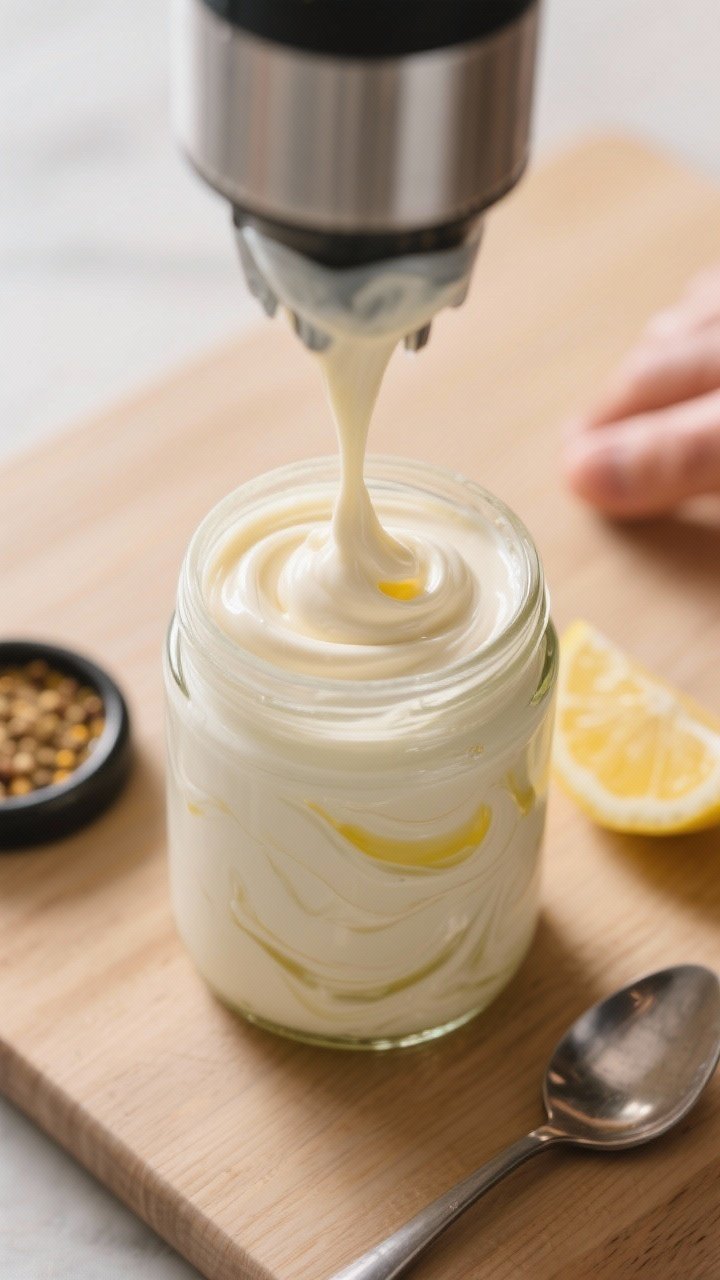
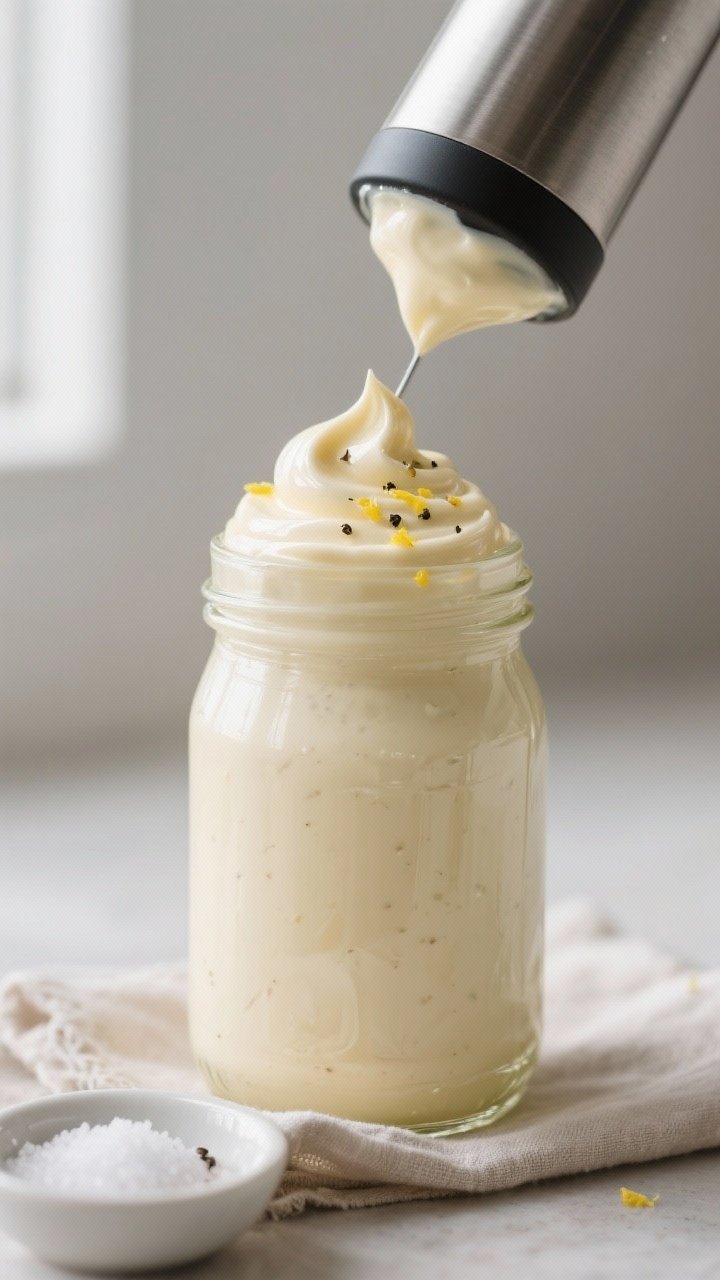
- Choose your tool. For the easiest, most reliable mayo, use an immersion blender and a tall jar that just fits the blender head.
A food processor or blender works too, but the immersion blender is more foolproof.
- Add ingredients to the jar. Crack the egg into the jar. Add salt, lemon juice or vinegar, and Dijon if using. Pour all the oil on top.
The layering helps the emulsion start fast.
- Blend from the bottom. Place the immersion blender at the bottom of the jar and start blending on low. Don’t move it for about 10–15 seconds. You’ll see the mixture turn white and thick at the base.
- Pull up slowly. Once the bottom has emulsified, gently lift the blender head to incorporate the remaining oil.
Move it up and down a few times until everything is creamy and uniform, about 30–45 seconds total.
- Adjust to taste. Stir in a little more salt, lemon, or a pinch of sugar if you want a softer tang. If it’s too thick, whisk in a teaspoon of water to loosen it.
- If using a blender or food processor: Add egg, lemon, salt, and mustard first. Blend, then very slowly drizzle in the oil in a thin stream until thick.
Patience is key here.
How to Store
- Refrigerate immediately in a clean, airtight jar.
- Use within 5–7 days for the best flavor and quality.
- Keep it cold. Don’t leave it at room temperature for extended periods.
- Label the jar with the date so you know when you made it.
Why This is Good for You
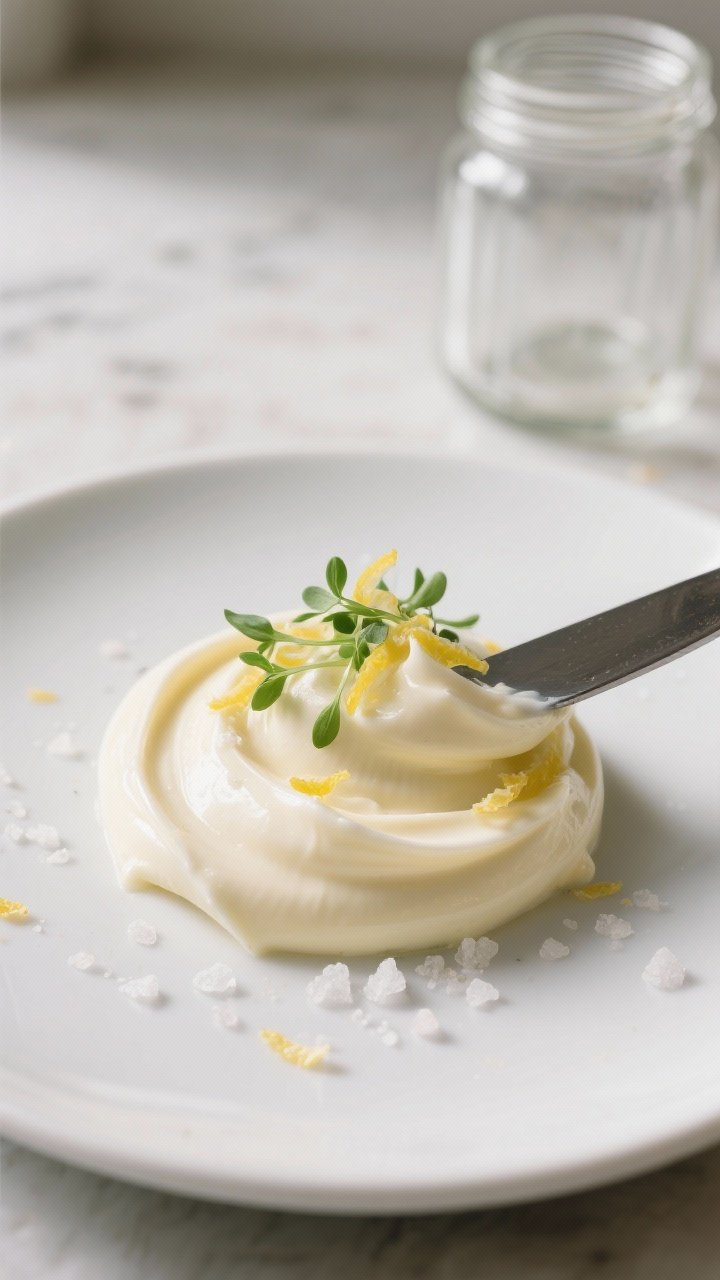
Homemade mayo lets you choose better oils, like avocado or high-oleic versions that offer a more favorable fat profile. It’s also free from stabilizers and fillers you often find in store-bought jars. You control the sodium and acidity, which can help if you’re watching those.
And because it’s rich, a little goes a long way, making it satisfying without needing a huge amount.
Pitfalls to Watch Out For
- Broken emulsion: If it looks thin or oily, it didn’t emulsify. Don’t panic—start with a fresh egg in a new jar, then slowly blend in the broken mixture as if it were the oil.
- Using extra-virgin olive oil: It can turn bitter when blended. Use light olive oil or mix half neutral oil with a bit of EVOO for flavor.
- Cold ingredients: Very cold eggs can make emulsifying harder.
Room temperature works best.
- Pouring oil too fast: Especially with a blender or food processor, add it slowly so the mixture has time to thicken.
- Over-acidifying: Too much lemon or vinegar can thin the mayo. Start with the recipe amount, then adjust at the end.
Variations You Can Try
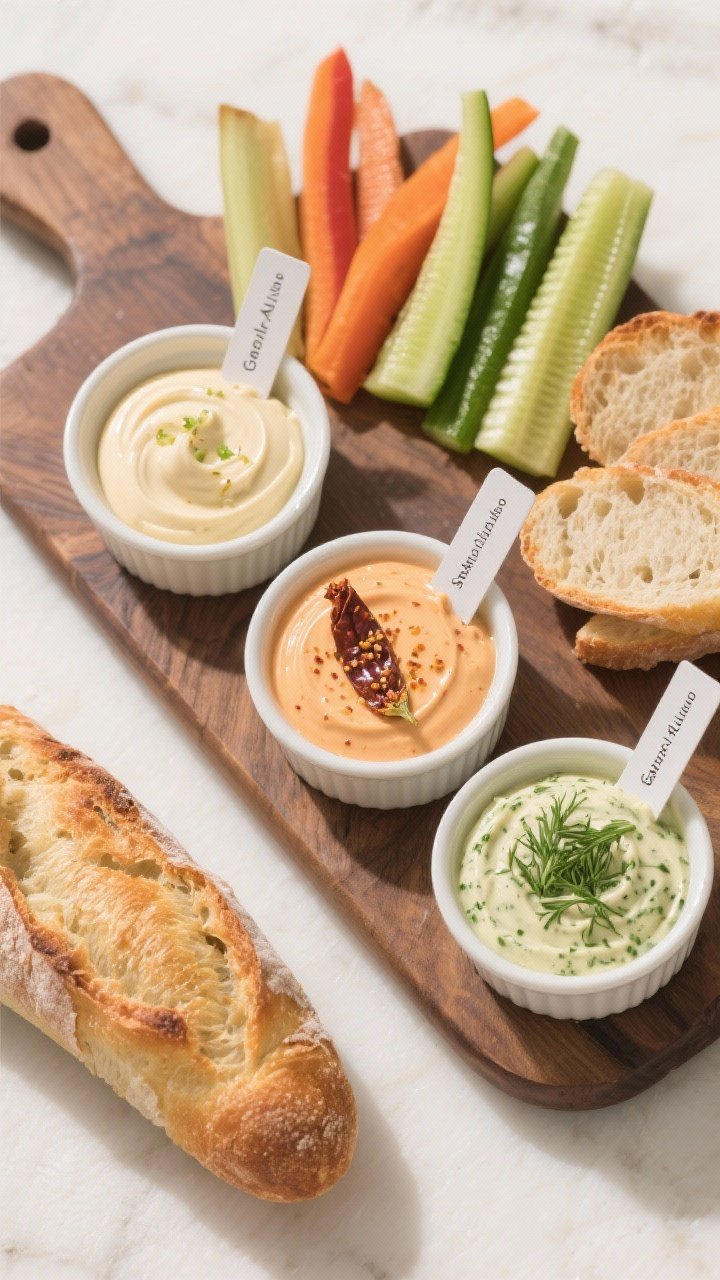
- Garlic Aioli: Add 1 small grated garlic clove and 1/2 teaspoon Dijon.
- Lemon-Pepper: Stir in extra lemon zest and plenty of cracked black pepper.
- Smoky Chipotle: Blend in 1 teaspoon chipotle in adobo and a squeeze of lime.
- Herb Mayo: Fold in finely chopped parsley, dill, or chives.
- Sriracha Mayo: Mix in 1–2 teaspoons sriracha for heat.
- Wasabi-Lime: Add a pea-size amount of wasabi paste and a little lime juice.
- Honey Mustard: Stir in 1 teaspoon Dijon and 1 teaspoon honey.
FAQ
Is it safe to eat raw eggs in homemade mayo?
Use the freshest eggs you can find and keep the mayo refrigerated. If you’re concerned, look for pasteurized eggs at the store.
They’ve been heat-treated to reduce risk while still acting like fresh eggs in recipes.
Can I make it without an immersion blender?
Yes. A blender or food processor works well if you drizzle the oil in slowly. You can also whisk by hand, but it’s a workout and requires a very slow, steady pour.
Why did my mayo turn bitter?
Extra-virgin olive oil can taste bitter when aggressively blended.
Use a neutral oil or a light olive oil. If you want EVOO flavor, whisk in a spoonful at the end rather than blending it hard.
How can I fix broken mayo?
Start over with a fresh egg in a clean jar. Blend the egg, then slowly add the broken mixture while blending, as if it were the oil.
It usually comes back together.
Can I use only egg yolks?
Yes. Two yolks will make a richer mayo, but you may need to adjust the acid and salt. The whole egg version is simpler and slightly lighter.
Which oil tastes best?
For classic flavor, choose avocado oil, grapeseed, canola, or light olive oil.
If you want a little character, blend 3/4 neutral oil with 1/4 flavorful oil like sesame or walnut.
How thick should mayo be?
It should be thick and spreadable. If it’s too thick, whisk in 1–2 teaspoons of water or lemon juice. If it’s too thin, blend in a bit more oil slowly until it sets.
Can I freeze homemade mayo?
No.
Freezing breaks the emulsion and changes the texture. Keep it refrigerated and make a fresh batch when you need more.
Why does my mayo taste flat?
It likely needs a pinch more salt or acid. Add a few drops of lemon juice or vinegar and a tiny pinch of salt, then stir and taste again.
What can I do with leftover mayo?
Use it for chicken salad, tuna salad, BLTs, potato salad, or as a base for ranch or Caesar dressing.
It’s great as a spread on sandwiches and a dip for roasted veggies or fries.
Final Thoughts
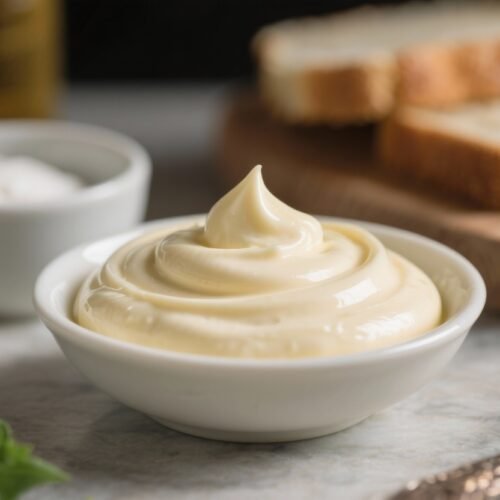
With four ingredients and a minute of blending, you get a creamy, customizable mayo that tastes better than anything in a jar. Keep the method simple, use fresh ingredients, and adjust the seasoning to your liking. Once you master this, you’ve got the base for countless sauces and dressings.
It’s a small effort with a big payoff in everyday cooking.
Easy 4 Ingredient Homemade Mayo - Simple, Fresh, and Foolproof
Ingredients
- 1 large fresh egg (room temperature, if possible)
- 1 cup neutral oil (like avocado, grapeseed, canola, or light olive oil)
- 1 tablespoon lemon juice or white wine vinegar
- ½ teaspoon kosher salt (plus more to taste)
Instructions
- Choose your tool. For the easiest, most reliable mayo, use an immersion blender and a tall jar that just fits the blender head.A food processor or blender works too, but the immersion blender is more foolproof.
- Add ingredients to the jar. Crack the egg into the jar. Add salt, lemon juice or vinegar, and Dijon if using. Pour all the oil on top.The layering helps the emulsion start fast.
- Blend from the bottom. Place the immersion blender at the bottom of the jar and start blending on low. Don’t move it for about 10–15 seconds. You’ll see the mixture turn white and thick at the base.
- Pull up slowly. Once the bottom has emulsified, gently lift the blender head to incorporate the remaining oil.Move it up and down a few times until everything is creamy and uniform, about 30–45 seconds total.
- Adjust to taste. Stir in a little more salt, lemon, or a pinch of sugar if you want a softer tang. If it’s too thick, whisk in a teaspoon of water to loosen it.
- If using a blender or food processor: Add egg, lemon, salt, and mustard first. Blend, then very slowly drizzle in the oil in a thin stream until thick.Patience is key here.