Crispy Korean Pajeon Recipe | Savory Spring Onion Pancake at Home
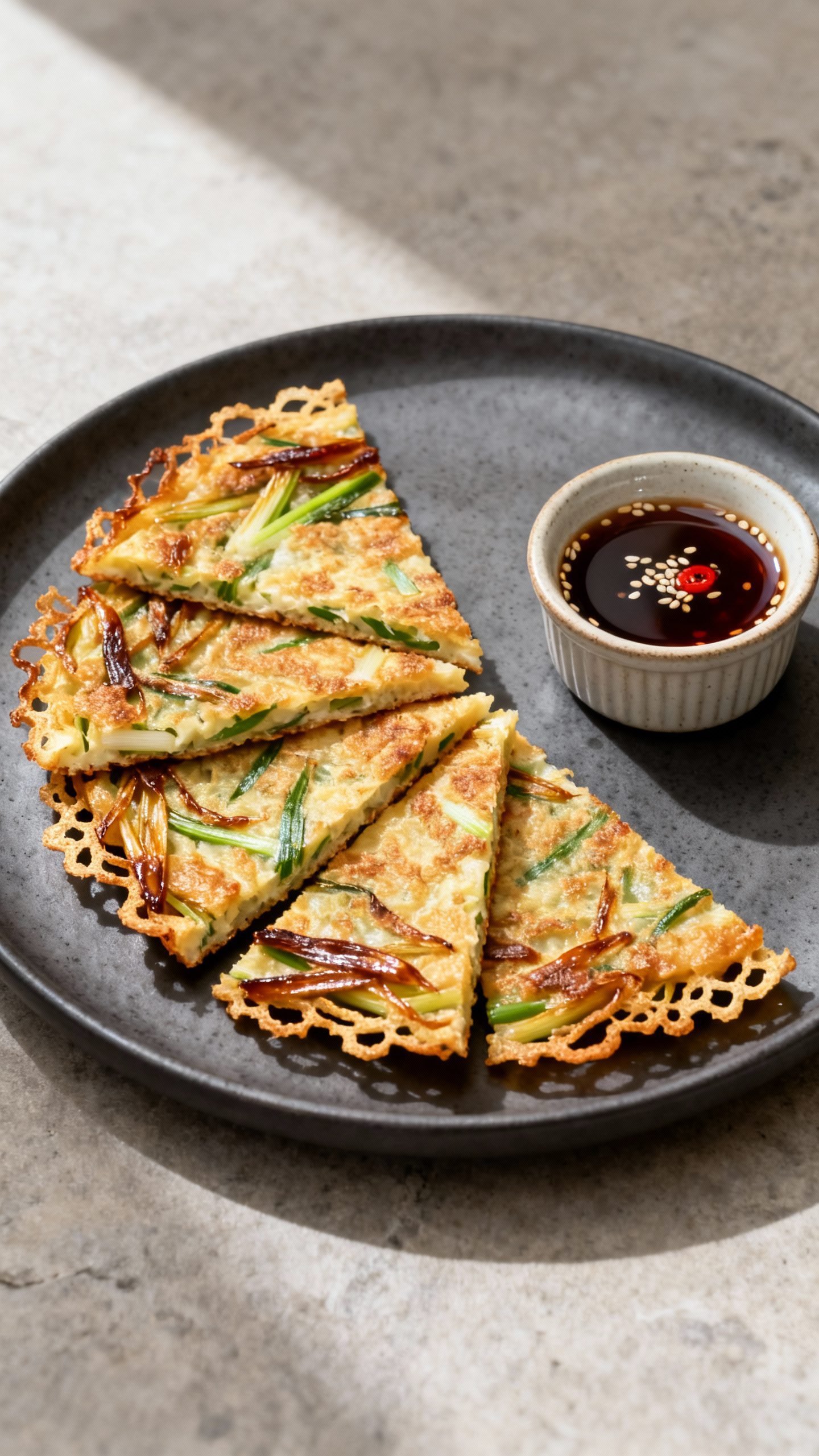
If you love savory pancakes with crisp, lacy edges and soft, tender centers, make pajeon tonight. This classic Korean spring onion pancake comes together fast with simple pantry ingredients, and it delivers huge flavor. Think golden-brown crunch, sweet-savory scallions, and a dipping sauce that makes every bite pop.
I’ll show you how to achieve restaurant-level crispness on your first try. You’ll mix a light batter, layer in plenty of spring onions, and pan-fry until the edges turn beautifully frilled. Serve as a snack, appetizer, or with a cozy bowl of soup for a comforting meal at home.
Why This Korean Scallion Pancake Turns Out Crispy and Delicious
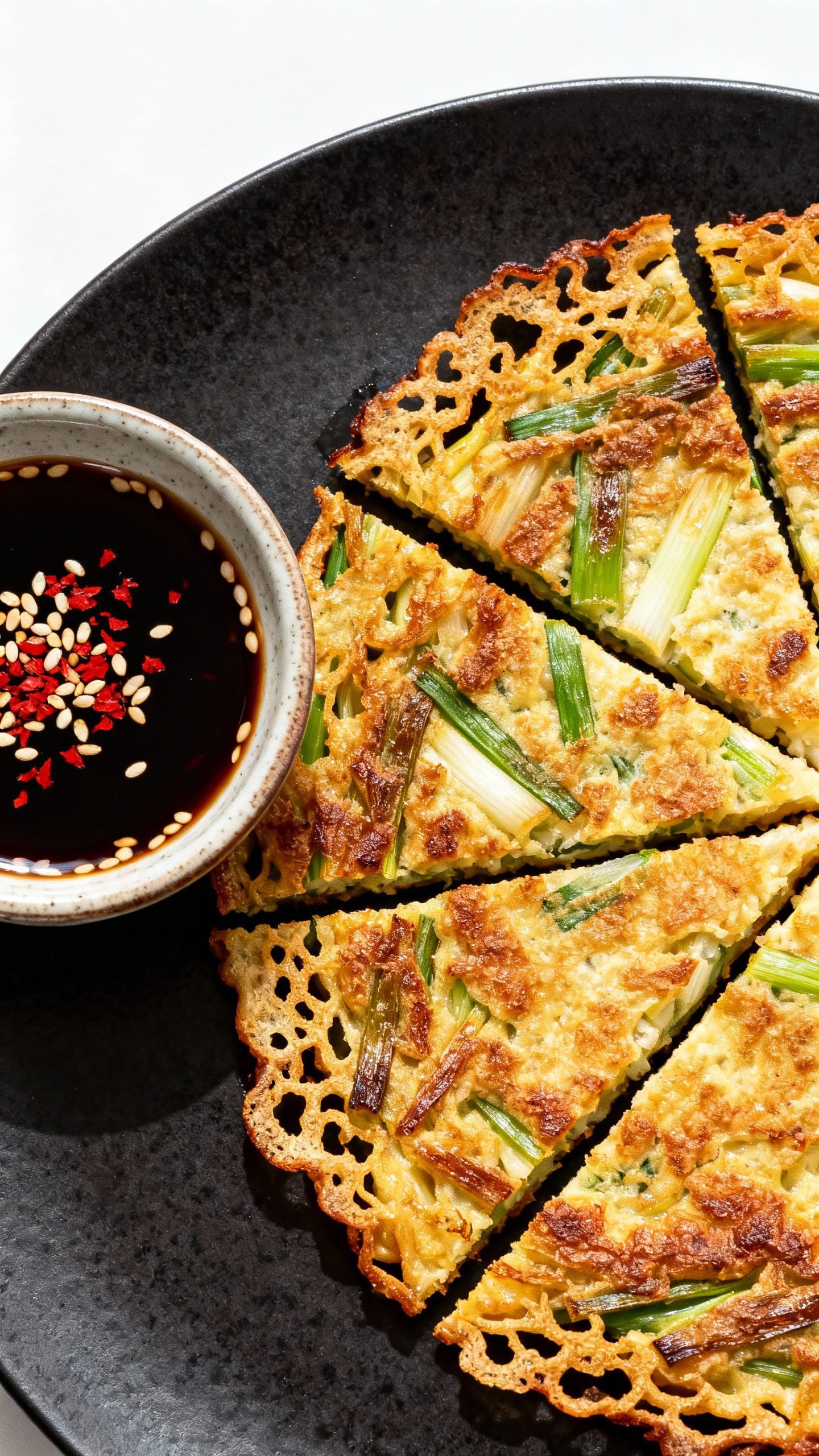
- Starch blend for crunch: A mix of all-purpose flour and potato starch makes a batter that fries up light with crisp edges.
- Cold batter, hot pan: Chilled liquid and a properly heated skillet create steam and sizzle that form a thin, shatter-y crust.
- Thin batter, generous scallions: The scallions sit in a shallow batter so they sear and caramelize instead of steaming.
- Enough oil for shallow-frying: A modest but visible layer of oil delivers even browning and prevents soggy patches.
- Flip once: Minimal handling keeps the pancake crisp and intact while it finishes cooking through.
Ingredients
For the Pajeon
- 8–10 spring onions (scallions), trimmed; cut into 2–3 inch pieces, lengthwise split if thick
- 3/4 cup all-purpose flour
- 1/4 cup potato starch (or cornstarch)
- 1/2 teaspoon fine sea salt
- 1/4 teaspoon white pepper (black pepper works too)
- 1/2 teaspoon sugar (balances savory flavors)
- 3/4 cup cold water (plus 1–2 tablespoons if needed)
- 1 large egg, lightly beaten
- Neutral oil for frying (avocado, canola, or grapeseed)
For the Dipping Sauce
- 2 tablespoons soy sauce
- 1 tablespoon rice vinegar
- 1 teaspoon sesame oil
- 1 teaspoon sugar or honey
- 1 teaspoon gochugaru (Korean red pepper flakes), to taste
- 1 teaspoon toasted sesame seeds
- 1 clove garlic, finely grated (optional)
- 1 tablespoon thinly sliced scallions (optional)
How to Make Crispy Korean Spring Onion Pancakes
- Prep the scallions: Wash, trim roots, and pat dry. Split thicker white parts lengthwise so everything cooks evenly. Set aside.
- Mix the batter: In a bowl, whisk flour, potato starch, salt, white pepper, and sugar. Add cold water and whisk until smooth and pourable—like thin cream. Whisk in the egg. If it looks thick, add a tablespoon or two of water.
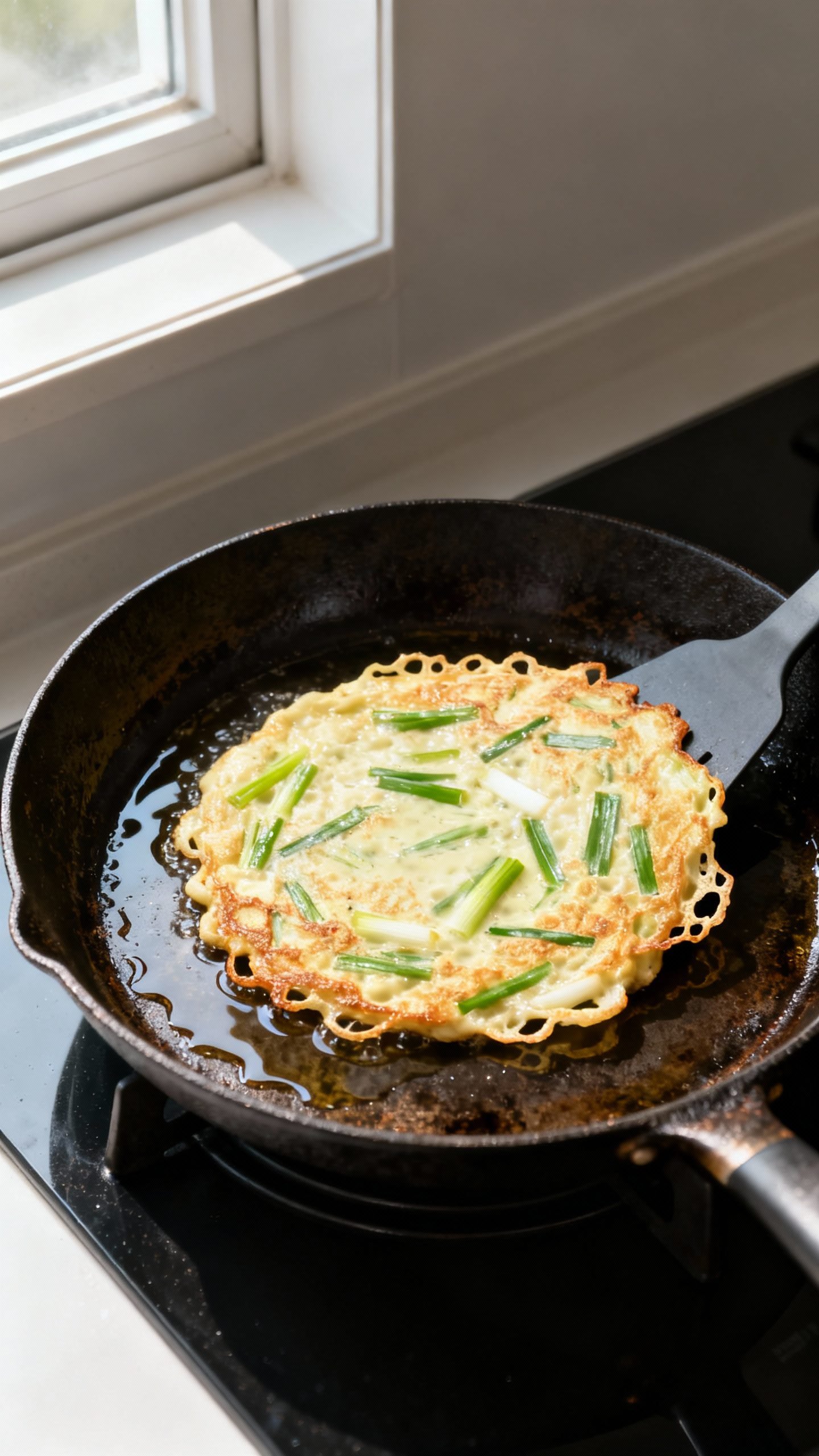
- Heat the pan: Use a 10–12 inch nonstick or well-seasoned cast-iron skillet. Add enough oil to lightly coat the bottom (about 2–3 tablespoons). Heat over medium-high until the oil shimmers.
- Layer for crispness: Pour a thin layer of batter into the hot pan, just enough to cover. Scatter half the scallions in an even layer. Drizzle a little more batter over the top to “glue” them down.
- Pan-fry: Cook 3–4 minutes until the edges look frilly and golden and the bottom turns nicely browned. Press gently with a spatula to ensure contact with the pan.
- Flip confidently: Slide a spatula under the pancake and flip in one motion. Add another teaspoon of oil around the edges if the pan looks dry. Cook 2–3 more minutes until the second side browns and crisps.
- Repeat: Transfer to a wire rack and make the second pancake with the remaining batter and scallions.
- Make the sauce: Stir soy sauce, rice vinegar, sesame oil, sugar, gochugaru, sesame seeds, garlic, and sliced scallions until the sugar dissolves.
- Serve hot: Slice the pancakes into wedges. Serve immediately with dipping sauce.
Pro Tips for Better Texture
- Keep the batter cold: Pop the batter in the fridge while the pan heats for extra lift and crispness.
- Don’t overcrowd: Make two thinner pancakes instead of one thick one for better browning.
- Use enough oil: You want a gentle shallow-fry, not a dry sauté.
- Wire rack > plate: Rest on a rack to keep the bottom from steaming and softening.
How to Store Leftover Pajeon
- Refrigerate: Cool completely. Store slices in an airtight container with parchment between layers for up to 3 days.
- Freeze: Freeze in a single layer on a sheet tray, then bag for up to 1 month. Label with the date.
- Reheat for crispness: Air fryer at 375°F (190°C) for 3–5 minutes, or skillet with a teaspoon of oil over medium heat until re-crisped. Avoid microwaves; they soften the crust.
- Refresh the sauce: Whisk a new batch of dipping sauce right before serving.
Benefits of Making Pajeon at Home
- Fast and budget-friendly: You can turn inexpensive scallions into a shareable appetizer in minutes.
- Flexible ingredients: The batter welcomes add-ins like seafood or thin vegetables without fuss.
- Perfect for gatherings: Slice into wedges and serve with drinks—everyone loves a crispy bite.
- Reliable technique: Once you learn the heat and oil sweet spot, you’ll get consistent, golden results every time.
Mistakes to Avoid
- Too thick batter: It should pour easily. Thick batter makes doughy centers and weak crisping.
- Skimping on oil: Not enough oil means patchy browning and sticking.
- Low heat: Warm pans steam the batter. Use medium-high heat for a strong initial sizzle.
- Overloading with fillings: Heavy add-ins prevent the pancake from setting and flipping cleanly.
- Flipping repeatedly: Flip once; constant flipping breaks the crust and toughens the pancake.
Tasty Variations to Try
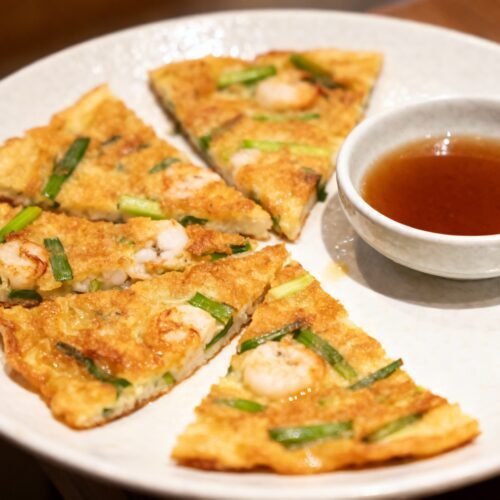
- Haemul Pajeon (Seafood): Add 1/2 cup chopped shrimp, squid, or mixed seafood. Pat dry well to avoid sogginess.
- Kimchi Pajeon: Fold in 1/2 cup chopped, well-drained kimchi and a tablespoon of kimchi juice for tang and heat.
- Zucchini and Scallion: Julienne 1 small zucchini; salt lightly, squeeze out moisture, and add to the batter.
- Extra-crispy: Replace 2 tablespoons of the water with club soda for airy bubbles.
- Cheesy edge: Sprinkle a thin ring of shredded mozzarella around the edge after flipping for a lacy, browned “cheese skirt.”
FAQ
Can I make the batter ahead?
Yes, up to 24 hours. Store chilled and whisk before using. Add a splash of water if it thickens.
What if I don’t have potato starch?
Use cornstarch in the same amount. You’ll still get great crispness.
Which pan works best?
Nonstick or well-seasoned cast-iron. Both deliver even browning and easy flipping.
Can I bake pajeon instead?
Pan-frying delivers the signature texture. If you must, preheat a sheet pan with oil at 450°F (230°C) and bake until golden, flipping once, but expect a less lacy edge.
How do I keep the first pancake warm?
Hold on a rack in a 200°F (95°C) oven. The rack prevents sogginess.
Is the dipping sauce necessary?
Highly recommended. The salty-tangy-slightly sweet sauce balances the rich, crispy pancake.
Conclusion
Pajeon proves that simple ingredients can taste extraordinary with the right technique. With a chilled, light batter, plenty of scallions, and a hot, well-oiled pan, you’ll get a pancake that crackles at the edges and stays tender inside. Mix the dipping sauce, slice into wedges, and enjoy a plate of pure comfort that lands on the table in under 30 minutes.
Crispy Korean Pajeon Recipe | Savory Spring Onion Pancake at Home
Ingredients
Ingredients
- 8–10 spring onions (scallions), trimmed; cut into 2–3 inch pieces, lengthwise split if thick
- 3/4 cup all-purpose flour
- 1/4 cup potato starch (or cornstarch)
- 1/2 teaspoon fine sea salt
- 1/4 teaspoon white pepper (or black pepper)
- 1/2 teaspoon sugar
- 3/4 cup cold water (plus 1–2 tablespoons if needed)
- 1 large egg, lightly beaten
- Neutral oil for frying (avocado, canola, or grapeseed)
- 2 tablespoons soy sauce
- 1 tablespoon rice vinegar
- 1 teaspoon sesame oil
- 1 teaspoon sugar or honey
- 1 teaspoon gochugaru (Korean red pepper flakes), to taste
- 1 teaspoon toasted sesame seeds
- 1 clove garlic, finely grated (optional)
- 1 tablespoon thinly sliced scallions (optional)
Instructions
Instructions
- Wash, trim, and pat the scallions dry, splitting thicker white parts lengthwise for even cooking.
- Whisk the flour, potato starch, salt, white pepper, and sugar in a bowl.
- Add the cold water and whisk until smooth and thin like pourable cream, then whisk in the egg; adjust with a little more water if thick.
- Heat a 10–12 inch nonstick or well-seasoned cast-iron skillet over medium-high with 2–3 tablespoons oil until shimmering.
- Pour a thin layer of batter to just cover the pan, scatter half the scallions evenly, and drizzle a little more batter to help them adhere.
- Cook until the edges turn frilly and golden and the bottom is browned, about 3–4 minutes, pressing gently for contact.
- Slide a spatula under the pancake and flip in one motion; add a little oil around the edges if the pan looks dry and cook 2–3 minutes until crisp and browned.
- Transfer to a wire rack and repeat with the remaining batter and scallions to make the second pancake.
- Stir together soy sauce, rice vinegar, sesame oil, sugar or honey, gochugaru, sesame seeds, garlic, and sliced scallions until the sugar dissolves.
- Slice the pancakes into wedges and serve hot with the dipping sauce.