Classic Vanilla Cake Recipe | Simple Homemade Cake for Beginners
You can bake a tender, buttery vanilla cake with a fine crumb and a golden top—even if you’ve never made a cake from scratch. This simple vanilla cake uses pantry staples, comes together quickly, and bakes up evenly for a dessert that tastes like a bakery classic without the fuss.
I’ll walk you through everything: the right mixing order, how to avoid dryness, and when to pull the cake from the oven. You’ll also get storage tips, easy frosting ideas, and smart variations. Grab a bowl and a whisk—we’re making a soft, fragrant vanilla cake that always delivers.
Why This Easy Vanilla Cake Always Turns Out
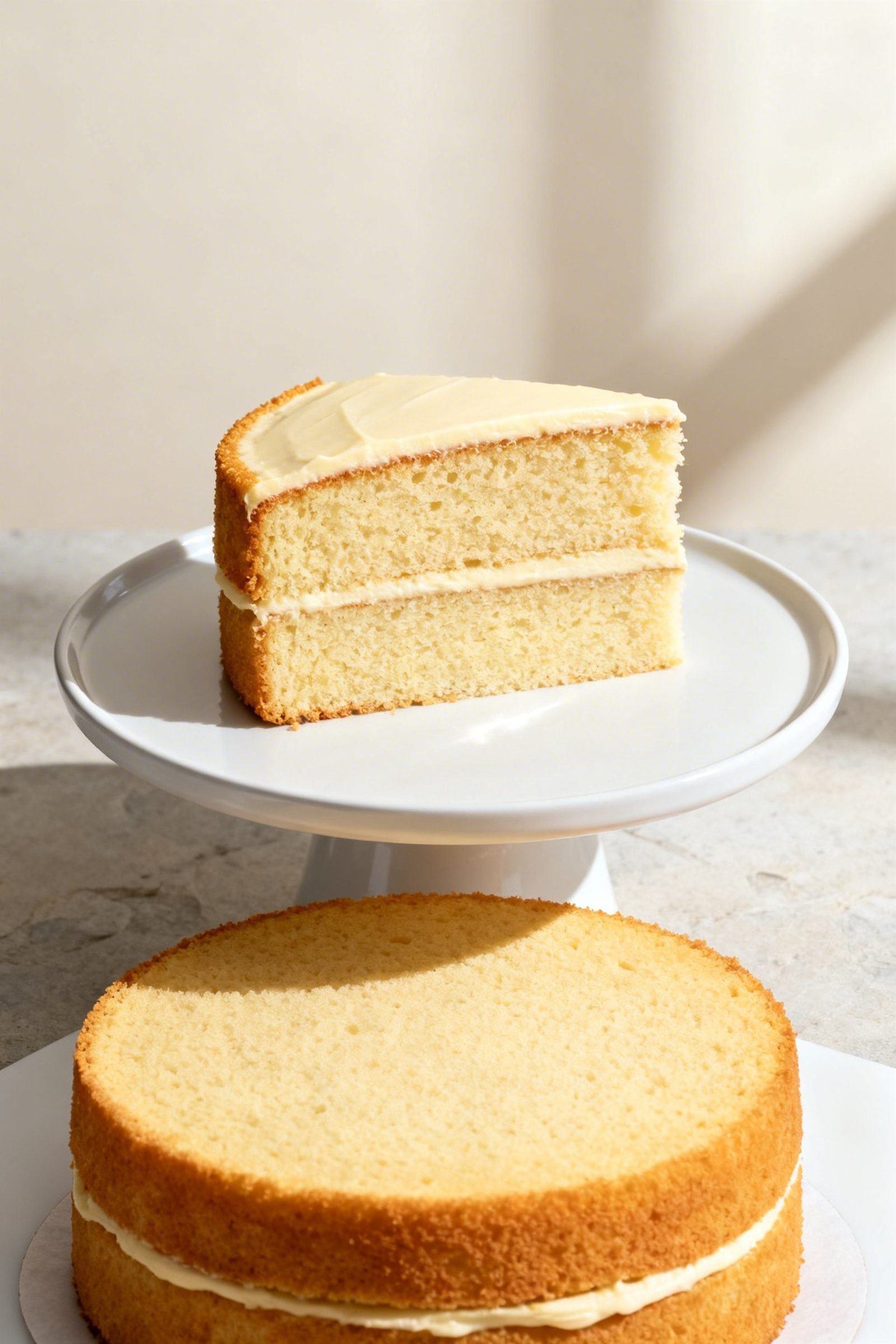
You want dependable, moist, and flavorful. This recipe delivers because it uses straightforward ratios and a few small techniques that make a big difference.
- Balanced fat and liquid keep the crumb moist without feeling heavy.
- Room-temperature ingredients blend smoothly for an even, tender texture.
- Two-pan option or one tall layer gives you flexibility for any occasion.
- Real vanilla extract or paste creates clean, warm flavor in every bite.
- Creaming method builds lightness so the cake rises tall without collapsing.
Ingredients
Here’s everything you need for a classic 8-inch two-layer vanilla cake (or one 9×13-inch sheet cake):
- All-purpose flour – 2 1/2 cups (300 g), spooned and leveled
- Granulated sugar – 1 1/2 cups (300 g)
- Unsalted butter – 3/4 cup (170 g), softened
- Large eggs – 4, at room temperature
- Whole milk – 1 cup (240 ml), room temperature
- Vanilla extract or paste – 2 to 2 1/2 teaspoons
- Baking powder – 2 1/2 teaspoons
- Fine sea salt – 1/2 teaspoon
Optional for extra tenderness:
- Sour cream – 1/4 cup (60 g), replace equal amount of milk
For buttercream (enough to fill and frost a two-layer cake):
- Unsalted butter – 1 cup (226 g), softened
- Powdered sugar – 3 1/2 to 4 cups (420–480 g), sifted
- Vanilla extract – 2 teaspoons
- Heavy cream or milk – 2–4 tablespoons
- Pinch of salt
How to Make This Simple Vanilla Cake
Prep the pans and oven
- Preheat oven to 350°F (175°C).
- Grease and line two 8-inch round cake pans with parchment. Lightly flour the sides. For a sheet cake, use a 9×13-inch pan and line the bottom.
Mix the batter
- In a medium bowl, whisk together flour, baking powder, and salt. Set aside.
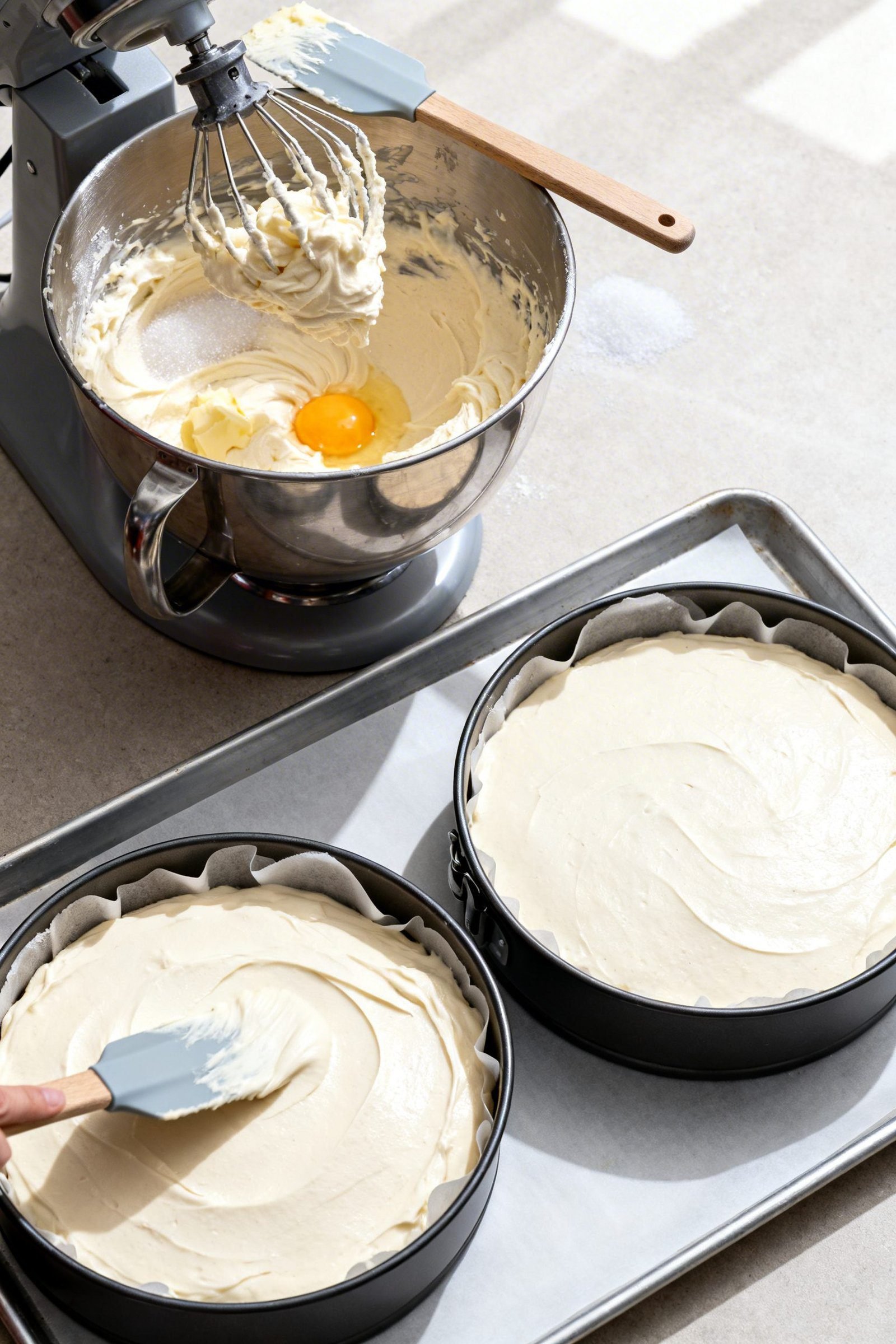
- In a large bowl or stand mixer, beat butter and sugar on medium-high until light and fluffy, about 3 minutes. Scrape the bowl.
- Add the eggs one at a time, mixing fully after each. Stir in the vanilla.
- On low speed, add the dry ingredients in three parts, alternating with the milk (and sour cream if using), beginning and ending with dry. Mix just until combined. Do not overmix.
Bake
- Divide the batter evenly between pans and smooth the tops.
- Bake for 23–28 minutes for two 8-inch layers, or 30–36 minutes for a 9×13. The cake should spring back in the center and a toothpick should come out with a few moist crumbs.
- Cool in pans for 10 minutes, then turn out onto a rack. Peel parchment and cool completely.
Make the vanilla buttercream
- Beat the butter until creamy, 1 minute.
- Add powdered sugar gradually. Beat until fluffy, 2 minutes.
- Mix in vanilla and a pinch of salt. Add cream 1 tablespoon at a time until smooth and spreadable.
Assemble
- Level cake layers if domed. Place first layer on a stand and add about 3/4 cup frosting. Spread to the edges.
- Top with second layer. Apply a thin crumb coat and chill 10–15 minutes. Finish with a thicker coat and smooth.
Pro tips for best texture
- Weigh your flour or spoon and level to avoid dense cake.
- Room-temp ingredients blend better and trap air for lift.
- Don’t overbake. Pull the cake when the center springs back and edges barely pull away.
- Use fresh baking powder. Replace it every 6 months for reliable rise.
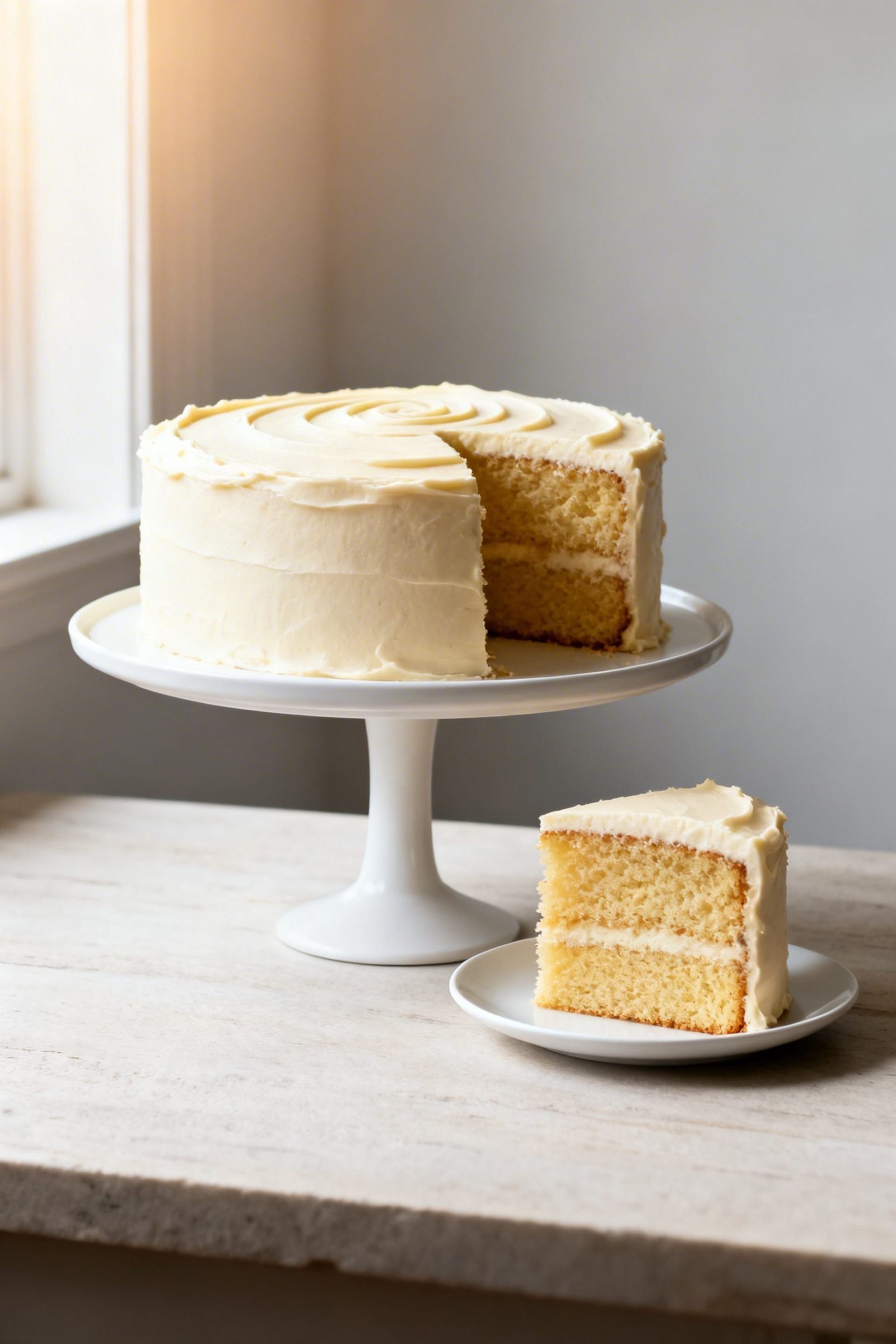
How to Store Your Vanilla Cake
- At room temperature: Keep frosted cake covered for 2 days. Use a cake dome or invert a large bowl over it.
- In the fridge: Store tightly covered for 4–5 days. Bring slices to room temp before serving for best texture.
- Freeze layers: Wrap unfrosted layers in plastic, then foil. Freeze up to 2 months. Thaw wrapped at room temp.
- Freeze frosted cake: Chill until firm, wrap well, and freeze up to 1 month. Unwrap and thaw in the fridge overnight.
Why Baking This Cake Benefits Beginner Bakers
- Simple steps teach you creaming, alternating additions, and crumb-coating—core baking skills you’ll use forever.
- Flexible format bakes as a layer cake, cupcakes, or a sheet cake without changes to flavor or texture.
- Reliable moisture means no dry slices and no disappointment at the first cut.
- Everyday ingredients keep costs low and shopping easy.
- Classic flavor pairs with any frosting, fruit, or drizzle, so you can dress it up or keep it simple.
Common Mistakes to Avoid
- Packing flour into the cup: It adds too much and dries the cake. Spoon and level or use a scale.
- Cold butter or eggs: They curdle the batter and reduce lift.
- Overmixing after flour goes in: It toughens the crumb. Mix on low just until combined.
- Opening the oven too early: You’ll lose heat and risk a sunken center. Check near the minimum time only.
- Skipping parchment: Cakes stick. Line the pan bottoms for stress-free release.
Flavor Variations to Try
- Lemon-vanilla: Add 1 tablespoon lemon zest and replace 2 tablespoons milk with lemon juice.
- Almond bakery style: Swap 1 teaspoon vanilla for almond extract and top with sliced toasted almonds.
- Funfetti: Fold in 1/2 cup rainbow jimmies right before baking.
- Vanilla bean: Use 1 teaspoon vanilla paste plus 1 teaspoon extract for visible specks and deeper flavor.
- Strawberry shortcake: Fill with macerated strawberries and lightly sweetened whipped cream instead of buttercream.
- Cupcakes: Bake at 350°F for 18–20 minutes. Yields about 24 cupcakes.
FAQ
Can I use cake flour instead of all-purpose?
Yes. Use 2 3/4 cups (300 g) cake flour and reduce baking powder to 2 teaspoons for an extra-soft crumb.
What if I only have salted butter?
Use it and reduce added salt to a small pinch. Taste the buttercream before adding more salt.
Can I make it dairy-free?
Yes. Use plant-based butter and unsweetened almond or oat milk. Texture stays soft, though flavor changes slightly.
Why did my cake sink?
Likely causes: old baking powder, overmixing, or opening the oven early. Measure carefully and check doneness near the minimum time.
How do I get flat layers?
Use cake strips around pans or lower oven rack one level. You can also level domes with a serrated knife after cooling.
Can I halve the recipe?
Yes. Bake in one 8-inch pan for 25–30 minutes, or make about 12 cupcakes.
Conclusion
This classic vanilla cake brings buttery flavor, a tender crumb, and reliable results every time. With simple steps and pantry staples, you can bake a cake that fits any celebration—or just a Tuesday craving. Keep the tips handy, trust your senses, and enjoy a slice while it’s still just slightly warm. You did that—and it tastes amazing.
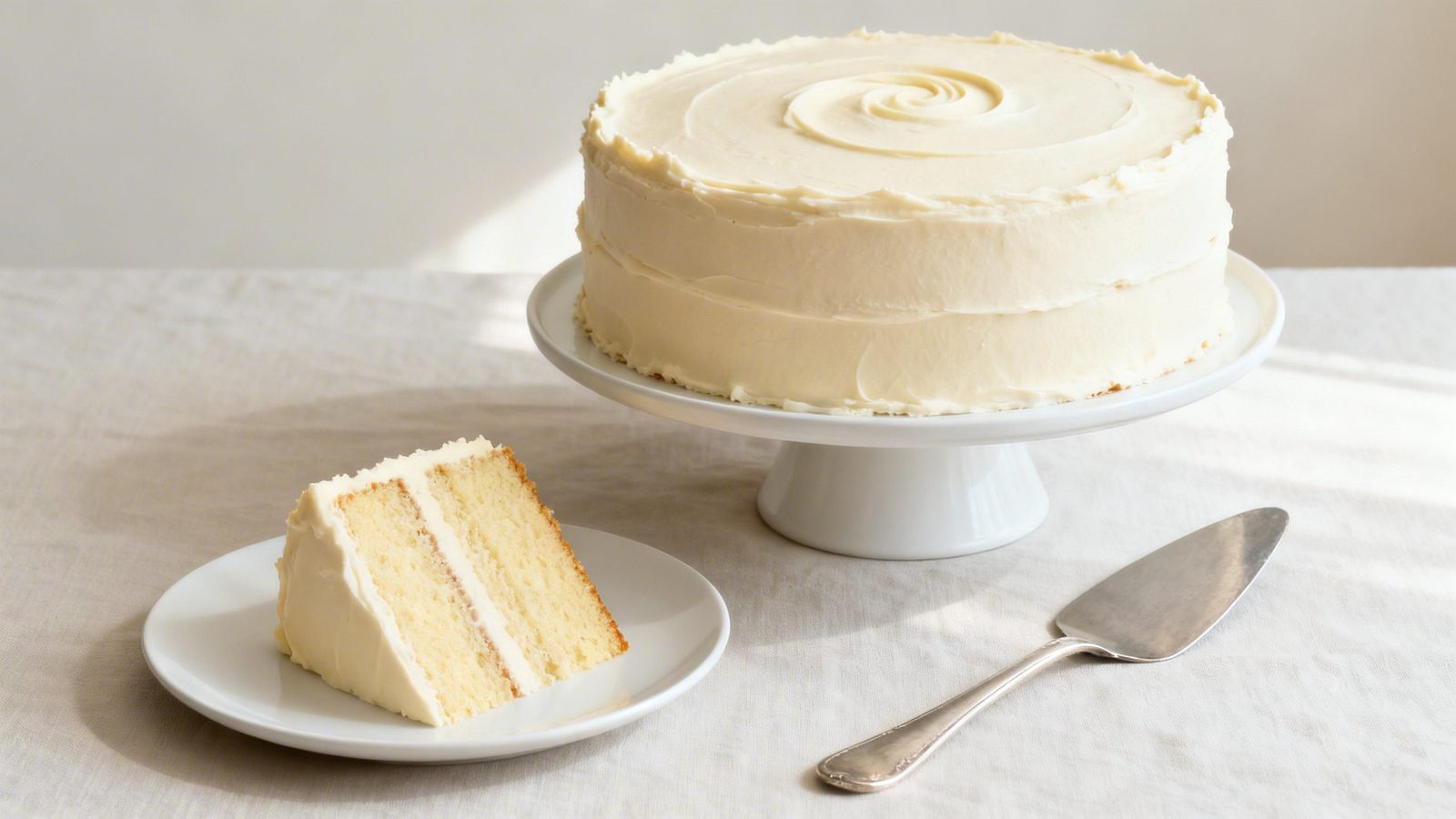
Classic Vanilla Cake
Tender, buttery vanilla cake with a fine crumb and simple vanilla buttercream, perfect for beginners.
Ingredients
- All-purpose flour – 2 ½ cups (300 g), spooned and leveled
- Granulated sugar – 1 ½ cups (300 g)
- Unsalted butter – ¾ cup (170 g), softened
- Large eggs – 4, at room temperature
- Whole milk – 1 cup (240 ml), room temperature
- Vanilla extract or paste – 2 to 2 ½ teaspoons
- Baking powder – 2 ½ teaspoons
- Fine sea salt – ½ teaspoon
- Optional: Sour cream – ¼ cup (60 g), replace equal amount of milk
- For the vanilla buttercream:
- Unsalted butter – 1 cup (226 g), softened
- Powdered sugar – 3 ½ to 4 cups (420–480 g), sifted
- Vanilla extract – 2 teaspoons
- Heavy cream or milk – 2–4 tablespoons
- Pinch of salt
Instructions
- Preheat oven to 350°F (175°C). Grease and line two 8-inch round pans with parchment and lightly flour the sides, or line a 9×13-inch pan.
- Whisk together flour, baking powder, and salt; set aside.
- Beat butter and sugar on medium-high until light and fluffy, about 3 minutes. Scrape the bowl.
- Add eggs one at a time, mixing fully after each. Stir in vanilla.
- On low speed, add dry ingredients in three parts, alternating with the milk (and sour cream if using), beginning and ending with dry. Mix just until combined; do not overmix.
- Divide batter evenly between pans and smooth tops.
- Bake 23–28 minutes for two 8-inch layers or 30–36 minutes for a 9×13-inch cake, until centers spring back and a toothpick comes out with a few moist crumbs.
- Cool in pans 10 minutes, then turn out onto a rack, peel parchment, and cool completely.
- Make buttercream: Beat butter until creamy (1 minute). Gradually add powdered sugar and beat until fluffy (2 minutes). Mix in vanilla and a pinch of salt. Add cream 1 tablespoon at a time until smooth and spreadable.
- Assemble: Level layers if needed. Place first layer on a stand, spread about ¾ cup frosting to the edges, top with second layer, apply a thin crumb coat and chill 10–15 minutes, then finish with a thicker coat and smooth.