Classic Homemade Mayonnaise Recipe | Easy From-Scratch Creamy Mayo
Meet your new kitchen staple: creamy, silky, classic homemade mayonnaise. It comes together in minutes with everyday ingredients, tastes brighter and richer than anything from a jar, and makes every sandwich, salad, and dip feel special. If you’ve ever had mayo split or turn too runny, don’t worry—I’ll walk you through foolproof steps that deliver consistent results.
We’ll use simple tools—either a blender, food processor, immersion blender, or a whisk—and I’ll show you how to get that perfect emulsion every single time. You’ll learn why ingredient temperature matters, how to fix a broken mayo, and easy flavor twists for aioli-style garlic mayo, lemony mayo, or a zippy spicy version.
Why This Homemade Mayonnaise Recipe Works
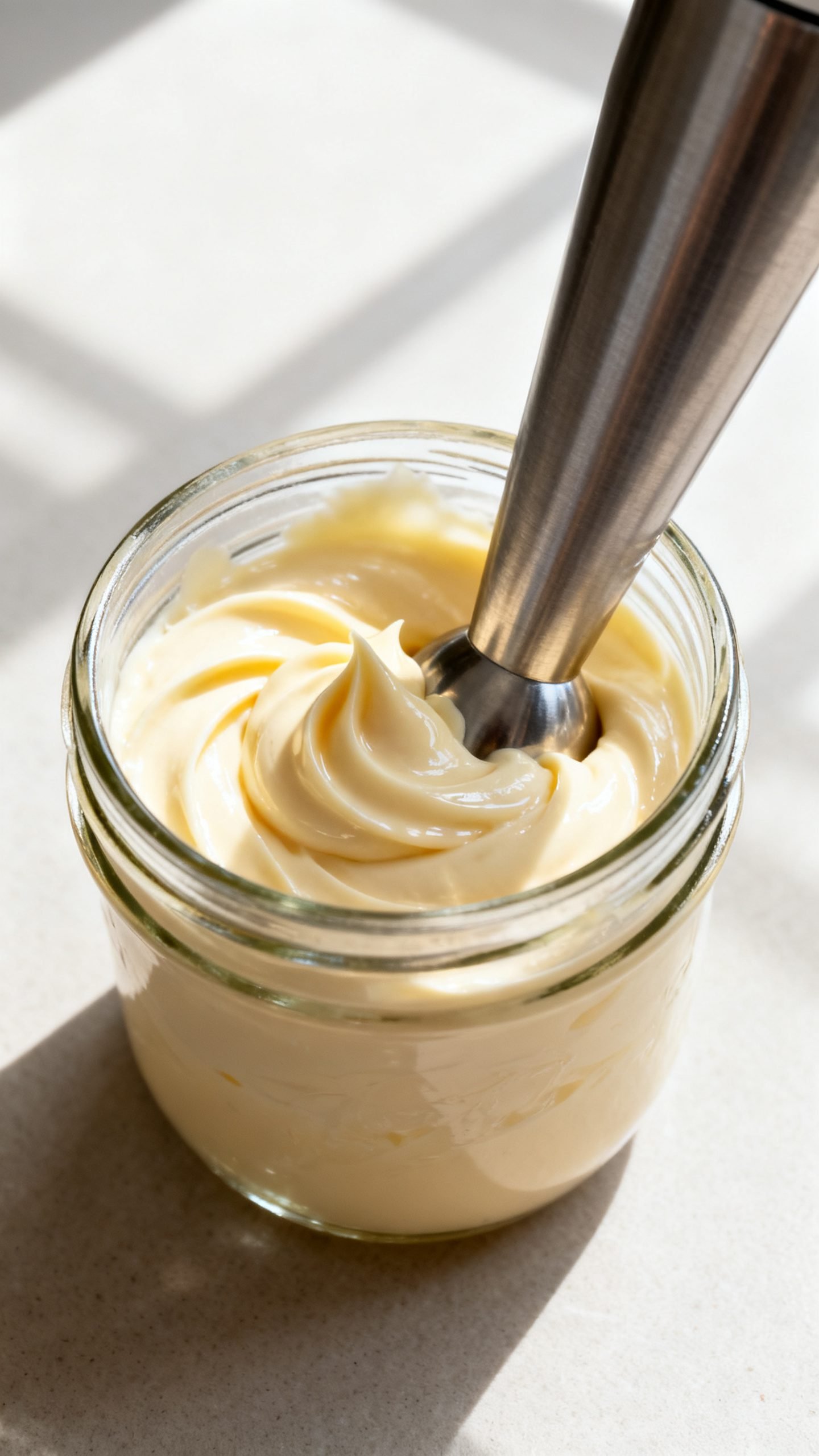
You only need a few pantry staples and some patience. The science is simple: egg yolks and mustard help emulsify oil into a thick, stable sauce. When you add oil at the right speed and keep everything at the same temperature, the mixture thickens beautifully.
- Consistent emulsion: Egg yolk lecithin and a touch of Dijon help bind oil and water so the sauce doesn’t separate.
- Better flavor: Fresh lemon juice and a mild vinegar create clean, bright acidity you can’t get from store-bought.
- Custom texture: Control thickness by adjusting oil quantity and speed—you get it exactly how you like it.
- Versatile base: Use it for dressings, dips, potato or pasta salad, chicken salad, and sandwiches.
- Budget-friendly: A handful of ingredients make a full jar at a fraction of the price.
Ingredients
- 1 large fresh egg yolk (room temperature)
- 1 teaspoon Dijon mustard (for flavor and emulsifying power)
- 1 tablespoon fresh lemon juice (plus more to taste)
- 1 teaspoon white wine vinegar (or apple cider vinegar)
- 1/4 teaspoon fine sea salt (adjust to taste)
- 1 cup neutral oil (light olive oil, avocado, grapeseed, or sunflower)
- Optional: a few grinds black pepper, 1 small garlic clove grated, or a pinch of sugar for balance
Ingredient notes:
- Egg temperature: Room temperature eggs emulsify faster and more reliably than cold eggs.
- Oil choice: Use a neutral-tasting oil; extra-virgin olive oil turns bitter when blended vigorously.
- Acid balance: Lemon juice brightens; vinegar adds a clean edge. Use both for depth.
- Mustard matters: Dijon adds mild heat and stabilizes the emulsion. Don’t skip it.
How to Make Classic Homemade Mayo
Equipment Options
- Immersion blender: Fastest, most foolproof method.
- Food processor or blender: Great for bigger batches.
- By hand with a whisk: Totally doable—just add oil extra slowly and whisk steadily.
Immersion Blender Method (Fast and Reliable)
- Add egg yolk, Dijon, lemon juice, vinegar, and salt to a tall, narrow jar that fits your blender head.
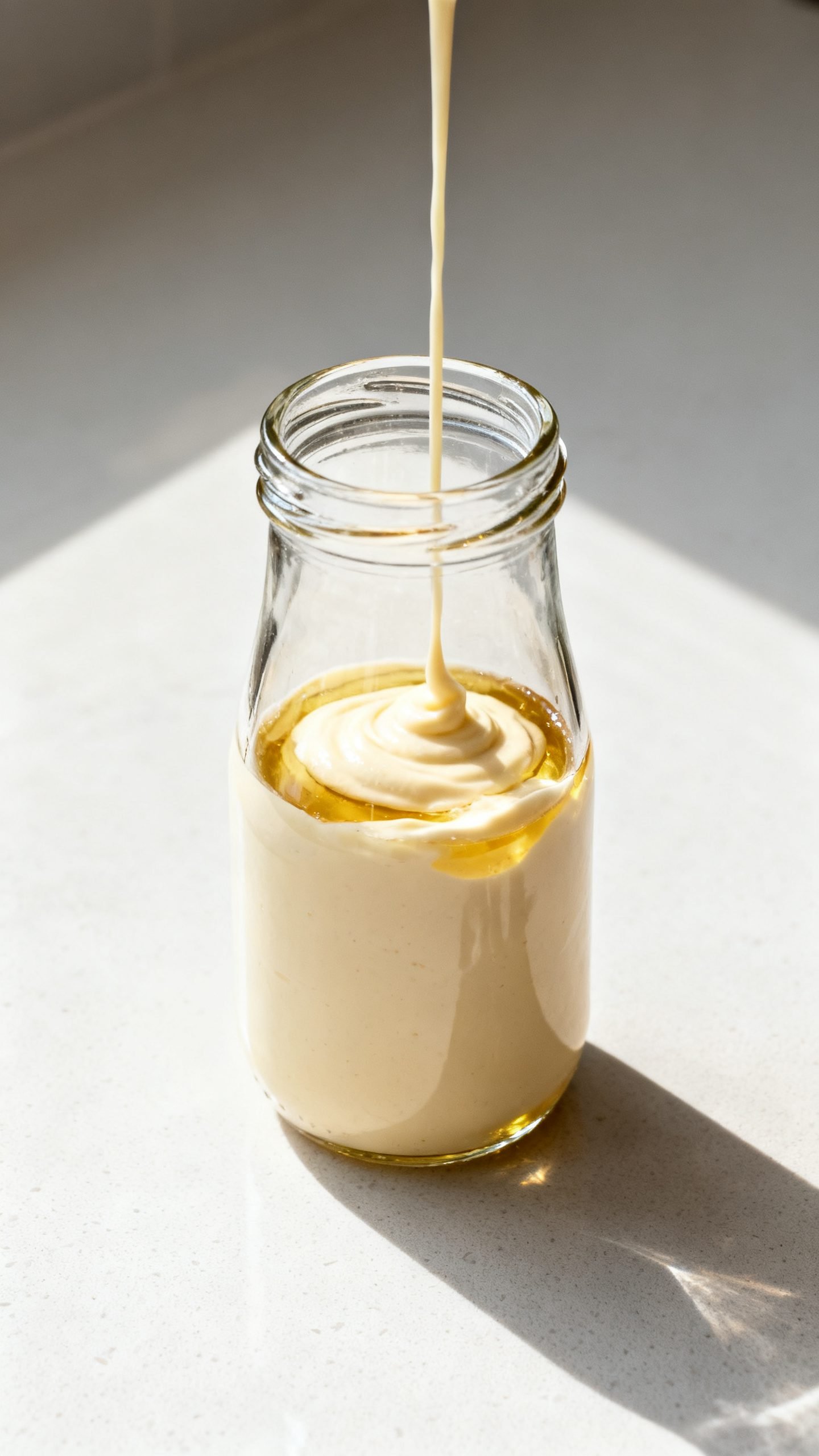
- Pour in the oil on top. Do not stir.
- Place the immersion blender at the bottom of the jar. Turn it on and keep it anchored. You’ll see a thick emulsion form immediately at the base.
- Once the bottom turns creamy and white, slowly lift the blender head upward to pull in the rest of the oil until everything thickens.
- Taste and adjust with more salt or lemon. If it’s too thick, whisk in a teaspoon of water or lemon juice.
Whisk Method (Classic and Satisfying)
- Set a medium bowl on a damp towel to keep it steady. Add egg yolk, Dijon, lemon juice, vinegar, and salt. Whisk until smooth.
- Start adding oil drop by drop while whisking vigorously. When it starts to thicken, drizzle a thin, steady stream while you keep whisking.
- Continue until you’ve added all the oil and the mayo feels thick and glossy. Adjust seasoning.
Troubleshooting and Fixes
- Too thin: Whisk in more oil little by little until it thickens. You may also add 1/2 teaspoon mustard to help bind.
- Broken mayo (looks curdled): In a clean bowl, whisk 1 teaspoon of warm water or an extra egg yolk, then slowly whisk in the broken mixture until it re-emulsifies.
- Too sharp or acidic: Whisk in a pinch of sugar or a splash of neutral oil.
- Too thick: Whisk in a teaspoon of water, milk, or lemon juice to loosen.
How to Store Homemade Mayo
- Refrigerate immediately: Transfer to a clean, airtight jar and chill right away.
- Shelf life: Use within 5 to 7 days for best quality and food safety.
- Label it: Mark the date so you remember when you made it.
- Keep it cold: Don’t leave mayo at room temperature for long; return it to the fridge after using.
- No double-dipping: Always use a clean spoon to prevent contamination.
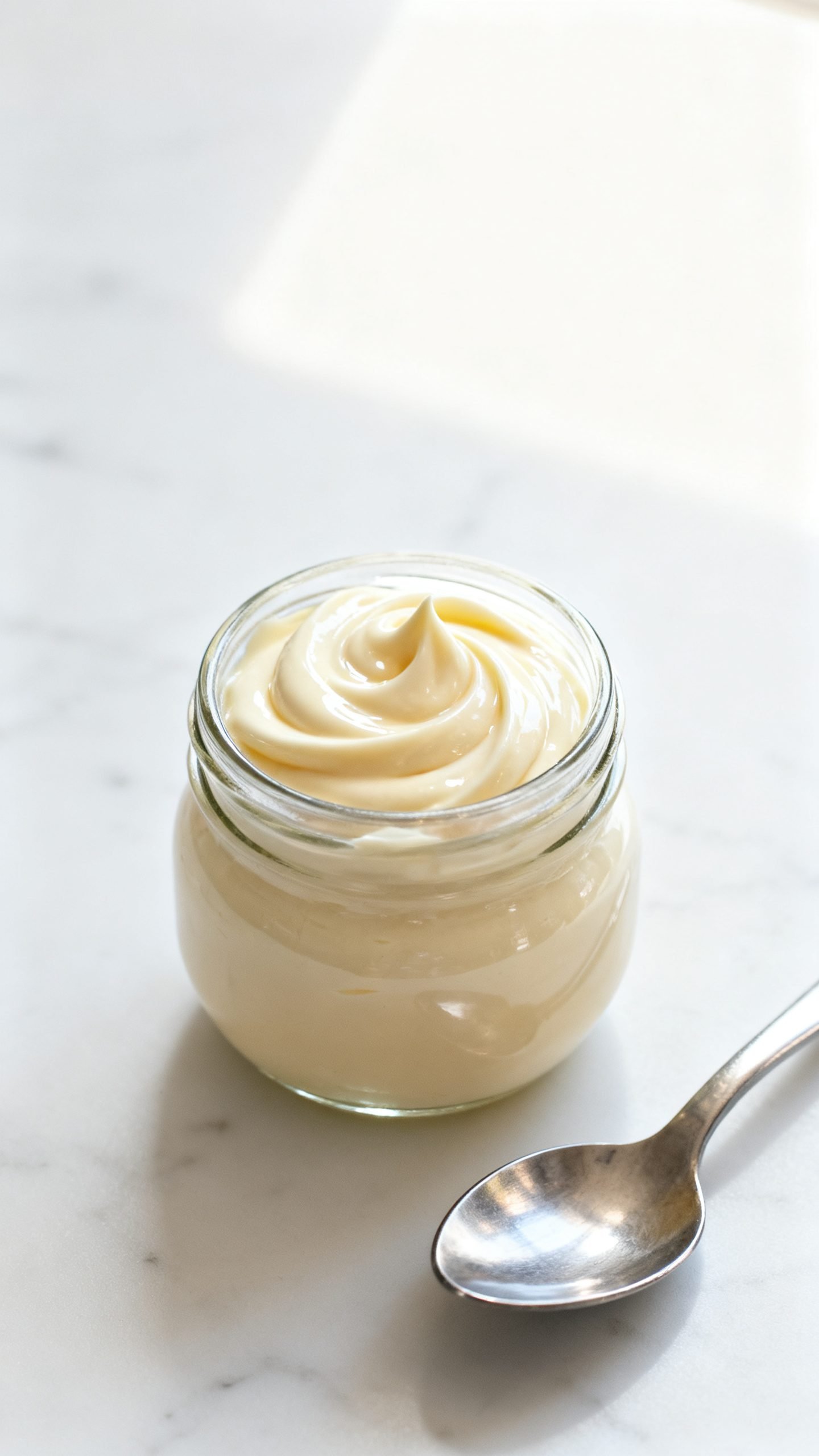
Benefits of Making Mayo From Scratch
- Control the ingredients: No preservatives, stabilizers, or seed oils you don’t want.
- Superior taste: Fresh acidity and velvety texture beat store-bought every time.
- Customizable: Dial in salt, acid, and thickness to match your recipes.
- Cost-effective: Pantry items turn into a premium condiment in minutes.
- Skill-building: Master one emulsion and you unlock dressings, aioli, and hollandaise.
What Not to Do
- Don’t rush the oil: Add it too fast and the emulsion breaks.
- Don’t start with cold ingredients: Cold yolks struggle to emulsify smoothly.
- Don’t use strong extra-virgin olive oil: It can taste bitter when blended.
- Don’t skip the mustard or acid: Both help stability and flavor.
- Don’t ignore food safety: Use fresh eggs, keep utensils clean, and refrigerate promptly.
Variations You Can Try
- Garlic Aioli: Whisk in 1–2 grated garlic cloves and a splash more lemon.
- Herb Mayo: Fold in finely chopped parsley, chives, dill, or tarragon.
- Lemony Mayo: Add extra lemon zest and juice; season with white pepper.
- Smoky Paprika: Stir in 1/2 to 1 teaspoon smoked paprika and a squeeze of lemon.
- Spicy Mayo: Mix in sriracha, gochujang, or chili crisp to taste.
- Roasted Garlic: Mash 2–3 cloves of roasted garlic for sweet, mellow depth.
- Honey Mustard Mayo: Add 1–2 teaspoons honey and extra Dijon for sandwich magic.
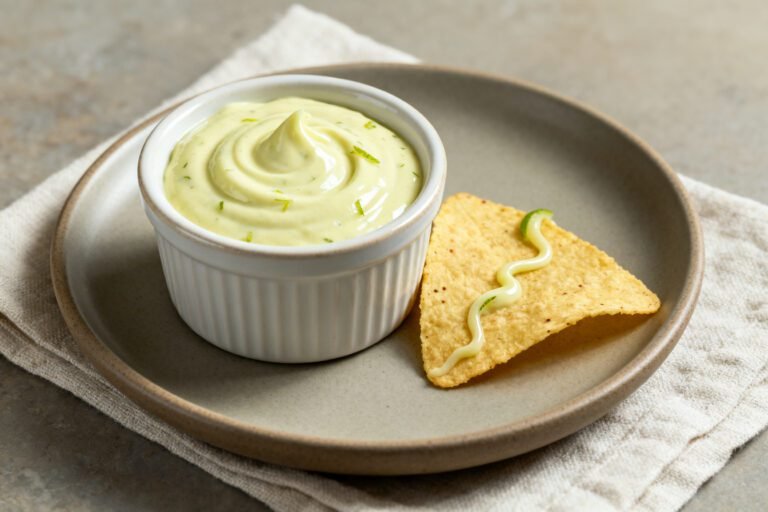
- Lime-Cilantro: Swap lemon with lime and fold in chopped cilantro for taco nights.
FAQ
Can I use the whole egg?
Yes. Use 1 whole egg instead of just the yolk for a lighter, slightly looser mayo. Follow the same process.
Is raw egg safe?
Use the freshest eggs you can find. If you’re concerned, use pasteurized shell eggs or liquid pasteurized eggs.
Why did my mayo turn bitter?
Some extra-virgin olive oils taste harsh when blended. Choose a neutral oil or a light-tasting olive oil.
How do I thicken mayo without more oil?
Whisk in 1/2 teaspoon Dijon and a few drops of water to kickstart emulsification, then whisk vigorously. A tiny bit more oil often helps most.
Can I make it in advance?
Yes. Store in a clean jar in the fridge and use within 5 to 7 days.
What if I only have olive oil?
Use light olive oil, not peppery extra-virgin. Blend gently or switch to the whisk method to reduce bitterness.
Why is my mayo yellow?
Fresh yolks and Dijon give a golden hue—that’s normal. For paler mayo, use a paler oil and less mustard.
Conclusion
Once you make mayonnaise at home, the jarred stuff won’t taste the same again. With a single egg yolk, a squeeze of lemon, and steady oil, you’ll whip up a thick, glossy, ultra-creamy mayo that upgrades everything it touches. Try the immersion blender method if you want guaranteed success, then play with flavors to suit your meals. A small bowl of fresh mayo in the fridge makes weeknight cooking taste like something special.
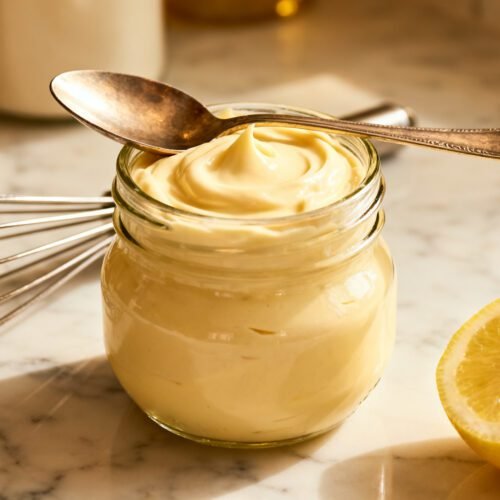
Classic Homemade Mayonnaise Recipe | Easy From-Scratch Creamy Mayo
Ingredients
Ingredients
- 1 large fresh egg yolk (room temperature)
- 1 teaspoon Dijon mustard
- 1 tablespoon fresh lemon juice (plus more to taste)
- 1 teaspoon white wine vinegar (or apple cider vinegar)
- 1/4 teaspoon fine sea salt (adjust to taste)
- 1 cup neutral oil (light olive oil, avocado, grapeseed, or sunflower)
- Optional: a few grinds black pepper
- Optional: 1 small garlic clove, grated
- Optional: a pinch of sugar
Instructions
Instructions
- Add the egg yolk, Dijon mustard, lemon juice, vinegar, and salt to a tall, narrow jar that fits an immersion blender, or to a medium bowl if whisking by hand.
- Pour the oil on top without stirring if using an immersion blender, or prepare to add it slowly if whisking.
- For immersion blender: Place the blender at the bottom of the jar, turn it on, and keep it anchored until a thick emulsion forms at the base.
- Slowly lift the blender head upward to incorporate the remaining oil until the mixture becomes thick and creamy.
- For whisk method: Whisk the yolk, mustard, lemon, vinegar, and salt until smooth, then add oil drop by drop while whisking vigorously.
- Once thickening begins, slowly drizzle in the remaining oil in a thin, steady stream while whisking continuously until glossy and thick.
- Taste and adjust seasoning with more salt or lemon juice as needed.
- If too thick, whisk in a teaspoon of water, milk, or lemon juice to loosen.
- If the mayo is too thin, whisk in more oil gradually until it thickens.
- If the mayo breaks, whisk 1 teaspoon warm water or an extra egg yolk in a clean bowl, then slowly whisk in the broken mixture to re-emulsify.