Chinese Beef Noodle Soup Recipe | Traditional Savory Broth
If you crave a deeply savory, soul-warming bowl, Chinese beef noodle soup delivers every time. Tender chunks of beef, a rich soy-and-spice broth, and springy noodles make this comfort classic a weeknight favorite—and the leftovers taste even better the next day.
I’ll show you how to build a fragrant broth with everyday pantry staples and a few key aromatics. You’ll get clear steps, practical timing tips, and easy swaps, so you can make a pot that tastes like it simmered all day—even if you don’t have that kind of time.
Why This Chinese Beef Noodle Soup Works
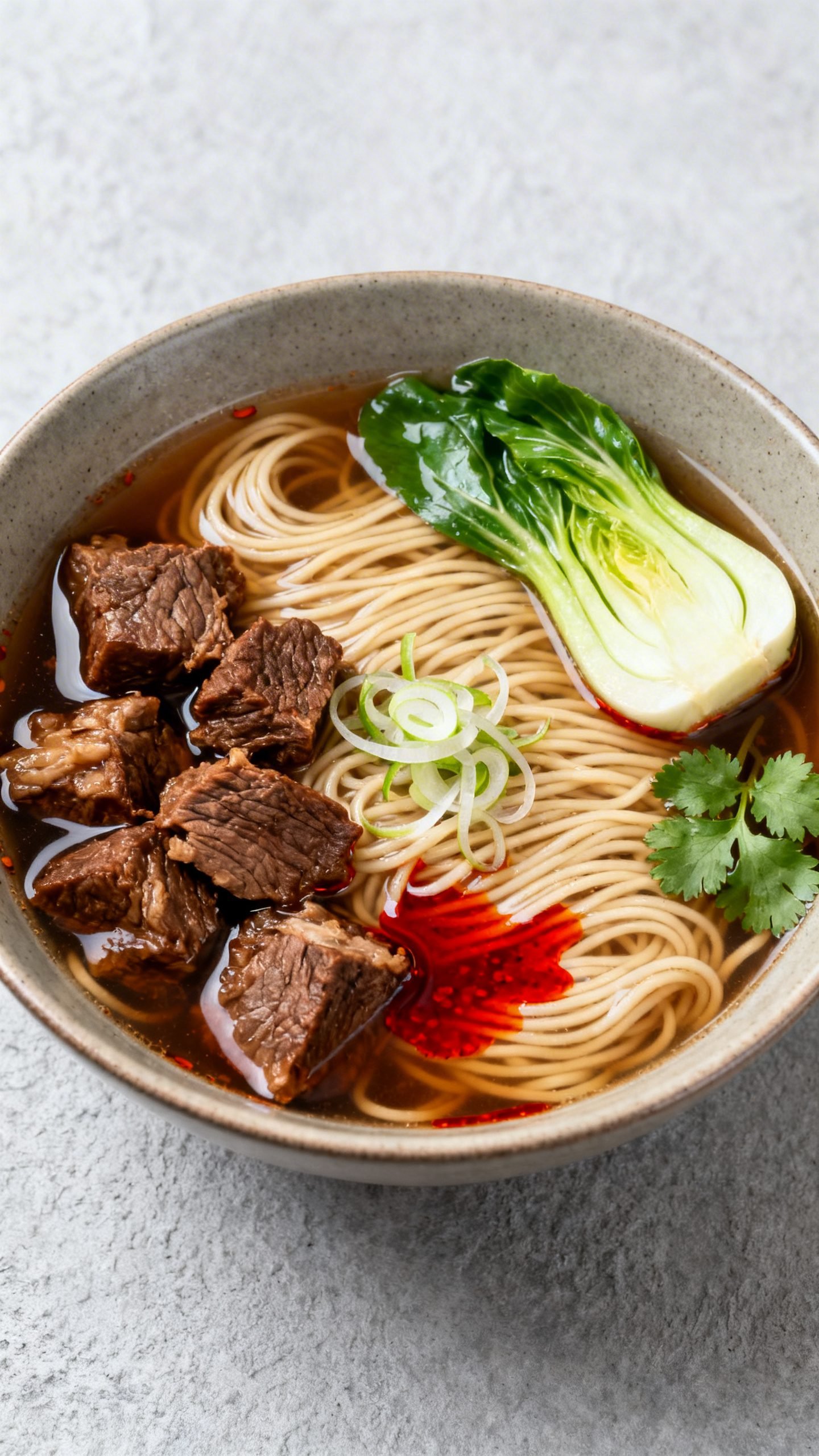
- Flavor built in layers: Browning the beef, blooming aromatics, and simmering with soy, spices, and tomatoes creates a broth that tastes complex and comforting.
- Affordable cuts turn buttery: Chuck or shank becomes tender and silky after a gentle simmer.
- Balanced seasoning: Light and dark soy, rock sugar (or brown sugar), and a touch of rice wine keep the broth savory with rounded sweetness.
- Meal-prep friendly: The broth improves overnight, and you can cook noodles fresh for quick bowls all week.
- Flexible veggies and heat: Add bok choy, daikon, or spinach; dial chili oil up or down to suit your table.
Ingredients
For the Beef and Broth
- 2 pounds beef chuck or shank, cut into 1.5-inch cubes
- 1 tablespoon neutral oil (canola or peanut)
- 1 large onion, quartered
- 6 garlic cloves, smashed
- 2-inch piece fresh ginger, sliced
- 2 scallions, cut into 2-inch pieces (plus more for serving)
- 2 medium tomatoes, wedged (canned whole tomatoes work too)
- 2 tablespoons doubanjiang (spicy fermented broad bean paste) or 1 tablespoon chili bean sauce + 1 teaspoon chili flakes
- 1/4 cup light soy sauce
- 2 tablespoons dark soy sauce (for color and depth)
- 2 tablespoons Shaoxing wine (or dry sherry)
- 1–2 tablespoons rock sugar (or brown sugar), to taste
- 2 star anise
- 1 small cinnamon stick
- 3–4 whole cloves
- 1 bay leaf
- 8 cups water or unsalted beef stock
- Salt and white pepper, to finish
For the Noodles and Greens
- 1–1.25 pounds fresh wheat noodles (knife-cut, udon-style, or thick dried noodles)
- Baby bok choy or spinach, a few handfuls
- Chili oil, to taste
- Fresh cilantro and sliced scallions, for garnish
Ingredient Notes and Swaps
- Beef cut: Chuck gives a nice fat-to-meat ratio. Shank adds collagen and silky body. Mix both for best texture.
- Soy sauces: Light soy seasons; dark soy adds color. If you only have one, use light soy and add an extra teaspoon of sugar for balance.
- Doubanjiang: It’s the backbone of savory heat. If you prefer mild, use half the amount and boost with tomato paste.
- Aromatics pack: Star anise + cinnamon bring signature Taiwanese/Chinese beef noodle soup vibes. Don’t skip them.
How to Make Chinese Beef Noodle Soup
1) Prep and Parboil the Beef (Optional but Helpful)
- Rinse beef cubes and place in a pot with cold water to cover by 2 inches. Bring to a gentle boil for 2–3 minutes until gray foam rises.
- Drain and rinse beef under warm water to remove scum. This step gives a cleaner, clearer broth.
2) Brown and Build the Base
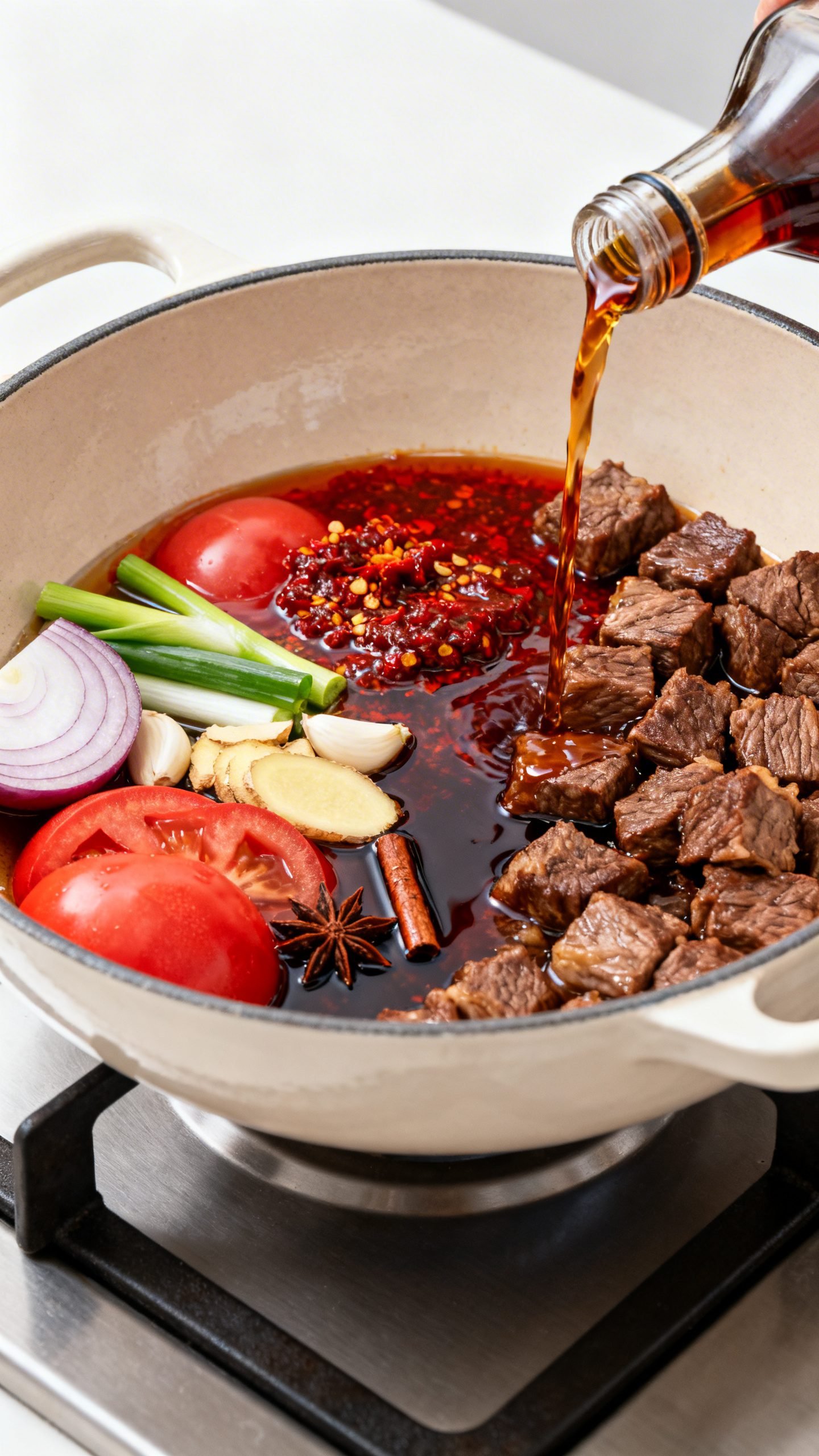
- Heat a heavy pot over medium-high. Add oil. Sear beef in batches until browned on 2–3 sides, about 5–7 minutes total per batch. Don’t crowd.
- Push beef aside. Add onion, ginger, garlic, and scallion pieces. Cook 2 minutes until fragrant.
- Stir in doubanjiang. Cook 1 minute to bloom the paste and tint the oil red.
- Deglaze with Shaoxing wine, scraping up browned bits for flavor.
3) Simmer with Spices
- Add tomatoes, light soy, dark soy, rock sugar, star anise, cinnamon, cloves, bay leaf, and water/stock.
- Bring to a boil, reduce to a gentle simmer, cover partially, and cook 90–120 minutes until beef is tender but not shredding.
- Skim fat and foam occasionally. Taste halfway; adjust soy or sugar if needed.
4) Cook Noodles and Greens
- Cook noodles in a separate pot of boiling water until just tender. Rinse briefly to stop cooking and remove extra starch.
- Blanch bok choy in the noodle water for 30–45 seconds until bright and crisp-tender.
5) Finish and Serve
- Fish out whole spices for a smooth sip. Season broth with salt and white pepper to taste.
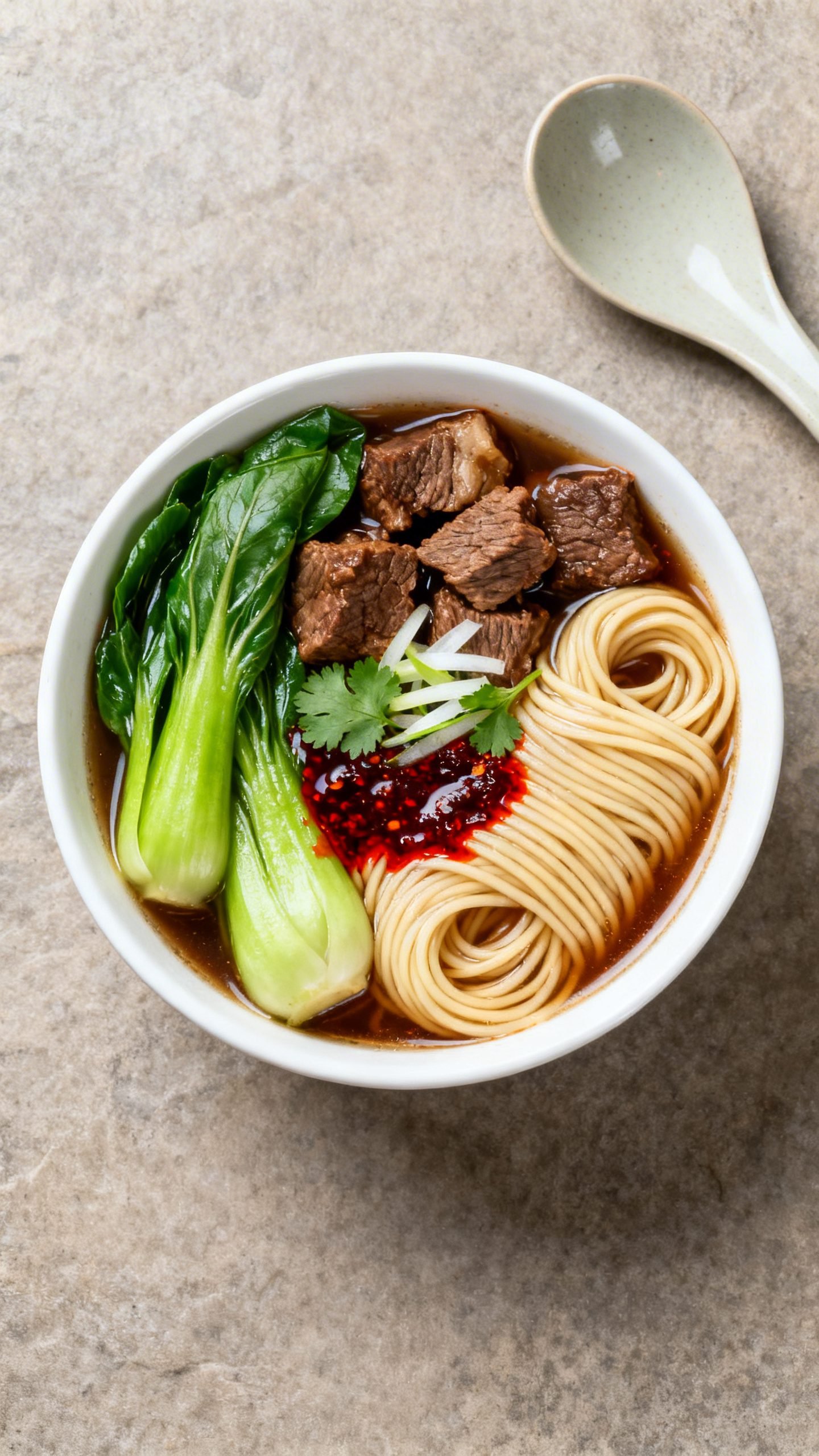
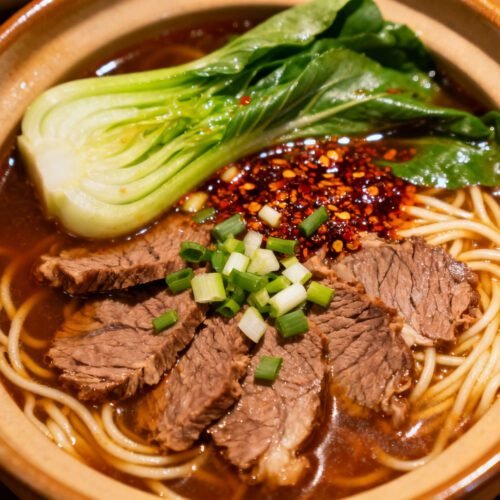
- Divide noodles into bowls. Ladle over hot beef and broth. Top with bok choy, scallions, cilantro, and a drizzle of chili oil.
How to Store Leftover Beef Noodle Soup
- Store broth and noodles separately: Noodles soak up liquid and turn mushy. Keep noodles in an airtight container and toss with a few drops of oil.
- Fridge: Broth with beef keeps 4 days. Noodles keep 2–3 days. Reheat broth to a full simmer before serving.
- Freeze: Freeze broth and beef (no noodles) for up to 3 months. Thaw overnight in the fridge, then reheat and add fresh-cooked noodles.
- Skim chilled fat: After chilling, lift off the fat cap for a cleaner flavor—or save it to stir into fried rice.
Benefits of Making This Soup at Home
- Custom heat and salt: Control spice and sodium exactly how you like it.
- Better texture: Choose your favorite noodle thickness and cook them to a perfect chew.
- Budget-friendly comfort: Chuck roast transforms into a restaurant-quality bowl at a fraction of the price.
- Nutritious and satisfying: Protein, greens, and a soothing broth make a complete, cozy meal.
- Make-ahead magic: The broth tastes even richer the next day, so you win on flavor and convenience.
What to Avoid for Best Results
- Don’t boil hard for long: A rolling boil toughens beef and clouds the broth. Keep it at a gentle simmer.
- Don’t skip blooming the paste: Cooking doubanjiang in oil unlocks its depth. Stir it in before adding liquids.
- Don’t cook noodles in the broth: They shed starch and mute flavors. Cook separately for a clean, bright bowl.
- Don’t rush the simmer: Plan 90 minutes minimum for tender beef and developed flavor.
- Don’t forget to taste: Adjust soy, sugar, and salt at the end. Seasoning swings as the broth reduces.
Variations You Can Try
- Five-spice twist: Add 1/2 teaspoon Chinese five-spice for a warmer, sweeter profile.
- Tomato-forward: Stir in 1 tablespoon tomato paste with the doubanjiang and add an extra tomato for a brighter, tangy broth.
- Clear-broth style: Skip the doubanjiang and dark soy. Use more ginger and scallions for a lighter, cleaner soup.
- Greens galore: Swap bok choy for napa cabbage, baby kale, or blanched Chinese broccoli.
- Spicy Sichuan: Add dried chilies and a teaspoon of Sichuan peppercorns for citrusy heat and a gentle tingle.
- Pressure cooker: Cook on High for 35–40 minutes with natural release for tender beef fast. Reduce the broth on sauté if needed.
FAQ
What noodles work best?
Thick wheat noodles hold up beautifully. Knife-cut, fresh ramen, or udon-style noodles bring the right chew. Dried wheat noodles work in a pinch—cook them just shy of tender.
Can I skip parboiling?
Yes. Parboiling removes impurities and gives a cleaner broth, but careful skimming achieves a similar result. If you want the clearest broth, parboil.
How do I make it milder?
Use half the doubanjiang and stir in 1 teaspoon tomato paste for umami without much heat. Serve chili oil on the side so spice lovers can customize.
Can I use an Instant Pot?
Yes. Sauté aromatics and paste, add liquids and spices, then cook on High for 35–40 minutes with natural release. Cook noodles separately and combine to serve.
How do I get really tender beef?
Choose well-marbled chuck or shank, keep the simmer gentle, and cook long enough—usually around 2 hours. Collagen breaks down into silky, spoon-tender bites.
What’s the difference between light and dark soy?
Light soy seasons and adds salinity. Dark soy is thicker, a bit sweeter, and mainly adds color and depth. Together they create balanced, full-bodied broth.
Conclusion
Build your pot with strong basics—browned beef, bloomed doubanjiang, and warm spices—and you’ll get a bowl that tastes like home. Keep noodles separate, season at the end, and don’t rush the simmer. Once you master this rhythm, Chinese beef noodle soup becomes your go-to comfort recipe you can tweak any night of the week.
Chinese Beef Noodle Soup Recipe | Traditional Savory Broth
Ingredients
Ingredients
- 2 pounds beef chuck or shank, cut into 1.5-inch cubes
- 1 tablespoon neutral oil (canola or peanut)
- 1 large onion, quartered
- 6 garlic cloves, smashed
- 2-inch piece fresh ginger, sliced
- 2 scallions, cut into 2-inch pieces (plus more for serving)
- 2 medium tomatoes, wedged (or canned whole tomatoes)
- 2 tablespoons doubanjiang (spicy fermented broad bean paste) or 1 tablespoon chili bean sauce + 1 teaspoon chili flakes
- 1/4 cup light soy sauce
- 2 tablespoons dark soy sauce
- 2 tablespoons Shaoxing wine (or dry sherry)
- 1–2 tablespoons rock sugar (or brown sugar), to taste
- 2 star anise
- 1 small cinnamon stick
- 3–4 whole cloves
- 1 bay leaf
- 8 cups water or unsalted beef stock
- Salt and white pepper, to finish
- 1–1.25 pounds fresh wheat noodles (knife-cut, udon-style, or thick dried noodles)
- Baby bok choy or spinach, a few handfuls
- Chili oil, to taste
- Fresh cilantro and sliced scallions, for garnish
Instructions
Instructions
- Optionally parboil the beef by rinsing the cubes, covering with cold water by 2 inches, bringing to a gentle boil for 2–3 minutes until foam rises, then draining and rinsing to remove impurities.
- Heat a heavy pot over medium-high, add oil, and sear beef in batches until browned on 2–3 sides, about 5–7 minutes per batch.
- Push beef to the side, add onion, ginger, garlic, and scallion pieces, and cook about 2 minutes until fragrant.
- Stir in doubanjiang and cook about 1 minute to bloom the paste.
- Deglaze with Shaoxing wine, scraping up browned bits.
- Add tomatoes, light soy, dark soy, rock sugar, star anise, cinnamon, cloves, bay leaf, and water or stock, then bring to a boil.
- Reduce to a gentle simmer, partially cover, and cook 90–120 minutes until the beef is tender, skimming fat and foam as needed and adjusting soy or sugar to taste.
- Cook the noodles in a separate pot of boiling water until just tender, then rinse briefly to stop cooking and remove excess starch.
- Blanch bok choy or spinach in the noodle water for 30–45 seconds until bright and crisp-tender.
- Remove and discard whole spices from the broth, then season with salt and white pepper to taste.
- Divide noodles into bowls, ladle over hot beef and broth, top with greens, and finish with scallions, cilantro, and a drizzle of chili oil.