Best Butter and Lard Pie Crust Recipe | Flaky Homemade Crust for Beginners
You can master an ultra-flaky pie crust on your first try. This butter and lard pie crust gives you buttery flavor, tender layers, and reliable structure that rolls out like a dream. If dough usually intimidates you, this method will change your baking life.
I’ll walk you through the exact ingredients, why they work, and the simple steps that deliver crisp edges and lofty flakes. We’ll keep it chill (literally), keep it simple, and you’ll pull a golden, shatteringly flaky crust from the oven with total confidence.
Why This Butter and Lard Pie Crust Works
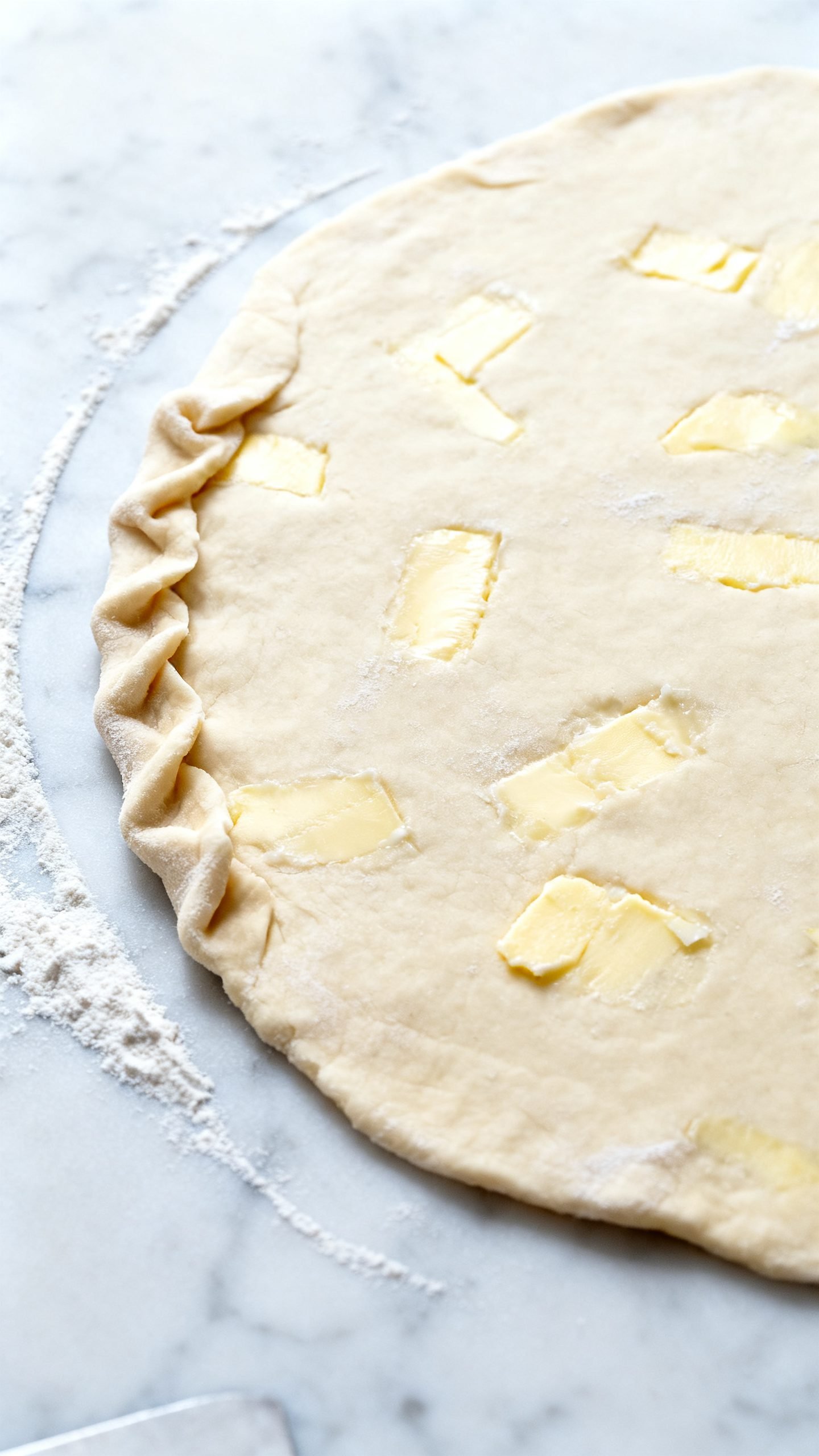
Let’s keep it simple: we combine fats for the best of both worlds and manage temperature for texture. Here’s what makes this crust a winner every time:
- Butter = flavor + steam: Cold butter melts in the oven and releases steam, which puffs the layers for visible flakes.
- Lard = tenderness + structure: Lard coats flour more efficiently, which reduces gluten and creates a tender, easy-to-roll dough that holds crimped edges.
- High hydration control: We add just enough icy water to bind without toughening. A splash of acid keeps the dough workable.
- Chill at every step: Cold dough means defined layers and less shrinkage in the oven.
- Minimal mixing: We keep pea-sized fat pieces intact, so they translate into flakes.
Ingredients
Makes one double crust (two 9-inch rounds) or one deep-dish crust with lattice. Halve for a single crust.
- 2 1/2 cups (300 g) all-purpose flour – spooned and leveled
- 1 tablespoon granulated sugar – optional, for balanced browning
- 1 teaspoon fine sea salt
- 1/2 cup (115 g) cold unsalted butter – cut into 1/2-inch cubes
- 1/2 cup (100 g) cold leaf lard or high-quality rendered lard – cut into chunks
- 1 teaspoon apple cider vinegar or lemon juice – tenderizes and discourages overworking
- 6–9 tablespoons ice water – start low and add as needed
- Optional for finishing: 1 egg beaten with 1 tablespoon water for egg wash; a sprinkle of sugar for sweet pies or flaky salt for savory
Tool list (quick and helpful):
- Large mixing bowl and a fork or pastry blender
- Bench scraper for tidy folding and moving dough
- Rolling pin and 9-inch pie plate
- Plastic wrap or zip-top bags for chilling
How to Make This Flaky Butter and Lard Pie Crust
1) Keep everything cold
- Chill the butter and lard until very firm. If your kitchen runs warm, freeze the fats for 10 minutes and pop your mixing bowl and flour in the fridge.
- Make a small bowl of ice water and add the vinegar to it.
2) Mix the dry ingredients
- Whisk together the flour, sugar, and salt in a large bowl.
3) Cut in the fats
- Add the cold butter and lard.
- Use a pastry blender or your fingertips to work the fats into the flour until you see a mix of pea-sized pieces with some flat, nickel-sized shards. Those flats equal flakes.
4) Add the liquid slowly
- Drizzle in 6 tablespoons ice water (with vinegar) around the bowl.
- Toss with a fork. Pinch a handful: if it holds together with light pressure, stop. If it crumbles, add water 1 tablespoon at a time until it just comes together. Avoid a wet or sticky feel.
5) Bring the dough together
- Turn the mixture onto a lightly floured surface. Use a bench scraper to perform a quick frasage: press and smear small portions of dough forward once to create streaks of butter and lard through the flour.
- Gather into a rough mass without kneading.
6) Divide and chill
- Split into two equal disks about 1 inch thick. Wrap tightly.
- Chill 1–2 hours (or up to 2 days) to hydrate the flour and firm the fats.
7) Roll it out
- Work with one disk at a time. Flour your surface and rolling pin lightly.
- Roll from the center out, rotating the dough a quarter turn every couple of rolls. Aim for a 12-inch round about 1/8 inch thick.
- Dust off excess flour. Fit into a 9-inch pie plate without stretching. Trim overhang to about 1 inch.
8) For a double crust pie
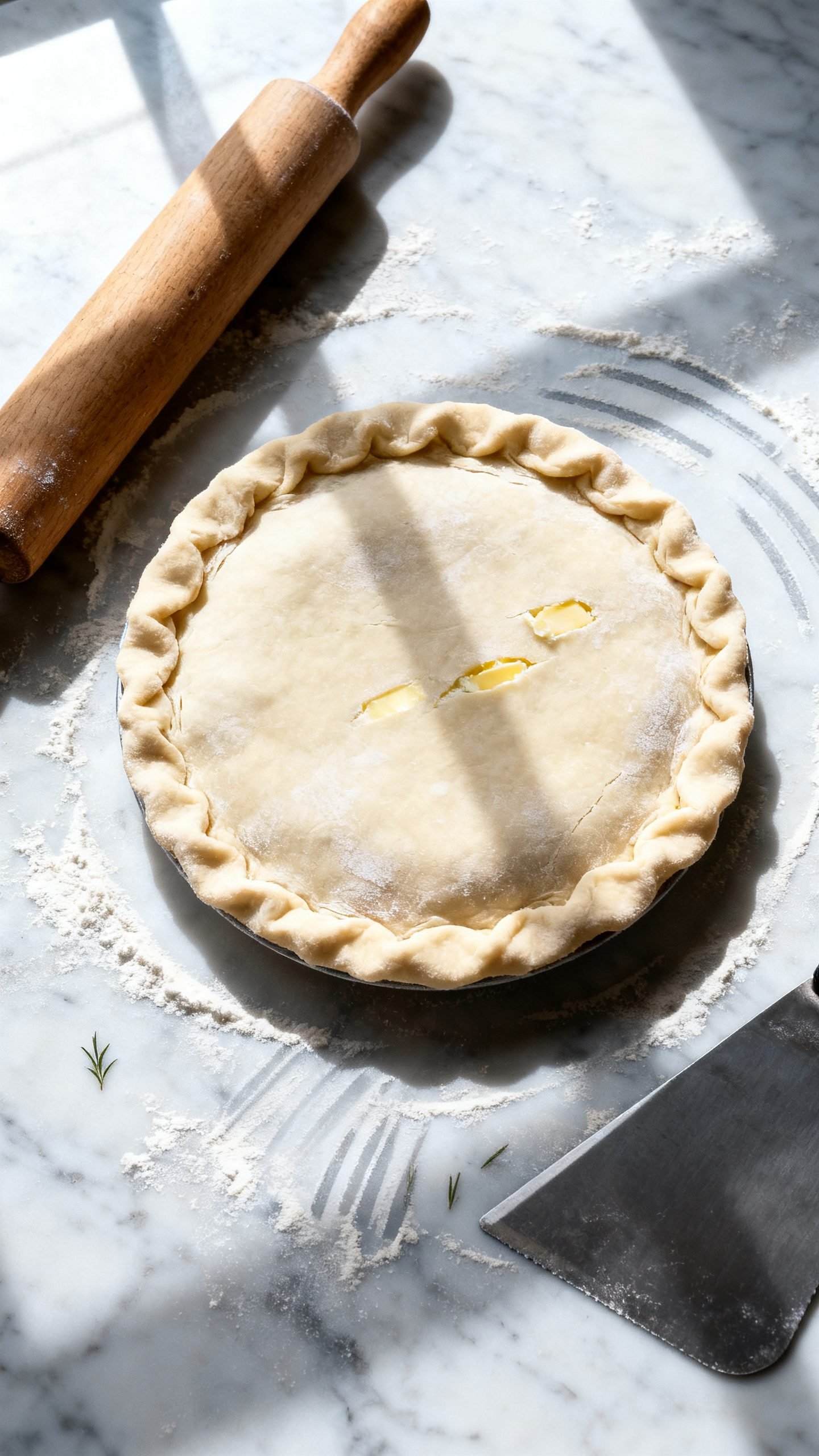
- Fill the bottom crust, then roll the second disk and drape it over.
- Trim to match the bottom, tuck edges together, and crimp. Cut a few vents.
- Brush with egg wash for shine and sprinkle sugar for sweet pies.
9) For a single blind-baked crust
- Chill the shaped crust 20–30 minutes. Prick the base with a fork.
- Line with parchment and fill with pie weights or dried beans.
- Bake at 400°F (200°C) for 15 minutes. Remove weights, then bake 8–12 minutes more for partial blind, or until golden for fully blind.
Pro tips for success
- See dry flour? Don’t panic. A few dry spots vanish during resting and rolling.
- Cracks while rolling? Patch with scraps and a touch of water; keep moving.
- Warm kitchen? Chill the rolled dough in the pan 10–15 minutes before baking to prevent slump.
How to Store Your Pie Dough and Baked Crust
- Refrigerator (unbaked disks): Up to 2 days, well-wrapped.
- Freezer (unbaked disks): Up to 3 months. Thaw overnight in the fridge before rolling.
- Freezer (shaped crust in pan): Freeze until solid, wrap, and keep up to 2 months. Bake from frozen; add a few minutes.
- Baked shell: Cool completely, wrap, and store at room temperature up to 24 hours or freeze up to 2 months.
Benefits of Using Butter and Lard Together
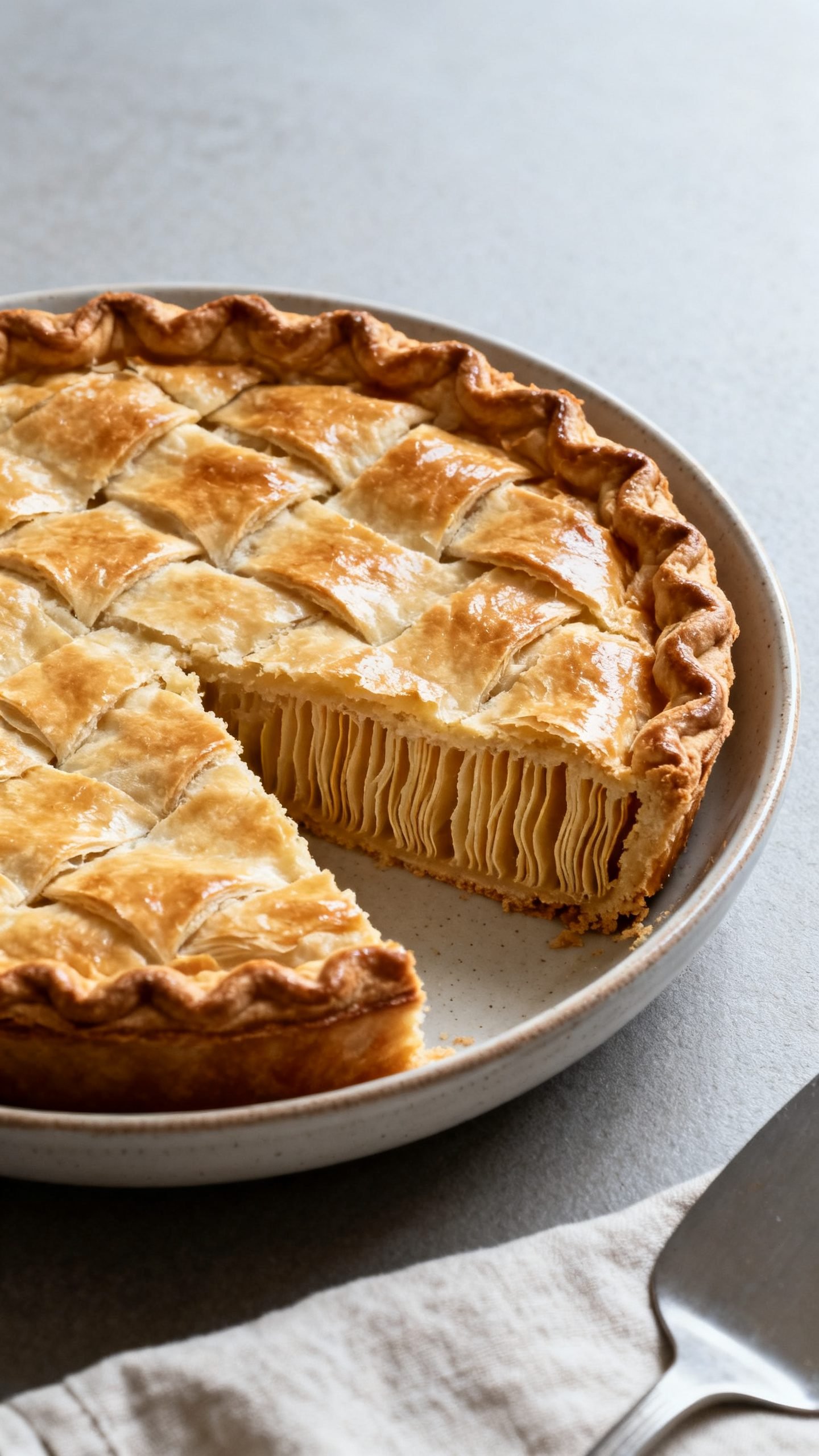
- Best flavor + best texture: Butter brings rich, dairy notes while lard guarantees tenderness and height.
- Easier handling: Lard’s plasticity makes rolling smoother and reduces cracking.
- Cleaner layers: Distinct fat sizes create visible, crisp flakes that don’t collapse.
- Versatile for sweet or savory: Works beautifully with fruit fillings, custards, quiches, and pot pies.
What to Avoid for Flaky Results
- Over-hydrating the dough: Too much water leads to toughness and shrinkage.
- Over-mixing after adding water: Stir just until it holds together; no kneading.
- Warm fat: Soft butter or lard smears without creating layers. Keep it cold.
- Stretching into the pan: Stretching = shrinkage. Lift and ease the dough instead.
- Skipping the chill: Warm dough slumps and loses definition in the oven.
Variations You Can Try
- All-butter crust: Use 1 cup butter total, add 1–2 tablespoons more water as needed. Flavor-forward, slightly less tender.
- All-lard crust: Ultra-tender and easy to handle, milder flavor; great for savory pies.
- Whole wheat blend: Swap 1/2 cup whole wheat for AP. Add 1 extra tablespoon water for hydration.
- Herb and pepper crust: Add 1 teaspoon chopped thyme or rosemary and 1/2 teaspoon black pepper for savory pies.
- Sweet crust boost: Increase sugar to 2 tablespoons and add 1/2 teaspoon vanilla to the water for dessert pies.
- Vodka trick: Replace 2 tablespoons of water with cold vodka for easy rolling and fewer gluten bonds.
FAQ
Can I substitute shortening for lard?
Yes. Shortening mimics lard’s tenderness. Choose a high-quality, non-hydrogenated brand for cleaner flavor and use the same amount.
What if I don’t have a pastry blender?
Use your fingertips or two knives. Work quickly and keep visible chunks of fat. You can also pulse the dry ingredients with fats in a food processor a few times, then finish by hand to avoid overprocessing.
How do I prevent a soggy bottom?
- Blind-bake for custard and very juicy fillings.
- Brush the baked shell with egg white for a thin seal.
- Bake on a preheated metal sheet on a lower oven rack.
My dough keeps cracking. What should I do?
- Let the disk rest 5 minutes at room temp to soften slightly.
- Lightly mist the surface with water or rub a tiny bit of butter on stubborn edges.
- Patch cracks with a scrap and seal with a dab of water.
How thick should I roll pie dough?
Aim for about 1/8 inch thick. Too thin tears; too thick stays doughy.
Can I make it ahead?
Absolutely. Make and chill the disks up to 2 days ahead, or freeze for several months.
Conclusion
You don’t need fancy tools or years of practice to bake a pie crust that flakes like pastry shop magic. Use cold butter for flavor, lard for tenderness, and a gentle hand with just enough water. Chill between steps, roll with confidence, and you’ll have a crisp, beautiful crust ready for any filling you love. Once you taste this butter-and-lard combo, you’ll never settle for store-bought again.
Best Butter and Lard Pie Crust Recipe | Flaky Homemade Crust for Beginners
Ingredients
Ingredients
- 2 1/2 cups (300 g) all-purpose flour
- 1 tablespoon granulated sugar (optional)
- 1 teaspoon fine sea salt
- 1/2 cup (115 g) cold unsalted butter, cut into 1/2-inch cubes
- 1/2 cup (100 g) cold leaf lard or high-quality rendered lard, cut into chunks
- 1 teaspoon apple cider vinegar or lemon juice
- 6–9 tablespoons ice water
- 1 egg, beaten with 1 tablespoon water (optional, for egg wash)
- Sugar for sprinkling or flaky salt (optional)
Instructions
Instructions
- Chill the butter and lard until very firm; keep the bowl and flour cold and prepare ice water with the vinegar.
- Whisk the flour, sugar, and salt together in a large bowl.
- Cut in the cold butter and lard until you have a mix of pea-sized pieces with some flat shards.
- Drizzle in about 6 tablespoons of the ice water with vinegar, tossing with a fork, and add more water 1 tablespoon at a time until the dough holds together with light pressure without feeling wet.
- Turn the mixture onto a lightly floured surface and perform a brief frasage by pressing small portions forward once to create streaks, then gather into a rough mass without kneading.
- Divide the dough into two equal disks about 1 inch thick, wrap tightly, and chill for 1 to 2 hours or up to 2 days.
- On a lightly floured surface, roll one disk from the center outward, rotating frequently, to a 12-inch round about 1/8 inch thick; dust off excess flour, fit into a 9-inch pie plate without stretching, and trim to a 1-inch overhang.
- For a double-crust pie, add filling, roll the second disk, drape over, trim to match, tuck edges together, crimp, cut vents, and brush with egg wash; sprinkle sugar for sweet pies if desired.
- For a single blind-baked crust, chill the shaped crust 20 to 30 minutes, prick the base, line with parchment, fill with pie weights, bake at 400°F (200°C) for 15 minutes, remove weights, then bake 8 to 12 minutes more for partial blind or until golden for fully blind.