Homemade Pasta Dough Recipe | Easy Fresh Pasta from Scratch
Nothing beats a bowl of fresh pasta you made with your own hands. This homemade pasta dough comes together with just a few pantry staples and a little kneading. You’ll get silky, springy noodles that cook in minutes and make any sauce taste restaurant-level.
I’ll walk you through every step—from mixing and kneading to resting and rolling—so you get consistent results even on your first try. No fancy equipment needed. If you have a bowl and a rolling pin, you’re in business. Let’s make pasta night unforgettable.
Why This Easy Fresh Pasta Dough Works
This method keeps things simple and reliable. You’ll build gluten for structure and keep enough moisture for tender noodles. Here’s why it delivers every time:
- Perfect texture: A precise egg-to-flour ratio gives you dough that’s elastic, not sticky, and cooks up tender with a nice bite.
- Beginner-friendly steps: Clear mixing, kneading, and resting guidance takes out the guesswork.
- Flexible shaping: Roll it by hand or use a pasta machine for fettuccine, tagliatelle, pappardelle, or sheets for lasagna and ravioli.
- Fast cooking: Fresh pasta boils in 2–3 minutes, so dinner hits the table quickly.
- Customizable flavor: Olive oil, herbs, or semolina tweaks let you dial in taste and texture.
Ingredients
Use quality eggs and flour for the best flavor and color. Measure by weight for accuracy when you can.
- 2 cups (240 g) all-purpose flour or Italian 00 flour for extra silkiness
- 1/2 cup (60 g) fine semolina flour for a little bite and easier rolling (optional but recommended)
- 3 large eggs (room temperature)
- 1 large egg yolk for richness and better elasticity
- 1 teaspoon extra-virgin olive oil for a supple dough
- 1/2 teaspoon fine sea salt
- 1–2 teaspoons water only if needed for dry dough
Tools
- Mixing bowl or clean work surface
- Fork or bench scraper
- Rolling pin or pasta machine
- Plastic wrap or a reusable cover
- Sharp knife or pasta cutter
How to Make Fresh Pasta Dough Step by Step
1) Mix the dough
- Combine the all-purpose flour, semolina, and salt in a bowl. Make a well in the center.
- Add the eggs, extra yolk, and olive oil to the well. Beat the eggs with a fork, then gradually pull flour from the edges into the eggs until a shaggy dough forms.
- If the mixture looks very dry with lots of loose flour, sprinkle in 1 teaspoon water at a time. If sticky, dust with a little flour.
2) Knead until smooth
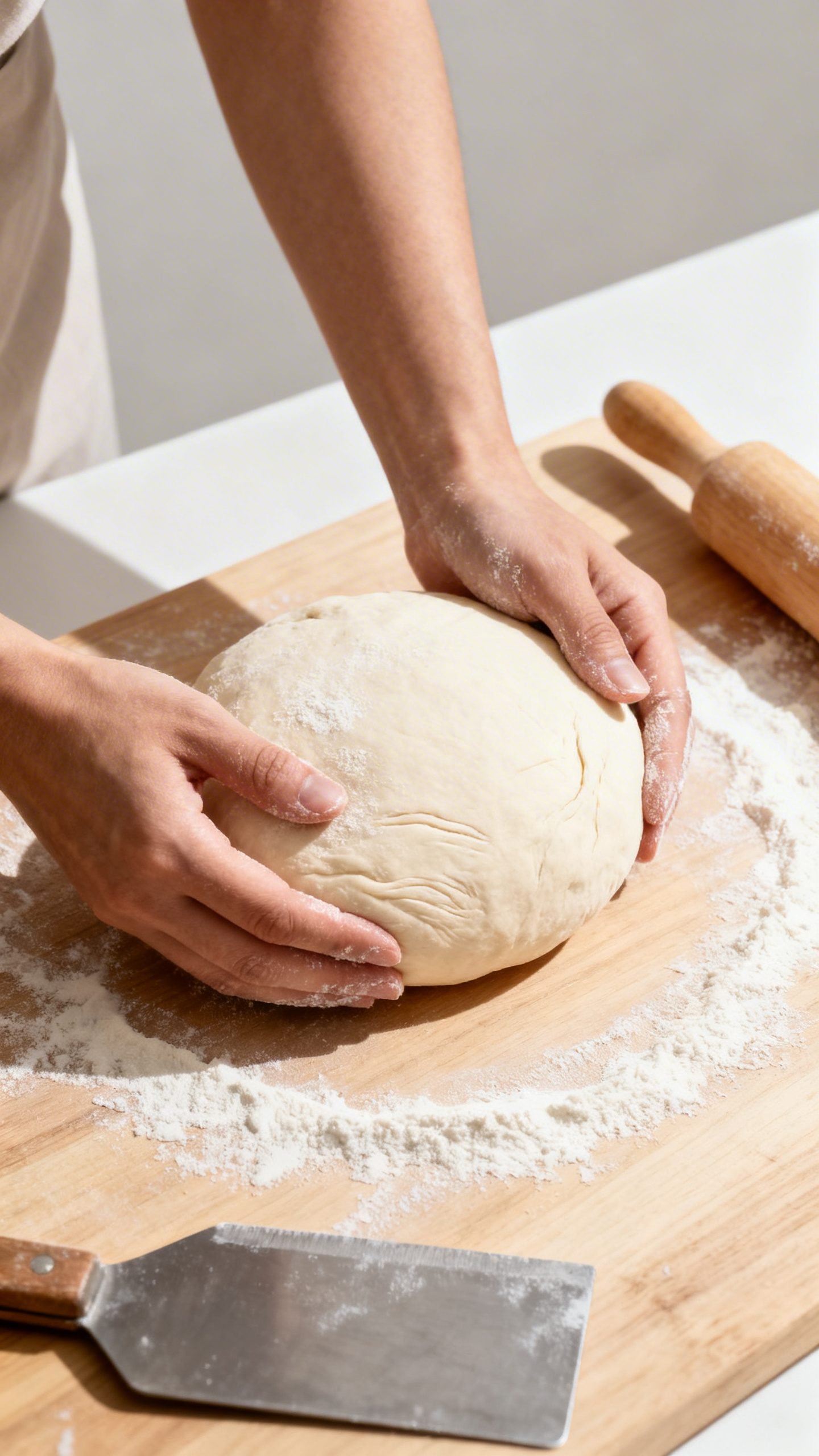
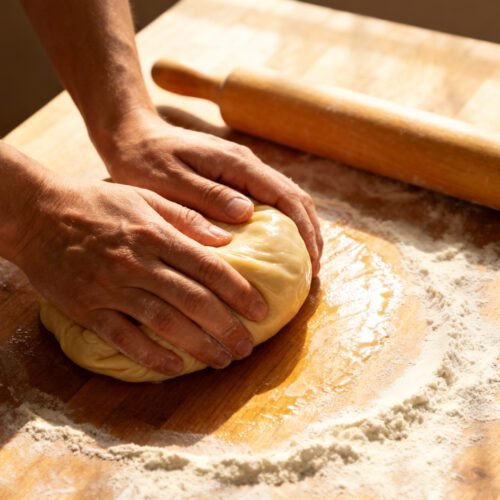
- Turn the dough onto a lightly floured surface. Gather it into a ball.
- Knead with the heel of your hand, folding and turning, for 8–10 minutes until the dough feels smooth, elastic, and slightly tacky but not sticky.
- Do a quick test: press a finger into the dough—it should slowly spring back. That’s gluten doing its job.
3) Rest the dough
- Wrap the dough tightly in plastic or cover it in a sealed container.
- Rest at room temperature for 30–45 minutes. This relaxes gluten so the dough rolls easily and won’t snap back.
4) Roll the dough
- Divide the dough into 4 pieces. Keep pieces covered so they don’t dry out.
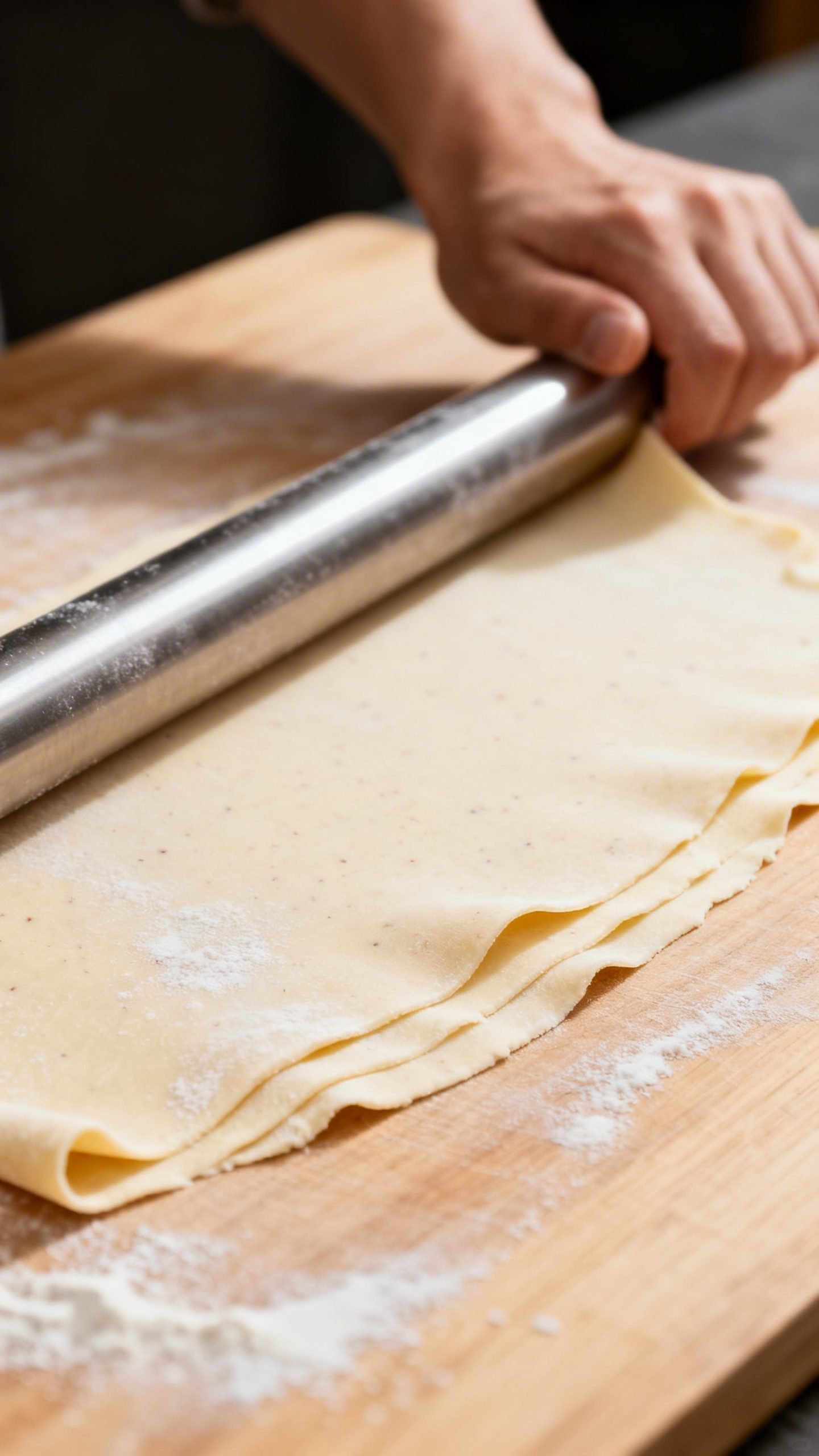
- With a pasta machine: Flatten one piece and feed it through the widest setting. Fold in thirds and repeat 2–3 times to smooth. Then narrow the setting one notch at a time until you reach your desired thickness (usually 1–2 mm for noodles, slightly thicker for lasagna).
- By hand: Dust with flour and roll from the center out until very thin—you should almost see your hand through it. Rotate often to keep an even sheet.
5) Cut and shape
- Dust the sheet with flour, fold it loosely like a letter, and slice into fettuccine (1/4 inch), tagliatelle (3/8 inch), or pappardelle (3/4–1 inch). Or leave whole for lasagna or stuffed pasta.
- Gently toss cut noodles with flour or semolina to prevent sticking. Form into loose nests.
6) Cook the pasta
- Bring a large pot of well-salted water to a rolling boil.
- Drop in the pasta and cook for 2–3 minutes, tasting at 2 minutes for al dente.
- Reserve a cup of pasta water, then drain. Toss immediately with sauce and a splash of pasta water to help it cling.
Pro tips
- Humidity changes flour: On dry days, your dough may need a few drops of water. On humid days, add a dusting of flour.
- Knead long enough: Under-kneaded dough tears and rolls unevenly. Aim for that smooth, elastic feel.
- Rest the dough: Skipping rest makes rolling frustrating. The gluten needs time to relax.
- Flour lightly: Use just enough to prevent sticking; too much dries the dough and dulls the surface.
How to Store Fresh Pasta Dough and Noodles
Uncut dough
- Wrap tightly and chill for up to 24 hours. Let it sit at room temp 20–30 minutes before rolling.
- For longer storage, wrap well and freeze for up to 2 months. Thaw overnight in the fridge.
Cut noodles
- Refrigerate: Dust with flour, form nests, and place on a sheet pan. Cover and chill for up to 24 hours.
- Freeze: Freeze nests on a tray until firm, then transfer to a bag for 2 months. Boil from frozen, adding 30–60 seconds.
- Dry: Hang strands or spread on racks until fully dry, then store airtight for up to 1 month. Cooking time increases to 5–7 minutes.
Why Making Pasta From Scratch Is Worth It
- Flavor and texture win: Fresh pasta absorbs sauce and offers a velvety bite you can’t buy in a box.
- Fast weeknight payoff: Dough rests while you prep sauce; noodles cook in minutes.
- Ingredients you trust: Just flour, eggs, and a pinch of salt—no additives.
- Endless creativity: Shape, color, and flavor options keep things exciting.
- Budget-friendly luxury: Simple pantry staples turn into a special meal.
Mistakes to Avoid
- Adding too much flour: Over-flouring creates dry, tough noodles. Use the lightest dusting you can.
- Skipping the rest: Tight dough fights you. Rest for at least 30 minutes.
- Overcooking: Fresh pasta turns mushy fast. Start tasting at 2 minutes.
- Not salting the water: Salty water seasons the noodles from the inside out.
- Rolling too thick: Thick sheets won’t cook evenly. Aim for thin, flexible sheets you can almost see through.
Fun Variations to Try
- Herb pasta: Knead in 1–2 tablespoons finely chopped parsley, basil, or chives.
- Spinach pasta: Blend 1/2 cup cooked, well-squeezed spinach with the eggs for a vibrant green dough.
- Lemon-pepper: Add 1 teaspoon lemon zest and 1/2 teaspoon cracked black pepper to the flour.
- Whole-wheat: Swap up to 50% of the flour with fine whole-wheat flour; add an extra teaspoon of water if needed.
- Semolina-forward: For a firmer bite, use 50% semolina and 50% 00 or all-purpose flour.
- Stuffed pasta sheets: Roll slightly thinner and cut for ravioli, tortellini, or agnolotti.
FAQ
Can I make pasta without a machine?
Yes. Use a rolling pin and patience. Work in small portions and rotate as you roll. Dust lightly and keep going until you reach a thin, even sheet.
Which flour is best?
00 flour gives the smoothest dough. All-purpose works great and is easy to find. A touch of semolina adds structure and a pleasant chew.
My dough feels sticky. What should I do?
Dust the surface and your hands lightly, then continue kneading. Add flour a teaspoon at a time until the dough just stops sticking.
How many servings does this make?
About 4 modest portions or 3 generous portions of noodles. Double the recipe for a crowd.
Can I make the dough ahead?
Yes. Refrigerate for up to 24 hours or freeze for up to 2 months. Let chilled dough warm slightly before rolling.
Conclusion
Fresh pasta from scratch transforms simple ingredients into something special. With a reliable ratio, a short knead, and a good rest, you’ll plate up silky noodles that make any sauce shine. Roll it thin, salt that water, and enjoy the kind of pasta night you’ll crave every week.
Homemade Pasta Dough Recipe | Easy Fresh Pasta from Scratch
Ingredients
Ingredients
- 2 cups (240 g) all-purpose flour or Italian 00 flour
- 1/2 cup (60 g) fine semolina flour (optional but recommended)
- 3 large eggs, room temperature
- 1 large egg yolk
- 1 teaspoon extra-virgin olive oil
- 1/2 teaspoon fine sea salt
- 1–2 teaspoons water, only if needed for dry dough
- Flour, for dusting
Instructions
Instructions
- Combine the all-purpose flour, semolina, and salt in a bowl and make a well in the center.
- Add the eggs, extra yolk, and olive oil to the well, beat with a fork, then gradually incorporate the flour until a shaggy dough forms, adding water a teaspoon at a time only if very dry.
- Turn the dough onto a lightly floured surface, gather into a ball, and knead for 8–10 minutes until smooth, elastic, and slightly tacky; it should slowly spring back when pressed.
- Wrap the dough tightly or cover in a sealed container and rest at room temperature for 30–45 minutes.
- Divide the dough into 4 pieces and keep covered to prevent drying.
- For a pasta machine, flatten a piece and roll through the widest setting, folding in thirds and repeating 2–3 times, then reduce the setting one notch at a time to 1–2 mm for noodles or slightly thicker for lasagna.
- For rolling by hand, dust with flour and roll from the center outward, rotating often, until very thin and nearly translucent.
- Dust the sheet with flour, fold loosely, and slice to desired widths for fettuccine, tagliatelle, or pappardelle, or leave sheets whole for lasagna; toss cut noodles with flour or semolina and form loose nests.
- Bring a large pot of well-salted water to a rolling boil, cook the pasta for 2–3 minutes until al dente, reserve some pasta water, drain, and toss with sauce and a splash of pasta water.