No-Fail Hand-Whisked Mayo Recipe | Classic Homemade Mayo Without a Blender
If you’ve ever had homemade mayo, you know it tastes richer, silkier, and just plain better than anything from a jar. And yes—you can absolutely make it by hand with just a whisk, no blender or food processor in sight. I’ll show you exactly how to make a stable, creamy mayonnaise that never splits, using pantry ingredients and a little technique.
This no-fail, hand-whisked mayo method gives you control. You decide the flavor, the thickness, and the oil. With the right tips, your mayo will emulsify quickly and stay smooth. Let’s whisk it together—literally.
Why This Hand-Whisked Mayo Method Works
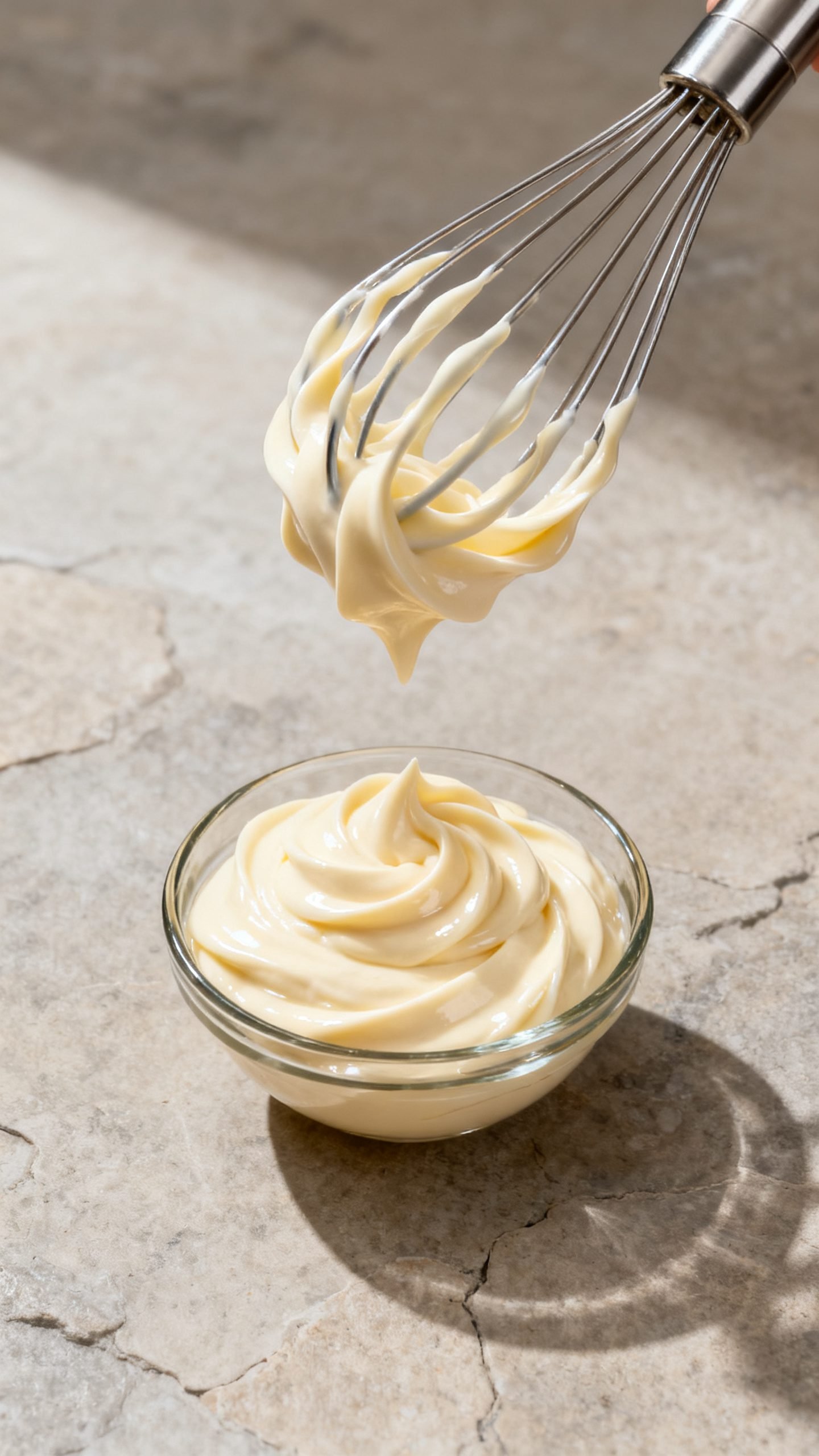
Homemade mayo relies on an emulsion: oil suspended in egg yolk and acid. We make that emulsion strong from the start and keep it stable as we build it up. Here’s why this method delivers creamy mayo every time:
- Egg yolk + acid = strong base. The lecithin in yolks grabs onto oil, while vinegar or lemon juice tightens the emulsion.
- Add oil drop by drop first. You create a thick paste before adding more oil, which prevents splitting.
- Room temperature ingredients blend better. Similar temperatures help the emulsion form quickly.
- Mustard boosts stability and flavor. Even a small amount acts like a second emulsifier.
- Proper bowl and whisk matter. A medium bowl with a steady base and a balloon whisk let you whip air and control flow.
Ingredients
- 1 large egg yolk, room temperature
- 1 teaspoon Dijon mustard (or smooth yellow mustard)
- 1 tablespoon lemon juice or white wine vinegar (plus more to taste)
- 1 cup neutral oil (grapeseed, sunflower, canola, or light olive oil)
- 1/2 to 3/4 teaspoon fine sea salt, to taste
- Freshly ground black pepper, optional
- 1 to 2 teaspoons water, if needed to adjust thickness
Optional add-ins for flavor:
- 1 small garlic clove, grated (for aioli vibes)
- 1/2 to 1 teaspoon sugar or honey for balance
- 1 teaspoon white miso for umami
How to Make Hand-Whisked Mayo (No Blender Needed)
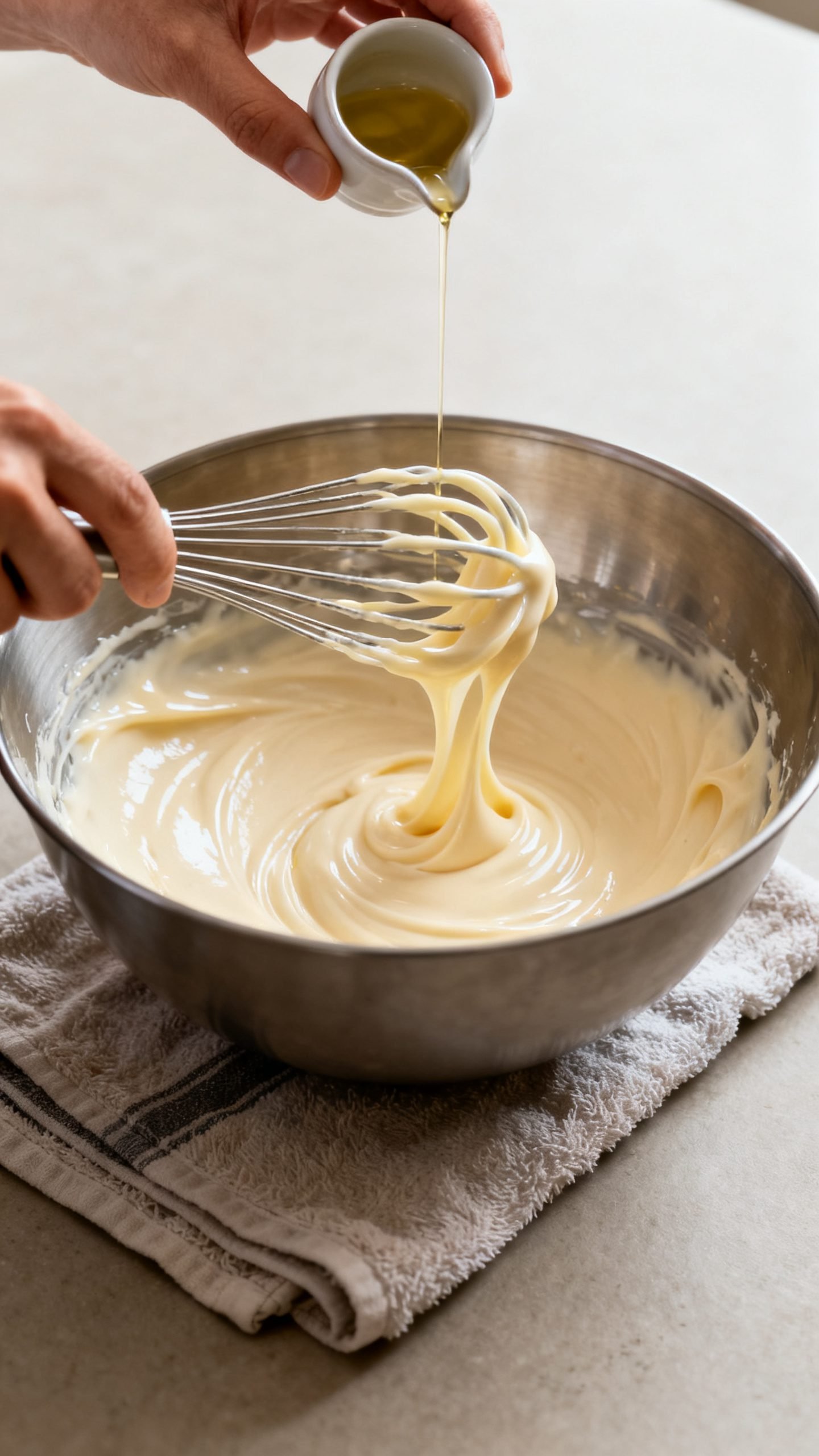
Set up for success
- Bring ingredients to room temperature. Set the egg and lemon juice out for 20–30 minutes.
- Stabilize your bowl. Place a damp towel under a medium metal or glass bowl to keep it from sliding.
- Use the right whisk. A balloon whisk gives better control and faster thickening.
Step-by-step method
- Build the base: Add egg yolk, Dijon, and lemon juice (or vinegar) to the bowl. Whisk until creamy and slightly lighter in color, 20–30 seconds. Season with a pinch of salt.
- Start with drops of oil: While whisking constantly, add the oil drop by drop for the first 2–3 tablespoons. Aim for a glossy, thick paste that clings to the whisk. If it looks thin, slow down the oil even more.
- Increase to a thin stream: Once the emulsion looks stable and thick, pour the oil in a very thin, steady stream while whisking nonstop. Keep your whisk moving in small circles; pause the oil if the mixture stops absorbing it.
- Taste and season: When all the oil is in, whisk in 1/4 to 1/2 teaspoon more lemon juice or vinegar to brighten. Add salt and pepper to taste. If it’s too thick, whisk in 1–2 teaspoons cold water to loosen.
- Finish smooth: Whisk another 10–15 seconds for a glossy, unified texture. Adjust acidity and salt until the flavor pops.
Visual cues to trust
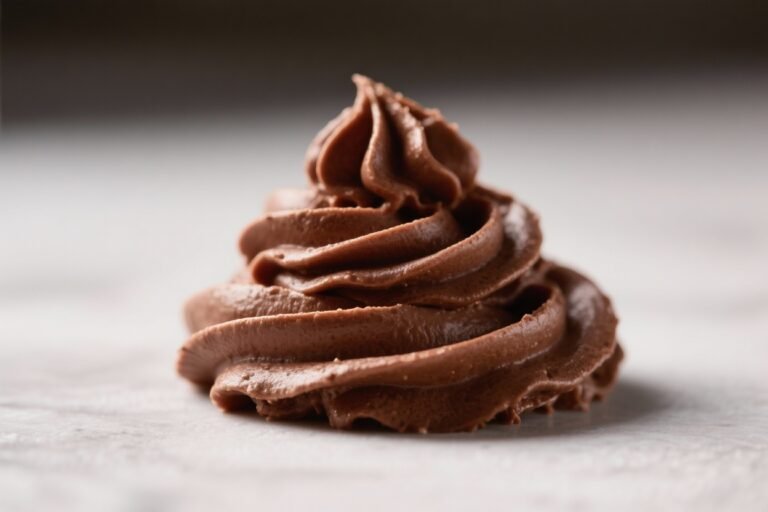
- Right: Thick, glossy ribbons; no visible oil; stands in soft peaks on the whisk.
- Needs help: Looks shiny but runny; oil sits on top; streaky or curdled appearance.
If your mayo looks broken
- Stop adding oil.
- In a clean bowl, whisk 1 teaspoon water + 1 teaspoon lemon juice + 1 teaspoon Dijon.
- Slowly whisk in the broken mayo a spoonful at a time until it re-emulsifies, then continue with remaining oil if needed.
How to Store Your Homemade Mayo
- Transfer to a clean, airtight jar with a tight lid.
- Refrigerate immediately. Keep it cold at all times.
- Use within 5–7 days for the best flavor and quality.
- Label the jar with the date so you remember when you made it.
- Stir before using if it thickens slightly in the fridge.
Note: If you prefer, use pasteurized shell eggs or liquid pasteurized yolks for extra peace of mind.
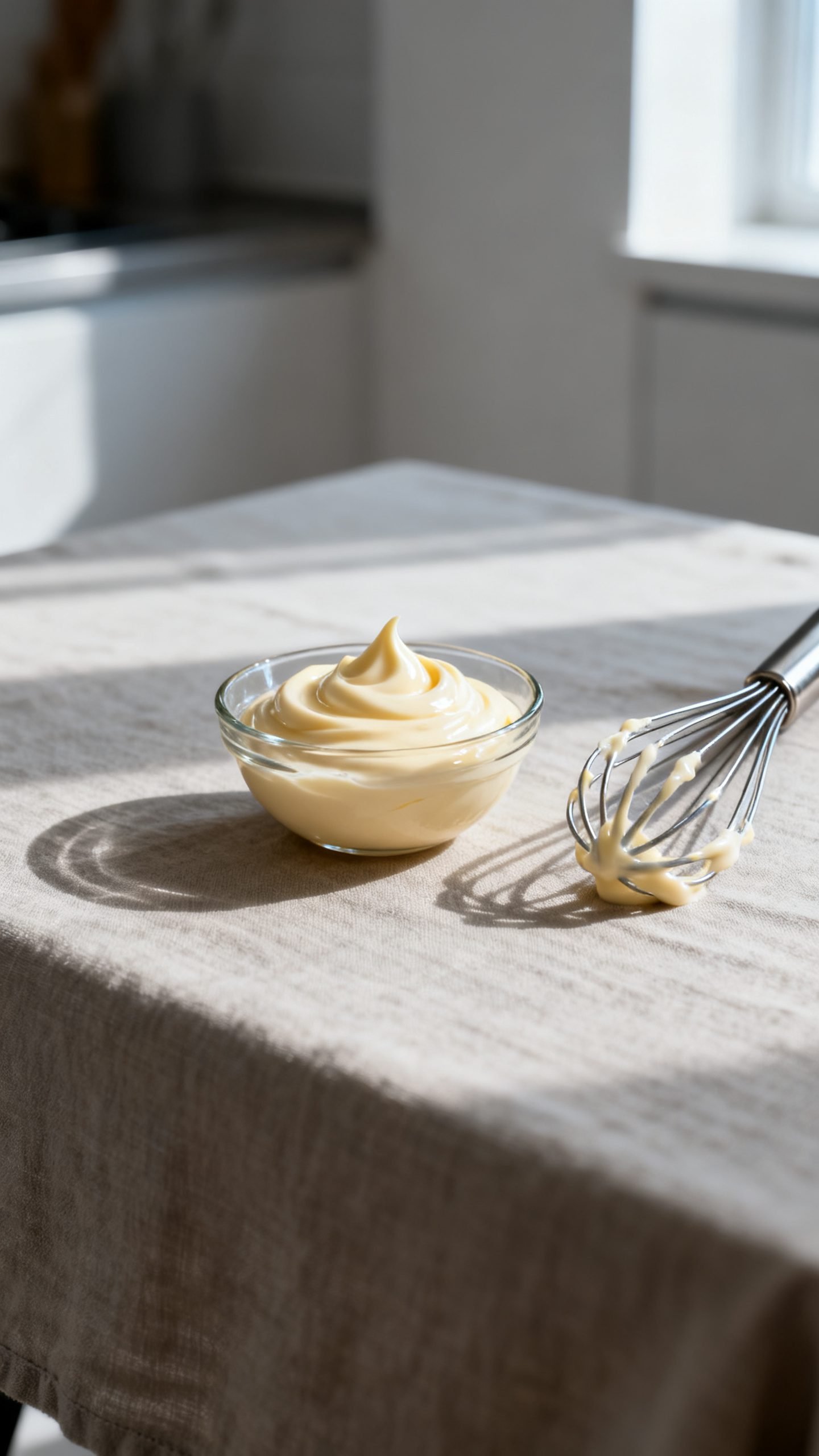
Why Make Mayo by Hand
- Unbeatable texture and taste. Hand-whisking creates a silky, lush body you can’t buy.
- Total control. Choose the oil, the tang, the salt, and the thickness.
- No special equipment. Just a bowl and a whisk—great for small kitchens or travel.
- Batch flexibility. Make exactly what you need, from a half cup to a full cup.
- Better ingredients. Use high-quality oil and fresh acid for a clean, bright flavor.
What Not to Do
- Don’t rush the first oil additions. Drops only at the beginning. Speed breaks sauces.
- Don’t use cold ingredients. Temperature mismatch makes emulsifying harder.
- Don’t use extra-virgin olive oil for all the oil. It can turn bitter when whisked aggressively; blend in just a little for flavor if you like.
- Don’t stop whisking while adding oil. Keep the whisk moving to absorb the stream.
- Don’t skip the mustard or acid. Both strengthen and brighten the mayo.
- Don’t season only at the end. Build flavor as you go so the salt and acid dissolve properly.
Variations You Can Try
- Lemon-Garlic “Aioli”: Add 1 finely grated garlic clove and extra lemon zest.
- Herb Mayo: Stir in chopped parsley, chives, and dill; add a squeeze of lemon.
- Smoky Paprika Mayo: Whisk in 1 teaspoon smoked paprika and a pinch of cayenne.
- Roasted Garlic Mayo: Mash in 2–3 cloves roasted garlic for sweetness and depth.
- Sriracha or Chili Crisp Mayo: Add 1–2 teaspoons for heat and umami.
- Miso-Lime Mayo: Mix in 1 teaspoon white miso and swap lemon for lime.
- Classic Olive Oil Blend: Use 3/4 cup neutral oil + 1/4 cup mild extra-virgin olive oil.
- Buttermilk Dressing Starter: Thin finished mayo with buttermilk and lemon for a quick ranch base.
FAQ
Can I use the whole egg instead of just the yolk?
Yes. A whole egg makes a slightly lighter mayo and helps it emulsify quickly. Start with 1 whole egg and the same amounts of mustard and acid, then whisk in the oil as directed.
What’s the best oil for homemade mayo?
Choose a neutral, fresh-tasting oil like grapeseed, sunflower, or canola. For flavor, blend in up to 1/4 cup mild extra-virgin olive oil.
Why did my mayo turn bitter?
Some robust extra-virgin olive oils taste bitter when vigorously whisked. Use a mild olive oil or stick to neutral oils for the base.
How do I fix mayo that’s too thick?
Whisk in 1–2 teaspoons cold water or lemon juice a little at a time until it loosens to your liking.
Is homemade mayo safe?
Use fresh eggs and good hygiene, and refrigerate immediately. If concerned, use pasteurized eggs.
Can I double the recipe?
Yes, but whisking gets strenuous. Keep the same ratios and take more time with the initial oil additions.
Can I make it without mustard?
You can, but mustard helps stability. If you skip it, go extra slow with the oil and use a bit more acid.
Conclusion
With a whisk, a yolk, and a steady hand, you can make creamy, no-fail mayo anytime. Start slow, watch the visual cues, and season until it sings. Once you master the base, riff with herbs, garlic, or spice and make it your own. Homemade mayo tastes better, spreads smoother, and turns simple meals into something special—no blender required.
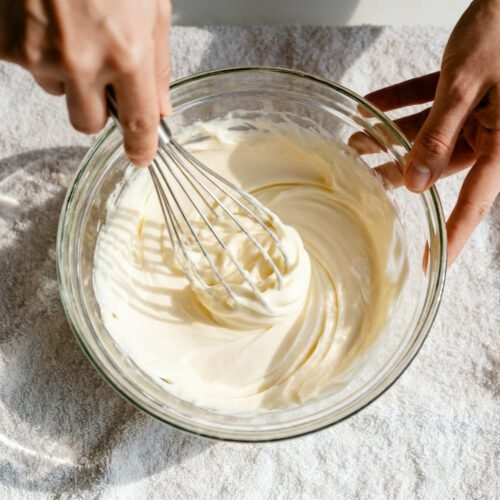
No-Fail Hand-Whisked Mayo Recipe | Classic Homemade Mayo Without a Blender
Ingredients
Ingredients
- 1 large egg yolk, room temperature
- 1 teaspoon Dijon mustard (or smooth yellow mustard)
- 1 tablespoon lemon juice or white wine vinegar, plus more to taste
- 1 cup neutral oil (grapeseed, sunflower, canola, or light olive oil)
- 1/2 to 3/4 teaspoon fine sea salt, to taste
- Freshly ground black pepper, optional
- 1 to 2 teaspoons water, if needed to adjust thickness
- Optional: 1 small garlic clove, grated
- Optional: 1/2 to 1 teaspoon sugar or honey
- Optional: 1 teaspoon white miso
Instructions
Instructions
- Bring the egg yolk and lemon juice or vinegar to room temperature for about 20 to 30 minutes.
- Stabilize a medium metal or glass bowl on a damp towel and use a balloon whisk.
- Whisk together the egg yolk, Dijon mustard, and lemon juice or vinegar until creamy and slightly lighter in color, then season with a pinch of salt.
- While whisking constantly, add oil drop by drop for the first 2 to 3 tablespoons until a thick, glossy paste forms.
- Increase to a very thin, steady stream of oil while whisking nonstop, pausing the oil if the mixture stops absorbing it.
- When all the oil is incorporated, whisk in additional lemon juice or vinegar to taste and season with salt and pepper.
- If the mayo is too thick, whisk in 1 to 2 teaspoons cold water to loosen, then whisk 10 to 15 seconds more until smooth and glossy.
- Adjust acidity and salt to taste and fold in any optional add-ins if using.
- If the mayo breaks, whisk together 1 teaspoon water, 1 teaspoon lemon juice, and 1 teaspoon Dijon in a clean bowl, then slowly whisk in the broken mayo a spoonful at a time to re-emulsify.