Easy Macaron Recipe for Beginners | Foolproof French Cookies at Home
Learning macarons at home feels intimidating until you try this simplified method. I’ll walk you through each step so you can bake crisp, airy shells with chewy centers and perfect little feet. No mystery, no overthinking—just a reliable system that works in a regular kitchen.
You’ll use the easiest macaron technique for beginners, a stable French meringue, and a short rest time. I’ll also share visual cues that matter more than the clock. By the end, you’ll pull a tray of pastel beauties from the oven and wonder why you waited so long.
Why This Easy Macaron Method Works
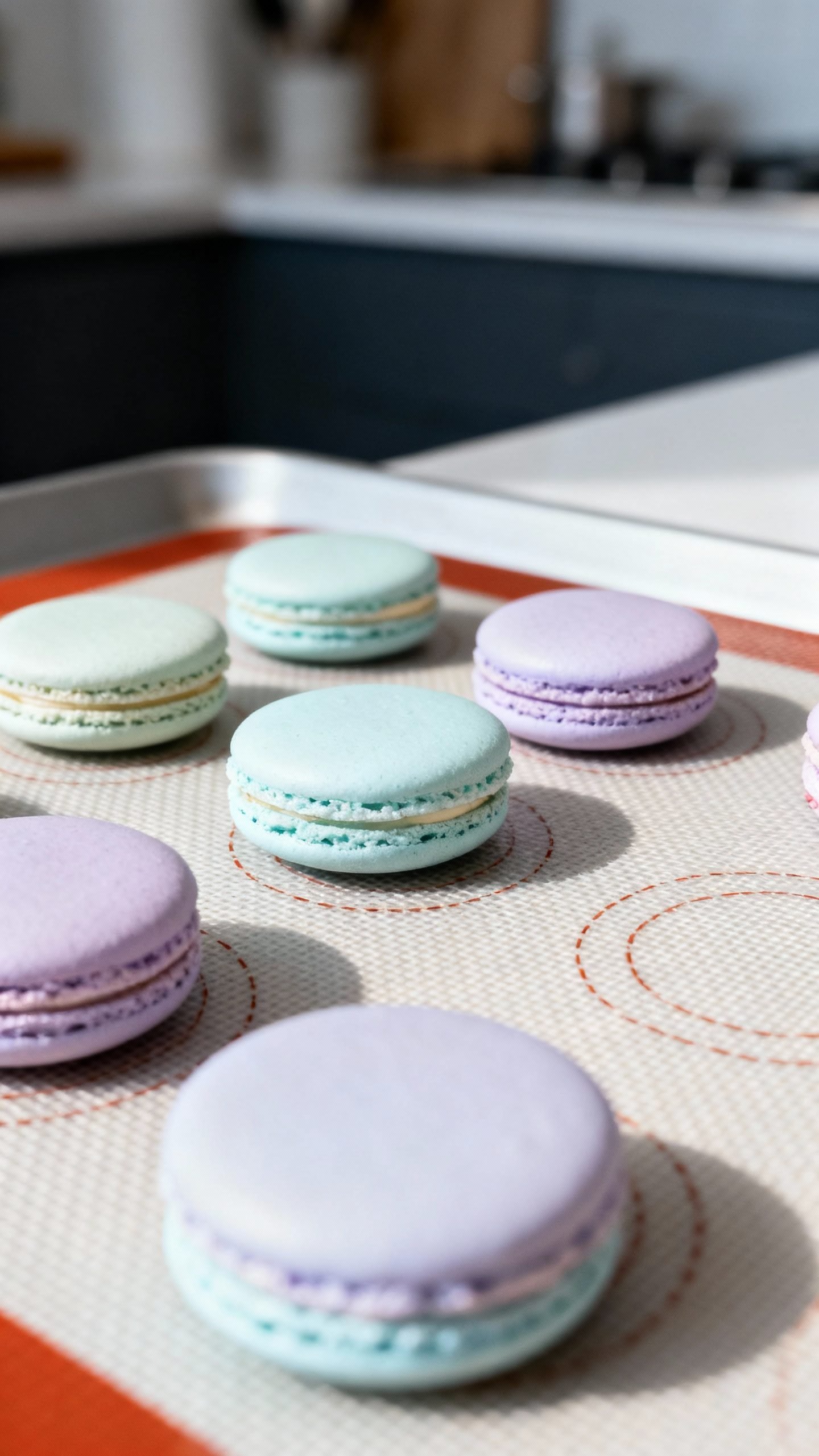
Beginner-friendly macarons succeed when you control a few key variables. This recipe keeps things simple and repeatable.
- French meringue for stability: You whip egg whites with sugar to stiff, glossy peaks—no hot syrup needed.
- Almond flour texture matters: Fine, dry almond flour and powdered sugar create smooth tops and prevent hollows.
- Macaronage with clear cues: I’ll tell you exactly what the batter should look like so you never overmix.
- Consistent size and spacing: Piping guides or a template help shells bake evenly and form neat feet.
- Short drying window: A light surface skin helps lift and prevents cracking in the oven.
- Moderate bake, not guesswork: We’ll use visual signs—set tops, no wiggle—to know when they’re done.
Ingredients
For the macaron shells
- 100 g almond flour (super-fine; blanched, not coarse)
- 100 g powdered sugar (10X; no cornstarch-heavy brands if possible)
- 80 g egg whites (from about 2–3 large eggs), at room temp
- 80 g granulated sugar
- 1/4 tsp cream of tartar or a few drops lemon juice (for stability)
- 1/2 tsp vanilla extract or 1/4 tsp almond extract
- Gel food coloring (optional; avoid liquid)
For a simple buttercream filling
- 115 g unsalted butter, softened
- 160–200 g powdered sugar, to taste
- 1–2 tbsp heavy cream or milk
- 1 tsp vanilla paste or extract
- Pinch of fine salt
Yield: About 24–28 assembled macarons, depending on size.
How to Make Easy French Macarons at Home
1) Prep your tools and pans
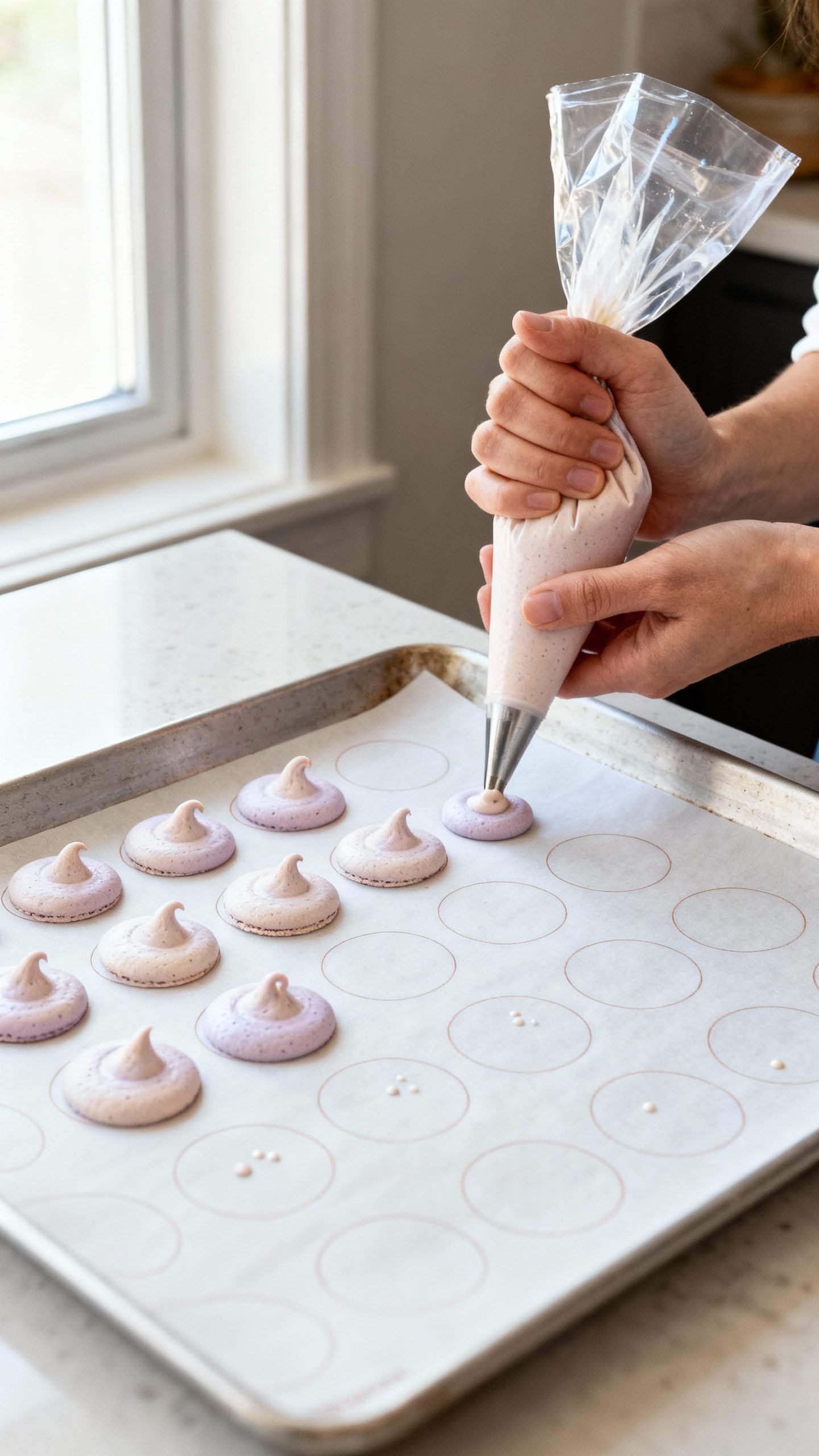
- Line two baking sheets with silicone mats or parchment. If using parchment, trace 1.25–1.5 inch circles as a guide.
- Fit a piping bag with a 1/2-inch round tip (e.g., Wilton 2A or Ateco 804).
- Wipe bowl and whisk with a little vinegar or lemon juice to remove grease.
- Separate egg whites, then weigh everything for accuracy.
2) Sift the dry mix
- Combine almond flour and powdered sugar.
- Sift twice into a bowl. Discard big bits or pulse flour in a processor, then sift again.
3) Whip the meringue
- Add egg whites and cream of tartar to a clean bowl. Whip on medium until foamy.
- Slowly rain in granulated sugar. Increase to medium-high.
- Beat to stiff, glossy peaks: the whisk leaves clear lines, and the peak stands up with a tight bend.
- Blend in vanilla and a tiny drop of gel color if using.
4) Fold (macaronage) correctly
- Tip the sifted almond mixture into the meringue in two additions.
- Use a spatula to fold: press batter up the bowl, scrape down, and turn—repeat.
- Stop at the “lava” stage: batter flows slowly, ribbons disappear in 10–15 seconds, and you can draw a figure-8 without breaking.
5) Pipe the shells
- Transfer batter to the piping bag.
- Pipe straight down, then twist slightly to stop. Aim for 1.25–1.5 inch rounds.
- Tap the trays firmly on the counter 3–4 times to release bubbles. Pop visible bubbles with a toothpick.
6) Rest briefly
- Let shells sit until they form a dry skin you can lightly touch without batter sticking. In average humidity, this takes 20–40 minutes.
- If your kitchen runs humid, use a fan on low to speed it up.
7) Bake
- Preheat oven to 300°F (150°C). If your oven runs hot, go 290°F (145°C).
- Bake one tray at a time on the center rack for 15–18 minutes.
- They’re done when tops feel set and don’t slide if you gently nudge a shell.
- Cool completely on the tray before removing.
8) Make the buttercream
- Beat butter until very smooth and pale, 2–3 minutes.
- Gradually add powdered sugar, salt, vanilla, and enough cream for a soft but pipeable texture.
9) Fill and mature
- Pair shells by size. Pipe a small dollop of buttercream on one shell.
- Top with its match and twist gently to spread to the edges.
- Chill filled macarons in an airtight container for 12–24 hours to mature. Texture improves dramatically.
How to Store Homemade Macarons
- Refrigerator: Keep filled macarons in an airtight container for 4–5 days. Bring to room temp 20 minutes before serving.
- Freezer (best option): Freeze filled or unfilled shells in a single layer, then bag for up to 2 months. Thaw in the fridge overnight, then temper.
- Unfilled shells: Store at room temp in an airtight container for 2 days, or freeze up to 2 months.
Benefits of This Beginner Macaron Recipe
- Simple method: French meringue means no syrup thermometer, fewer steps, and less stress.
- Reliable texture: Crisp top, soft-chewy interior, and consistent feet.
- Flexible flavors: Keep shells neutral and get creative with fillings.
- Make-ahead friendly: Shells and filled cookies both freeze beautifully.
- Pretty on any table: These look boutique-level with basic tools.
What to Avoid for Best Results
- Skipping the sift: Coarse almond bits cause lumpy shells and hollow centers.
- Underwhipping meringue: Soft peaks deflate fast and make flat, sticky shells.
- Overmixing batter: Runny batter spreads, cracks, and loses feet. Stop at lava stage.
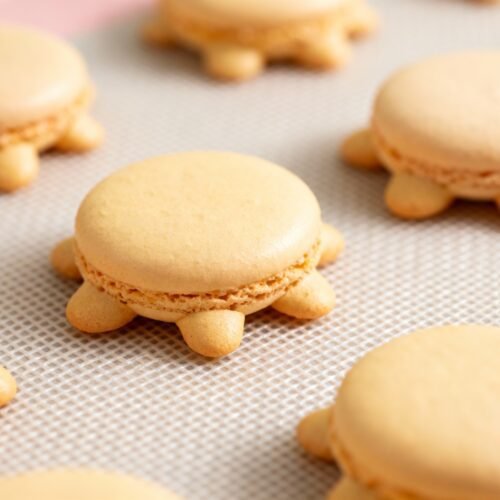
- High oven heat: Too hot leads to browned tops, mushroom feet, and hollow interiors.
- Humidity creep: Wet weather extends drying. Use a fan and give them time.
- Yanking warm shells: They tear. Cool completely before removing from the mat.
Flavor Variations to Try
Shell colors
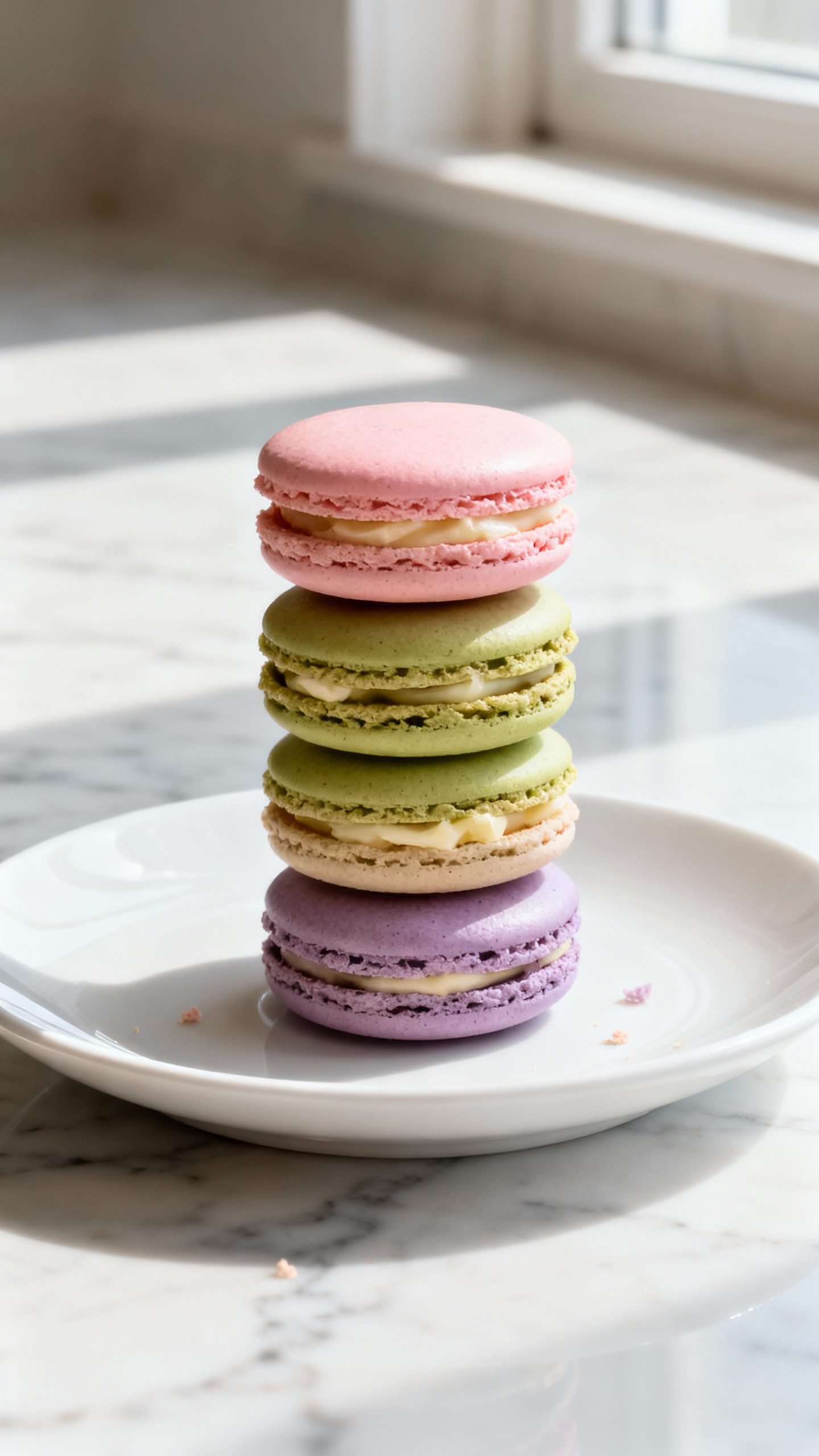
- Pastel pink: Tiny drop of rose gel, vanilla shells, raspberry buttercream.
- Pistachio green: Matcha or pistachio buttercream for a nutty vibe.
- Lavender: Purple gel, honey-vanilla filling, optional tiny lavender extract.
Fillings
- Lemon curd: Pipe a buttercream ring and spoon curd in the center.
- Chocolate ganache: 2:1 chocolate to cream, cooled until thick but pipeable.
- Salted caramel: Buttercream + caramel swirl with a pinch of flaky salt.
- Strawberry: Buttercream with freeze-dried strawberry powder for bold flavor.
- Coffee: Buttercream with espresso powder and vanilla.
Texture add-ins
- Nut crunch: Press crushed pistachios onto piped buttercream before capping.
- Sprinkle edge: Roll filled edges in festive sprinkles for parties.
FAQ
Do I need to age egg whites?
You can bake great macarons with fresh room-temp whites. If you want extra stability, separate the whites 24 hours ahead and chill, then bring to room temp before whipping.
Why did my shells crack?
Usually too-wet batter or not enough drying time. Also check oven heat—lower by 10–15°F and bake one tray at a time.
How do I know I reached stiff peaks?
The meringue forms a firm peak that stands up with a tight hook, looks shiny, and stays in the bowl if you invert it carefully.
Can I use liquid food coloring?
Skip it. Liquid thins the batter. Use concentrated gel or powder for vibrant color without extra moisture.
Why are my macarons hollow?
Common causes: underbaked shells, too-hot oven, or overmixed batter. Bake a minute longer, lower the temp slightly, and stop folding earlier next time.
What size should I pipe?
About 1.25–1.5 inches wide. Keep them uniform so they bake evenly and pair easily.
Do I need a macaron mat?
No. Parchment works fine. A printed template under the parchment helps with size.
How long should I mature them?
12–24 hours in the fridge. The filling hydrates the shells and gives the best chewy texture.
Conclusion
You can absolutely master macarons at home with this straightforward method. Focus on a shiny, stiff meringue, fold to that lava flow, dry until lightly skinned, and bake at a steady, moderate temperature. Fill, chill, and let them mature—then take a bite and smile. When you want bakery-worthy results without fuss, this easy macaron recipe delivers every time.
Easy Macaron Recipe for Beginners | Foolproof French Cookies at Home
Ingredients
Ingredients
- 100 g almond flour (super-fine; blanched)
- 100 g powdered sugar (10X)
- 80 g egg whites, at room temperature
- 80 g granulated sugar
- 1/4 tsp cream of tartar or a few drops lemon juice
- 1/2 tsp vanilla extract or 1/4 tsp almond extract
- Gel food coloring (optional)
- 115 g unsalted butter, softened
- 160–200 g powdered sugar
- 1–2 tbsp heavy cream or milk
- 1 tsp vanilla paste or extract
- Pinch of fine salt
Instructions
Instructions
- Line two baking sheets with silicone mats or parchment and prepare a piping bag fitted with a 1/2-inch round tip.
- Wipe mixing bowl and whisk with vinegar or lemon juice to remove grease, then weigh all ingredients.
- Sift almond flour and powdered sugar together twice, discarding coarse bits.
- Whip egg whites with cream of tartar to foamy, then gradually add granulated sugar and beat to stiff, glossy peaks; mix in vanilla and optional gel color.
- Fold the sifted almond mixture into the meringue in two additions until the batter reaches a slow-flowing lava stage that ribbons and dissolves in 10–15 seconds.
- Transfer batter to the piping bag and pipe 1.25–1.5 inch rounds, then tap trays firmly 3–4 times and pop surface bubbles.
- Rest the piped shells until a dry skin forms and they no longer stick to a light touch, about 20–40 minutes depending on humidity.
- Preheat oven to 300°F (150°C) and bake one tray at a time on the center rack for 15–18 minutes until tops are set and shells do not slide when gently nudged.
- Cool shells completely on the tray before removing.
- Beat butter until very smooth and pale, then gradually add powdered sugar, salt, vanilla, and enough cream to reach a soft, pipeable buttercream.
- Pair shells by size, pipe a small dollop of buttercream on one shell, cap with its match, and twist gently to spread to the edges.
- Chill assembled macarons in an airtight container for 12–24 hours to mature before serving.