Dutch Oven Bread with Garlic & Rosemary | Easy Crusty Artisan Loaf
You don’t need a bakery to get that crackly crust and tender, chewy crumb. This Dutch oven bread with garlic and rosemary brings serious artisan vibes to your kitchen with almost no effort. If you can stir, wait, and preheat a pot, you can bake this loaf. It’s a showstopper for soups, pasta nights, or a buttery slice straight from the cutting board.
The secret sits in the method: a high-heat Dutch oven traps steam, which gives you that shattering crust, while long hydration builds flavor and structure. Fresh garlic and rosemary perfume the dough, and olive oil rounds it out with a gentle richness. The result tastes like you spent the day baking—without actually doing that.
Why This Garlic Rosemary Dutch Oven Bread Works
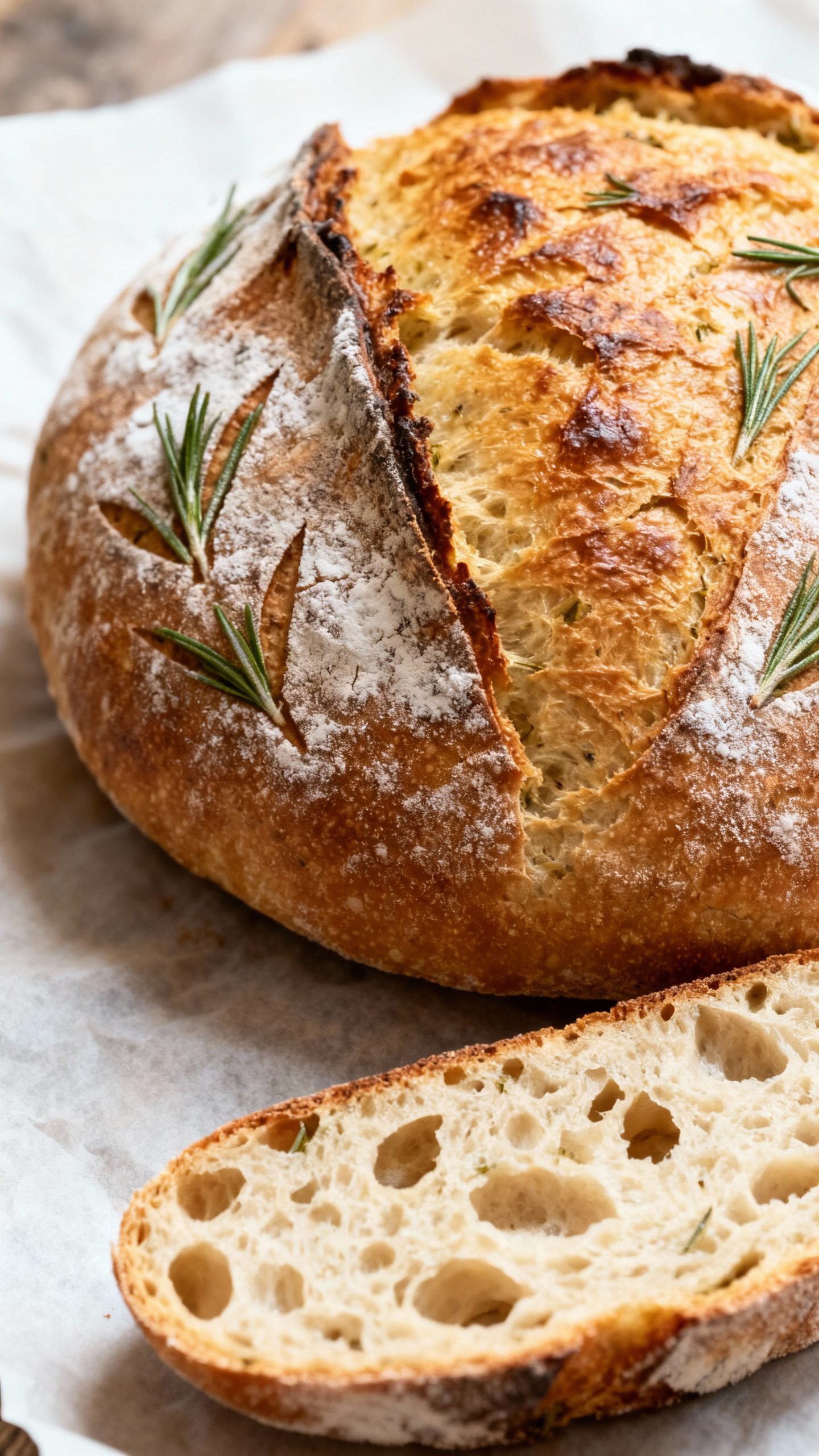
- Steam equals crust: The Dutch oven traps steam from the dough, delivering a glossy, blistered exterior.
- High hydration for a tender crumb: A wetter dough creates those beautiful irregular holes and a springy bite.
- Minimal kneading: Time does the work. A long rest hydrates flour and develops gluten.
- Bold flavor, simple add-ins: Fresh garlic and rosemary infuse the loaf without extra steps.
- Reliable method: The process gives consistent results, even for beginners.
Ingredients
For the dough
- 3 cups (360 g) bread flour (or all-purpose in a pinch)
- 1 1/2 teaspoons fine sea salt
- 1 teaspoon instant yeast (rapid-rise)
- 1 1/2 cups (355 ml) warm water (about 105–110°F)
- 1 1/2 tablespoons extra-virgin olive oil
Flavor boosters
- 3–4 cloves garlic, finely minced (or grated)
- 1 1/2 tablespoons fresh rosemary, finely chopped
- Optional: 1/2 teaspoon freshly cracked black pepper
Finishing
- Flour for dusting
- Coarse sea salt for topping
Ingredient notes: Bread flour gives extra chew and height, but all-purpose still bakes a gorgeous loaf. Instant yeast mixes right into the flour—no proofing needed. If you only have active dry yeast, dissolve it in the warm water first until foamy.
How to Make Garlic Rosemary Dutch Oven Bread
1) Mix the dough
- In a large bowl, whisk flour, salt, and instant yeast.
- Stir in warm water and olive oil until a shaggy dough forms—no dry pockets. It should look sticky.
- Fold in garlic, rosemary, and pepper if using. Scrape down the bowl.
Tip: Lightly oil your spatula and hands to keep sticky dough manageable.
2) Let it rest and rise
- Cover the bowl tightly with plastic wrap or a lid.
- Let it rise at room temperature for 8–12 hours until doubled, puffy, and bubbly on top.
Cool kitchen? Give it more time. Warm kitchen? Check at 6–8 hours so it doesn’t overproof.
3) Shape the loaf
- Dust a work surface with flour. Turn the dough out gently with a spatula.
- With floured hands, do 4 envelope folds: pull one side up and over to the center, rotate 90 degrees, repeat three more times.
- Flip seam-side down and cup your hands to tighten into a round. Avoid deflating the bubbles.
- Place on a parchment square. Dust lightly with flour. Cover with a towel and rest 30–45 minutes while the oven heats.
4) Preheat the Dutch oven
- Place a 4–6 qt Dutch oven with lid on the middle rack.
- Preheat to 450°F (232°C) for at least 30 minutes.
Safety first: That pot gets blazing hot. Use sturdy oven mitts and clear a landing space.
5) Bake
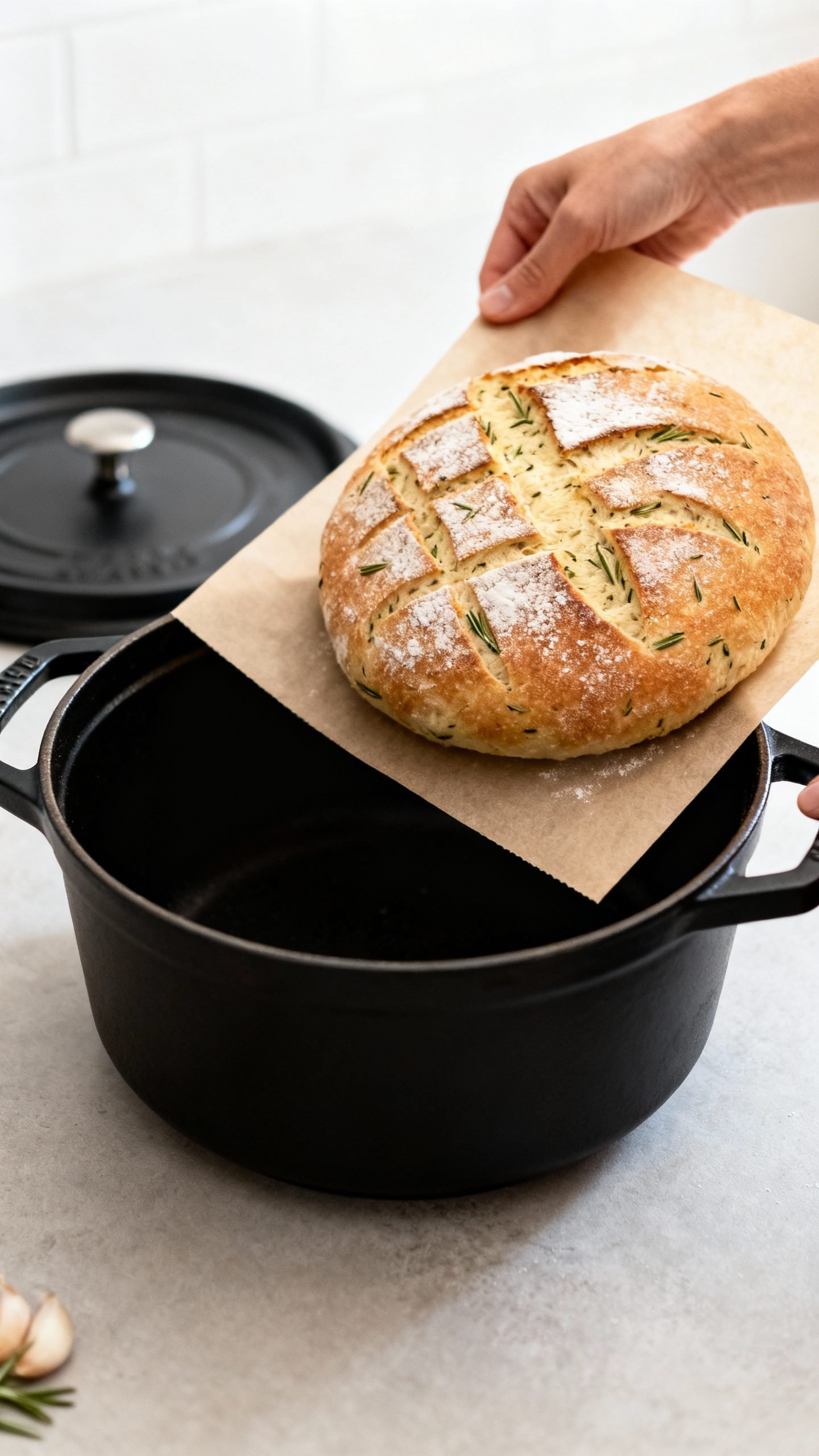
- Score the top with a sharp knife or lame (one deep slash or a few shallow ones).
- Carefully remove the pot, lift the dough by the parchment, and lower it into the pot.
- Sprinkle with a pinch of coarse salt. Cover and bake 30 minutes.
- Remove the lid and bake another 12–18 minutes until deep golden and crusty.
Doneness check: Internal temp should read 205–210°F. The loaf sounds hollow when tapped.
6) Cool
- Lift bread out by the parchment. Cool on a rack at least 45–60 minutes before slicing.
Yes, wait: The crumb sets as it cools. Cutting early compresses the structure and makes slices gummy.
How to Store Garlic Rosemary Dutch Oven Bread
- Room temperature (best for 2–3 days): Wrap in a clean towel or store cut-side down on a board. Avoid sealed plastic, which softens the crust.
- Freeze (up to 3 months): Cool completely. Slice, then wrap tightly in foil and a freezer bag. Toast slices straight from frozen.
- Revive the crust: Bake at 350°F for 8–10 minutes to re-crisp day-old bread.
Benefits of Baking This Easy Artisan Loaf
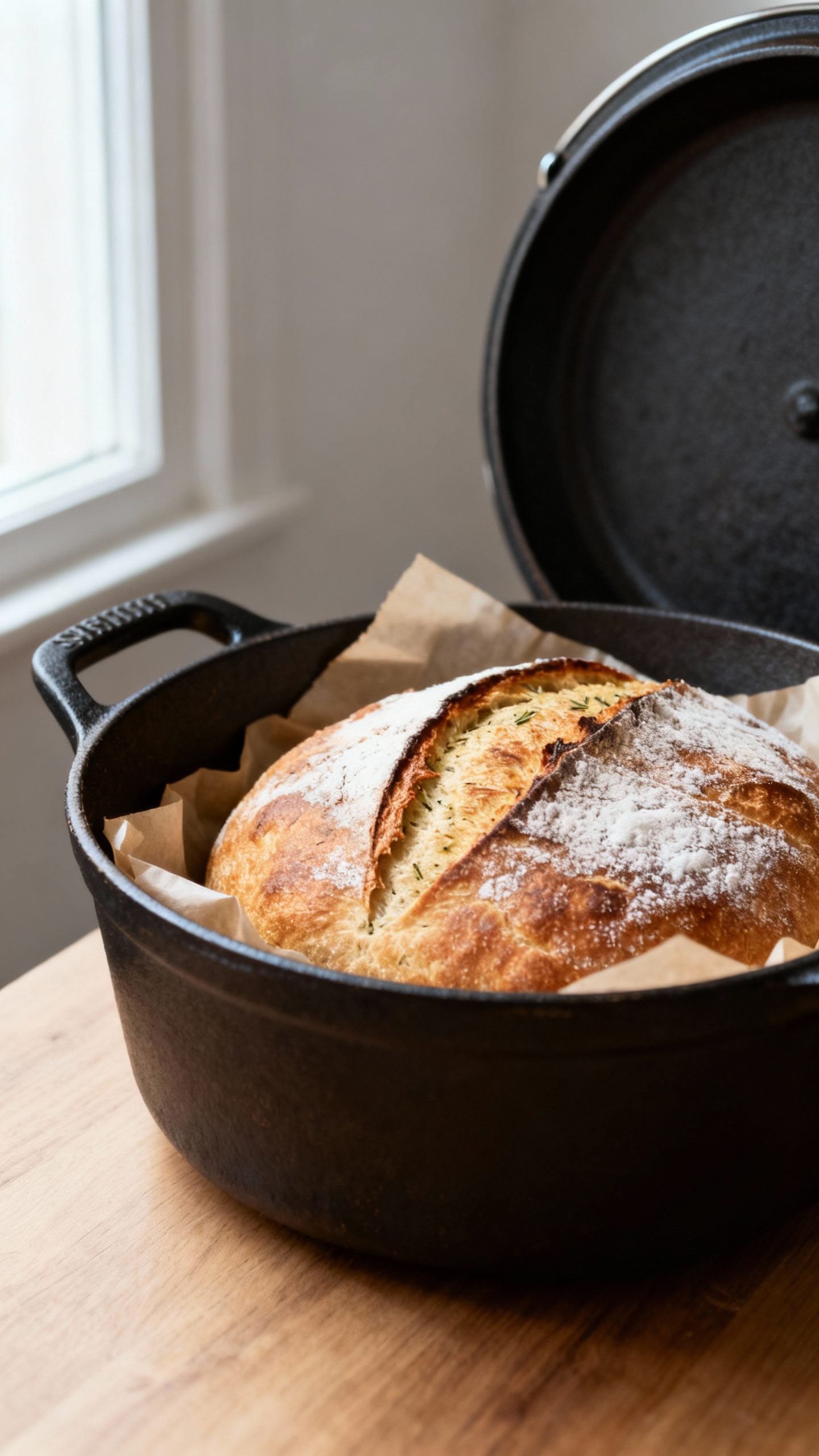
- Restaurant-quality crust at home: Steam in the Dutch oven delivers that coveted crunch.
- Big flavor, few ingredients: Flour, water, yeast, salt—and classic aromatics—do heavy lifting.
- Low-effort method: Most of the time is hands-off rising and preheating.
- Versatile pairing: Perfect with soups, charcuterie, roasted meats, and breakfast spreads.
- Budget-friendly: A premium loaf for a fraction of bakery prices.
What Not to Do
- Don’t skip the long rest: Shortcuts dull the flavor and structure.
- Don’t add too much flour while shaping: Excess flour tightens the dough and dries the crumb.
- Don’t bake in a cold pot: Without a ripping-hot Dutch oven, you lose oven spring and crust.
- Don’t slice while hot: You’ll compress the crumb and trap steam inside.
- Don’t overload with add-ins: Too much garlic or herbs weakens the dough and causes tunnels.
Variations You Can Try
- Lemon zest + rosemary: Add 1 teaspoon zest for a bright, aromatic lift.
- Roasted garlic: Swap raw garlic for 1 head of roasted cloves, mashed. Sweeter and mellow.
- Parmesan crust: Sprinkle 1/4 cup finely grated Parmesan over the top after uncovering for the last 10 minutes.
- Olive and herb: Fold in 1/3 cup chopped, well-drained Kalamata olives with the rosemary.
- Whole wheat twist: Use 1 cup whole wheat flour and 2 cups bread flour; add 1–2 tablespoons extra water if needed.
- Seeded top: Press sesame or poppy seeds onto the surface before scoring.
FAQ
Can I use active dry yeast?
Yes. Proof 1 teaspoon active dry yeast in the warm water with a pinch of sugar for 5–10 minutes until foamy, then mix as directed.
Do I need a Dutch oven?
A heavy, lidded pot works best, but you can mimic the steam by baking on a preheated sheet with an inverted metal bowl covering the loaf for the first 25–30 minutes.
Why is my dough so sticky?
High hydration makes stickiness normal. Lightly flour your hands and surface, and use a bench scraper. Resist adding lots of flour.
How do I get bigger holes?
Handle the dough gently, avoid over-flouring, and give the dough enough rise time. A hotter oven and proper steam help, too.
Can I mix in dried herbs?
Yes. Use 1–1 1/2 teaspoons dried rosemary instead of fresh. Rub it between fingers to release oils.
What size Dutch oven should I use?
A 4–6 quart pot fits this loaf perfectly and lets it rise tall without spreading.
Can I make it same day?
Yes. Use slightly warmer water and let it rise in a warm spot until doubled (about 3–4 hours). Flavor improves with the overnight rest, though.
How do I keep the bottom from over-browning?
Place a baking sheet on the rack below the Dutch oven or set the pot on a pizza stone. You can also sprinkle a little cornmeal under the parchment.
Conclusion
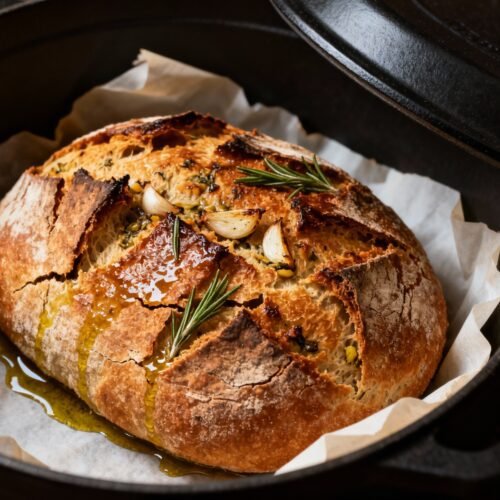
This garlic and rosemary Dutch oven bread delivers bakery-quality results with simple steps and pantry staples. The crust crackles, the crumb stays tender, and the aroma turns heads before you slice. Bake it once, and it’ll become your go-to loaf for weeknights, dinner parties, and everything in between. Warm bread, good butter, happy table—done.
Dutch Oven Bread with Garlic & Rosemary | Easy Crusty Artisan Loaf
Ingredients
Ingredients
Instructions
Instructions
- In a large bowl, whisk flour, salt, and instant yeast.
- Stir in warm water and olive oil until a shaggy dough forms—no dry pockets. It should look sticky.
- Fold in garlic, rosemary, and pepper if using. Scrape down the bowl.
- Cover the bowl tightly with plastic wrap or a lid.
- Let it rise at room temperature for 8–12 hours until doubled, puffy, and bubbly on top.
- Dust a work surface with flour. Turn the dough out gently with a spatula.
- With floured hands, do 4 envelope folds: pull one side up and over to the center, rotate 90 degrees, repeat three more times.
- Flip seam-side down and cup your hands to tighten into a round. Avoid deflating the bubbles.
- Place on a parchment square. Dust lightly with flour. Cover with a towel and rest 30–45 minutes while the oven heats.
- Place a 4–6 qt Dutch oven with lid on the middle rack.
- Preheat to 450°F (232°C) for at least 30 minutes.
- Score the top with a sharp knife or lame (one deep slash or a few shallow ones).
- Carefully remove the pot, lift the dough by the parchment, and lower it into the pot.
- Sprinkle with a pinch of coarse salt. Cover and bake 30 minutes.
- Remove the lid and bake another 12–18 minutes until deep golden and crusty.
- Lift bread out by the parchment. Cool on a rack at least 45–60 minutes before slicing.