Easy 6 Ingredient Fluffy Flatbread
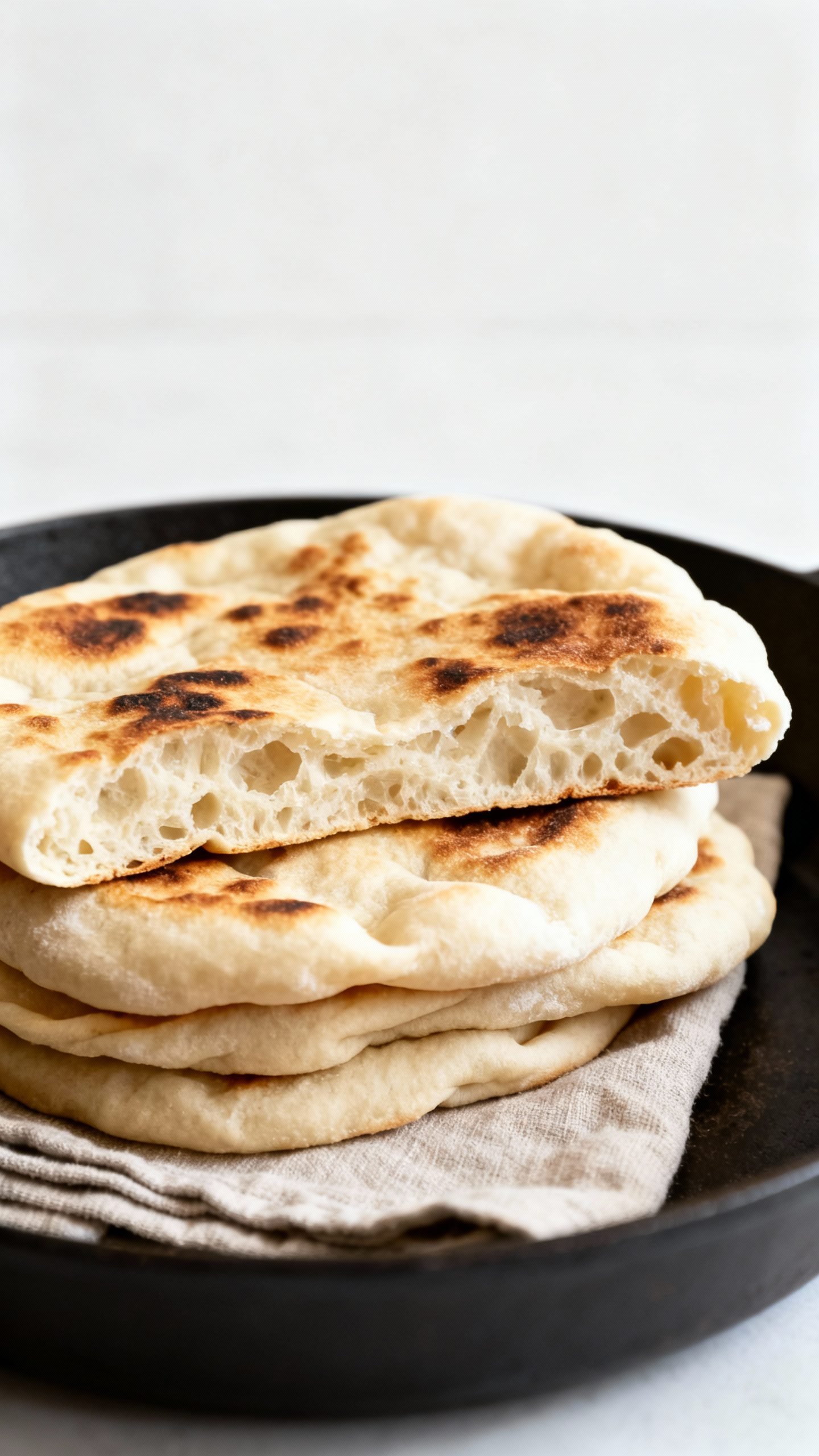
You can make pillowy, warm flatbread with just six staple ingredients and a skillet. No fancy gear, no special flours, and no stress—just soft, flexible bread perfect for dipping, wrapping, or snacking straight from the pan. If you’ve ever wanted a quick bread that delivers big comfort with minimal effort, this is it.
I’ve tested this on busy weeknights and lazy weekends, and it always comes through. The dough mixes in minutes, rests briefly, and cooks fast. You get golden-brown spots, fluffy interiors, and that irresistible fresh-bread smell that makes everyone wander into the kitchen. Let’s make it happen.
Why This 6-Ingredient Fluffy Flatbread Works
- Six pantry staples: All-purpose flour, Greek yogurt, milk, baking powder, salt, and olive oil. That’s it.
- Greek yogurt for tenderness: It adds moisture and gentle tang while keeping the crumb soft.
- Baking powder lift: You get a light, puffy texture without yeast.
- Quick rest, better results: A short rest relaxes the dough so it rolls easily and cooks evenly.
- Works in any skillet: Cast iron or nonstick both deliver charred spots and soft centers.
- Foolproof method: Clear steps, forgiving dough, and simple cues to nail it every time.
Ingredients
- 2 cups (250 g) all-purpose flour, plus more for dusting
- 1 cup (240 g) plain Greek yogurt (full-fat or 2%)
- 1/4 cup (60 ml) milk (dairy or unsweetened plant milk)
- 2 teaspoons baking powder
- 1 teaspoon fine salt
- 1 tablespoon olive oil, plus more for brushing
Optional but Recommended
- Soft butter or olive oil for finishing
- Garlic, herbs, or flaky salt for topping
How to Make Fluffy 6-Ingredient Flatbread
1) Mix the Dough
- In a large bowl, whisk flour, baking powder, and salt together.
- Add Greek yogurt, milk, and olive oil. Stir with a spoon until shaggy and mostly combined.
- Switch to your hands and gently knead 30–60 seconds in the bowl until the dough comes together. It should feel soft and slightly tacky, not sticky. Add a sprinkle of flour only if it clings heavily.
2) Rest Briefly
- Cover the bowl and let the dough rest 10–15 minutes. This relaxes the gluten for easier rolling and fluffier bread.
3) Divide and Shape
- Turn the dough onto a lightly floured surface.
- Divide into 6 equal pieces for medium rounds (or 8 for smaller breads).
- Roll each piece into a smooth ball. Keep them covered with a towel so they don’t dry out.
4) Roll the Rounds
- Working with one ball at a time, roll into a 6–7 inch circle or oval, about 1/8–1/4 inch thick. Dust lightly with flour only as needed.
5) Cook on a Hot Skillet
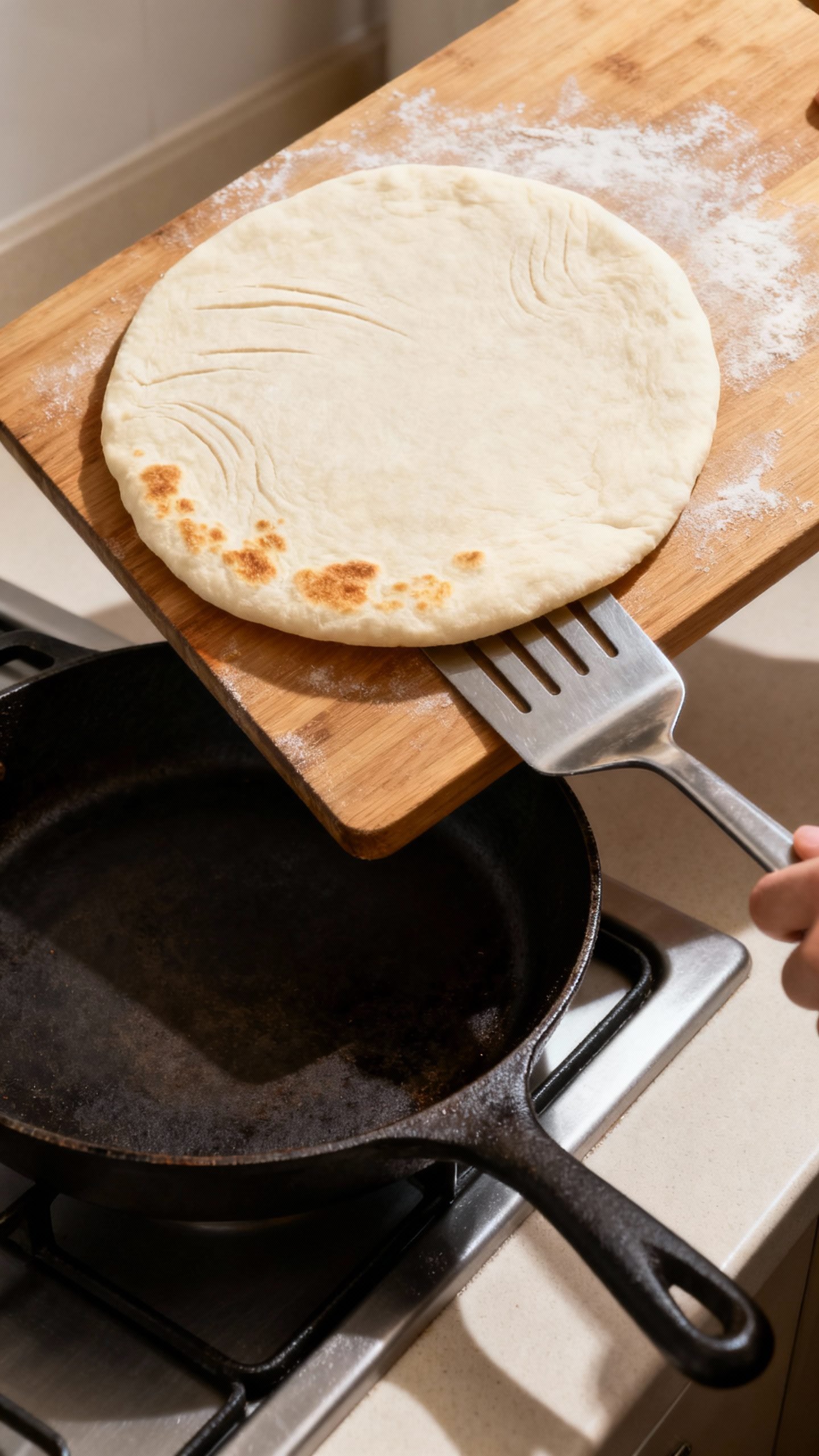
- Preheat a dry cast-iron or nonstick skillet over medium-high until hot.
- Lay in one flatbread. Cook 45–75 seconds until bubbles form and the underside has golden-brown spots.
- Flip and cook another 30–60 seconds. Adjust heat if it browns too fast before puffing.
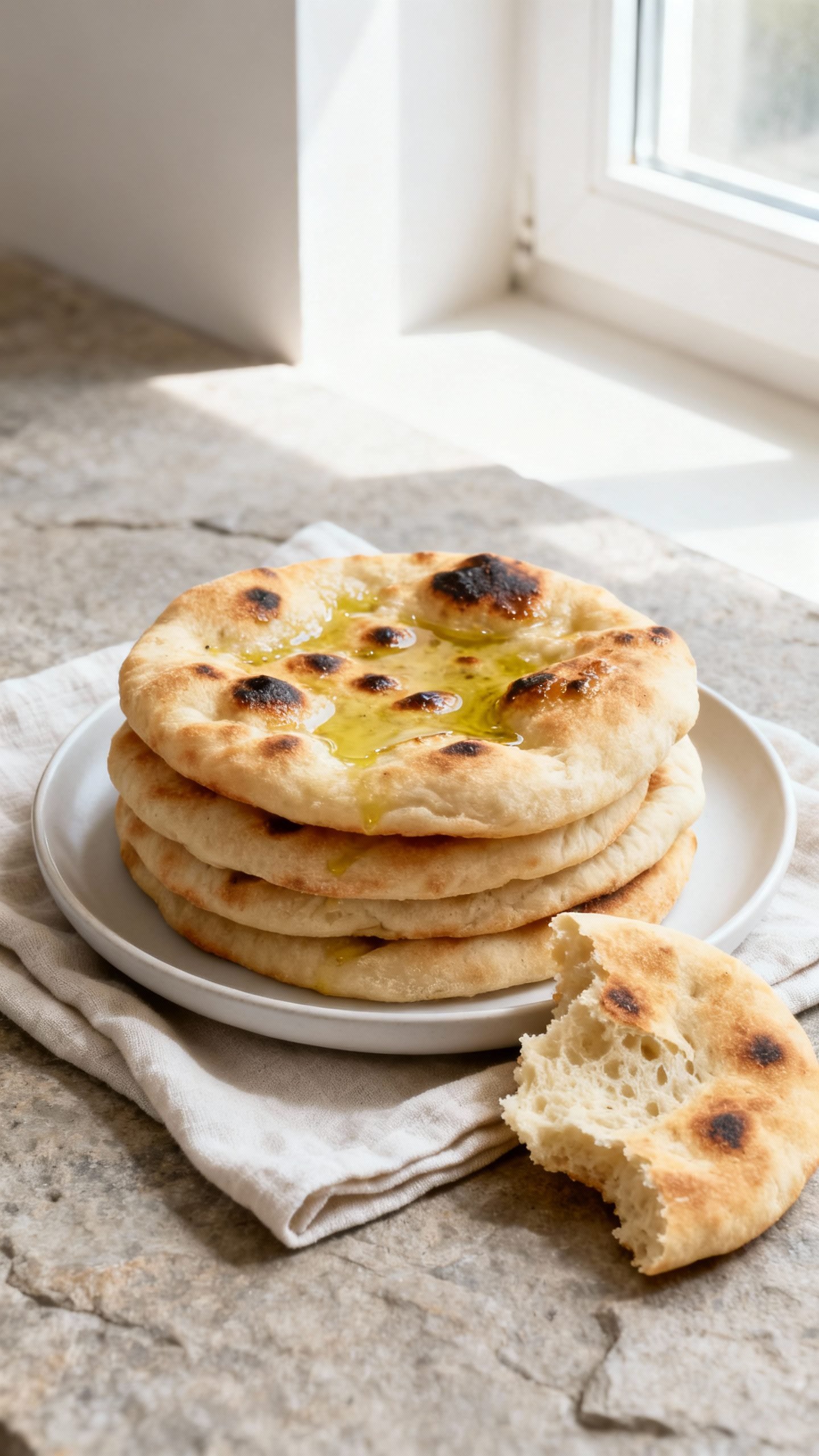
- Brush with olive oil or butter if you like, then keep warm in a clean towel while you cook the rest.
Pro Tips for Best Texture
- Don’t overflour: Excess flour makes tough bread. Use just enough to prevent sticking.
- Heat matters: A properly hot skillet gives char and steam puff.
- Aim for even thickness: Thin edges and thicker centers cook unevenly—roll consistently.
- Cook to spots, not time: Look for evenly scattered brown spots, not deep dark patches.
How to Store Your Flatbread
- Room temperature: Cool completely. Store in a zip-top bag with air pressed out for 1–2 days.
- Refrigerator: Wrap well to avoid drying. Keeps 3–4 days, but reheat before serving.
- Freezer: Stack with parchment between each, seal tightly, and freeze up to 2 months.
Reheating
- Skillet: Medium heat 30–60 seconds per side for best texture.
- Oven: 350°F (175°C) for 5–8 minutes, wrapped in foil.
- Microwave: 10–15 seconds, wrapped in a barely damp paper towel for softness.
Benefits of Making This Flatbread
- Fast and doable: Mix, rest, and cook in about 30 minutes.
- Budget-friendly: Uses inexpensive staples you probably already have.
- No yeast, no proof: Baking powder gives reliable lift without extra steps.
- Endlessly useful: Wraps, gyros, dips, curry night, breakfast eggs—everything works.
- Customizable: Fold in herbs, spices, or cheese for easy flavor twists.
What Not to Do
- Don’t skip the rest: Tight dough resists rolling and cooks dense.
- Don’t roll too thick: Over 1/4 inch won’t puff well and stays doughy.
- Don’t underheat the pan: A lukewarm skillet dries the surface and prevents bubbles.
- Don’t overload with flour: Dust sparingly or the bread turns tough and floury.
- Don’t walk away: These cook fast—watch for bubbles and spots.
Variations You Can Try
- Garlic-herb: Mix 1–2 minced garlic cloves and 2 tablespoons chopped parsley or cilantro into the dough.
- Sesame or nigella: Press seeds onto the surface before cooking for nutty crunch.
- Cheesy: Fold in 1/2 cup finely grated Parmesan or cheddar for a savory twist.
- Spiced: Add 1 teaspoon ground cumin, smoked paprika, or za’atar to the dry ingredients.
- Dairy-free: Use a thick dairy-free yogurt and unsweetened plant milk; add 1–2 teaspoons extra oil if the dough feels dry.
- Whole-wheat: Swap 1/2 cup flour for whole-wheat and add 1–2 teaspoons extra milk if needed.
FAQ
Can I use regular yogurt instead of Greek?
Yes. Strain it through a coffee filter or paper towel for 10–15 minutes to thicken, or reduce the milk slightly to avoid a sticky dough.
Why didn’t my flatbread puff?
You likely rolled too thick or used a pan that wasn’t hot enough. Aim for 1/8–1/4 inch and preheat the skillet well.
Can I make the dough ahead?
Yes. Wrap tightly and refrigerate up to 24 hours. Bring to room temp for 20–30 minutes before rolling.
What if my dough feels sticky?
Dust your hands and surface lightly with flour. Knead just a few seconds to smooth it out—avoid overworking.
Which skillet works best?
Cast iron gives the best char and puff, but a heavy nonstick pan works great and needs no oil.
Can I bake these instead?
You can, but a skillet gives better bubbles and browning. If baking, use 475°F (245°C) on a preheated sheet for 4–6 minutes.
Conclusion
Six ingredients, one bowl, and a hot skillet—this flatbread delivers soft, fluffy results every time. Keep a batch on hand for weeknight wraps, last-minute dips, or a cozy side for soups and curries. Once you taste them warm from the pan, you’ll want to double the recipe—because they disappear fast.
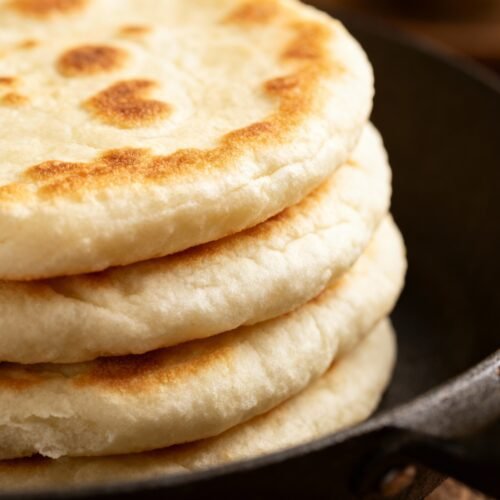
Easy 6 Ingredient Fluffy Flatbread
Ingredients
Ingredients
Instructions
Instructions
- In a large bowl, whisk flour, baking powder, and salt together.
- Add Greek yogurt, milk, and olive oil. Stir with a spoon until shaggy and mostly combined.
- Switch to your hands and gently knead 30–60 seconds in the bowl until the dough comes together. It should feel soft and slightly tacky, not sticky. Add a sprinkle of flour only if it clings heavily.
- Cover the bowl and let the dough rest 10–15 minutes. This relaxes the gluten for easier rolling and fluffier bread.
- Turn the dough onto a lightly floured surface.
- Divide into 6 equal pieces for medium rounds (or 8 for smaller breads).
- Roll each piece into a smooth ball. Keep them covered with a towel so they don’t dry out.
- Working with one ball at a time, roll into a 6–7 inch circle or oval, about 1/8–1/4 inch thick. Dust lightly with flour only as needed.
- Preheat a dry cast-iron or nonstick skillet over medium-high until hot.
- Lay in one flatbread. Cook 45–75 seconds until bubbles form and the underside has golden-brown spots.
- Flip and cook another 30–60 seconds. Adjust heat if it browns too fast before puffing.
- Brush with olive oil or butter if you like, then keep warm in a clean towel while you cook the rest.
- Don’t overflour: Excess flour makes tough bread. Use just enough to prevent sticking.
- Heat matters: A properly hot skillet gives char and steam puff.
- Aim for even thickness: Thin edges and thicker centers cook unevenly—roll consistently.
- Cook to spots, not time: Look for evenly scattered brown spots, not deep dark patches.