Rich & Savory Au Jus Recipe – A Simple, Flavor-Packed Classic
A good au jus can turn a roast into a restaurant-quality meal. It’s thin, deeply savory, and made from simple ingredients you likely already have. This version builds on pan drippings for real flavor, but it also works even if you don’t have any.
The process is quick, the ingredients are flexible, and the result is rich without being heavy. Serve it with roast beef, prime rib, sandwiches, or even mashed potatoes.
What Makes This Recipe So Good
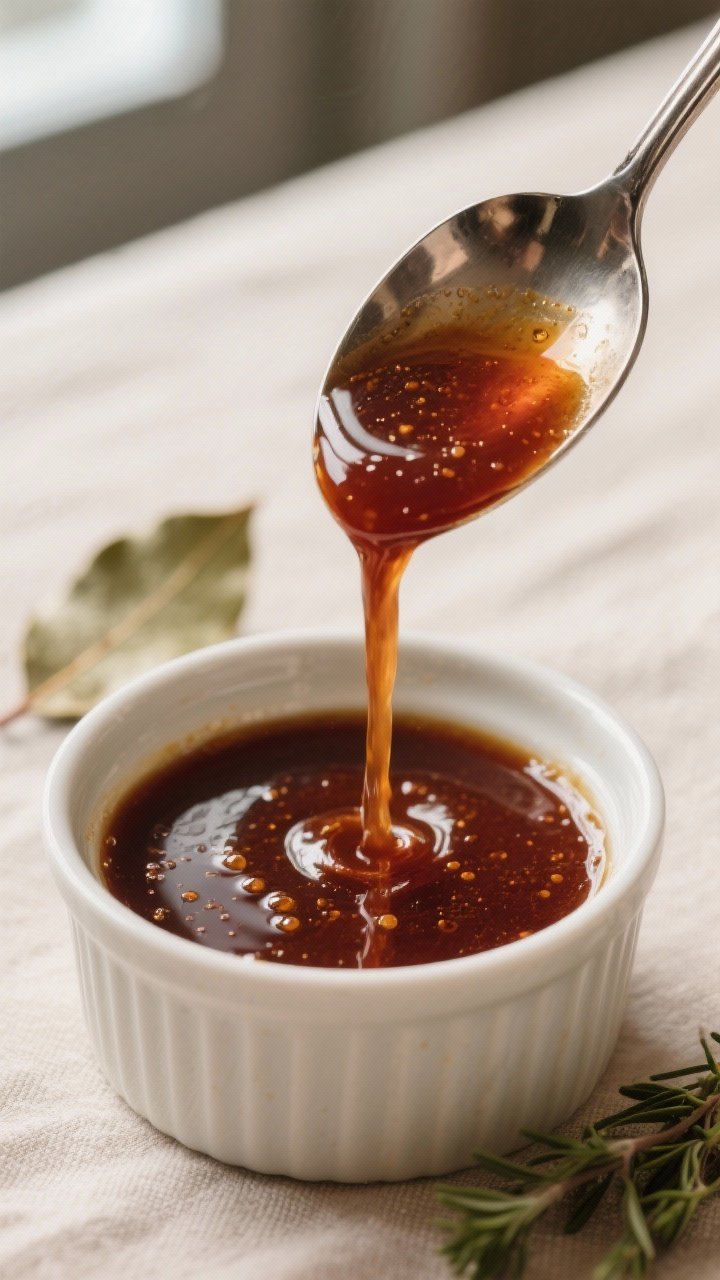
- Deep, beefy flavor: Using pan drippings, beef stock, and a touch of aromatics creates a layered sauce that tastes like it simmered all day.
- Quick and easy: You can make this in about 15–20 minutes. No long reductions, no complicated steps.
- Not thick or gloopy: Au jus is meant to be light and pourable.
This recipe keeps it silky and smooth.
- Flexible ingredients: No drippings? No problem. A few smart swaps still give you a rich result.
- Perfect for leftovers: It reheats well and can rescue dry roast or elevate simple sandwiches.
Ingredients
- 2 tablespoons fat from pan drippings (or unsalted butter)
- 2 tablespoons pan drippings (optional but ideal; substitute 1 teaspoon Worcestershire sauce if needed)
- 1 small shallot or 1/2 small onion, finely minced
- 2 cloves garlic, minced
- 1 teaspoon tomato paste (optional, for depth)
- 1/2 cup dry red wine (or 1/2 cup beef stock plus 1 teaspoon red wine vinegar)
- 2 cups high-quality beef stock or broth (preferably low-sodium)
- 1 teaspoon fresh thyme leaves (or 1/4 teaspoon dried thyme)
- 1 bay leaf
- 1 teaspoon soy sauce (for umami; adjust to taste)
- Freshly ground black pepper, to taste
- Kosher salt, to taste
How to Make It
- Collect the drippings: After roasting beef, tilt the pan and spoon off 2 tablespoons of the fat.
Reserve another 2 tablespoons of the flavorful juices. If you’re not using drippings, use butter for the fat and Worcestershire for some of that roasty flavor.
- Sauté the aromatics: In a medium saucepan over medium heat, add the fat. Stir in the shallot and cook 2–3 minutes until soft.
Add the garlic and cook 30 seconds, just until fragrant.
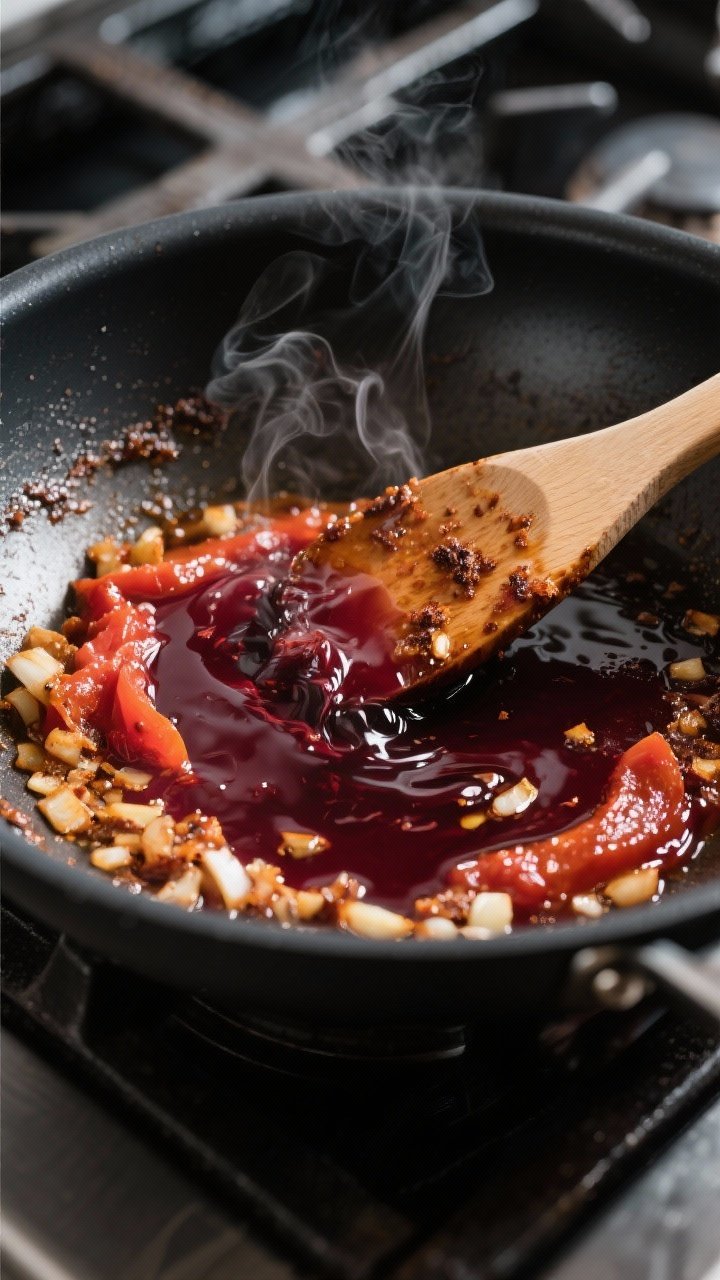
- Build the base: Stir in the tomato paste and cook 30–60 seconds to caramelize slightly. This step adds color and depth without making the jus thick.
- Deglaze with wine: Pour in the red wine, scraping the pan to pull up any browned bits. Let it simmer for 2–3 minutes until the alcohol cooks off and the liquid reduces by about half.
- Add stock and herbs: Stir in the beef stock, thyme, bay leaf, soy sauce, and the 2 tablespoons of pan juices (if using).
Bring to a gentle simmer.
- Simmer and reduce: Keep it at a light simmer for 8–10 minutes, uncovered, until the flavors concentrate and the jus tastes rich. It should still be thin and pourable.
- Strain for smoothness: Remove the bay leaf. Strain the jus through a fine-mesh sieve into a clean bowl or saucepan, pressing on solids to extract flavor.
- Adjust seasoning: Taste and add black pepper and salt as needed.
If it needs more brightness, add a splash of red wine vinegar. If it needs more body, simmer 2–3 minutes more.
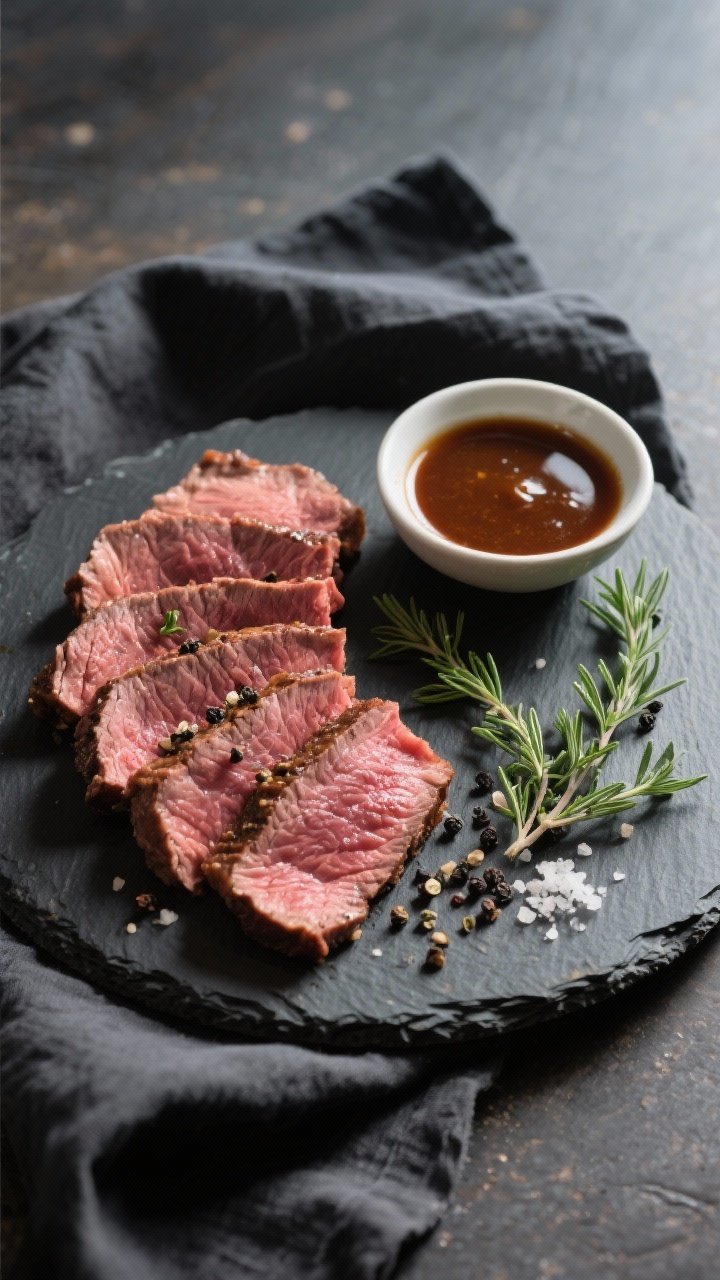
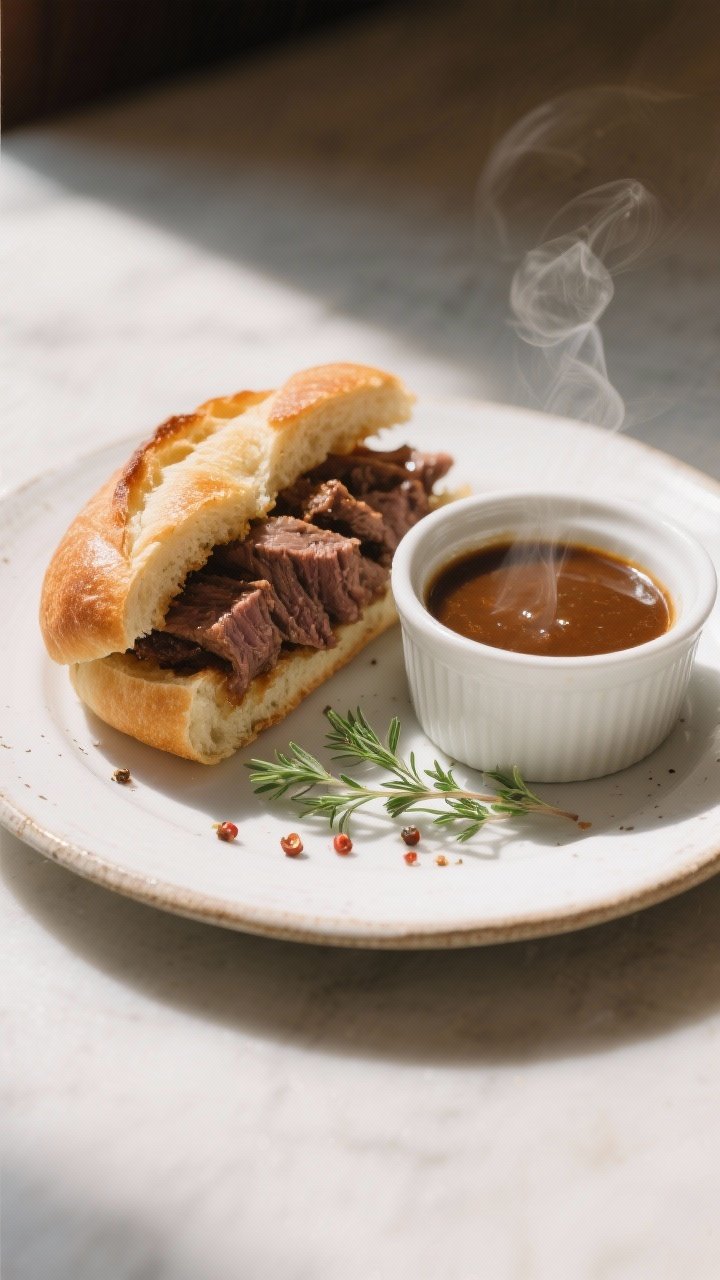
- Serve warm: Pour into a small pitcher or ramekin. Serve alongside sliced roast beef, French dip sandwiches, or prime rib.
Storage Instructions
- Refrigerator: Cool completely, then store in an airtight container for up to 4 days.
- Freezer: Freeze in small containers or ice cube trays for up to 3 months.
Thaw in the fridge and rewarm gently.
- Reheating: Warm over low heat on the stove. If it’s too salty after reducing again, stir in a splash of water or low-sodium stock.
Health Benefits
- Lower in fat than gravy: This au jus is not thickened with flour or cream, so it’s naturally lighter.
- Protein and minerals: Beef stock contributes small amounts of protein, iron, and collagen, especially if you use a bone-rich stock.
- Portion control: A little goes a long way in boosting flavor, which can help you enjoy leaner cuts without extra butter or heavy sauces.
- Customizable sodium: Using low-sodium stock and adding salt at the end helps you control overall salt intake.
What Not to Do
- Don’t skip tasting: Au jus hinges on balance. Taste at the end and tweak salt, acidity, and concentration.
- Don’t over-thicken: This isn’t gravy.
Avoid flour or cornstarch unless you want a different sauce altogether.
- Don’t boil hard: A rapid boil can make the flavors harsh and reduce too quickly. Keep it at a gentle simmer.
- Don’t use overly salty stock: You’ll concentrate the salt as it reduces. Start low-sodium and season later.
- Don’t burn the garlic: Burnt garlic turns bitter fast.
Cook it briefly and move on.
Variations You Can Try
- Onion au jus: Add 1 thinly sliced onion and cook until golden before deglazing. Sweeter and more aromatic.
- Mushroom au jus: Sauté 1 cup finely chopped cremini mushrooms with the shallot for an earthy, umami boost.
- Herb-forward: Swap thyme for rosemary, or add a small sprig of each. Remove before straining to avoid bitterness.
- Garlic and black pepper: Double the garlic and add extra cracked pepper for a steakhouse-style kick.
- Balsamic finish: Add 1–2 teaspoons balsamic vinegar at the end for gentle sweetness and acidity.
- No-wine version: Skip the wine and use all stock, plus 1–2 teaspoons red wine vinegar or sherry vinegar for brightness.
- Umami bomb: Add a few drops of fish sauce or a pinch of instant espresso powder to deepen the beefy notes.
FAQ
Can I make au jus without pan drippings?
Yes.
Use butter for the fat, a good low-sodium beef stock, and a teaspoon of Worcestershire sauce or soy sauce for depth. A quick sauté of shallot and garlic helps build flavor fast.
What’s the difference between au jus and gravy?
Au jus is thin, glossy, and not thickened with starch. Gravy is thicker and usually made with a roux or cornstarch.
Au jus is meant for dipping or drizzling, not smothering.
Which beef stock is best?
Choose a high-quality, low-sodium stock or broth. If you have homemade stock or bone broth, even better. Avoid stocks that taste overly sweet or artificial.
Can I use white wine instead of red?
You can, but the flavor will be lighter and less robust.
If using white wine, add a splash of Worcestershire or a bit more soy sauce to round it out.
How do I fix an au jus that’s too salty?
Add a little water or unsalted stock to dilute. You can also balance saltiness with a splash of vinegar or a pinch of sugar, then simmer briefly to meld.
Can I thicken au jus?
If you prefer a slightly thicker sauce, whisk in a small knob of cold butter off the heat for body. For true gravy, use a cornstarch slurry or roux, but that moves it away from classic au jus.
Is it safe to make au jus ahead?
Yes.
Make it up to 3–4 days in advance and reheat gently. Strain well and cool quickly before refrigerating.
What if I don’t cook with alcohol?
Skip the wine and use more stock, plus 1 teaspoon red wine vinegar or sherry vinegar for acidity. You’ll still get great flavor.
Can I use this with pork or chicken?
Absolutely.
Swap beef stock for chicken or pork stock, and match the herbs to the meat. Keep the same technique and adjust seasoning at the end.
How much au jus should I plan per person?
Plan on about 1/4 to 1/3 cup per person for dipping or drizzling. For French dip sandwiches, you might want closer to 1/2 cup per person.
Final Thoughts
A great au jus doesn’t need to be complicated or time-consuming.
With a few pantry ingredients and a light simmer, you’ll have a sauce that makes roast beef, prime rib, and sandwiches taste special. Keep it simple, taste as you go, and finish with just enough seasoning to make it sing. Once you learn this base method, you can tweak it to match any roast on your table.
Rich & Savory Au Jus Recipe – A Simple, Flavor-Packed Classic
Ingredients
- 2 tablespoons fat from pan drippings (or unsalted butter)
- 2 tablespoons pan drippings (optional but ideal; substitute 1 teaspoon Worcestershire sauce if needed)
- 1 small shallot or 1/2 small onion, finely minced
- 2 cloves garlic, minced
- 1 teaspoon tomato paste (optional, for depth)
- ½ cup dry red wine (or 1/2 cup beef stock plus 1 teaspoon red wine vinegar)
- 2 cups high-quality beef stock or broth (preferably low-sodium)
- 1 teaspoon fresh thyme leaves (or 1/4 teaspoon dried thyme)
- 1 bay leaf
- 1 teaspoon soy sauce (for umami; adjust to taste)
- Freshly ground black pepper, to taste
- Kosher salt, to taste
Instructions
- Collect the drippings: After roasting beef, tilt the pan and spoon off 2 tablespoons of the fat.Reserve another 2 tablespoons of the flavorful juices. If you’re not using drippings, use butter for the fat and Worcestershire for some of that roasty flavor.
- Sauté the aromatics: In a medium saucepan over medium heat, add the fat. Stir in the shallot and cook 2–3 minutes until soft.Add the garlic and cook 30 seconds, just until fragrant.
- Build the base: Stir in the tomato paste and cook 30–60 seconds to caramelize slightly. This step adds color and depth without making the jus thick.
- Deglaze with wine: Pour in the red wine, scraping the pan to pull up any browned bits. Let it simmer for 2–3 minutes until the alcohol cooks off and the liquid reduces by about half.
- Add stock and herbs: Stir in the beef stock, thyme, bay leaf, soy sauce, and the 2 tablespoons of pan juices (if using).Bring to a gentle simmer.
- Simmer and reduce: Keep it at a light simmer for 8–10 minutes, uncovered, until the flavors concentrate and the jus tastes rich. It should still be thin and pourable.
- Strain for smoothness: Remove the bay leaf. Strain the jus through a fine-mesh sieve into a clean bowl or saucepan, pressing on solids to extract flavor.
- Adjust seasoning: Taste and add black pepper and salt as needed.If it needs more brightness, add a splash of red wine vinegar. If it needs more body, simmer 2–3 minutes more.
- Serve warm: Pour into a small pitcher or ramekin. Serve alongside sliced roast beef, French dip sandwiches, or prime rib.