Old World Italian Pasta Recipe | Authentic Homemade Pasta Dish
This Old World Italian pasta brings you straight to a cozy Nonna’s kitchen—fresh eggs, silky dough, and a slow-simmered tomato-basil sauce that tastes like Sunday. You’ll knead the pasta by hand, roll it thin, and cut rustic ribbons that cook in minutes. It’s simple, comforting, and deeply satisfying.
I’ll guide you through the dough, resting, rolling, cutting, and simmering a classic sauce that clings beautifully. Expect approachable steps, practical tricks, and that unmistakable homemade texture you just can’t buy in a box.
Why This Classic Italian Pasta Recipe Works
- Simple ingredients, big flavor: Flour, eggs, olive oil, and a handful of pantry staples create rich noodles and a bright, savory sauce.
- Hands-on method for perfect texture: Kneading builds gluten so the pasta cooks tender with a pleasant bite.
- Rest time matters: Rested dough relaxes and rolls thin without springing back.
- Low-and-slow sauce: Gentle simmering sweetens tomatoes and deepens flavor without bitterness.
- Fresh pasta cooks fast: Two to three minutes mean weeknight-friendly timing with weekend-level results.
Ingredients
For the Fresh Pasta
- 2 cups (250 g) “00” flour (or all-purpose flour as a backup)
- 1/2 cup (60 g) fine semolina flour for strength and bite
- 4 large eggs, room temperature
- 1 tablespoon extra-virgin olive oil
- 1/2 teaspoon fine sea salt
For the Rustic Tomato-Basil Sauce
- 2 tablespoons extra-virgin olive oil
- 3 cloves garlic, thinly sliced
- 1 small yellow onion, finely chopped
- 1 can (28 oz) whole peeled San Marzano tomatoes, crushed by hand
- 1 small carrot, finely grated (for natural sweetness)
- 1 teaspoon kosher salt, plus more to taste
- 1/2 teaspoon freshly ground black pepper
- 1/4 teaspoon red pepper flakes (optional for gentle heat)
- 1 small bunch fresh basil, leaves torn
- 2 tablespoons unsalted butter to finish
To Serve
- Freshly grated Parmigiano-Reggiano
- Extra basil leaves
- Good olive oil for drizzling
How to Make Authentic Homemade Pasta
1) Mix and Knead the Dough
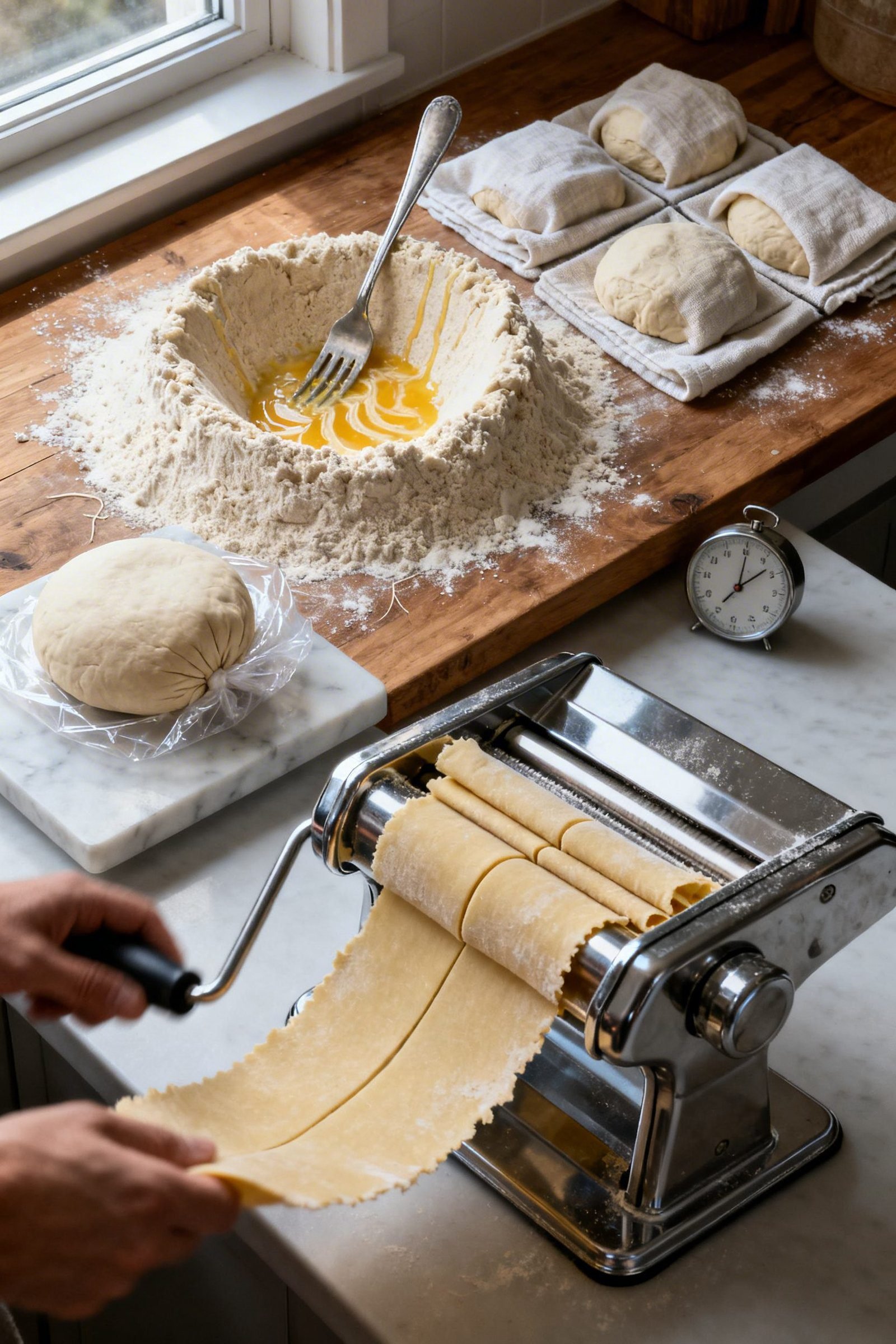
- Combine flours and salt on a clean counter. Make a wide well in the center.
- Add eggs and olive oil to the well. Whisk with a fork, pulling in flour gradually until a shaggy dough forms.
- Knead by hand 8–10 minutes until smooth, elastic, and slightly tacky. If sticky, dust with a touch of flour. If dry, wet your hands and continue kneading.
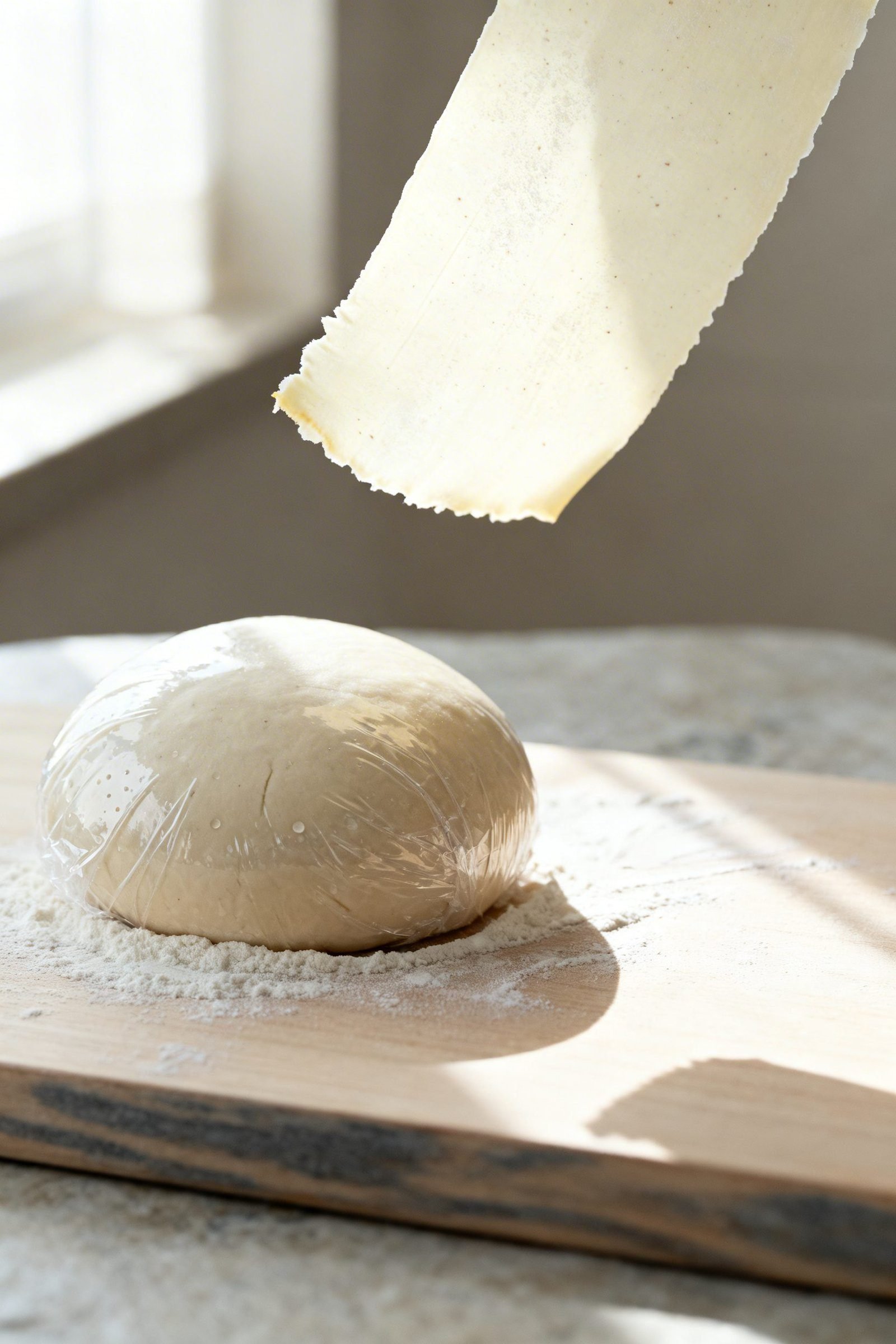
- Wrap tightly and rest 30–45 minutes at room temp. This relaxes gluten and makes rolling easier.
2) Roll and Cut the Pasta
- Divide dough into 4 pieces. Keep pieces covered so they don’t dry out.
- Flatten one piece and dust lightly with flour. Run through a pasta machine on the widest setting 2–3 times, folding in thirds between passes until edges look neat.
- Reduce the setting one notch at a time, rolling once per notch, until thin enough to see light through (usually setting 6–7 on most machines). For a rolling pin, work from center out and rotate frequently to maintain even thickness.
- Dust with semolina, then cut into tagliatelle-width ribbons or your preferred shape. Coil into loose nests on a semolina-dusted sheet tray.
3) Make the Sauce
- Warm olive oil in a wide skillet over medium heat. Add onion and cook 5–7 minutes until translucent.
- Stir in garlic and red pepper flakes; cook 30 seconds until fragrant.
- Add crushed tomatoes and grated carrot. Season with salt and pepper. Simmer gently 20–30 minutes, stirring occasionally, until thickened and glossy.
- Fold in butter and torn basil off heat. Taste and adjust salt.
4) Cook and Combine
- Bring a large pot of water to a rolling boil. Salt generously until it tastes like the sea.
- Drop fresh pasta and cook 2–3 minutes until al dente. Reserve 1 cup pasta water.
- Transfer pasta to the skillet with sauce. Toss over medium heat, adding splashes of pasta water to create a silky coating.
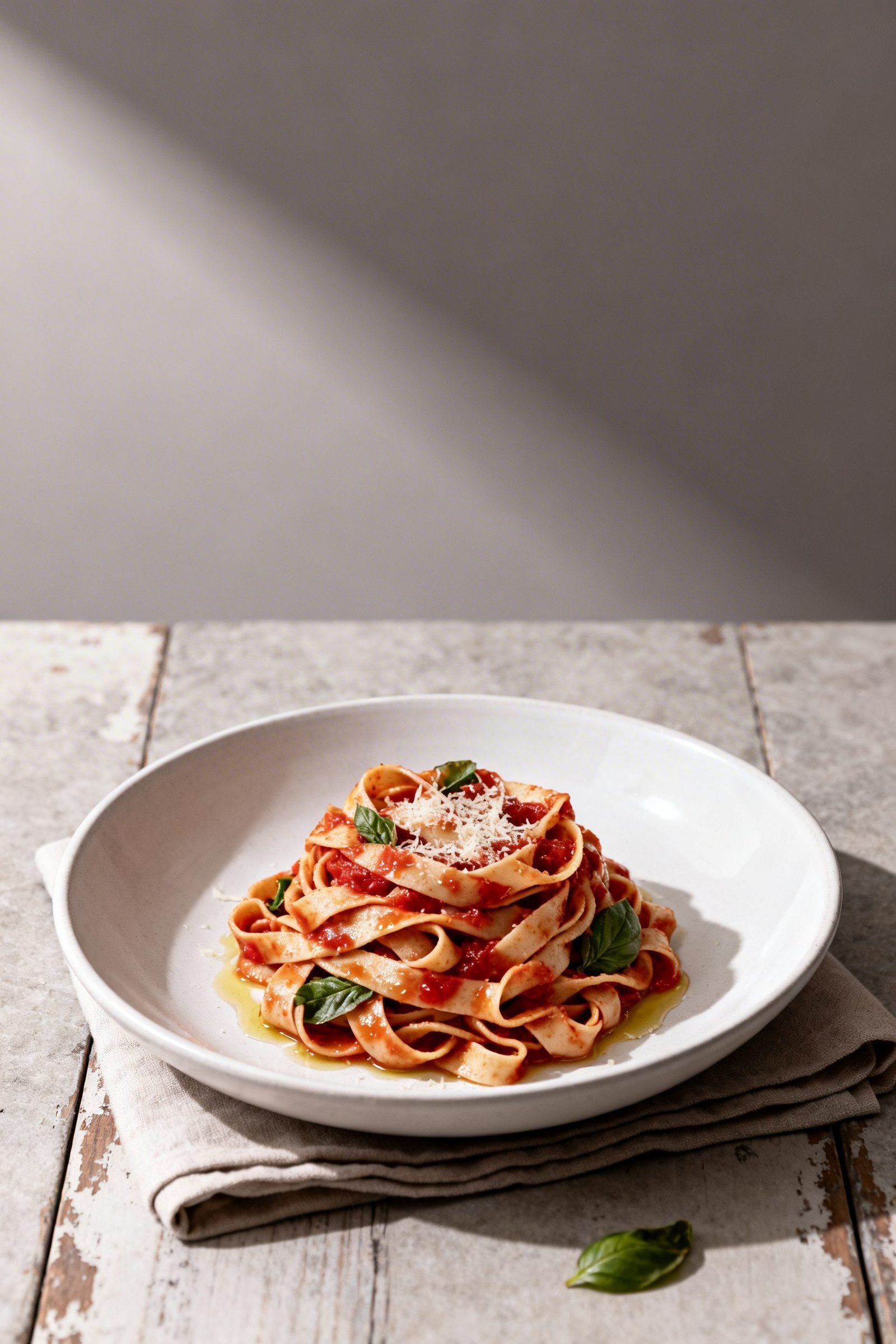
- Finish with Parmigiano-Reggiano and a drizzle of olive oil. Serve immediately with extra basil.
How to Store Leftover Homemade Pasta
Uncooked Fresh Pasta
- Refrigerator: Dust with semolina, place on a tray, cover loosely, and chill up to 24 hours.
- Freezer: Freeze nests on a tray until firm, then bag airtight for up to 2 months. Cook from frozen; add 1–2 extra minutes.
Cooked Pasta and Sauce
- Refrigerator: Store in an airtight container up to 3 days. Add a splash of water when reheating.
- Freezer: Freeze sauce separately up to 3 months. Fresh noodles don’t freeze well once cooked, so keep them separate when possible.
Benefits of Making This Old-World Pasta at Home
- Texture you control: Thickness, bite, and shape match your exact preference.
- Cleaner ingredients: No additives—just flour, eggs, and real tomatoes.
- Faster cook time: Fresh pasta goes from pot to plate in minutes.
- Budget-friendly luxury: Everyday pantry items feel restaurant-worthy.
- Skill-building: You’ll master kneading, rolling, and sauce balance with one recipe.
What to Avoid for Best Results
- Don’t skip the rest: Tight dough tears and resists rolling.
- Don’t over-flour: Too much dusting makes dry, tough noodles.
- Don’t boil in under-salted water: The pasta itself needs seasoning.
- Don’t rush the sauce: A quick boil tastes sharp; gentle simmer builds sweetness and depth.
- Don’t overcook: Fresh pasta turns mushy fast—taste at 2 minutes and pull early.
Variations You Can Try
- Herb dough: Knead chopped parsley or basil into the dough for speckled noodles.
- Spinach pasta: Replace one egg with 1/4 cup well-drained, puréed spinach for color and earthiness.
- Puttanesca twist: Add olives, capers, and anchovy to the sauce for briny depth.
- Amatriciana style: Swap butter for guanciale fat and add diced guanciale with a pinch of chili.
- Butter-sage finish: Toss cooked pasta with browned butter and crisped sage, then shower with cheese.
- Cheese-first: Stir a spoon of ricotta into the sauce for creamy richness.
FAQ
Can I make the dough in a food processor?
Yes. Pulse the flours and salt, add eggs and oil, and process until small curds form. Turn out and knead 1–2 minutes to smooth it, then rest.
What if I don’t have “00” flour?
Use all-purpose flour and keep the semolina. You’ll still get great texture with a touch more chew.
How thin should I roll?
Roll until you can almost see your hand through the sheet. For most machines, that’s setting 6–7.
Can I make the pasta ahead?
Yes. Shape nests, dust with semolina, and refrigerate up to 24 hours or freeze for longer.
Do I need to peel the tomatoes?
No. Crush canned whole tomatoes by hand for the best body and old-school texture.
How much salt goes in the water?
Use about 1–1.5 tablespoons kosher salt per 4 quarts water. It should taste pleasantly salty.
Why add butter at the end?
Butter softens acidity and gives the sauce a glossy finish that clings to fresh noodles.
Conclusion
Homemade Italian pasta tastes luxurious yet stays wonderfully simple when you keep to time-tested methods. Mix a sturdy dough, roll it thin, simmer a clean tomato-basil sauce, and bring it all together with a little pasta water magic. The result? A bowl that feels both everyday and extraordinary—exactly what Old World cooking does best.
Old World Italian Pasta with Rustic Tomato-Basil Sauce
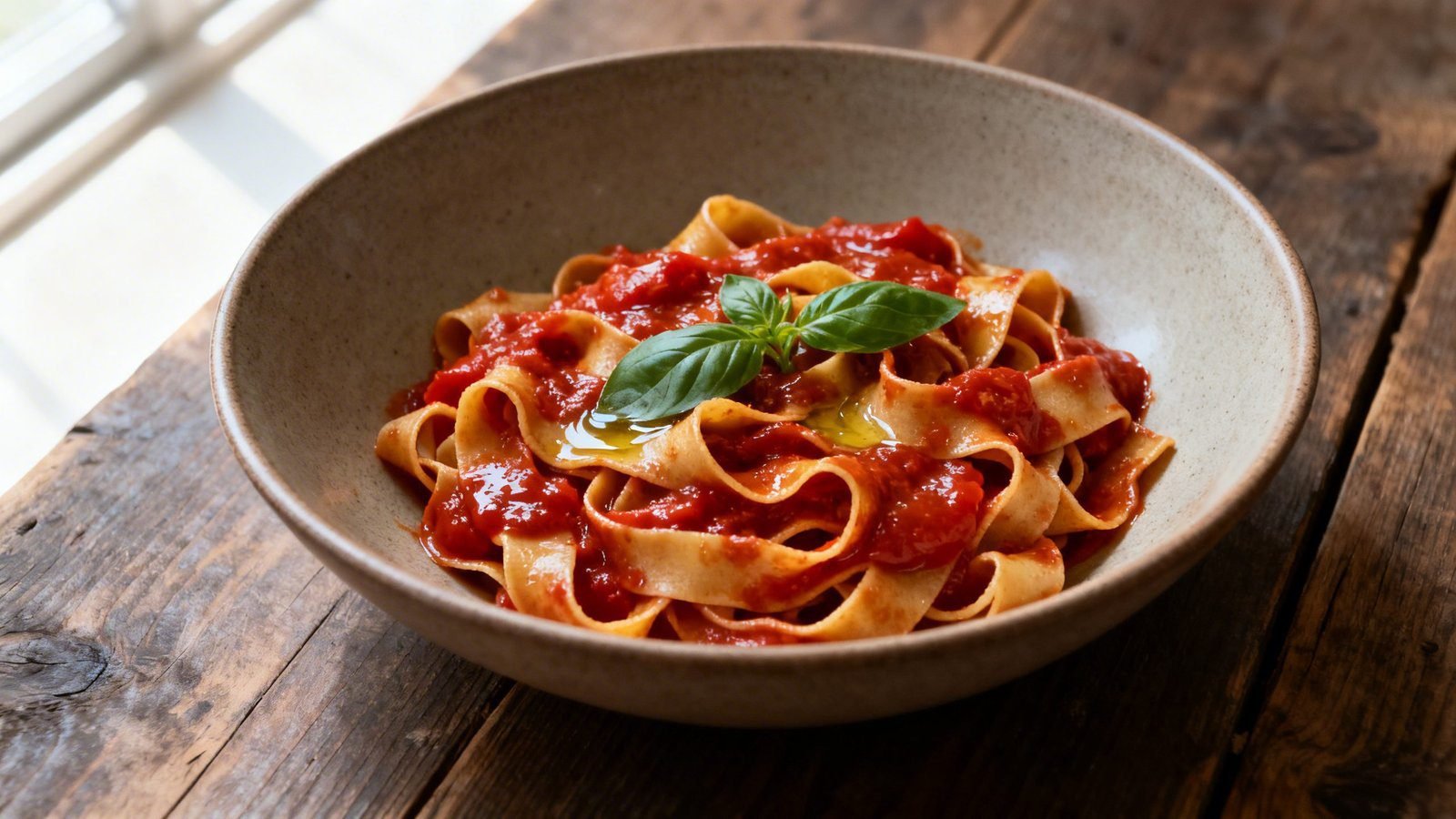
Hand-kneaded fresh pasta ribbons tossed in a slow-simmered tomato-basil sauce for a simple, comforting Italian classic.
Ingredients
- 2 cups (250 g) “00” flour or all-purpose flour
- ½ cup (60 g) fine semolina flour
- 4 large eggs, room temperature
- 1 tablespoon extra-virgin olive oil
- ½ teaspoon fine sea salt
- 2 tablespoons extra-virgin olive oil (for sauce)
- 3 cloves garlic, thinly sliced
- 1 small yellow onion, finely chopped
- 1 can (28 oz) whole peeled San Marzano tomatoes, crushed by hand
- 1 small carrot, finely grated
- 1 teaspoon kosher salt, plus more to taste
- ½ teaspoon freshly ground black pepper
- ¼ teaspoon red pepper flakes (optional)
- 1 small bunch fresh basil, leaves torn
- 2 tablespoons unsalted butter
- Freshly grated Parmigiano-Reggiano, for serving
- Extra basil leaves, for serving
- Good olive oil, for drizzling
- Kosher salt, for pasta water
Instructions
- Combine 00 flour, semolina, and fine sea salt on a clean counter; make a wide well.
- Add eggs and 1 tablespoon olive oil to the well; whisk and gradually incorporate flour until a shaggy dough forms.
- Knead 8–10 minutes until smooth and elastic, adjusting with a touch of flour or water as needed.
- Wrap dough and rest 30–45 minutes at room temperature.
- Divide dough into 4 pieces; keep covered. Flatten one piece, dust lightly, and run through a pasta machine on the widest setting 2–3 times, folding in thirds between passes.
- Reduce thickness one notch at a time until thin enough to see light through (about setting 6–7).
- Dust with semolina and cut into tagliatelle-width ribbons; coil into loose nests on a semolina-dusted tray.
- Warm 2 tablespoons olive oil in a wide skillet over medium heat. Cook onion 5–7 minutes until translucent.
- Stir in garlic and red pepper flakes; cook 30 seconds until fragrant.
- Add crushed tomatoes and grated carrot; season with 1 teaspoon kosher salt and ½ teaspoon black pepper. Simmer gently 20–30 minutes, stirring occasionally, until thickened and glossy.
- Remove from heat; fold in butter and torn basil. Adjust salt to taste.
- Bring a large pot of water to a rolling boil; salt until it tastes like the sea.
- Cook fresh pasta 2–3 minutes until al dente, reserving 1 cup pasta water.
- Transfer pasta to the skillet with sauce; toss over medium heat, adding splashes of pasta water to create a silky coating.
- Finish with Parmigiano-Reggiano and a drizzle of olive oil; garnish with extra basil and serve immediately.