French Macarons with Vanilla Buttercream | Delicate Bakery Style Treat
Craving bakery-perfect French macarons at home? You can make those delicate, smooth shells with ruffled feet and a creamy vanilla buttercream filling right in your kitchen. I’ll walk you through each step with practical tips so you get that coveted shine, chew, and snap every time.
This guide keeps things friendly and fuss-free, but it doesn’t skip the details. Grab your whisk, cue up a good playlist, and let’s make a batch of elegant vanilla macarons that look gorgeous and taste even better.
Why This Vanilla Macaron Recipe Works
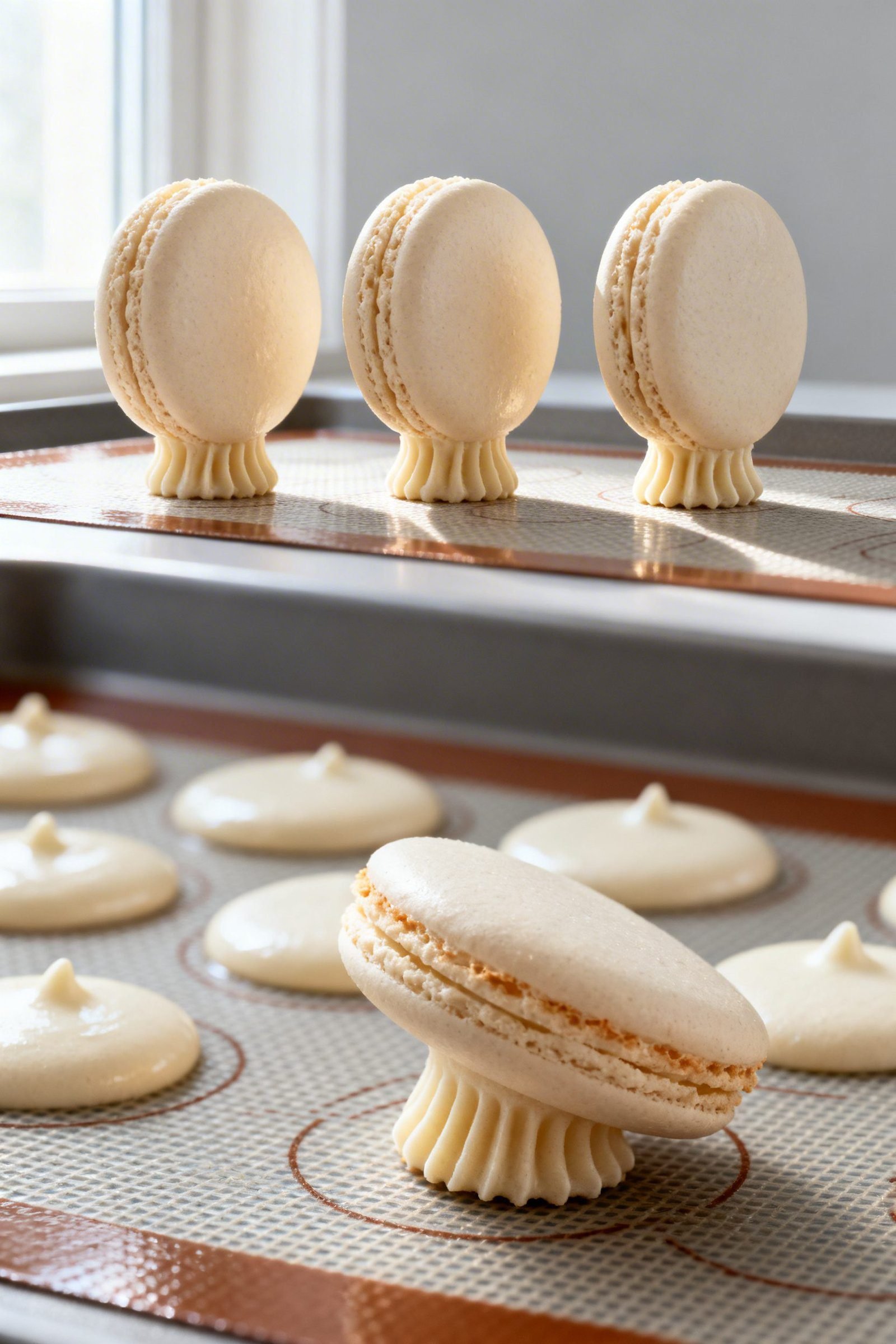
Macarons intimidate a lot of bakers, but this method removes the mystery. Here’s why it delivers reliable results:
- Accurate ratios of almond flour, confectioners’ sugar, and egg whites keep the batter balanced.
- French meringue technique (no syrup needed) offers simplicity and consistent structure.
- Macaronage cues show you exactly when to stop folding for smooth shells and proper feet.
- Low-and-slow baking dries shells evenly to prevent hollows and cracks.
- Vanilla buttercream uses real vanilla for a creamy, classic filling that pairs with everything.
Ingredients
For the macaron shells
- 120 g superfine almond flour (blanched, finely ground)
- 200 g confectioners’ sugar (sifted)
- 100 g egg whites (about 3 large, aged 24–48 hours, room temperature)
- 90 g granulated sugar
- 1/4 tsp cream of tartar (or a few drops of lemon juice)
- 1/4 tsp fine sea salt
- 1/2 tsp pure vanilla extract (optional for shells)
- Gel food coloring (optional; avoid liquid coloring)
For the vanilla buttercream
- 115 g unsalted butter (softened)
- 200–240 g confectioners’ sugar (sifted; adjust to taste)
- 2–3 tbsp heavy cream (or milk)
- 1 1/2 tsp pure vanilla extract (or vanilla bean paste for specks)
- Pinch of fine sea salt
Helpful tools
- Kitchen scale for precise measurements
- Fine-mesh sieve for dry ingredients
- Stand mixer or hand mixer with whisk attachment
- Silicone mats or parchment and large sheet pans
- Piping bags with round tips (Ateco 804–806)
- Oven thermometer to verify temperature
How to Make Vanilla Macarons Step by Step
1) Prep and sift
- Line two sheet pans with silicone mats or parchment. If you like, trace 1.3–1.5 inch circles on the parchment as a guide.
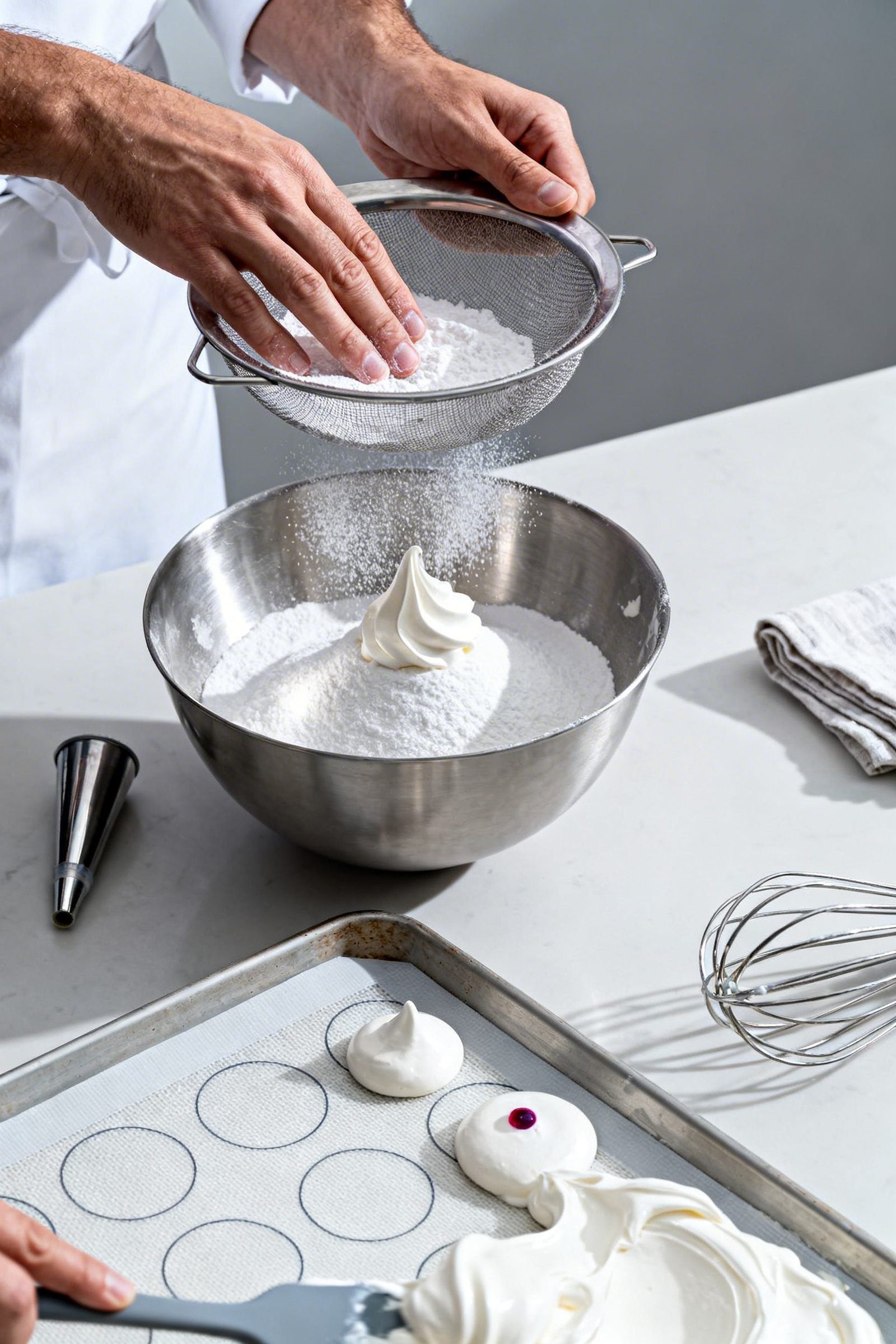
- Sift almond flour and confectioners’ sugar together twice. Discard large bits. You want a fine, fluffy mix.
2) Make the French meringue
- Wipe your bowl and whisk with vinegar or lemon juice to remove grease. Add egg whites and salt.
- Whip on medium speed until foamy, then add cream of tartar.
- Increase to medium-high and sprinkle in granulated sugar slowly over 1–2 minutes.
- Whip to glossy medium-stiff peaks: the peak stands tall with a slight curl. Mix in vanilla and a tiny bit of gel color if using.
3) Macaronage (folding the batter)
- Add the sifted almond-sugar mix in three additions.
- Fold with a spatula: go around the bowl, then press batter gently against the sides to deflate large air pockets.
- Stop when the batter flows like lava and forms a ribbon that disappears in 8–10 seconds. It should run off the spatula in a thick, continuous “V.”
4) Pipe and rest
- Transfer batter to a piping bag fitted with a round tip.
- Pipe 1.3–1.5 inch circles, holding the bag vertical and stopping with a quick twist.
- Tap the pans firmly on the counter 3–4 times to pop bubbles. Use a toothpick to gently burst stubborn ones for smooth tops.
- Let shells rest until they form a dry, matte skin you can touch lightly without sticking, about 25–45 minutes depending on humidity.
5) Bake
- Preheat oven to 300°F (150°C). Use an oven thermometer to confirm accuracy.
- Bake one tray at a time on the middle rack for 14–17 minutes. Shells should have set feet and release cleanly from the mat when cooled.
- Cool completely on the pan before removing.
6) Make the vanilla buttercream
- Cream butter until smooth and pale, 1–2 minutes.
- Add confectioners’ sugar in two additions with the salt, then beat until fluffy.
- Mix in vanilla and 2 tablespoons cream. Add more cream if needed for a soft, pipeable texture.
7) Fill and mature
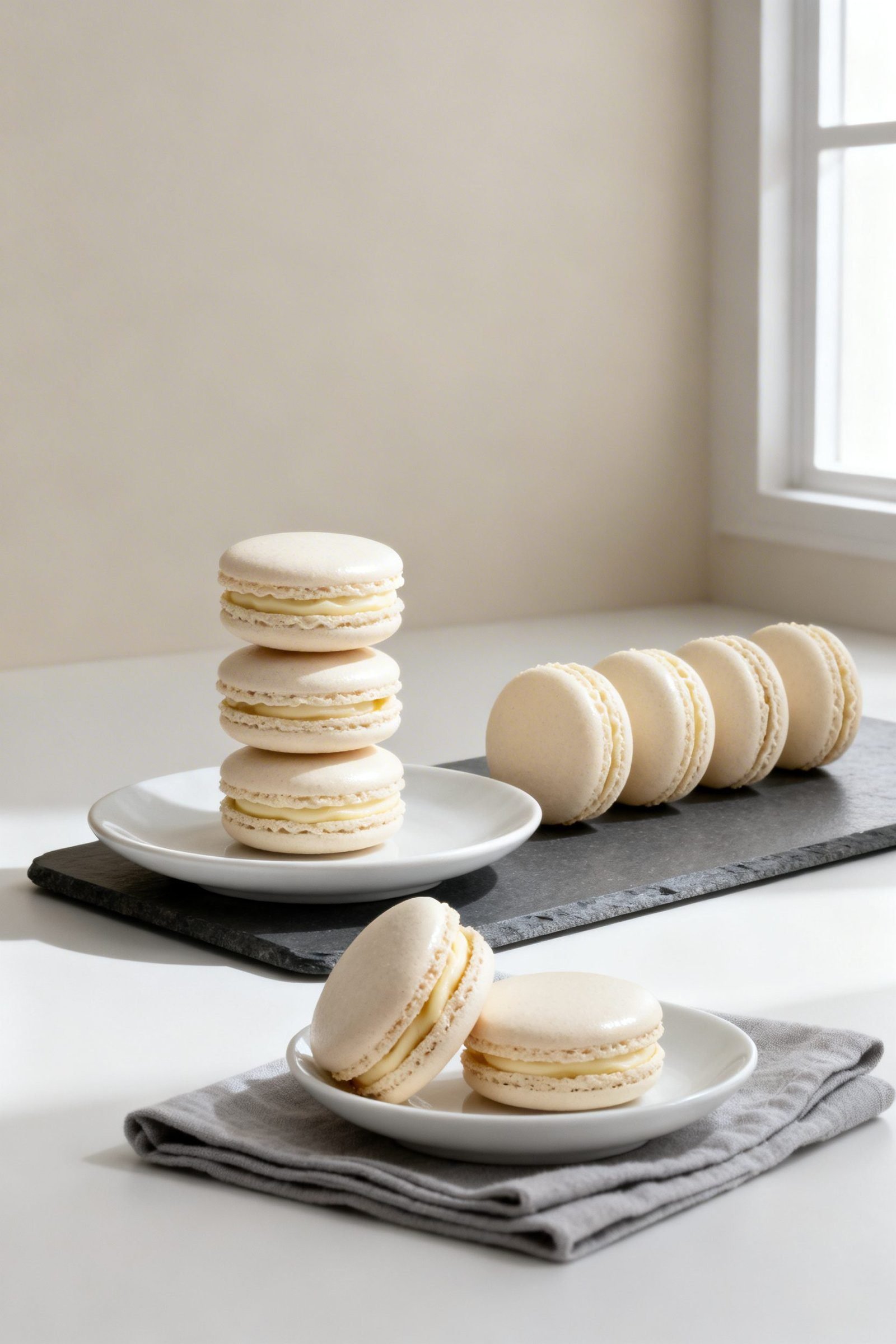
- Pair shells by size. Pipe a small dollop of buttercream on one shell and sandwich gently with its partner.
- Refrigerate macarons in an airtight container for 24 hours to mature. This step softens the interior and deepens flavor.
- Serve at cool room temperature.
How to Store Vanilla Macarons
- Short term: Keep filled macarons in an airtight container in the fridge for 4–5 days.
- Freezing: Freeze filled or unfilled shells for up to 2 months. Layer with parchment to protect the tops.
- Thawing: Thaw in the fridge overnight, then bring to room temp before serving for best texture.
- Make-ahead: Bake shells and freeze; whip buttercream the day you plan to fill.
Benefits of Homemade Vanilla Macarons
- Better texture: Crisp shell, chewy middle, creamy center tailored to your preference.
- Real vanilla flavor: Use extract or paste for pure, aromatic notes.
- Customization: Tint shells, decorate with sprinkles, or swap fillings easily.
- Cost savings: Gourmet results at a fraction of bakery prices.
- Skill building: You’ll master meringue, folding, and piping in one project.
What to Avoid When Making Macarons
- Skipping the scale: Cups vary; grams keep ratios precise.
- Over-whipping or under-whipping meringue: Aim for medium-stiff, glossy peaks.
- Over-folding the batter: Too runny batter spreads and bakes flat.
- High oven temp: Excess heat causes browning, cracks, or lopsided feet.
- Greasy tools: Any fat ruins meringue. Keep bowls spotless.
- Humidity: Moist air delays drying. Run a dehumidifier or AC if needed.
- Liquid food coloring: It thins the batter. Use gel or powder.
Flavor Twists and Variations
- Vanilla bean speckle: Swap extract for vanilla bean paste in shells and buttercream.
- Salted honey vanilla: Drizzle 1–2 teaspoons honey into the buttercream and add a pinch of flaky salt.
- Lemon-vanilla: Add 1 teaspoon lemon zest to shells; brighten buttercream with 1 teaspoon lemon juice.
- Coffee-vanilla: Dissolve 1 teaspoon espresso powder in 1 teaspoon cream and mix into the buttercream.
- Chocolate-dipped edges: After filling, chill, then dip half the macaron in melted dark chocolate and set.
- Sprinkle rims: Roll just-filled edges in rainbow sprinkles or toasted coconut for texture.
FAQ
Why do my macarons crack?
Underdried shells, over-whipped meringue, or hot spots often cause cracks. Ensure a dry skin forms before baking and verify oven temperature.
How do I fix hollow shells?
Whip to medium-stiff peaks, avoid over-folding, and bake long enough to set the interior. Slightly lower heat with a longer bake helps prevent hollows.
Can I use regular flour instead of almond flour?
No. Almond flour creates the signature texture. Wheat flour changes structure and flavor.
Do I have to age egg whites?
Aging helps reduce moisture and strengthens the meringue. If you can’t, use fresh whites at room temp and whip carefully to the right peaks.
Can I make them less sweet?
Macarons need sugar for structure. Instead, balance sweetness with fillings like tangy jams, ganache, or salted buttercream.
Why don’t my macarons have feet?
Usually from wet batter, short rest time, or low oven heat. Dry longer, confirm macaronage, and preheat fully.
What food coloring works best?
Gel or powdered coloring keeps the batter stable and vibrant without thinning.
Conclusion
You can absolutely master French macarons at home with patience and a solid method. Measure with a scale, watch your meringue, fold just enough, and give the shells time to rest. Then sandwich them with silky vanilla buttercream and let the magic happen in the fridge overnight.
Once you nail the base, you can color, flavor, and decorate to your heart’s content. Bake a batch, share a few, and stash some for yourself—you earned them.
French Macarons with Vanilla Buttercream
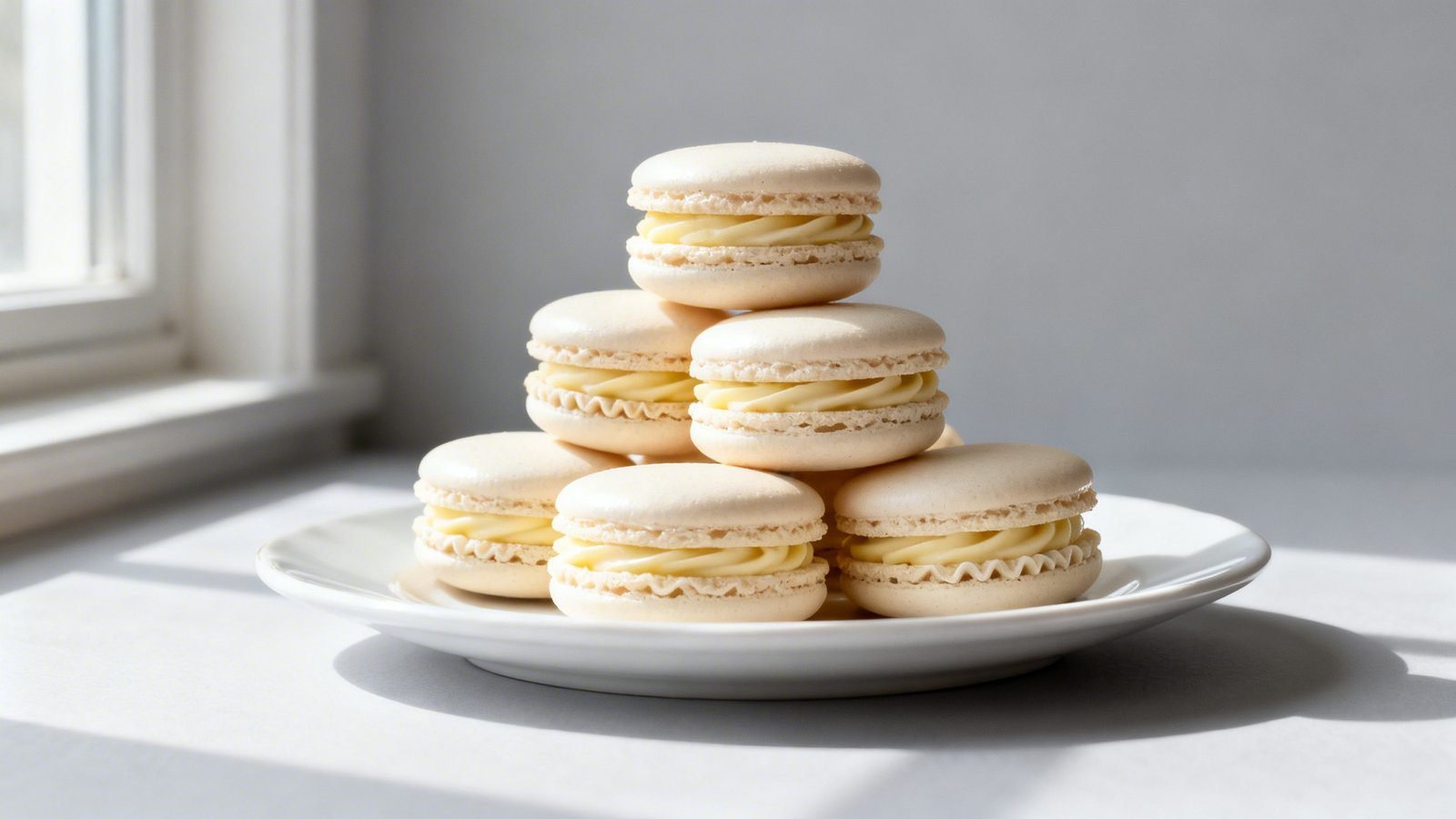
Delicate French macaron shells filled with creamy vanilla buttercream using a reliable, step-by-step French meringue method.
Ingredients
- 120 g superfine almond flour (blanched, finely ground)
- 200 g confectioners’ sugar (sifted)
- 100 g egg whites (about 3 large, aged 24–48 hours, room temperature)
- 90 g granulated sugar
- ¼ tsp cream of tartar (or a few drops of lemon juice)
- ¼ tsp fine sea salt
- ½ tsp pure vanilla extract (optional for shells)
- Gel food coloring (optional; avoid liquid coloring)
- 115 g unsalted butter (softened)
- 200–240 g confectioners’ sugar (sifted; adjust to taste)
- 2–3 tbsp heavy cream (or milk)
- 1 ½ tsp pure vanilla extract (or vanilla bean paste for specks)
- Pinch of fine sea salt
Instructions
- Line two sheet pans with silicone mats or parchment; optionally trace 1.3–1.5 inch circles.
- Sift almond flour and confectioners’ sugar together twice; discard any large bits.
- Clean bowl and whisk with vinegar or lemon juice; add egg whites and salt.
- Whip until foamy, add cream of tartar, then gradually add granulated sugar over 1–2 minutes.
- Whip to glossy medium-stiff peaks; mix in vanilla and gel color if using.
- Add sifted almond-sugar mixture in three additions; fold until batter flows like lava and ribbons disappear in 8–10 seconds.
- Transfer batter to a piping bag with a round tip; pipe 1.3–1.5 inch circles.
- Tap pans 3–4 times to release air bubbles; pop remaining bubbles with a toothpick.
- Rest shells until a dry, matte skin forms and they don’t stick to your finger, about 25–45 minutes.
- Preheat oven to 300°F (150°C) and verify with an oven thermometer.
- Bake one tray at a time on the middle rack for 14–17 minutes; cool completely on the pan.
- For buttercream: beat butter until smooth and pale, 1–2 minutes.
- Add confectioners’ sugar and salt in two additions; beat until fluffy.
- Mix in vanilla and 2 tbsp cream; add more cream as needed for a soft, pipeable texture.
- Pair cooled shells by size; pipe buttercream on one shell and sandwich with its partner.
- Refrigerate assembled macarons in an airtight container for 24 hours to mature; serve at cool room temperature.