
Homemade Fresh Mozzarella | Easy Cheese Making at Home
Fresh mozzarella feels like kitchen magic. You heat milk, add a few humble helpers, and suddenly you’re stretching glossy, silky curds into soft, milky cheese. The first time I made it, I couldn’t believe how simple it felt once I understood the steps—and the flavor blew every grocery-store ball out of the water.
If you love caprese salads, bubbling pizzas, or just snacking on tender cheese with olive oil and salt, this guide will walk you through homemade fresh mozzarella with clear steps, helpful tips, and zero fluff. You’ll learn why it works, what to use, how to fix hiccups, and how to store your cheese so it stays soft and dreamy.
Why This Fresh Mozzarella Method Works
Homemade mozzarella comes down to chemistry you can control. This method keeps it friendly and repeatable for home cooks:
- Acidification sets the stage: Citric acid lowers the milk’s pH so curds form quickly and cleanly.
- Rennet does the heavy lifting: It coagulates proteins into strong curds you can slice and stretch.
- Gentle heat protects texture: Moderate temperatures keep the curds tender, not rubbery.
- Hot whey bath creates the stretch: Heat plus salt helps the curd align so you get that classic pull.
- Simple tools, easy timing: You don’t need special gear—just a thermometer, slotted spoon, and patience.
Follow the temperatures and timing and you’ll turn milk into glossy, supple mozzarella you’ll want to put on everything.
Ingredients
- 1 gallon whole cow’s milk (not ultra-pasteurized; pasteurized is fine)
- 1 1/2 teaspoons citric acid, dissolved in 1/4 cup cool water
- 1/4 teaspoon liquid rennet, diluted in 1/4 cup cool water (or follow package for tablet rennet)
- 1–2 teaspoons kosher salt (plus extra for brine, optional)
- Ice for an ice bath (optional, for quick chilling)
Tools You’ll Need
- Large nonreactive pot (stainless steel or enameled)
- Instant-read thermometer
- Slotted spoon or skimmer
- Long knife or offset spatula to cut curds
- Microwave-safe bowl or a second pot for hot whey bath
- Cheesecloth and colander (optional but helpful)
- Gloves for handling hot curds (highly recommended)
How to Make Fresh Mozzarella at Home
1) Prep the milk
- Pour the milk into the pot. Stir in the dissolved citric acid.
- Warm gently over medium-low heat to 90°F (32°C), stirring slowly to distribute the acid evenly.
2) Coagulate with rennet
- Turn off the heat. Stir in the diluted rennet using an up-and-down motion for about 30 seconds. Stop stirring.
- Let the milk rest, undisturbed, for 5–10 minutes until it sets into a custard-like curd. It should pull cleanly from the sides when nudged.
3) Cut and cook the curds
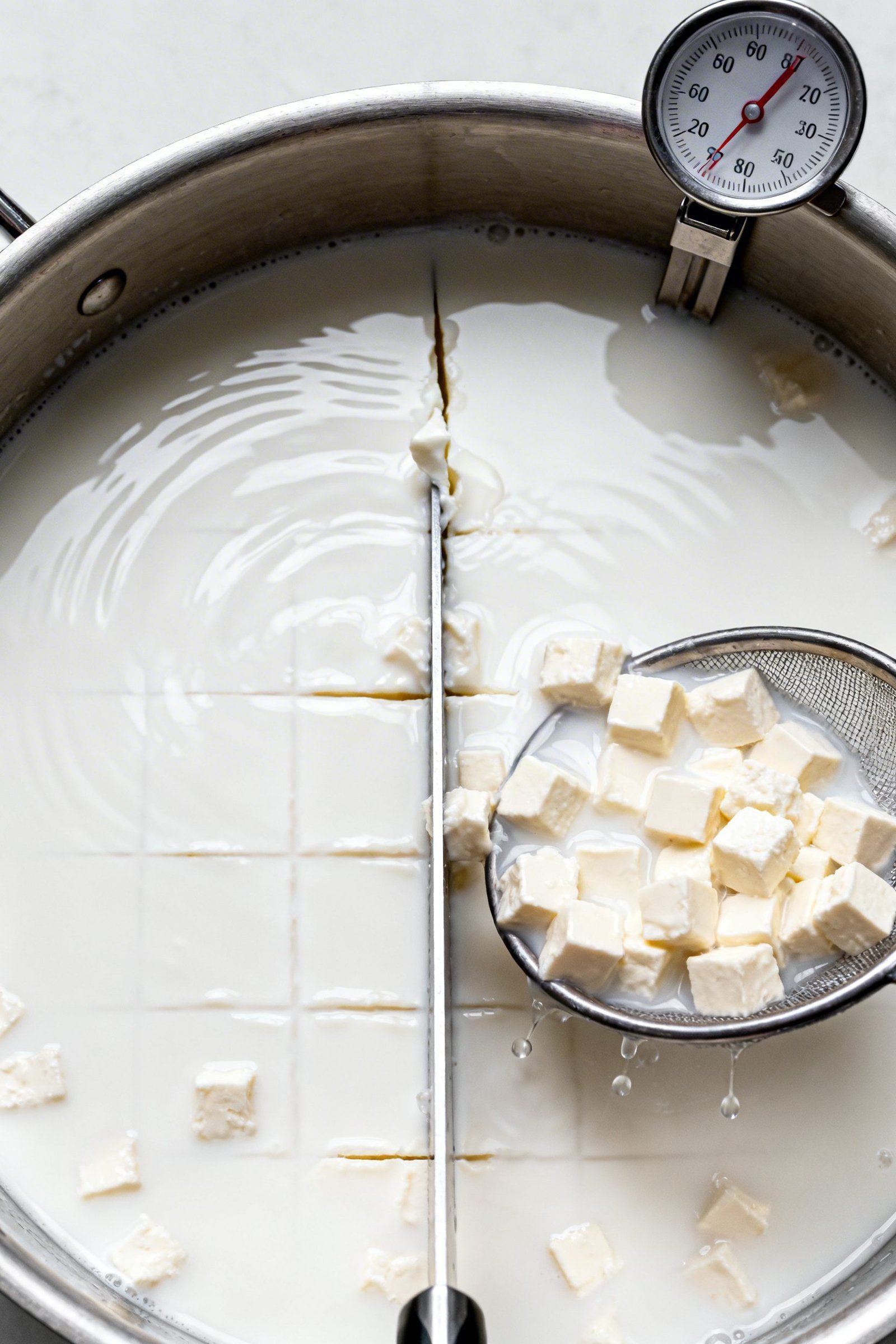
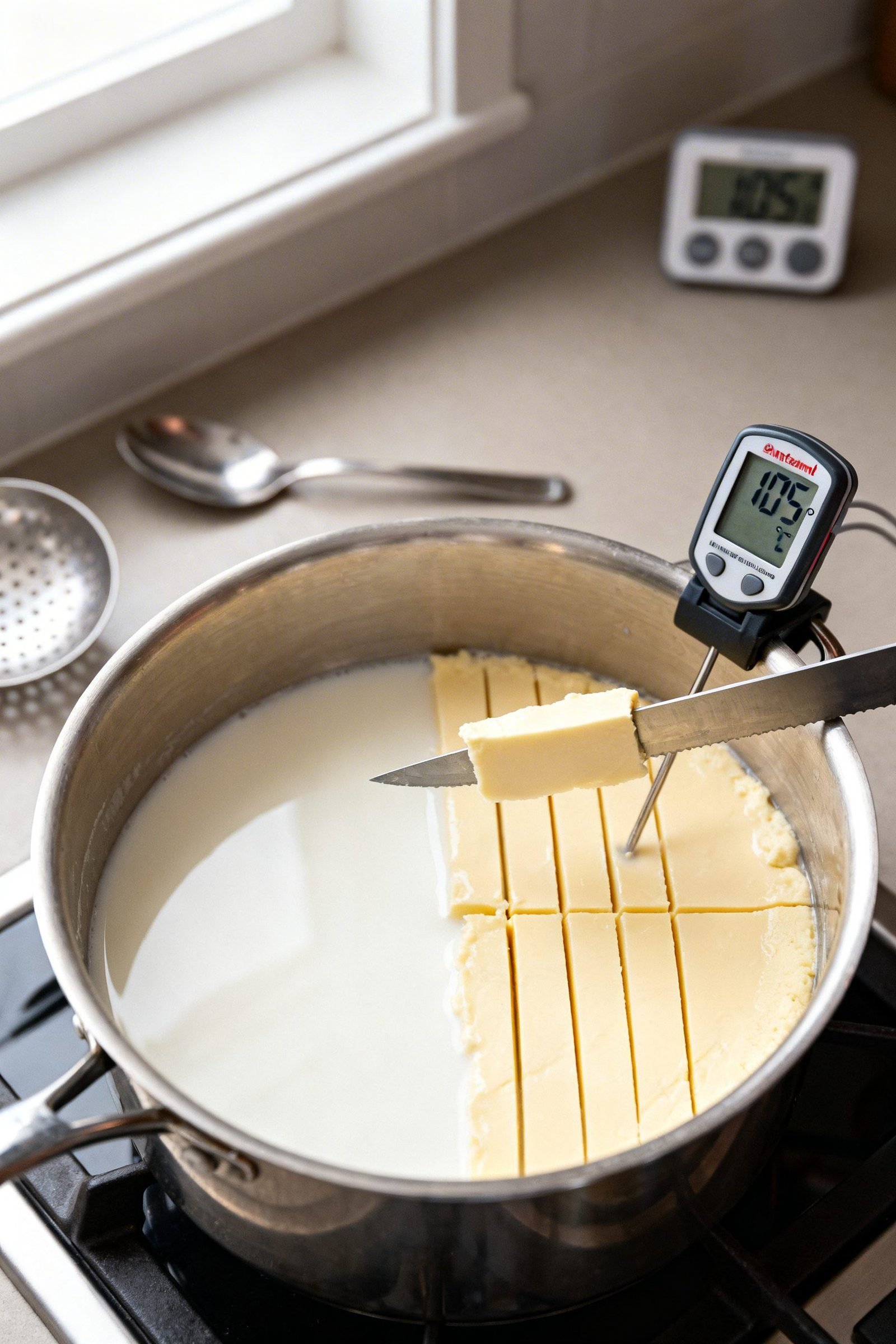
- Use a long knife to cut the curd into a 1-inch grid, slicing vertically and then perpendicular. Make sure you reach the bottom.
- Return gentle heat and warm the curds to 105°F (40°C), stirring slowly to shrink and firm them. Don’t over-stir or you’ll lose too much moisture.
4) Separate curds and whey
- Remove from heat. Let the curds settle for 5 minutes.
- Use a slotted spoon to transfer curds to a colander lined with cheesecloth. Drain briefly, then sprinkle with 1–2 teaspoons salt and fold gently to distribute.
5) Heat for the stretch (two options)
Microwave method (fast)
- Place curds in a microwave-safe bowl. Heat for 1 minute on high.
- Drain off whey, fold the curd with a spoon, and heat in two more 30-second bursts, draining between each. Aim for a curd temperature of 150–160°F (65–71°C).
Hot whey bath (classic)
- Heat a pot of reserved whey to 175°F (80°C). Add a spoonful of salt if you like.
- Dip the curd in the hot whey using a slotted spoon, then lift and fold it over itself until it reaches that same 150–160°F range and turns smooth and elastic.
6) Stretch and shape
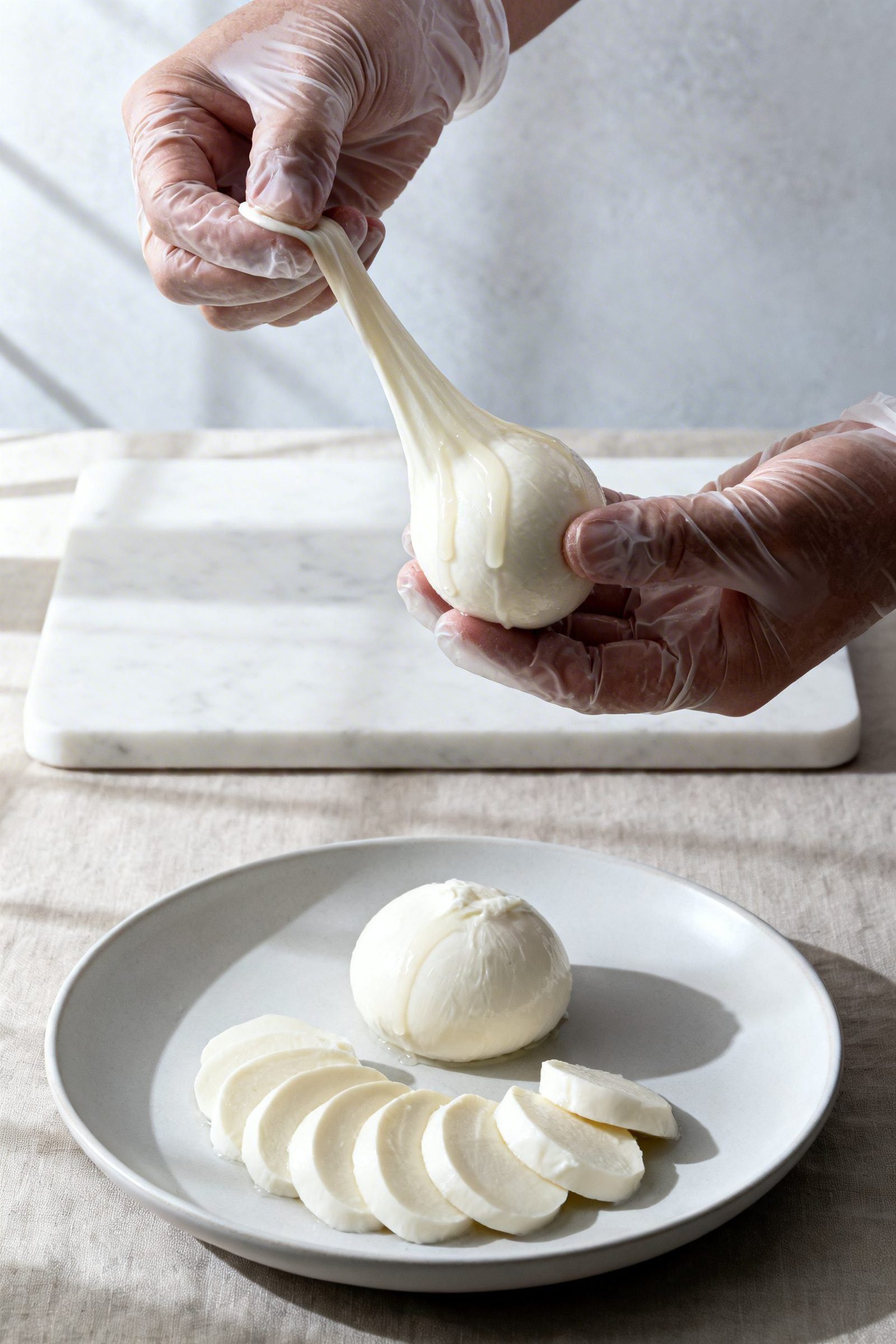
- Put on gloves. Stretch the hot curd like taffy—pull, fold, and pull again until it shines and lengthens without tearing. Work quickly so it stays warm.
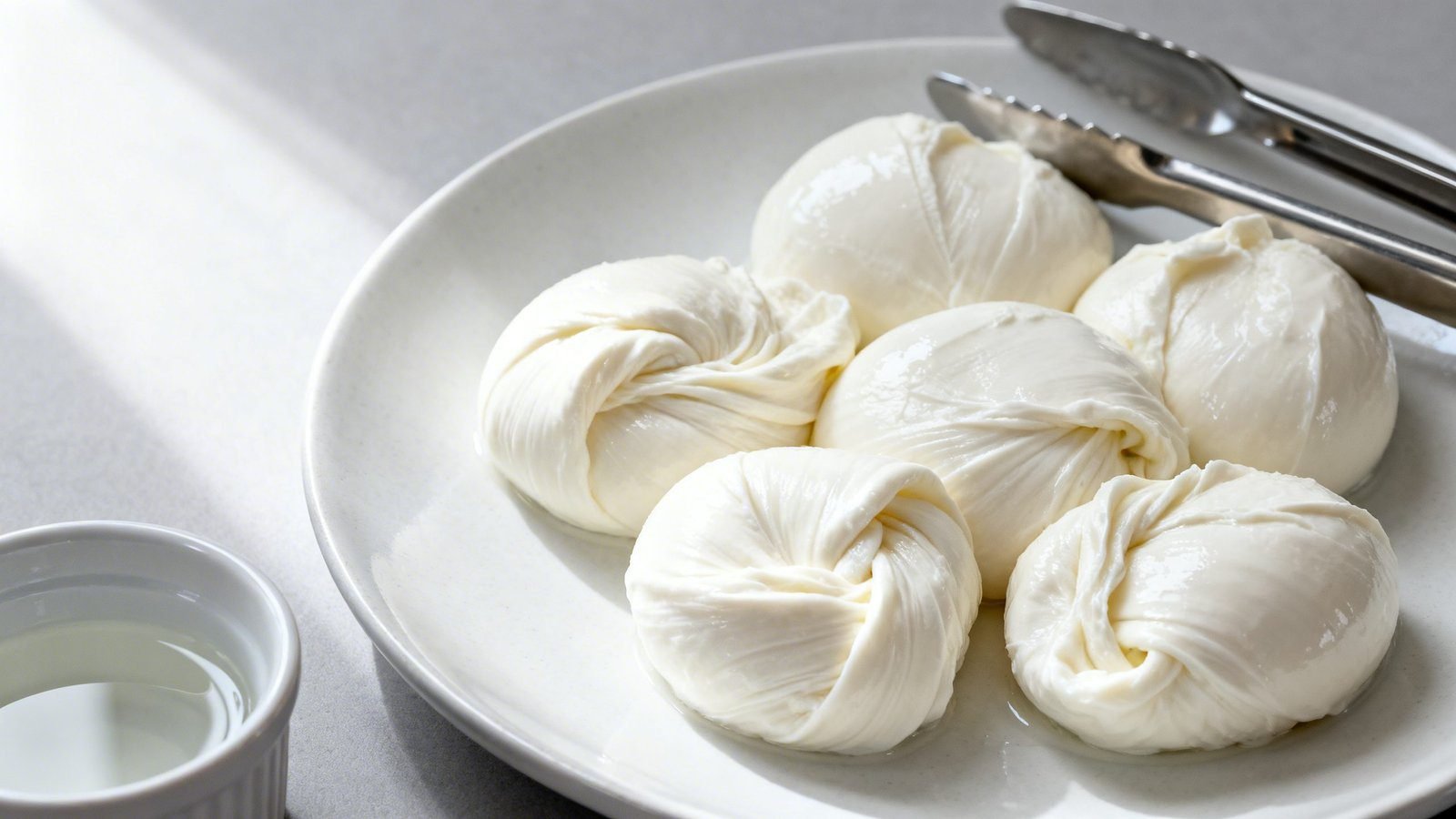
- Shape into one large ball, several small balls (bocconcini), or ropes for braiding.
- Drop the formed cheese into ice water for 5–10 minutes to set the shape, or slip it into a cool salted brine for more flavor.
Quick Troubleshooting
- Curds look like yogurt: Milk might be ultra-pasteurized or too acidic. Try a different brand and measure citric acid carefully.
- Curds won’t set: Rennet may be old or water had chlorine. Use fresh rennet and filtered water.
- Rubbery cheese: You overheated or overworked it. Stop stretching once glossy and elastic.
- Dry curds: Stirred too much during heating. Stir just enough to keep curds moving.
How to Store Fresh Mozzarella
- Short-term (same day): Keep at room temp for up to 2 hours or refrigerate in a light brine (2 cups water + 1 teaspoon salt) for 24 hours.
- Up to 3 days: Store submerged in cold, mildly salted whey or brine in a covered container. Change brine daily for best texture.
- Freezing: I don’t recommend it for fresh eating. If you must, freeze tightly wrapped for cooking use; texture will firm and become crumbly.
- Serving tip: Bring to room temperature before serving so the flavor blooms and the texture softens.
Benefits of Making Your Own Mozzarella
- Incredible freshness: You’ll taste clean, milky flavor with a delicate bounce you never get from pre-packed balls.
- Fast payoff: From milk to cheese in about an hour—perfect for same-day pizza or caprese.
- Control over salt and size: Make it as salty as you like, shape small pearls or big rounds, and tweak moisture.
- Cost-effective: Quality milk turns into premium cheese for less than specialty store prices.
- Zero weird additives: Just milk, acid, rennet, and salt.
- Confidence builder: You’ll understand curds and whey, which opens the door to ricotta, burrata, and more.
What to Avoid When Making Mozzarella
- Don’t use ultra-pasteurized milk: It won’t form strong curds. Check the label carefully.
- Don’t skip the thermometer: Guessing temperatures leads to tough or mushy cheese.
- Don’t over-acidify: Too much citric acid weakens curds. Measure precisely.
- Don’t overwork the curd: Once glossy and stretchy, stop. Extra kneading makes rubber.
- Don’t rush the set: If the curd doesn’t pull cleanly, give it a few more minutes.
- Don’t use chlorinated water: It can deactivate rennet. Use filtered or bottled water to dilute additives.
Easy Variations to Try
- Marinated mozzarella: Soak balls in olive oil with garlic, chili flakes, lemon zest, and herbs.
- Herb-folded curds: Gently fold in finely chopped basil or chives during the final stretch.
- Smoked finish: Chill balls, then cold-smoke briefly for a light smoky note.
- Bocconcini or ciliegine: Pinch off bite-size pieces for salads and antipasto boards.
- Creamy burrata hack: Wrap stretched mozzarella around a center of cream mixed with torn curds (stracciatella).
- Buffalo-style vibe: Use the hottest whey bath and keep moisture higher for extra tenderness.
FAQ
Can I use goat or buffalo milk?
Yes, with adjustments. Goat milk forms softer curds, so handle gently and reduce stirring. Water buffalo milk creates ultra-rich curds—dreamy if you can find it.
What if I only have ultra-pasteurized milk?
It won’t set into proper curds for stretching. Save it for paneer or ricotta and grab regular pasteurized milk for mozzarella.
Liquid or tablet rennet—does it matter?
Both work. Liquid measures easily in small amounts. If you use tablets, crush and dissolve thoroughly and follow the package conversion.
Why does my mozzarella tear when I stretch it?
It’s either too cool or under-acidified. Heat to 150–160°F and make sure you added the correct citric acid amount.
How salty should the brine be?
For a mild brine, use about 2–3% salt by weight (roughly 1 tablespoon kosher salt per 2 cups water). Adjust to taste.
Can I reheat and re-stretch?
Yes, once. If the texture looks rough, warm it again briefly and stretch to smooth it out. Stop as soon as it turns glossy.
What can I do with leftover whey?
Use it in bread, pancakes, soups, or for cooking pasta and grains. You can also make quick ricotta by heating whey with a splash of milk and a little acid.
Conclusion
Homemade fresh mozzarella turns a simple gallon of milk into something special in under an hour. You control the salt, size, and texture—and you get that unbeatable milky sweetness you only taste when it’s truly fresh. Grab a thermometer, some citric acid, and rennet, and give it a go. Caprese tonight, pizza tomorrow, and a new kitchen skill you’ll use forever.
Homemade Fresh Mozzarella
Make silky, stretchy fresh mozzarella at home in about an hour using milk, citric acid, rennet, and salt.
Ingredients
- 1 gallon whole cow’s milk (not ultra-pasteurized; pasteurized is fine)
- 1 ½ teaspoons citric acid, dissolved in ¼ cup cool water
- ¼ teaspoon liquid rennet, diluted in ¼ cup cool water (or follow package for tablet rennet)
- 1–2 teaspoons kosher salt (plus extra for brine, optional)
- Ice for an ice bath (optional, for quick chilling)
Instructions
- Pour milk into a large nonreactive pot and stir in the dissolved citric acid.
- Warm gently over medium-low heat to 90°F (32°C), stirring slowly.
- Turn off heat and stir in diluted rennet with an up-and-down motion for about 30 seconds; stop stirring.
- Let rest undisturbed for 5–10 minutes until a custard-like curd forms that pulls cleanly from the sides.
- Cut the curd into a 1-inch grid, making sure to reach the bottom.
- Heat gently to 105°F (40°C), stirring slowly to shrink and firm curds without over-stirring.
- Remove from heat and let curds settle for 5 minutes.
- Transfer curds with a slotted spoon to a cheesecloth-lined colander; drain briefly, then sprinkle with 1–2 teaspoons salt and fold gently.
- Microwave method: Place curds in a microwave-safe bowl; heat 1 minute on high, drain whey, fold, then heat two more 30-second bursts, draining between, until 150–160°F (65–71°C).
- Hot whey bath method: Heat reserved whey to 175°F (80°C) with a little salt if desired; dip curd in hot whey and lift/fold until curd reaches 150–160°F and becomes smooth and elastic.
- With gloves on, stretch curd like taffy—pull, fold, and repeat until glossy and extensible.
- Shape into one large ball, several small balls, or ropes.
- Chill shaped cheese in ice water for 5–10 minutes to set, or place in cool salted brine for added flavor.