Apple Jelly Recipe | Homemade Apple Peel Jelly From Scraps
Got a pile of apple peels and cores after making pie or sauce? Turn them into a gorgeous, jewel-toned apple jelly that tastes like autumn sunshine. This simple apple peel jelly recipe uses kitchen scraps, a bit of sugar, and lemon to create a bright, gently sweet spread that sets beautifully and makes toast, biscuits, and cheese boards sing.
I love this recipe because it squeezes every last bit of flavor out of apples you already paid for. You’ll simmer peels and cores to extract pectin and color, then add sugar and bring it to a quick gel. No fancy gear needed—just a pot, strainer, and a few clean jars. If you can boil water, you can make this jelly.
Why This Apple Peel Jelly Method Works
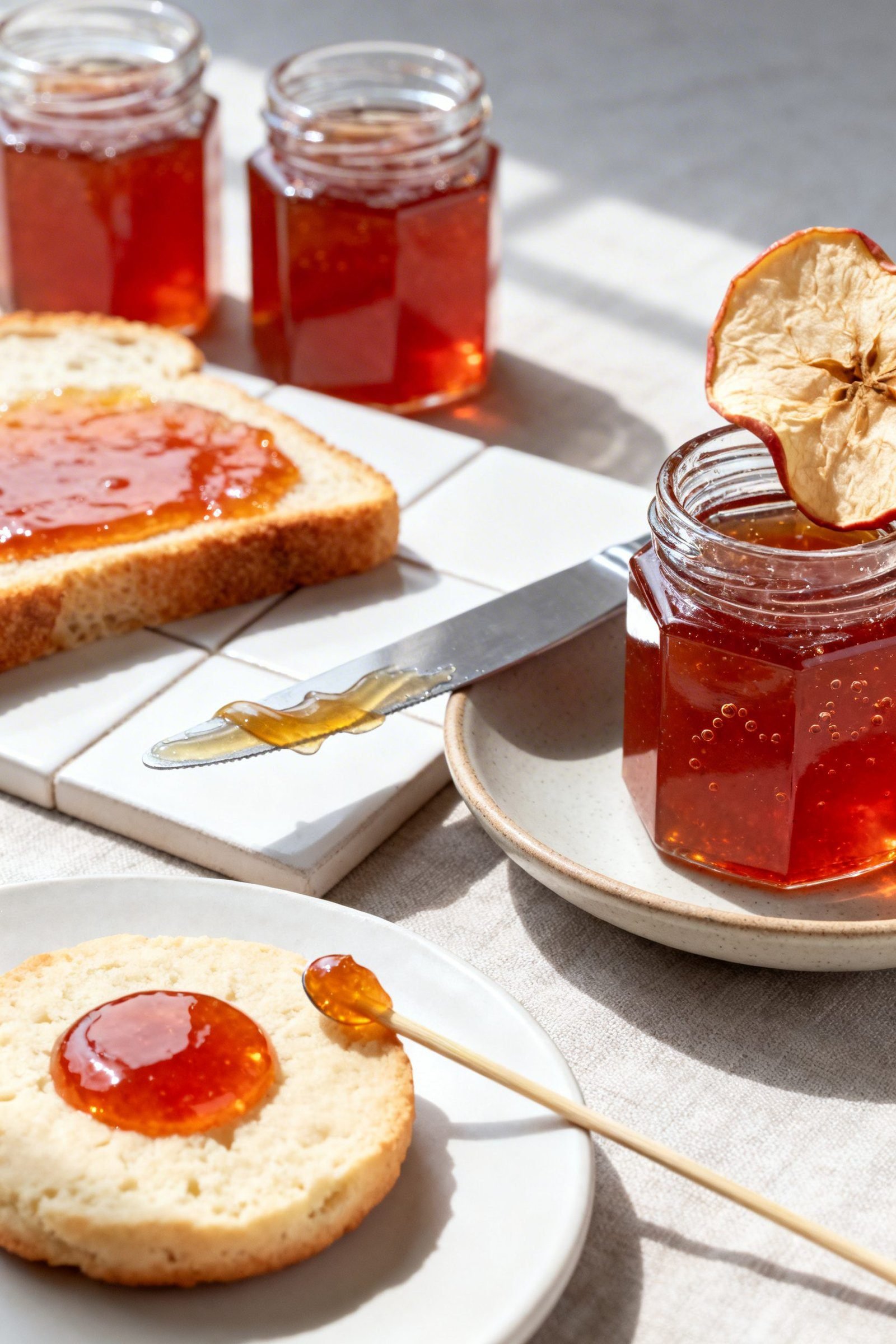
Apple peels and cores pack natural pectin and tartness—the two keys to a great set and bright flavor. When you simmer them with water, you pull out pectin, color, and aroma. Add sugar to balance the acidity and build the gel network, then finish with lemon for a reliable set and sparkle.
- Built-in pectin: Peels and cores contain higher pectin than apple flesh, which helps the jelly set without boxed pectin.
- Balanced sweetness: Sugar preserves, sets, and gives the jelly that classic, clear sheen.
- Fresh flavor: Lemon juice sharpens the apple notes and keeps the jelly from tasting flat.
- Zero waste: You turn scraps into a pantry staple and skip store-bought jelly.
Ingredients
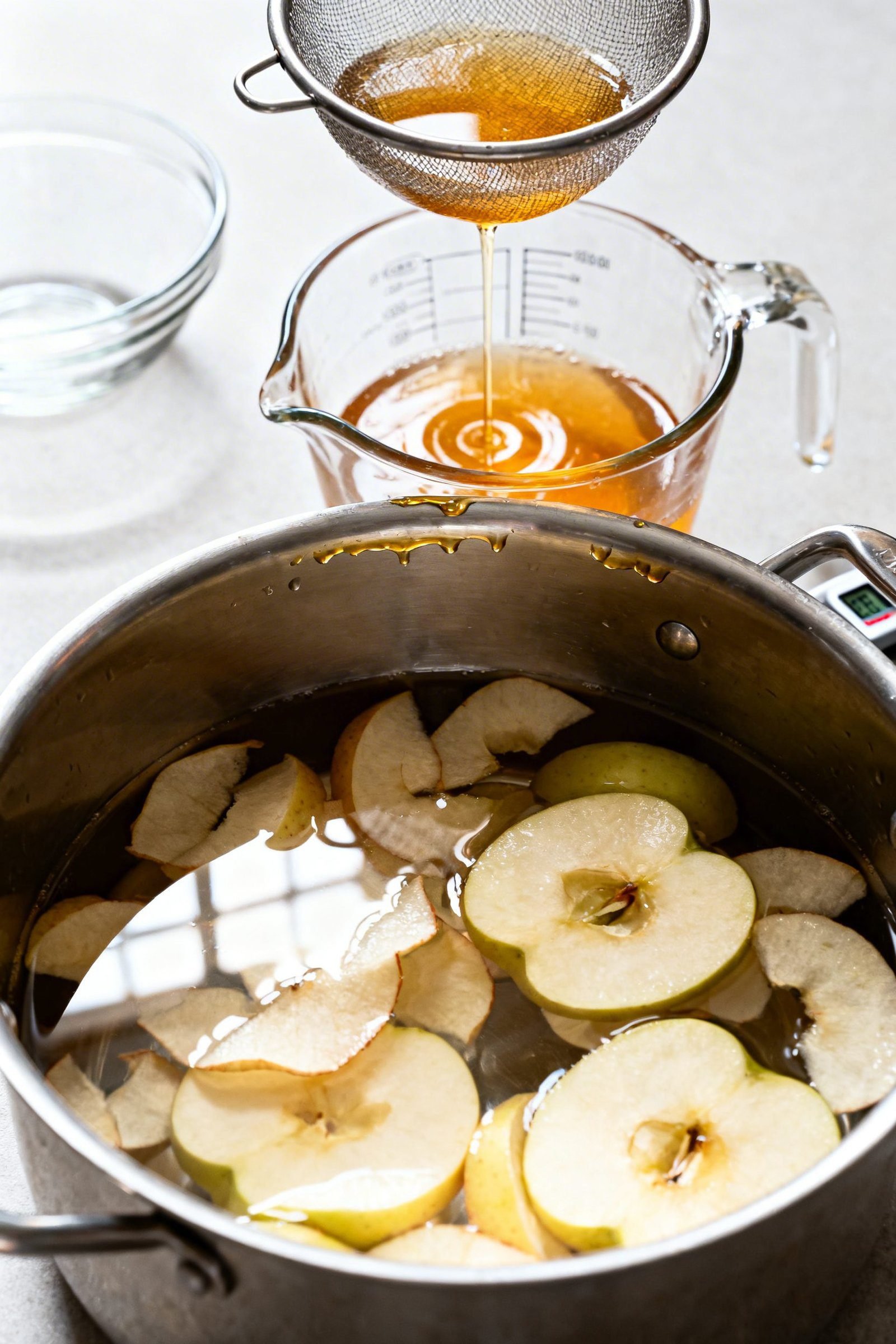
- Apple peels and cores: From about 3–4 pounds of apples (any mix works—tart apples like Granny Smith and sweet apples like Fuji or Gala balance well).
- Water: Enough to just cover the scraps (about 6–8 cups, depending on your pot).
- Granulated sugar: Measure after you strain the juice; plan on about 3/4–1 cup sugar per 1 cup apple juice.
- Lemon juice: 2–3 tablespoons per 4 cups juice for bright flavor and a dependable set.
- Optional flavor boosts: A small piece of cinnamon stick, a few strips of lemon peel, or a tiny pinch of ground cloves.
Equipment: Large pot, fine-mesh strainer or jelly bag, measuring cup, ladle, clean jars with lids, thermometer (helpful but optional).
How to Make Apple Peel Jelly From Scraps
1) Simmer the Scraps
- Add apple peels and cores to a large pot. Toss in optional spices if you like.
- Pour in water to just cover the scraps. You want a concentrated juice, not a thin brew.
- Bring to a boil, then reduce to a lively simmer for 35–45 minutes. Stir a few times and press scraps down to keep them submerged.
- When the peels look pale and the liquid tastes strongly of apple, you’re ready.
2) Strain for Clear Juice
- Set a fine-mesh strainer or jelly bag over a large bowl or pot.
- Ladle the hot mixture into the strainer and let it drip undisturbed for 20–30 minutes.
- Do not press the solids if you want crystal-clear jelly. Pressing clouds the jelly.
- Measure the strained juice. You should have 4–6 cups. If you have more, you can boil to reduce for stronger flavor.
3) Add Sugar and Lemon
- Return the measured juice to the pot.
- Stir in 3/4–1 cup sugar per cup of juice. Use the higher amount for a firmer, sweeter set; the lower for a softer, less sweet jelly.
- Add 2–3 tablespoons fresh lemon juice per 4 cups of juice.
4) Boil to Gel
- Bring the pot to a strong boil over medium-high heat. Skim foam as needed.
- Boil until the jelly reaches 220°F at sea level (subtract about 2°F for every 1,000 feet elevation). If you don’t have a thermometer, use the sheet test: Dip a chilled spoon into the boiling jelly, hold it sideways, and look for the syrup to fall in a sheet rather than thin drips.
- Start testing at around 10–12 minutes of hard boiling. Apple pectin varies, so time can range from 10–20 minutes.
5) Jar the Jelly
- While the jelly boils, wash jars and lids. Keep jars hot in simmering water or a warm oven so they don’t crack when filled.
- Ladle hot jelly into warm jars, leaving 1/4 inch headspace. Wipe rims clean and add lids.
- If you plan to shelf-store, process in a boiling water bath for 10 minutes (adjust for altitude per canning guidelines). For fridge storage, cool and refrigerate.
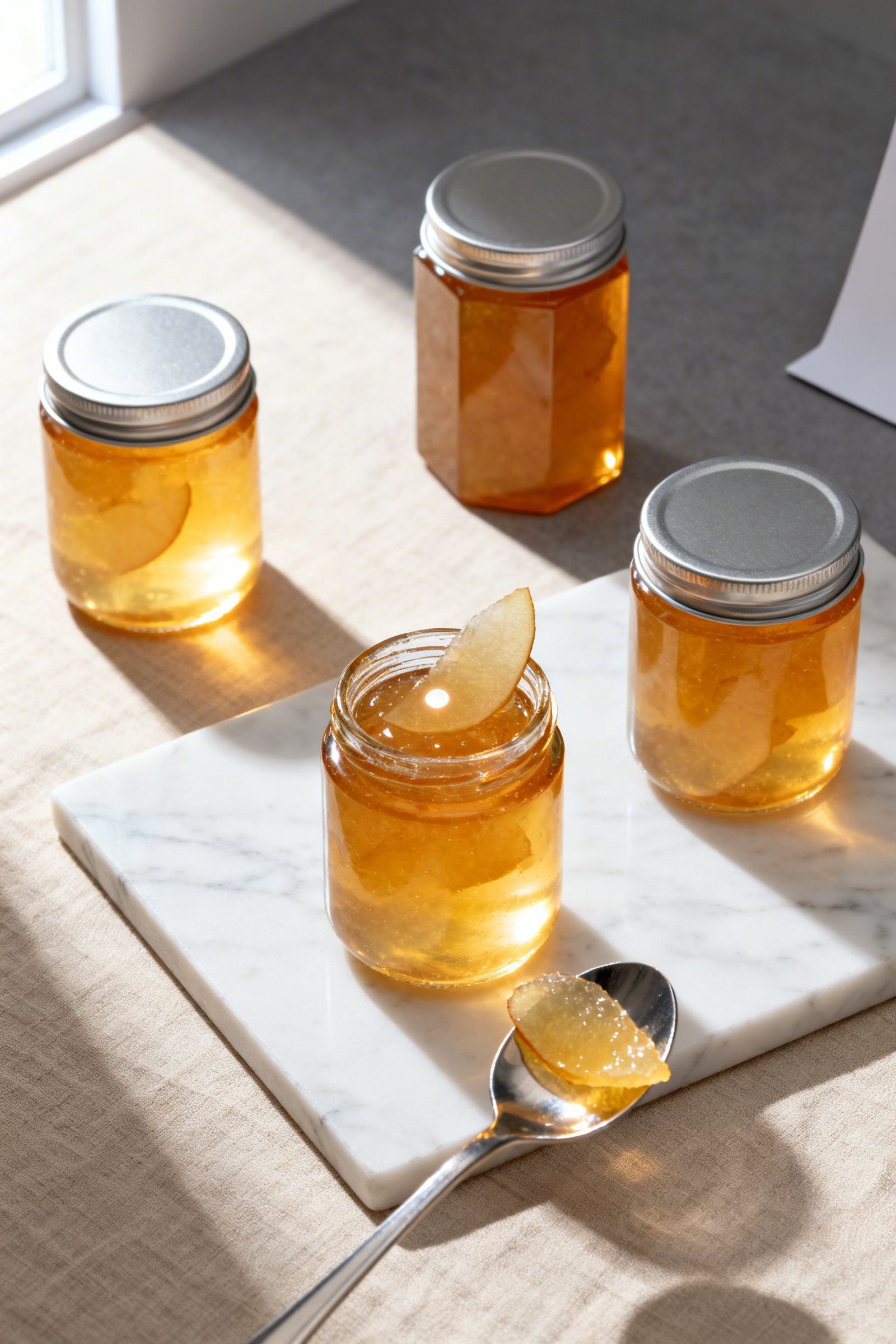
How to Store Apple Peel Jelly
- Room temperature (canned): Processed jars keep up to 12–18 months in a cool, dark place. Check seals before using.
- Refrigerator: Unprocessed or opened jars keep 3–4 weeks.
- Freezer: Pour into freezer-safe containers, leave headspace, and freeze up to 6 months. Thaw overnight in the fridge.
Label your jars with date and flavor notes so you remember which batch you loved most.
Benefits of Making Apple Jelly From Scraps
- Waste less: You transform peels and cores into a gorgeous pantry staple.
- Budget-friendly: You already bought the apples. Sugar and lemon cost pennies.
- Custom flavor: Choose your apple blend and spices for a taste that beats store-bought.
- Beautiful gifts: Clear, sunset-colored jars make thoughtful, homemade presents.
- Small-batch friendly: Make exactly what you need—no special pectin packets required.
What Not to Do
- Don’t skip lemon juice: It supports the set and brightens flavor. Without it, jelly can taste dull and set soft.
- Don’t drown the scraps: Too much water = weak juice and long boiling times.
- Don’t stir in foam: Skim it so your jelly stays clear and glossy.
- Don’t rush the gel test: Boil hard and test properly so you get a clean set.
- Don’t press the pulp if you want clarity: Pressing adds fine particles that cloud the jelly.
- Don’t skip clean, hot jars: Hot jelly into cold jars can cause cracks and contamination.
Variations You Can Try
- Cinnamon-vanilla: Simmer scraps with a small cinnamon stick; stir in 1 teaspoon vanilla off heat.
- Spiced cider jelly: Add a thin slice of fresh ginger and 2–3 allspice berries during the simmer.
- Rosemary-apple: Steep a small sprig of rosemary in the hot finished jelly for 5 minutes; remove before jarring.
- Honey-kissed: Replace up to 1/4 of the sugar with mild honey for floral notes. Boiling time may change slightly.
- Hard-cider twist: Replace 1 cup of water with dry hard cider in the simmer for a complex finish.
FAQ
Can I use boxed pectin?
Yes. If you want a faster set, use a low-sugar or regular pectin per package directions and adjust sugar accordingly. You’ll still simmer and strain the scraps for juice.
My jelly didn’t set. What now?
First, chill a jar overnight. If it’s still runny, reboil with 1–2 tablespoons lemon juice per 4 cups and a little extra sugar. Boil to 220°F or until it sheets from a spoon.
How many jars will this make?
From scraps of 3–4 pounds of apples, you’ll usually get 4–6 half-pint jars, depending on how much juice you extract and how far you reduce it.
Do I need to peel apples first?
If you’re making pie, sauce, or slices, save the peels and cores as you go. If you don’t have scraps, you can chop whole apples and use them instead.
Can I lower the sugar?
You can go as low as 1/2 cup sugar per cup of juice with a softer set. For very low sugar, use low-sugar pectin and follow that product’s ratio.
Why is my jelly cloudy?
Pressing the pulp forces fine particles through. Next time, let the juice drip on its own and strain through a damp jelly bag or coffee filter.
Can I skip the water bath?
For shelf-stable storage, you need a boiling water bath. If you prefer to skip it, refrigerate and use within a few weeks or freeze.
Conclusion
Apple peel jelly turns kitchen scraps into something you’ll reach for every morning. With a quick simmer, a clean strain, and a lively boil to set, you get jars of clear, perky jelly that tastes like crisp apples and sunshine. Save your peels, grab a lemon, and make a batch—you’ll never toss those scraps again.
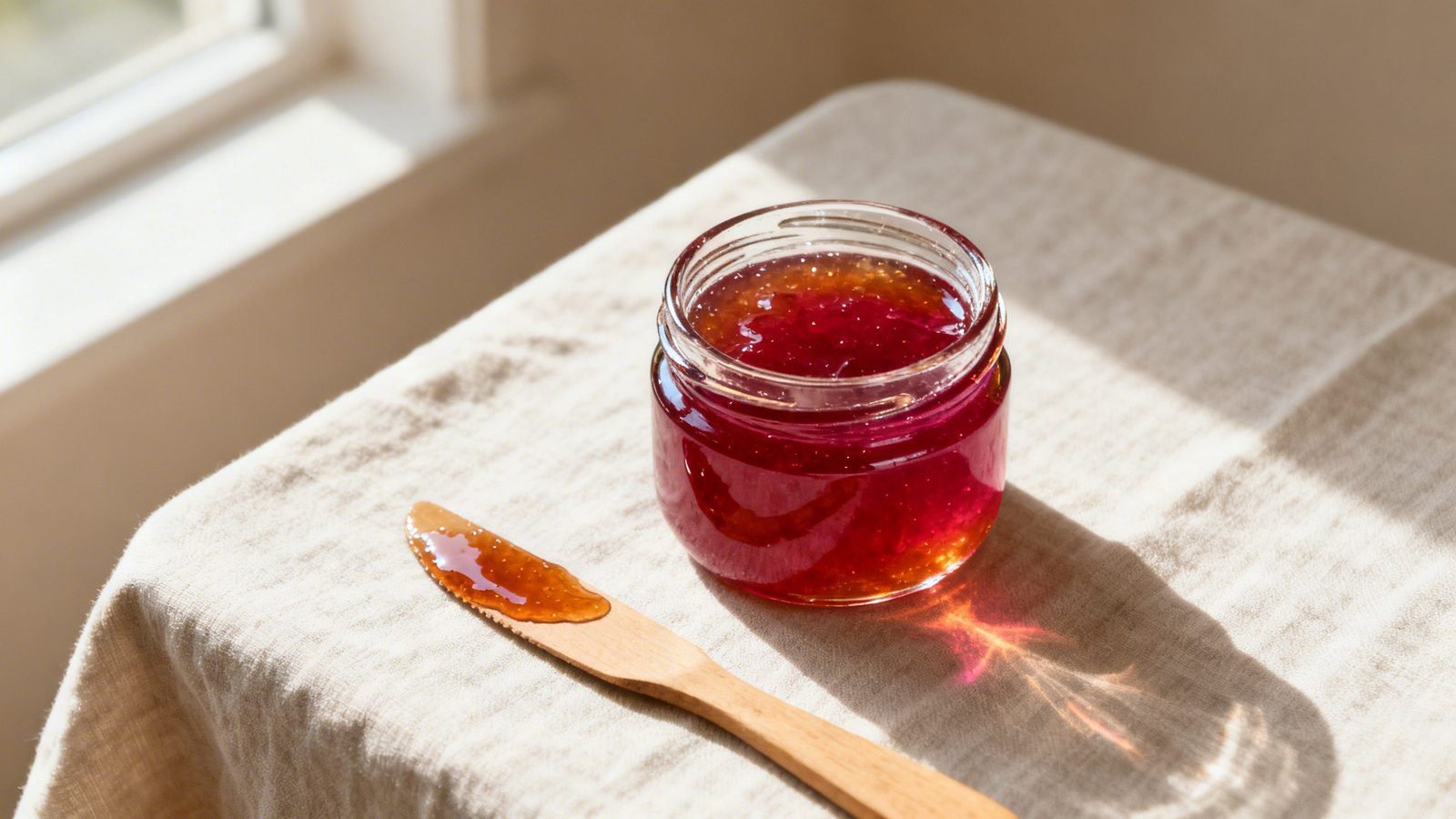
Apple Peel Jelly (Homemade Apple Jelly From Scraps)
Turn apple peels and cores into a bright, gently sweet, pectin-rich jelly with sugar and lemon.
Ingredients
- Apple peels and cores from about 3–4 pounds apples (any mix)
- Water to just cover scraps (about 6–8 cups)
- Granulated sugar (¾–1 cup per 1 cup strained apple juice)
- Fresh lemon juice (2–3 tablespoons per 4 cups juice)
- Optional: small piece of cinnamon stick, a few strips of lemon peel, or a tiny pinch of ground cloves
Instructions
- Add apple peels and cores to a large pot; add optional spices if using.
- Pour in water to just cover the scraps.
- Bring to a boil, then simmer 35–45 minutes, stirring occasionally and keeping scraps submerged, until peels are pale and liquid tastes strongly of apple.
- Strain through a fine-mesh strainer or jelly bag without pressing; let drip 20–30 minutes. Measure the clear juice (aim for 4–6 cups; reduce if needed for stronger flavor).
- Return measured juice to the pot. Add ¾–1 cup sugar per cup of juice and 2–3 tablespoons lemon juice per 4 cups juice.
- Bring to a strong boil over medium-high heat, skimming foam. Boil until 220°F at sea level (or until it sheets from a chilled spoon), about 10–20 minutes total.
- Meanwhile, wash jars and lids; keep jars hot.
- Ladle hot jelly into warm jars, leaving ¼ inch headspace. Wipe rims and apply lids.
- For shelf storage, process in a boiling water bath for 10 minutes (adjust for altitude). Otherwise, cool and refrigerate.