Easy Homemade Pasta Recipe | Fresh Italian Pasta from Scratch
Nothing beats a bowl of fresh, silky pasta you made yourself. The dough feels tender under your hands, the noodles cook in minutes, and every sauce tastes brighter and more luxurious. If homemade pasta sounds intimidating, don’t worry—I’ll walk you through it step by step. You only need a few pantry ingredients and a little patience.
This easy homemade pasta recipe delivers classic Italian-style pasta with a supple bite and beautiful texture. You can roll and cut it with a pasta machine or a rolling pin and a knife. Once you try it, you’ll wonder why you ever bought boxed pasta for special meals.
Why This Easy Homemade Pasta Recipe Works
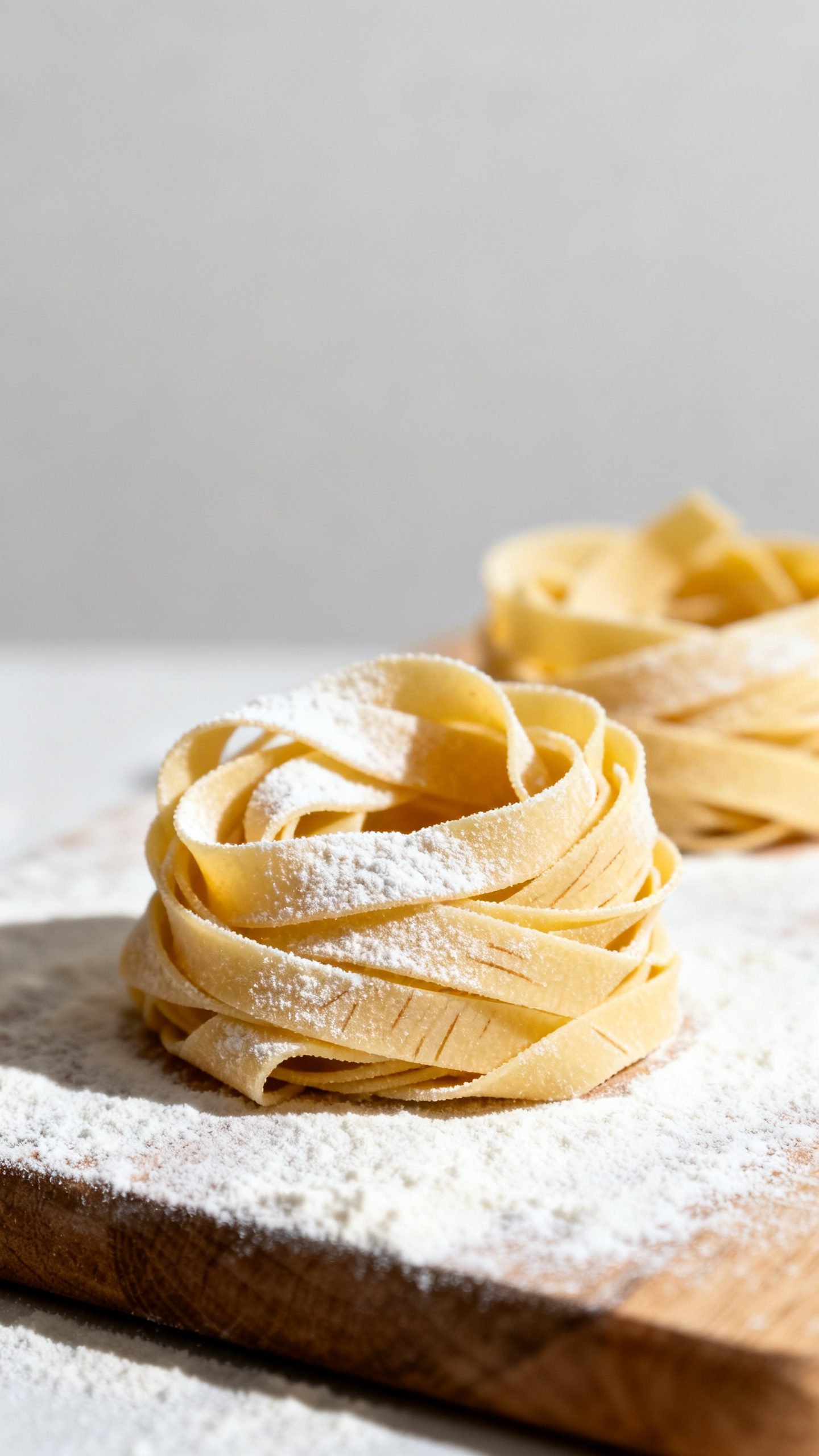
- Simple ingredients, big payoff: You only need flour, eggs, and a pinch of salt. Good technique does the rest.
- Great texture every time: The dough hydrates and relaxes as it rests, so you get elastic sheets that don’t tear.
- Fast cooking: Fresh pasta cooks in 2–3 minutes, which means dinner hits the table faster.
- Custom shapes and thickness: Roll it thin for tagliatelle, thicker for pappardelle, or fill it for ravioli.
- Perfect for any sauce: Butter and sage, tomato-basil, cacio e pepe—fresh pasta shines with everything.
Ingredients
- 2 cups (240 g) Italian 00 flour or all-purpose flour (you can swap in up to 25% semolina for more bite)
- 3 large eggs, room temperature
- 1/2 teaspoon fine sea salt
- 1 teaspoon extra-virgin olive oil (optional, for a silkier dough)
- Semolina flour, for dusting when rolling and cutting
Ingredient Notes
- 00 flour: Ultra-fine grind gives a smooth, supple dough. All-purpose still works well.
- Egg size matters: If eggs run small, add 1–2 teaspoons water. If dough feels sticky, add a sprinkle of flour.
- Semolina addition: Swap 1/2 cup (60 g) of the 00 flour for semolina if you like a firmer, more “al dente” noodle.
How to Make Fresh Pasta from Scratch
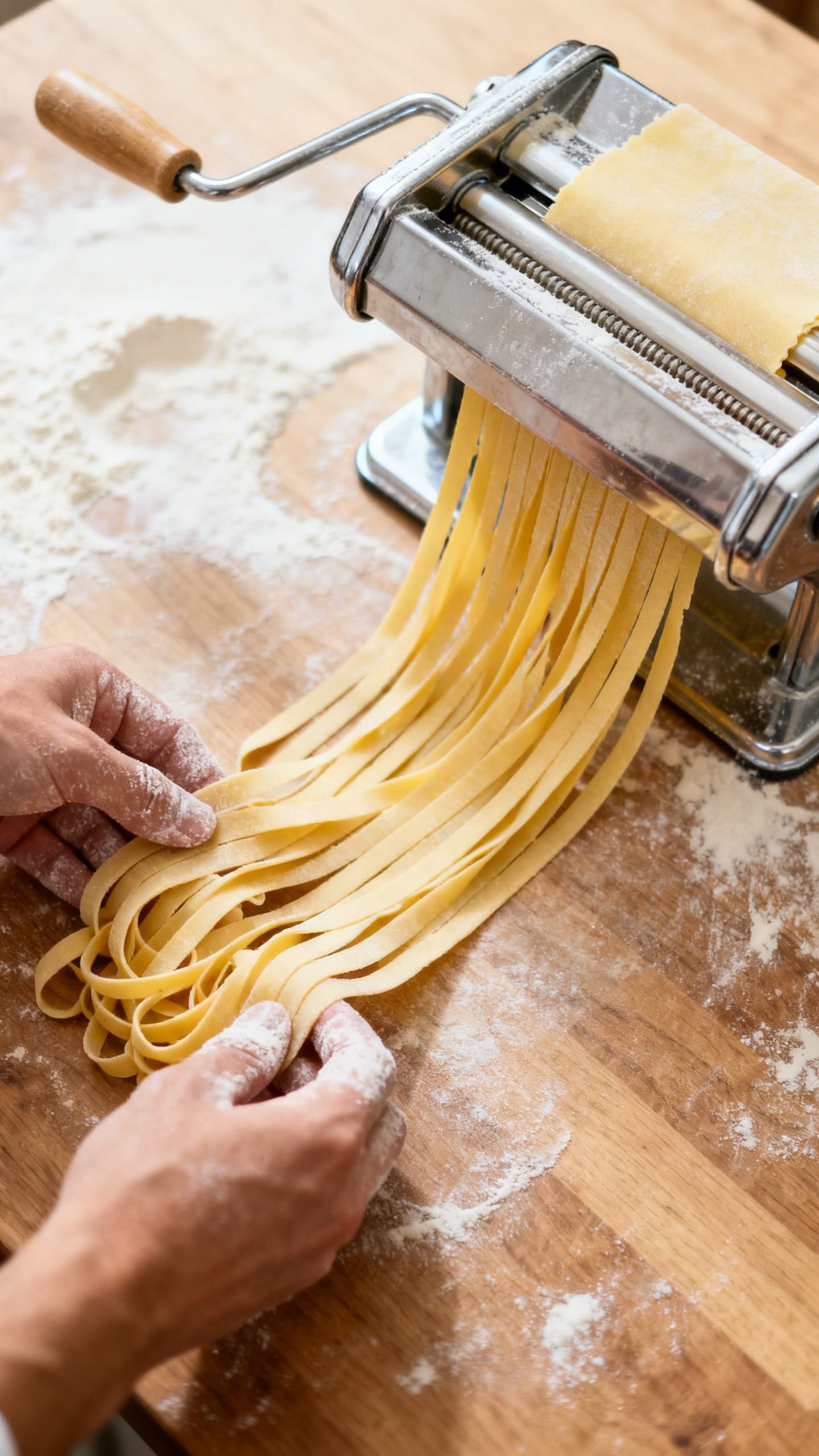
1) Mix and Knead the Dough
- On a clean work surface, mound the flour and salt. Make a deep well in the center.
- Add the eggs and olive oil to the well. Use a fork to whisk the eggs, then gradually pull in flour from the sides until a shaggy dough forms.
- Bring the dough together with your hands. Knead for 8–10 minutes until smooth, elastic, and slightly tacky but not sticky. The dough should spring back when pressed.
- If the dough feels dry and crumbly, add 1 teaspoon water at a time. If sticky, dust with flour sparingly.
2) Rest the Dough
- Wrap the dough tightly in plastic wrap or cover with an overturned bowl.
- Let it rest at room temperature for 30–45 minutes. Resting relaxes gluten so the dough rolls easily.
3) Roll the Dough
- With a pasta machine:
- Cut the dough into 4 pieces. Keep pieces covered.
- Flatten one piece into a rectangle and dust lightly with flour.
- Feed through the widest setting. Fold into thirds like a letter and roll again on the widest setting. Repeat 2–3 times to smooth the dough.
- Decrease the setting one notch and roll. Continue one notch at a time until you reach your desired thinness: setting 6–7 on most machines for tagliatelle or fettuccine, slightly thinner for ravioli.
- By hand with a rolling pin:
- Work with one piece at a time on a lightly floured surface.
- Roll from the center outward, rotating the sheet and flipping often. Dust with flour if it sticks.
- Roll until the sheet looks almost translucent and you can see your hand shadow through it.
4) Cut the Pasta
- For long noodles: Dust the sheet with semolina, fold it loosely into thirds, then slice into 1/4-inch strips for tagliatelle, 1/8-inch for fettuccine, or 3/4–1 inch for pappardelle. Gently shake out the strands and toss with semolina.
- For lasagna sheets: Cut sheets into rectangles to fit your dish.
- For filled pasta: Keep sheets a touch thinner and work quickly to prevent drying.
5) Cook the Pasta
- Bring a large pot of well-salted water to a rolling boil. Aim for 1 tablespoon kosher salt per 4 quarts water.
- Drop in the fresh pasta and stir gently. Cook for 2–3 minutes until just tender. Taste at 90 seconds and every 30 seconds after.
- Reserve 1 cup of pasta water. Drain pasta and immediately toss with sauce, loosening with pasta water as needed.
Pro Tips for Success
- Weigh your flour: Consistent hydration makes consistent results.
- Rest the dough: Skipping rest time leads to tough, springy sheets that fight you.
- Flour lightly, not heavily: Too much flour dries pasta and prevents sauce from clinging.
- Cook right before serving: Fresh pasta waits poorly once sauced.
How to Store Fresh Pasta
- Short rest (up to 2 hours): Arrange cut noodles in loose nests on a semolina-dusted sheet pan. Cover with a clean towel.
- Refrigerator (1 day): Place nests on a tray, dust well, and cover tightly. Expect slightly softer texture after a day.
- Freezer (up to 1 month): Freeze nests on a tray until firm, then transfer to airtight bags. Cook from frozen for 3–4 minutes.
- Dried at home (12–24 hours): Hang strands on a pasta rack or spread on screens. Dry until brittle, then store airtight for up to 2 months. Cooking time increases to 6–8 minutes.
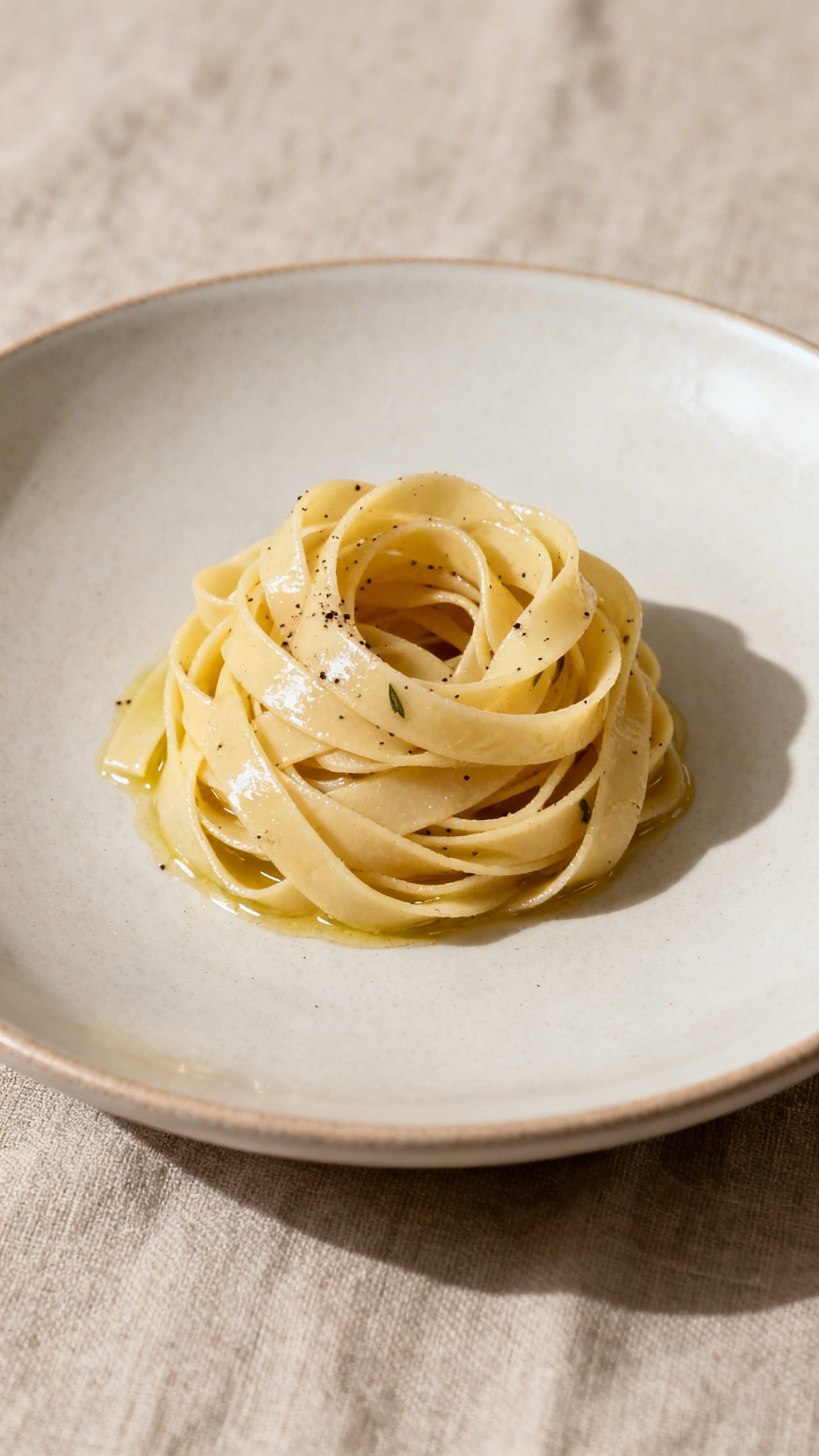
Benefits of Making Pasta from Scratch
- Superior texture: Fresh noodles absorb sauce while staying tender with a delightful bite.
- Flavor control: You can add herbs, cracked pepper, or saffron right into the dough.
- Customization: Choose shapes and thickness to match your sauce and mood.
- Faster dinners: Once rolled, fresh pasta cooks in minutes.
- Project joy: Kneading and rolling turn into a calming, hands-on ritual.
What Not to Do
- Don’t skip the rest: Tight dough tears and resists rolling.
- Don’t drown in flour: Excess dusting dries noodles and dulls flavor.
- Don’t overcook: Fresh pasta goes from perfect to mush quickly—taste early and often.
- Don’t rinse after cooking: You’ll wash away starch that helps sauce cling.
- Don’t overcrowd the pot: Boil in batches so strands don’t clump.
Variations You Can Try
- Semolina-forward dough: Use 50% semolina and 50% 00 flour for a sturdier bite, great for thicker noodles.
- Herb-speckled: Knead in 1–2 tablespoons finely chopped parsley, basil, or chives.
- Spinach pasta: Replace one egg with 1/4 cup well-drained, pureed spinach; reduce added water as needed.
- Black pepper dough: Add 1–2 teaspoons freshly ground pepper for cacio e pepe nights.
- Saffron richness: Bloom a pinch of saffron in 1 tablespoon warm water; add to the eggs for color and aroma.
- Gluten-free option: Use a reliable gluten-free flour blend and add 1/2 teaspoon xanthan gum if not included; handle gently.
FAQ
Can I make pasta without a machine?
Yes. Roll with a heavy rolling pin on a lightly floured surface. Work in small portions, rotate often, and roll until very thin. Slice with a sharp knife.
Why is my dough cracking?
It’s too dry. Knead in 1 teaspoon water at a time until smooth. Rest longer to relax gluten.
Why is my dough sticky?
It’s overhydrated. Dust with flour and knead briefly until tacky, not sticky. Keep your surface lightly floured, not snowy.
How thin should I roll?
For most noodles, roll to about 1 mm thick. You should see your hand shadow through the sheet.
How much salt for the cooking water?
Use about 1 tablespoon kosher salt per 4 quarts of water. It seasons the pasta from within.
Can I freeze the dough?
Yes. Wrap tightly and freeze for up to 1 month. Thaw overnight in the fridge, then bring to room temp before rolling.
What sauces work best with fresh pasta?
Light sauces shine: brown butter and sage, lemon cream, tomato-basil, or simple olive oil, garlic, and parmesan.
Conclusion
Fresh homemade pasta turns a regular night into something special with just flour, eggs, and a little care. You mix, you knead, you roll—and minutes later you twirl silky noodles through your favorite sauce. Make a batch this weekend, stash some in the freezer, and you’ll always have a fast, elegant dinner ready to go. Once you taste the difference, you’ll keep this recipe on repeat.
Easy Homemade Pasta Recipe | Fresh Italian Pasta from Scratch
Ingredients
Ingredients
- 2 cups (240 g) Italian 00 flour or all-purpose flour
- Up to 25% semolina flour swapped in for more bite (optional)
- 3 large eggs, room temperature
- 1/2 teaspoon fine sea salt
- 1 teaspoon extra-virgin olive oil (optional, for a silkier dough)
- Semolina flour, for dusting when rolling and cutting
Instructions
Instructions
- Mound the flour and salt on a clean work surface and make a deep well in the center.
- Add the eggs and olive oil to the well, whisk the eggs with a fork, then gradually incorporate flour until a shaggy dough forms.
- Bring the dough together and knead for 8–10 minutes until smooth, elastic, and slightly tacky; adjust with small amounts of water or flour as needed.
- Wrap the dough tightly or cover with a bowl and rest at room temperature for 30–45 minutes.
- Divide the dough into 4 pieces, keeping the others covered.
- With a pasta machine, roll the dough starting at the widest setting, folding and re-rolling 2–3 times, then reduce one notch at a time to desired thinness; by hand, roll on a lightly floured surface until nearly translucent.
- Dust the sheet with semolina and cut into desired shapes such as tagliatelle, fettuccine, pappardelle, or sheets for lasagna; toss strands lightly with semolina.
- Bring a large pot of well-salted water to a rolling boil (about 1 tablespoon kosher salt per 4 quarts).
- Cook the fresh pasta for 2–3 minutes until just tender, tasting at 90 seconds and every 30 seconds thereafter.
- Reserve 1 cup of pasta water, drain, and immediately toss pasta with sauce, loosening with pasta water as needed.